01
Storage map
Set individual pocket sizes and openings using the buyer's intended use and design brief.
Custom Menswear Manufacturing / OEM & ODM / Worldwide Delivery
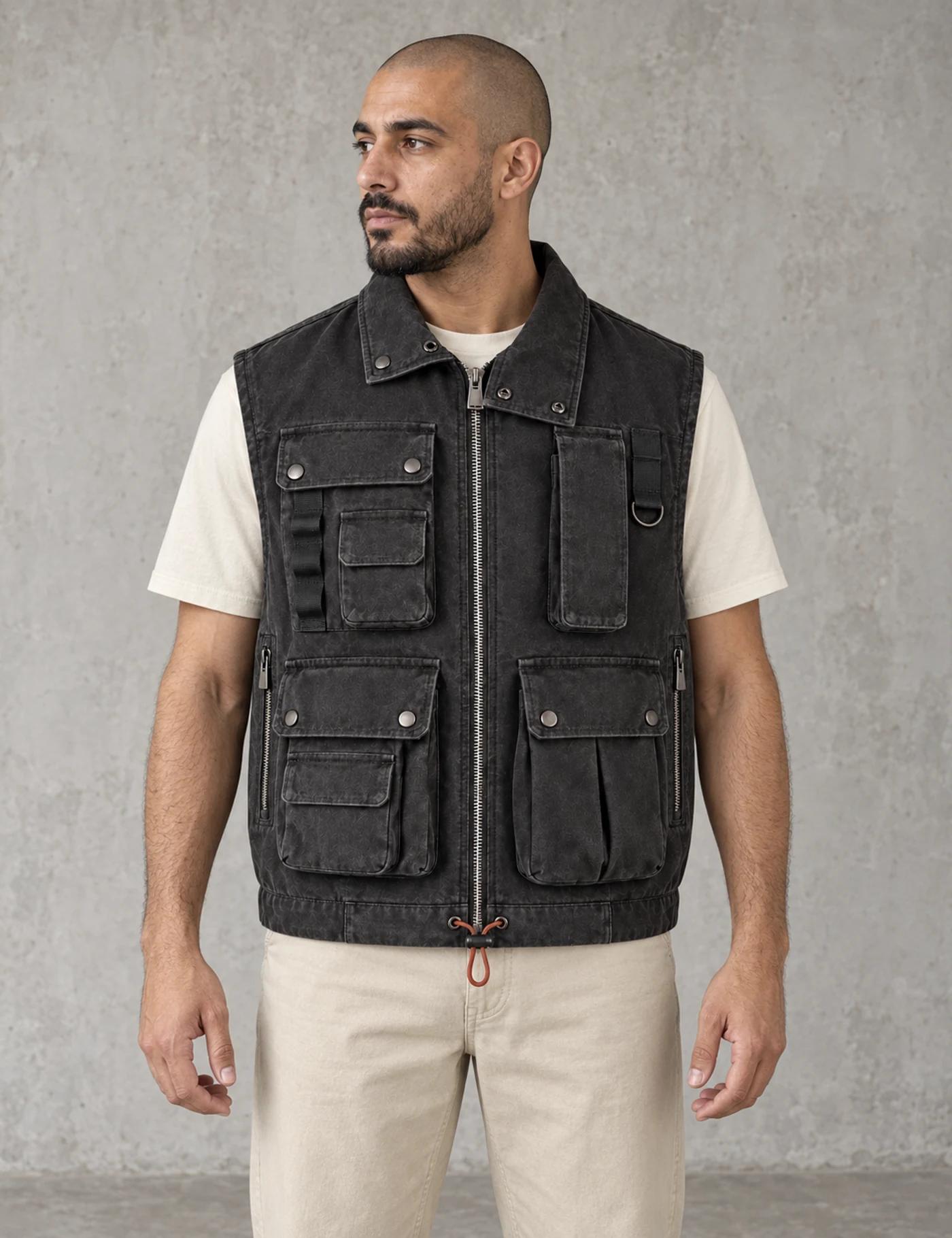
PK-114 / Actual sample reference
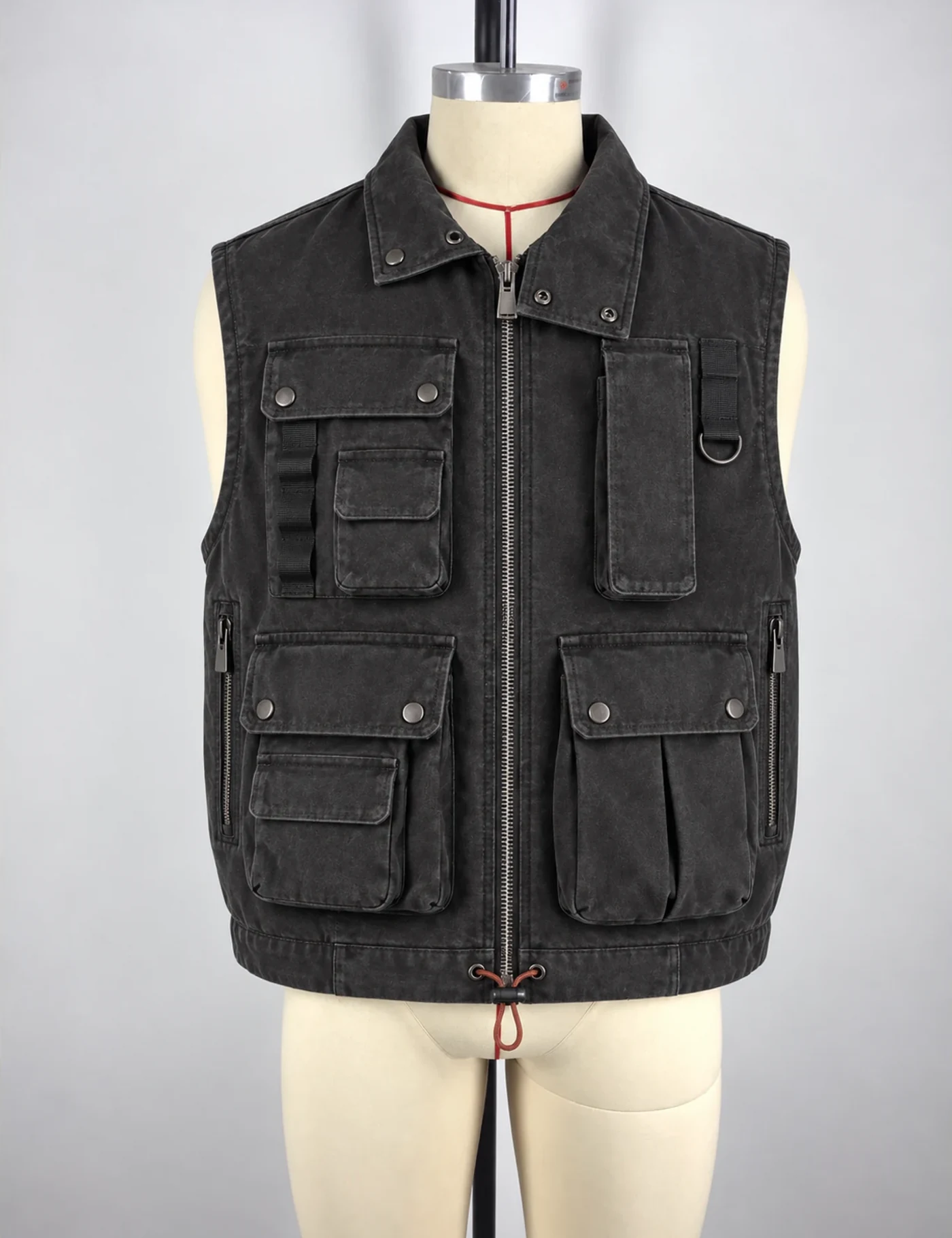
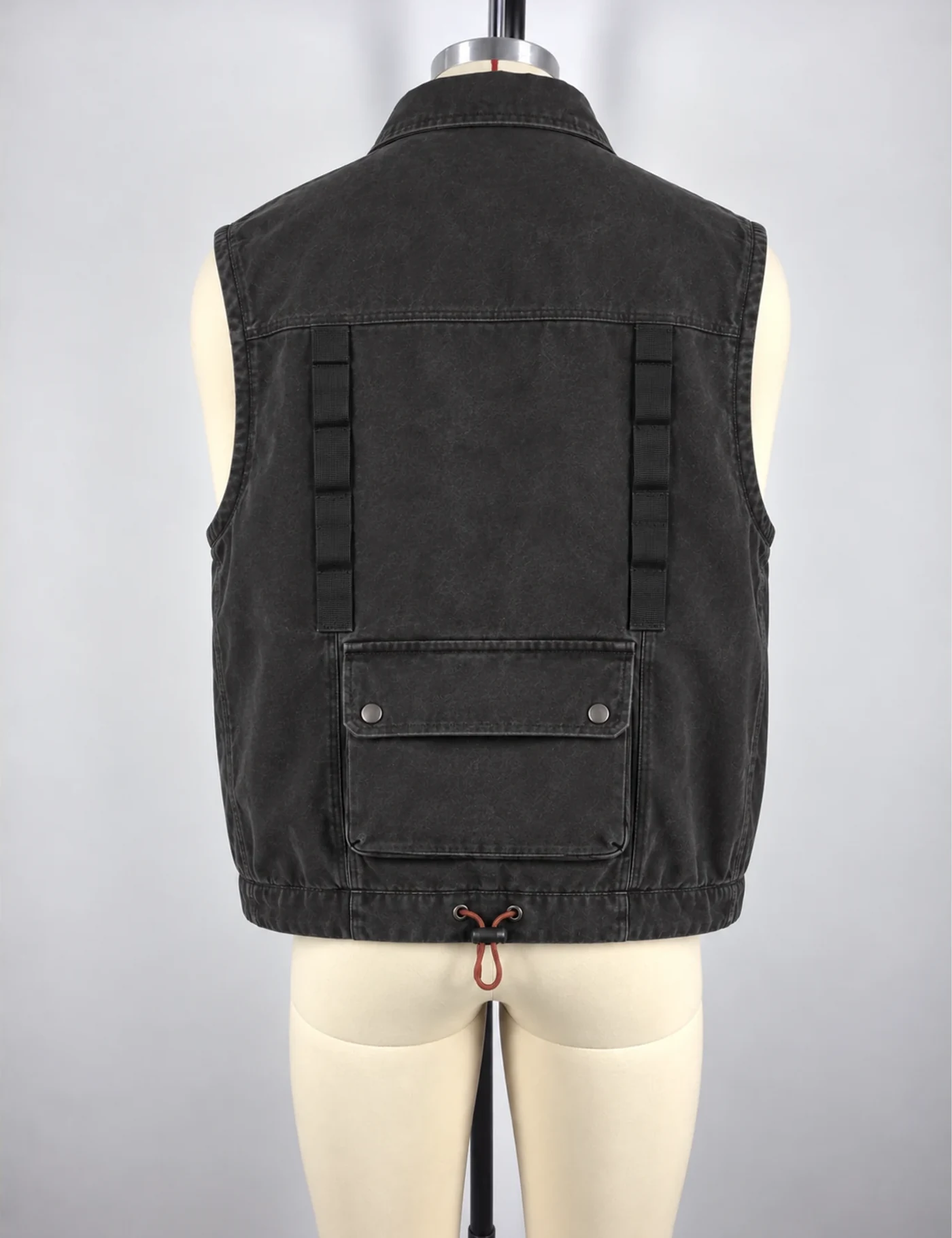
This washed-charcoal vest organizes storage around a central zip: stacked flap pockets on one chest, a narrow pocket and D-ring on the other, plus large lower pockets and side zips. Rear webbing and a flap pocket continue the utility layout. Pocket access, layer clearance and hardware support are the main development priorities.
01
Actual sample shown
02
Custom development
03
Sample approval before bulk
04
Project-specific quotation
Actual sample evidence
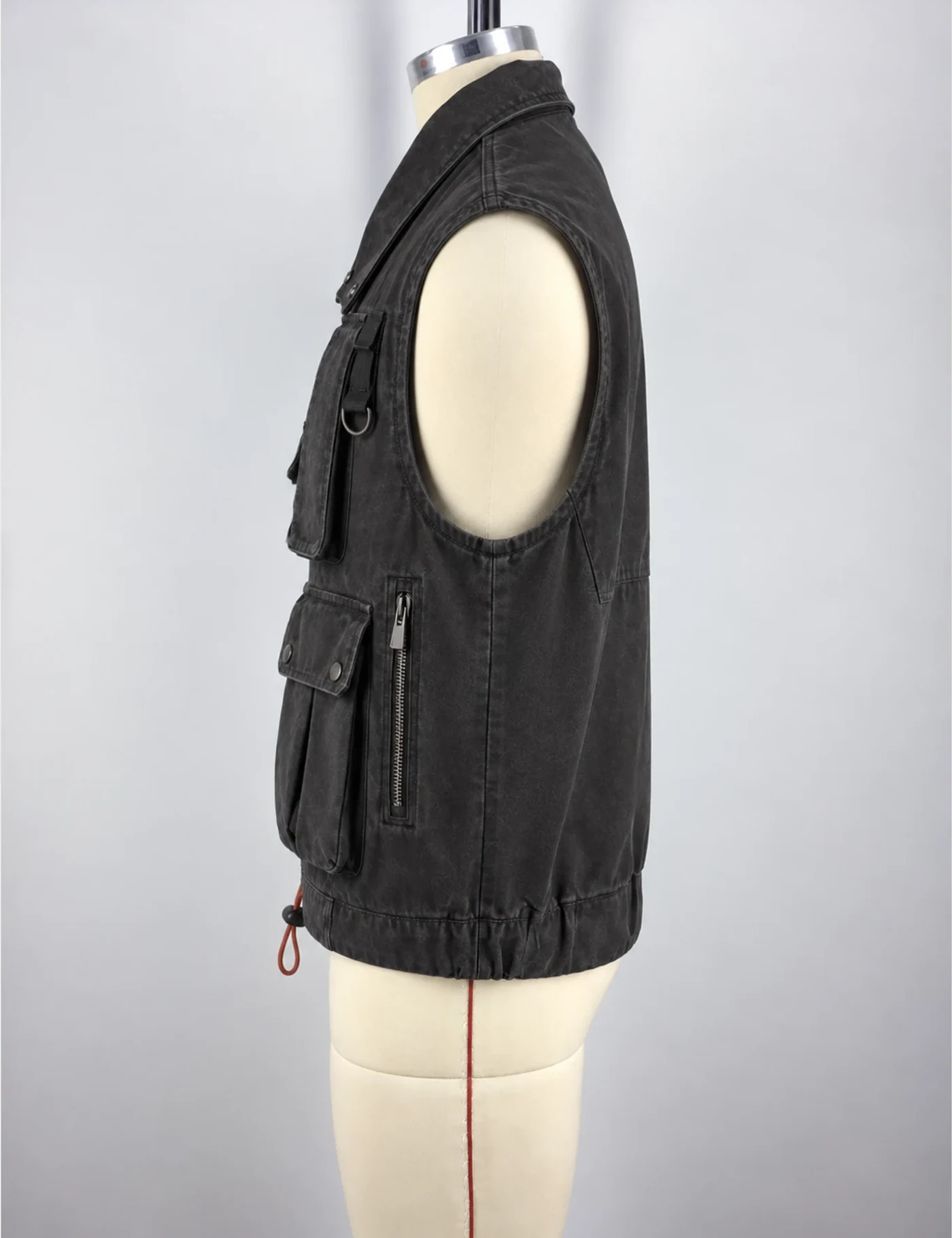
The back and side views document additional pocket and zip construction. Use all three views when planning the utility layout.
Visible on the sample
Confirmed for your project
Customization map
More pockets add bulk and attachment points. Specify useful dimensions before choosing the final hardware.
01
Set individual pocket sizes and openings using the buyer's intended use and design brief.
02
Approve positions, attachment stitches and any load requirement before choosing hardware.
03
Sample the charcoal shade and edge fading with the actual webbing and pocket cloth.
04
Fit the vest over the intended tee, sweatshirt or outer layer.
05
Review access, flap fastening and webbing routing on a worn sample.
06
Set cord length, toggle retention and a neat route clear of the center zipper.
Specification status
The visible pocket arrangement is established; cloth, load requirements and component performance need approval.
Related product references
Development path
An early storage trial reveals access conflicts that are harder to correct after washing and hardware attachment.
Record each pocket, zip, loop and ring on front and rear technical drawings.
Test opening access and seam allowances using the intended cloth thickness.
Review shade behavior and the strength of snaps, webbing and zips after finishing.
Check armhole movement, pocket bulk and front-zip closure with the vest worn.
Lock pocket dimensions, component codes, reinforcement and any agreed attachment tests.
Quality checkpoints
Inspect pocket access, zip operation and reinforcement alongside the washed appearance.
Open every flap and zip and check that neighboring components do not obstruct access.
Inspect webbing ends, ring anchors and pocket corners against the agreed reinforcement plan.
Check the front and side zip operation without catching pocket bags or cord.
Compare pocket edges and body panels with the approved charcoal shade range.
Assess armhole clearance and the rear pocket with the specified underlayer.
Check toggle retention, cord-end finish and excess length to the buyer's specification.
Buyer questions
It is a fashion utility-vest reference. The pictures do not establish protective performance, load ratings or suitability for specialized occupational use.
Yes. Provide item dimensions and access requirements so pocket mock-ups can be reviewed before the full garment is made.
A different shade or finish can be sampled, but it must be tested with pocket layers, webbing, snaps and zips because those components may respond differently.
It documents a rear flap pocket and vertical webbing absent from the front view. Those details affect storage layout, construction and fit.
Continue the evaluation
Custom development / PK-114
Send a pocket map, intended underlayer, material direction and hardware requirements for a sample review.