Custom Menswear Manufacturing / OEM & ODM / Worldwide Delivery
CUSTOM JACKET MANUFACTURING
Custom Jacket & Outerwear Manufacturer
KAOUYOU develops custom jackets and outerwear for streetwear and private-label brands, coordinating silhouette, shell fabric, lining, insulation, closures, pockets, decoration and finishing through one accountable manufacturing workflow.
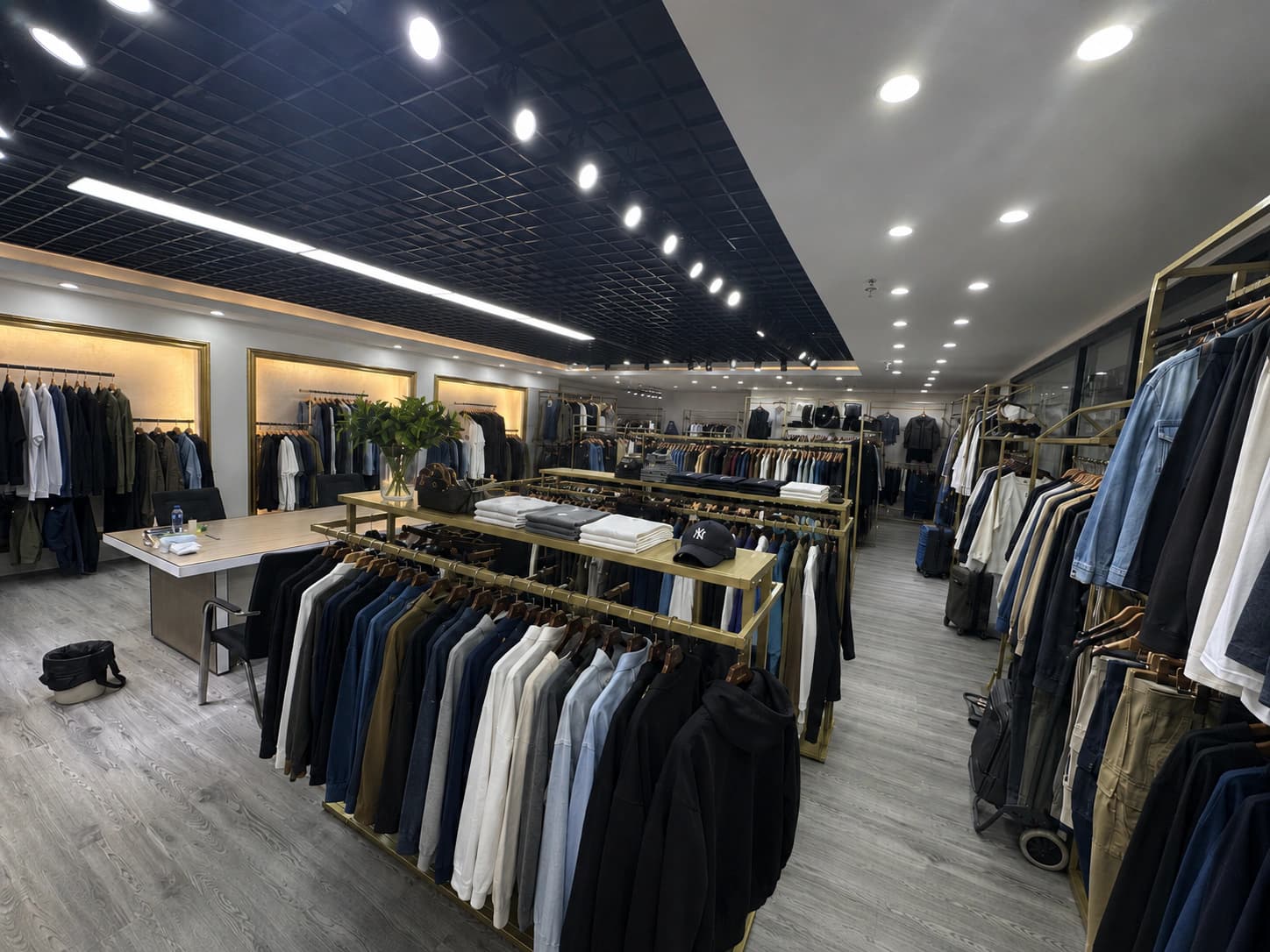
STYLE & SILHOUETTE LIBRARY
Start with the layer your collection needs.
Each direction represents a common outerwear development starting point — not a fixed stock catalogue. Fit, shell fabric, lining, insulation, hardware and decoration are adjusted to your brand’s requirements.
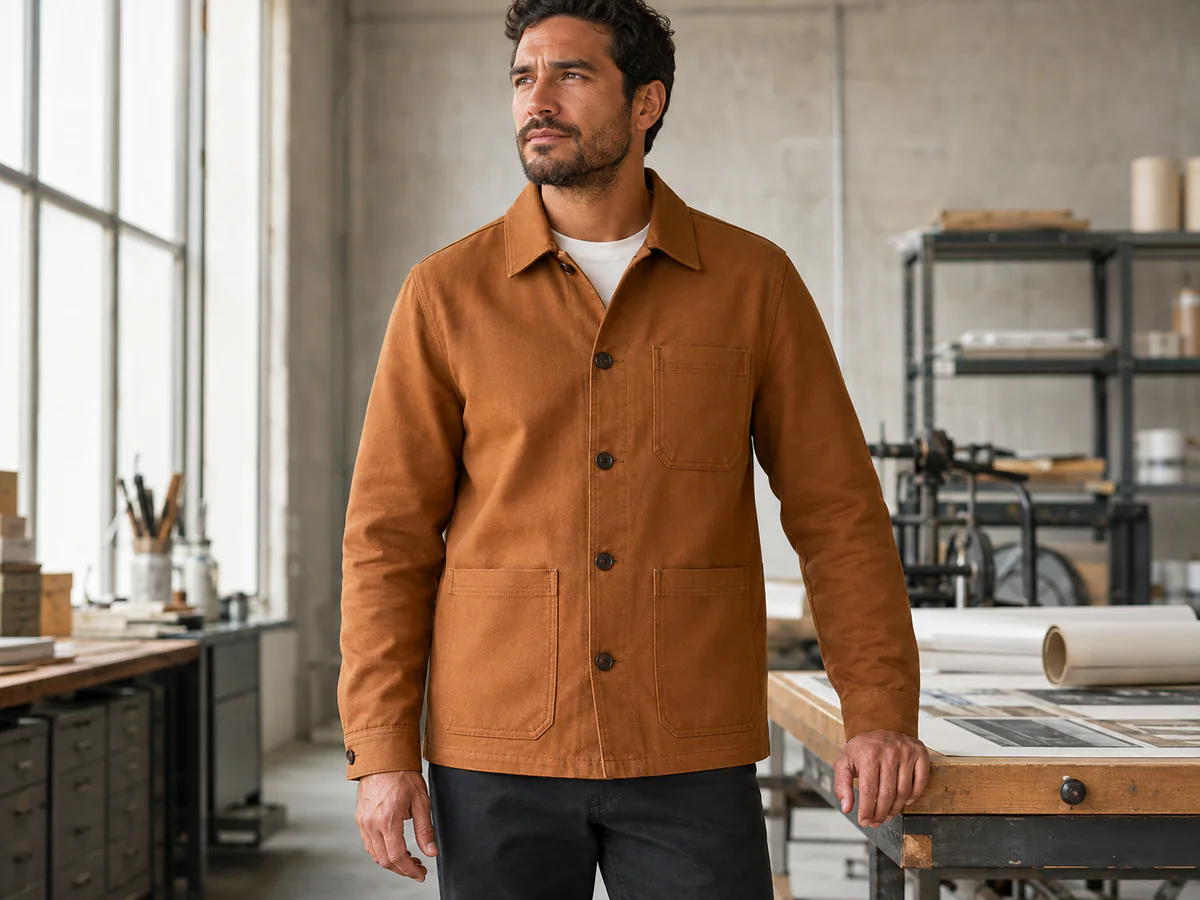
Workwear / Chore Jacket
Silhouette: Straight body, structured shoulder, utilitarian character with visible pocket work and topstitching detail.
Recommended Shell: Cotton twill, canvas, duck canvas or midweight woven.
Typical Construction: Unlined to lightly lined; button or snap front; multiple utility pockets; reinforced stitching at stress points.
Best For: Workwear-inspired streetwear, utility collections and brands referencing heritage outdoor and workshop garments.
Key Development Points: Fabric weight and structure, pocket scale and placement, collar shape, hem proportion and interior finish.
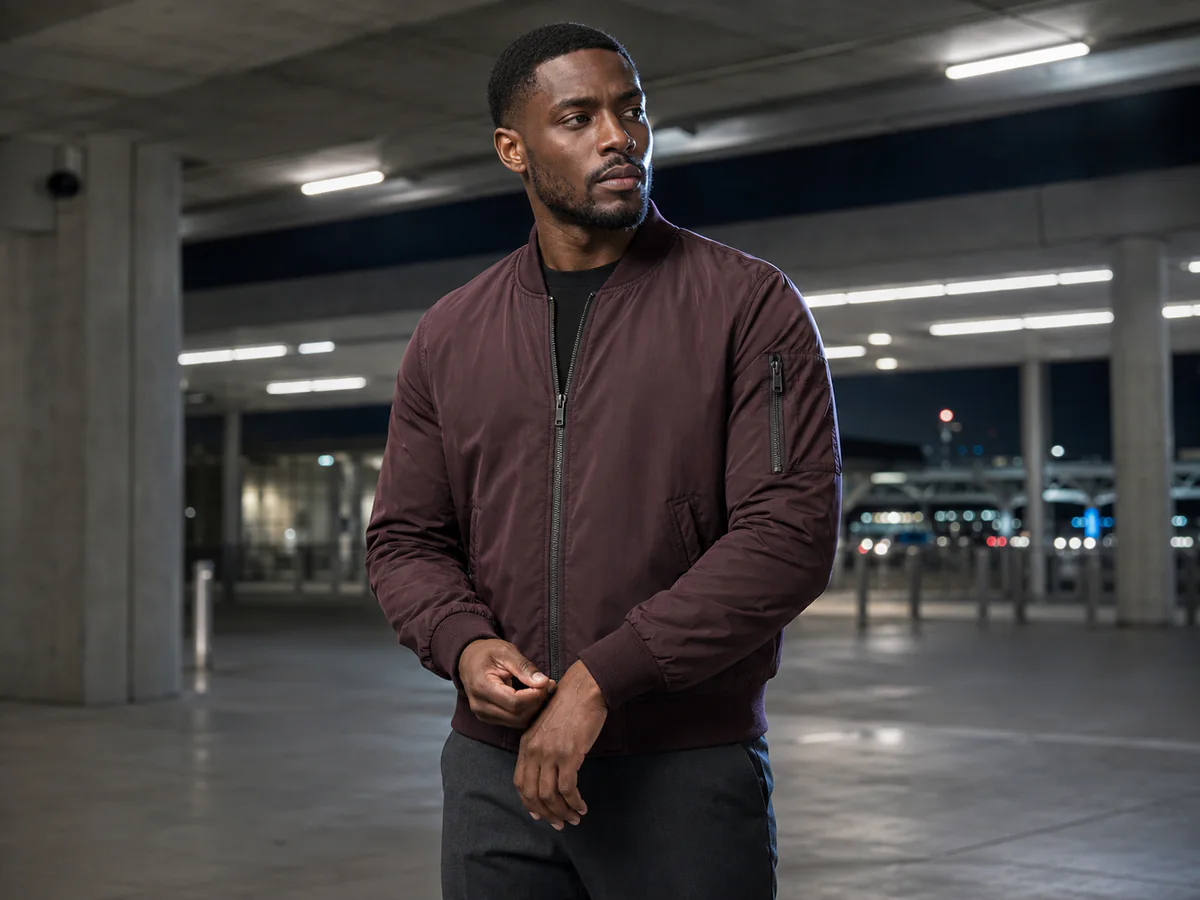
Bomber Jacket
Silhouette: Rounded silhouette with rib collar, cuff and hem; defined shoulder and clean body volume.
Recommended Shell: Nylon, polyester woven, taslan or project-specific shell fabric.
Typical Construction: Lightly lined or padded; rib collar, cuff and hem; one-way or two-way zipper; internal and external pocket configuration.
Best For: Streetwear bombers, varsity-adjacent styles and brands building iconic outerwear pieces.
Key Development Points: Rib tension and recovery, body volume against rib closure, sleeve shape, zipper weight and lining compatibility.
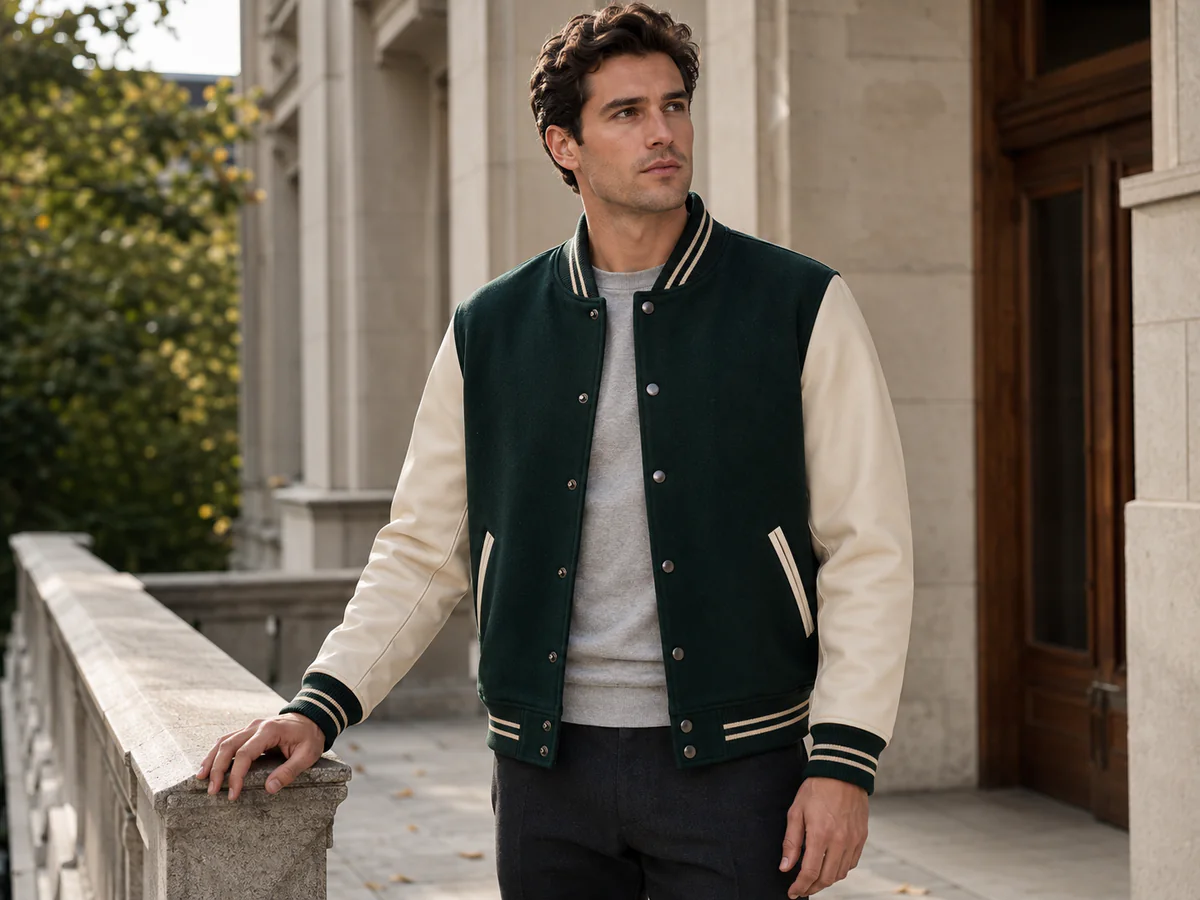
Varsity Jacket
Silhouette: Structured body with contrast sleeve, rib collar, cuff and hem; defined shoulder and bold silhouette.
Recommended Shell: Wool blend, melton body; PU or synthetic sleeve; project-specific body/sleeve combinations.
Typical Construction: Lined; snap or button front; rib collar, cuff and hem; internal and welt pockets; optional embroidery and chenille decoration.
Best For: Varsity, collegiate and heritage streetwear collections with strong brand identity.
Key Development Points: Body-to-sleeve contrast, rib proportion across sizes, snap spacing, lining coordination and decoration placement.
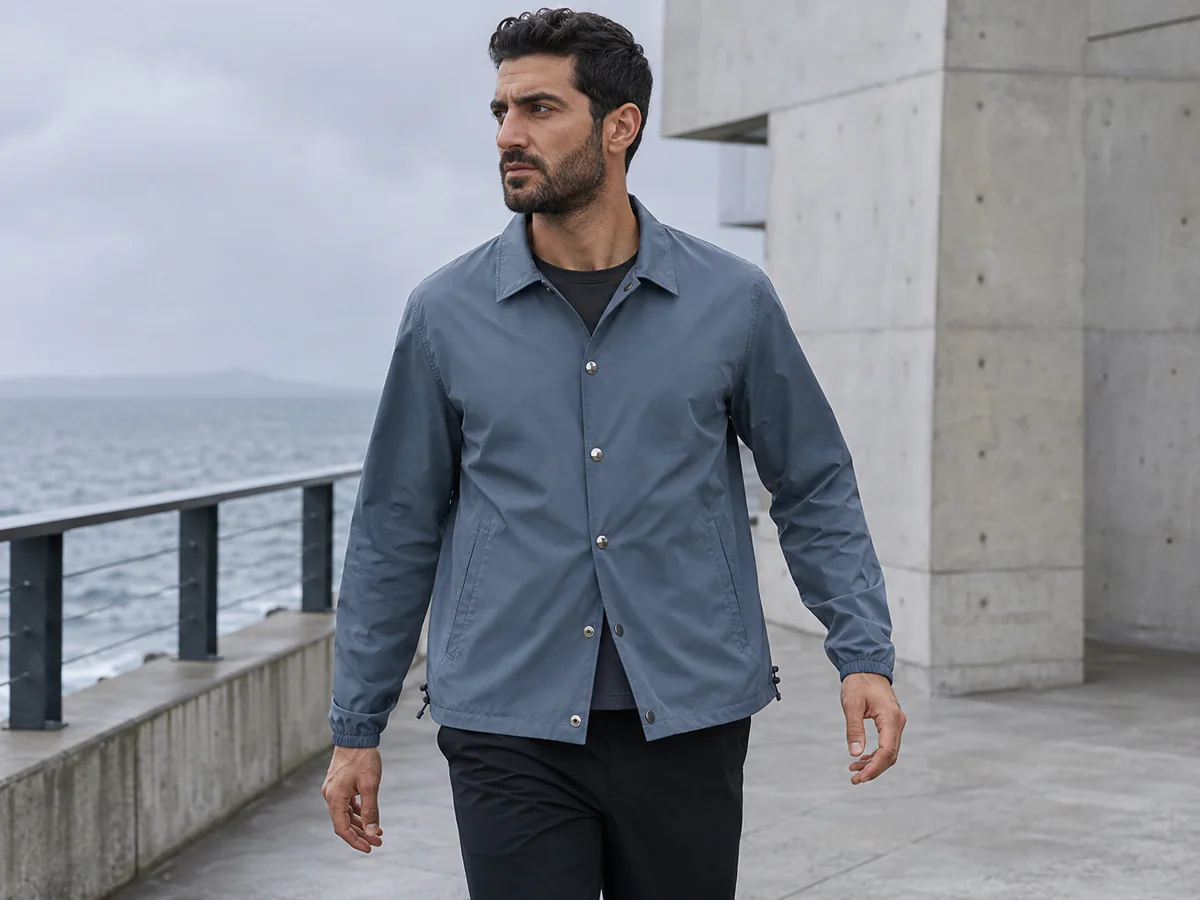
Coach Jacket / Windbreaker
Silhouette: Relaxed, straight through the body with snap or zipper front; lightweight construction.
Recommended Shell: Nylon, polyester or lightweight woven; project-specific lightweight shell fabrics.
Typical Construction: Unlined or mesh-lined; snap or zipper front; pointed or spread collar; elastic or straight cuff; adjustable hem.
Best For: Lightweight layering pieces, windbreaker collections and brand outerwear with logo placement.
Key Development Points: Fabric weight and drape, collar construction, snap or zipper function, hem adjustment and lining breathability.
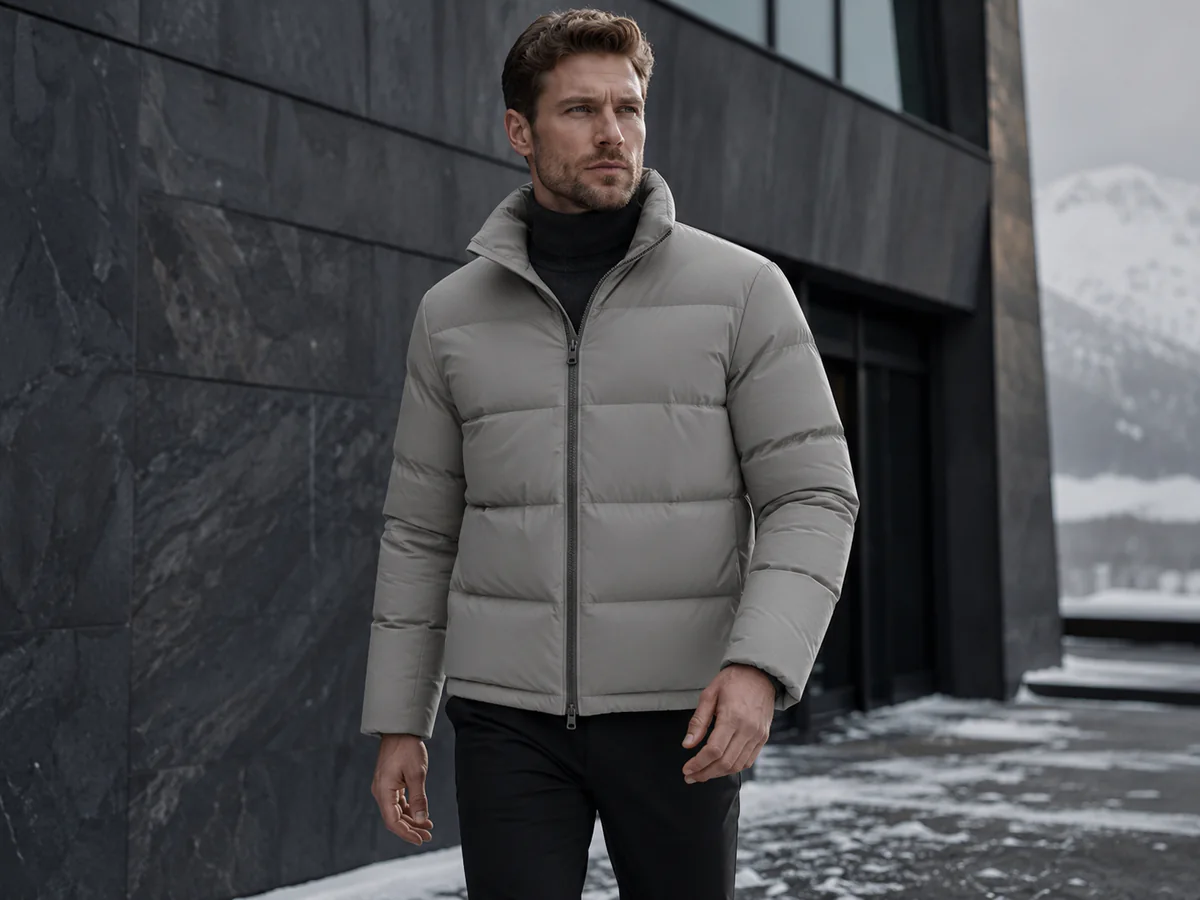
Padded / Puffer Jacket
Silhouette: Volume controlled by filling weight, quilting pattern and baffle construction; defined silhouette through construction.
Recommended Shell: Nylon, polyester or ripstop with filling-compatible construction.
Typical Construction: Padded or down-filled; horizontal, diamond or channel quilting; zipper or snap front; lined; hood option; internal and external pockets.
Best For: Cold-weather streetwear, padded outerwear collections and seasonal weight pieces.
Key Development Points: Filling type and weight, quilting pattern, baffle construction, shell fabric density, lining compatibility, cold-spot control and wash behaviour.

Overshirt / Lightweight Jacket
Silhouette: Shirt-jacket hybrid with structured collar, chest pockets and lighter construction.
Recommended Shell: Cotton twill, lightweight canvas, brushed cotton or project-specific shirting-weight fabrics.
Typical Construction: Lightly lined or unlined; button front; chest pockets; shirt collar; straight or curved hem; optional interior finish.
Best For: Transitional layering, shirt-jacket collections and brands needing lighter outerwear options.
Key Development Points: Fabric weight, collar construction, pocket proportion, hem finish and interior appearance.
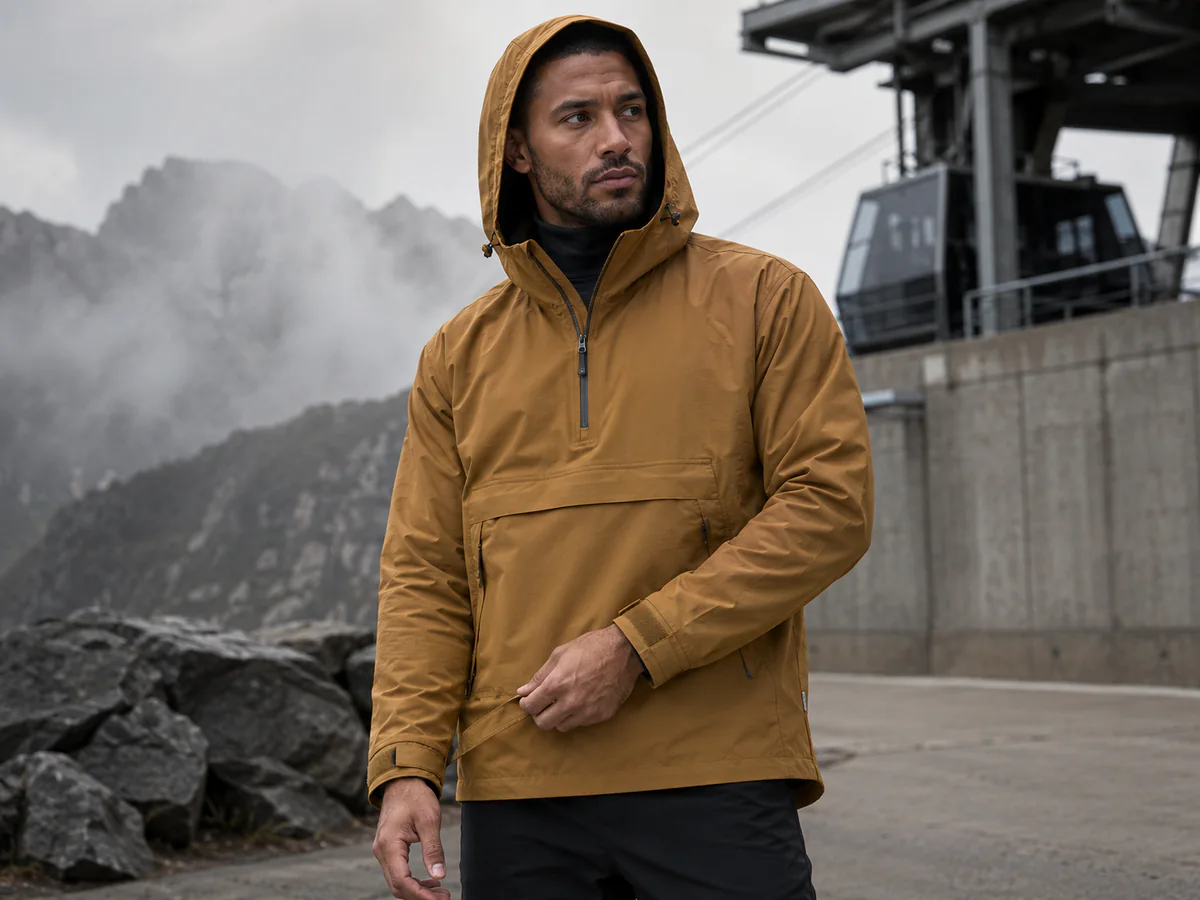
Technical Shell / Anorak
Silhouette: Functional silhouette with hood, front pocket and pullover or zip construction.
Recommended Shell: Ripstop, nylon, polyester or performance woven; project-specific technical fabrics.
Typical Construction: Mesh or taffeta lining; fixed or adjustable hood; zip or pullover front; front pocket; cuff adjustment; hem drawcord.
Best For: Technical streetwear, outdoor-inspired collections and functional outerwear requiring weather-ready construction.
Key Development Points: Seam construction, hood adjustment, pocket function, ventilation placement and fabric performance.
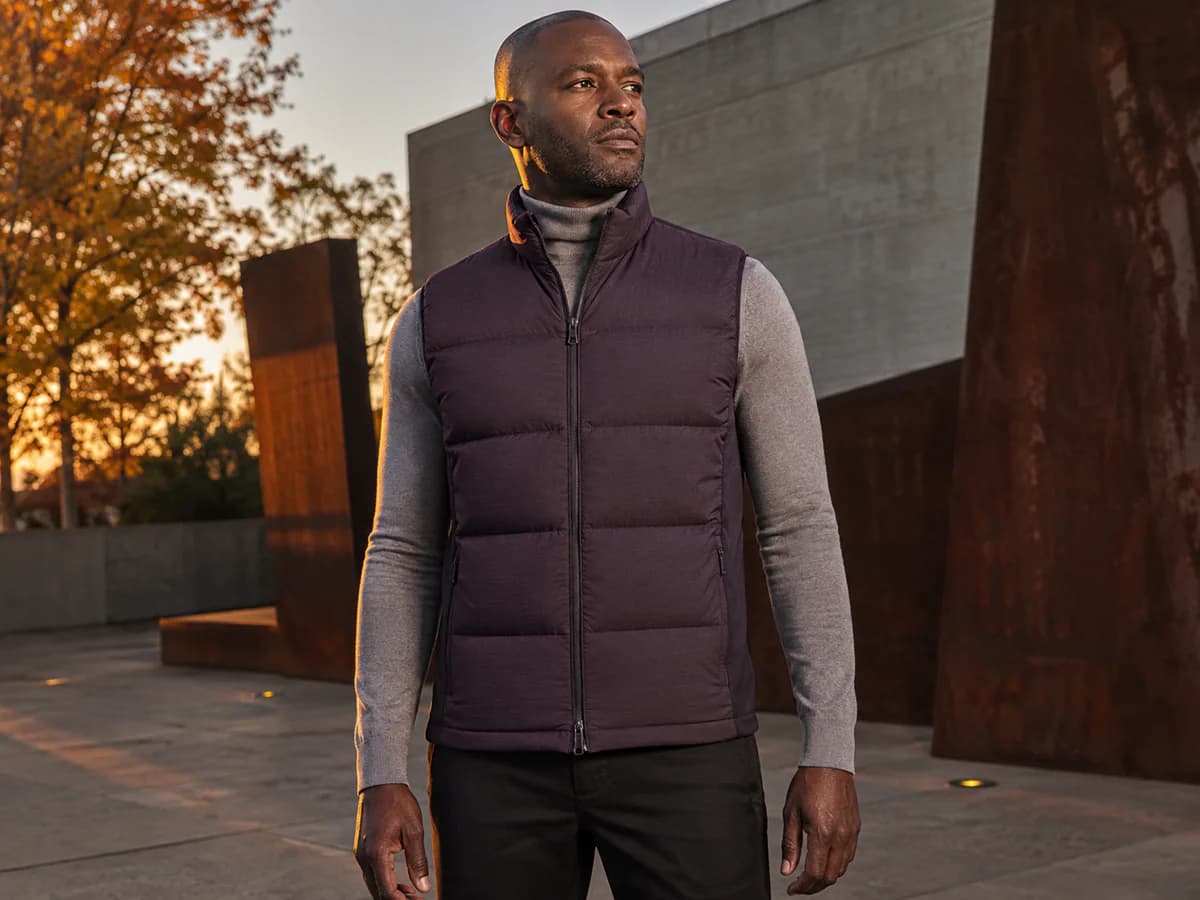
Vest / Gilet
Silhouette: Sleeveless body with defined armhole, front closure and controlled body volume.
Recommended Shell: Nylon, polyester, ripstop, wool blend or project-specific shell fabric.
Typical Construction: Padded or lightweight filling; zipper or snap front; lined; external and internal pockets; rib or straight armhole finish; optional hood.
Best For: Layering pieces, seasonal collections and brands needing sleeveless outerwear options.
Key Development Points: Armhole finish and shape, body volume, filling distribution, closure length and pocket access.
Looking for another jacket or outerwear direction? Share your reference, sample or tech pack and our team will review the most practical development route.
SEND YOUR BRIEF →SHELL, LINING & INSULATION
Build the jacket from the outside in.
SHELL
Controls appearance, surface character and first-line protection.
INSULATION
Controls loft, warmth direction, thickness and internal volume.
LINING
Controls interior finish, movement, comfort and layer compatibility.
SHELL FABRIC DIRECTIONS
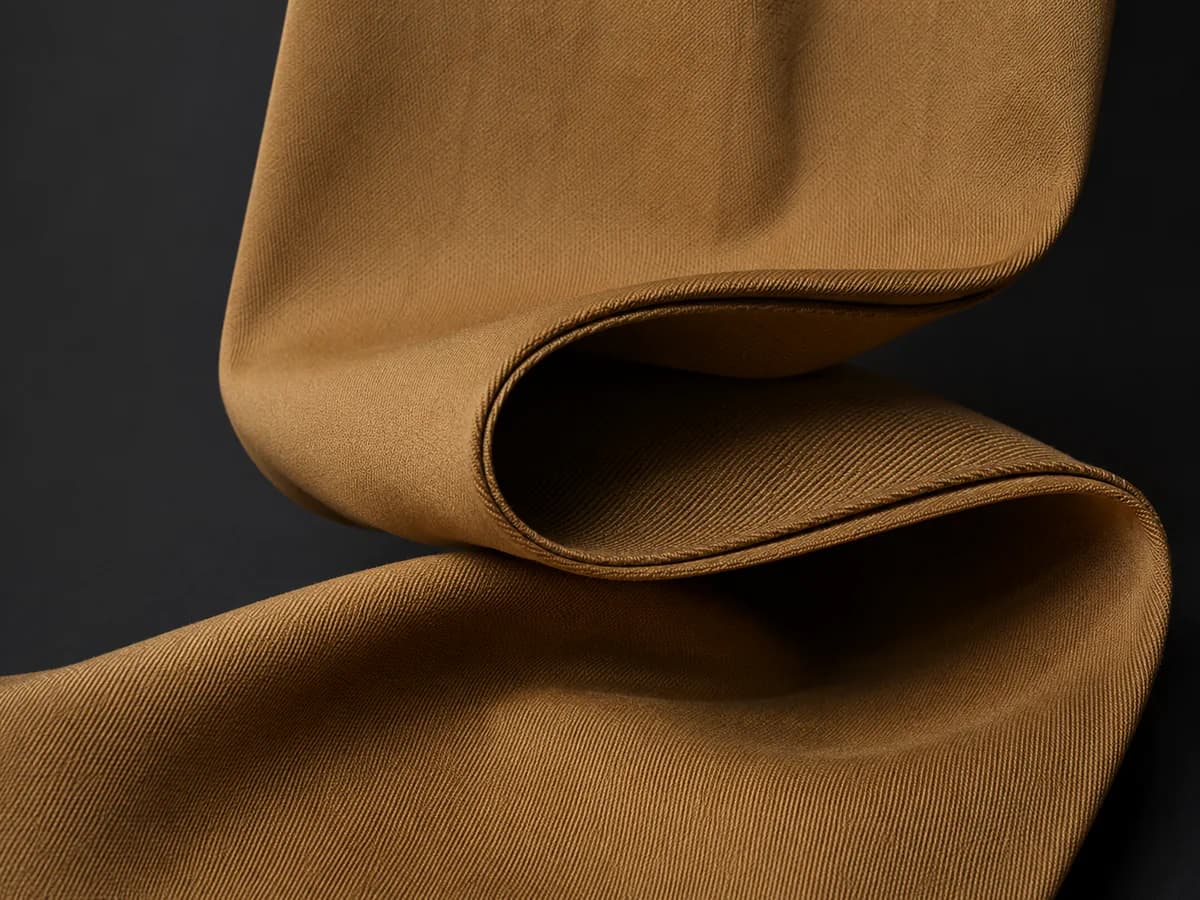
Cotton Twill
Surface / Structure: Diagonal weave structure with natural surface character and reliable drape.
Best For: Workwear, chore jackets, overshirts and structured streetwear outerwear.
Layer Compatibility: Works with lightweight lining; compatible with light padding where structure allows.
Construction Consideration: Confirm weight, weave density, shrinkage, colour fastness and wash behaviour.
Confirmation Required: Weight, composition, colour, shrinkage, surface finish and wash result.
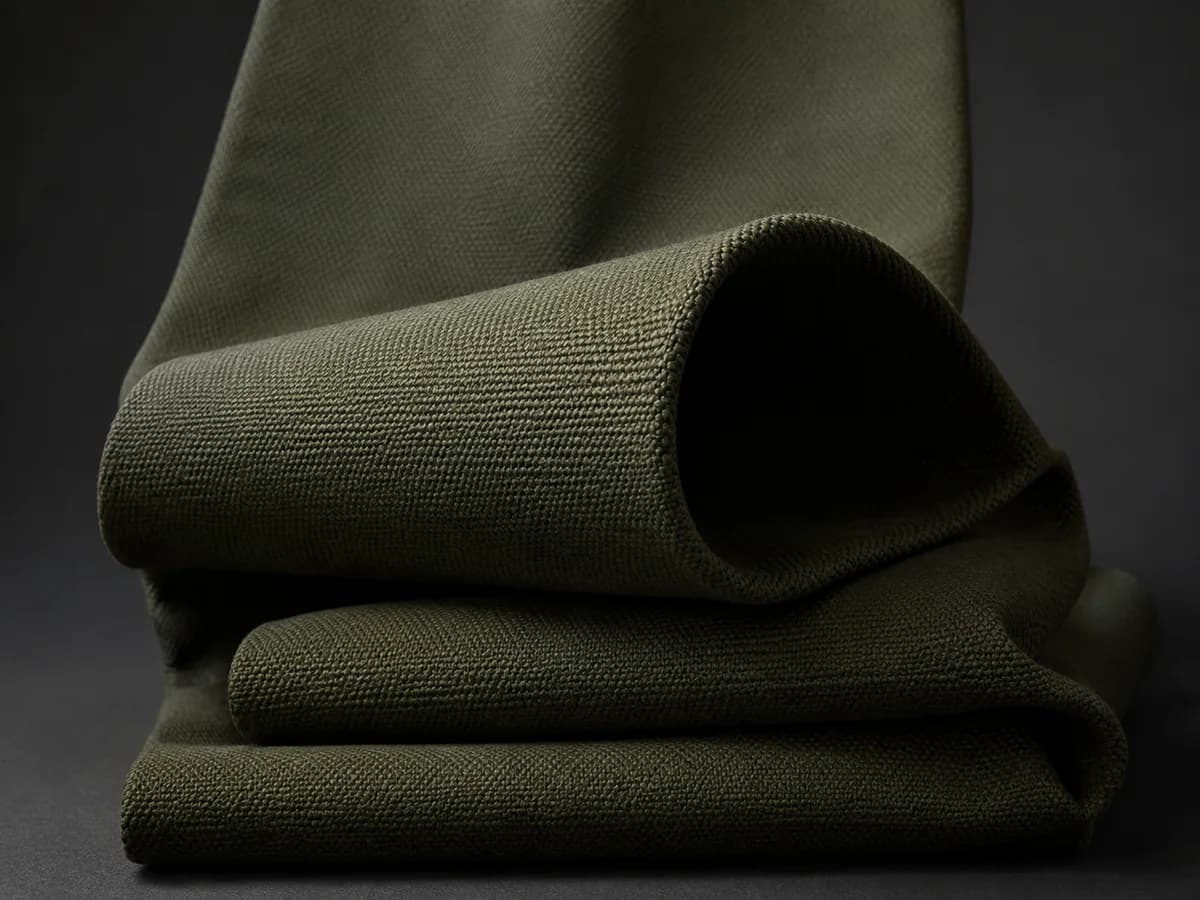
Canvas / Duck Canvas
Surface / Structure: Plain-weave, dense and structured with strong body and visible surface texture.
Best For: Heavyweight workwear jackets, chore coats and structured utility outerwear.
Layer Compatibility: Typically unlined or lightly lined; heavy canvas may not require padding.
Construction Consideration: Confirm weight, stiffness, shrinkage, seam bulk and wash compatibility.
Confirmation Required: Weight, stiffness, shrinkage, seam construction, wash result and wearing comfort.
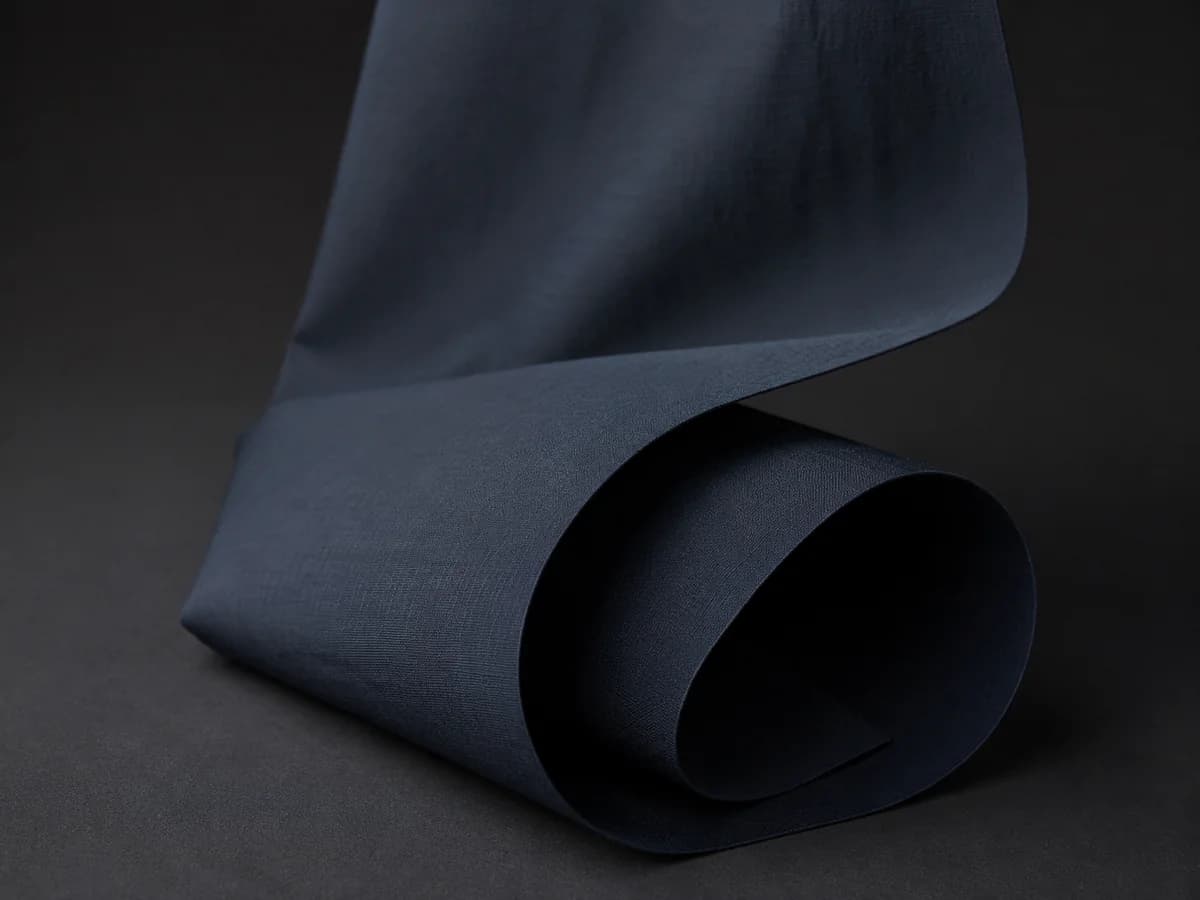
Nylon / Taslan
Surface / Structure: Smooth, lightweight and durable with varied surface finish according to yarn and weave.
Best For: Bombers, windbreakers, puffers and technical outerwear directions.
Layer Compatibility: Highly compatible with lining, padding and down filling; confirm density for filling retention.
Construction Consideration: Confirm weight, density, weave, colour, coating, water-repellent finish and wash behaviour.
Confirmation Required: Weight, density, coating, colour, filling compatibility and functional finish requirements.
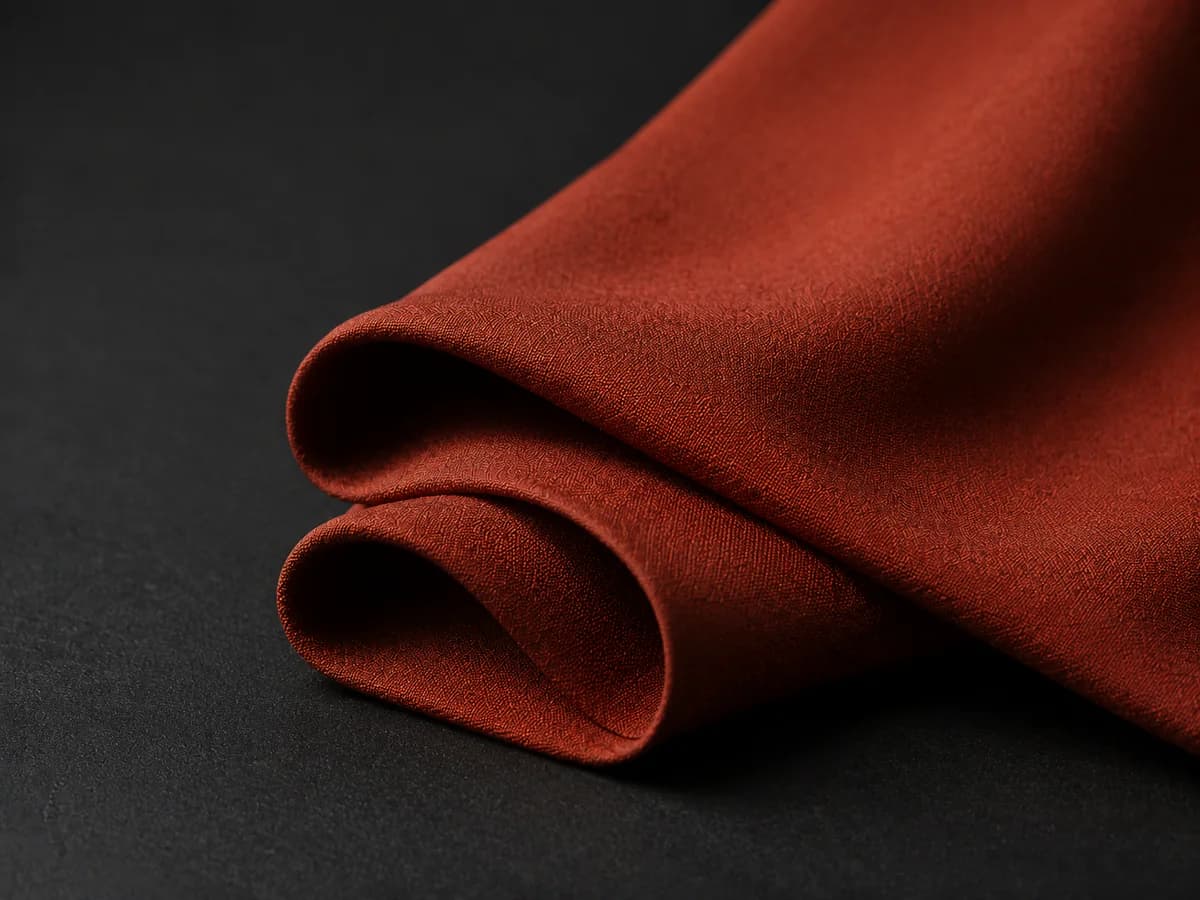
Polyester Woven
Surface / Structure: Versatile, colour-stable and cost-efficient with controlled surface character.
Best For: Windbreakers, coach jackets, lightweight outerwear and commercial programs.
Layer Compatibility: Compatible with mesh lining, taffeta lining and lightweight padding.
Construction Consideration: Confirm weight, weave, colour, finish, shrinkage and decoration compatibility.
Confirmation Required: Weight, weave, colour, finish, lining compatibility and decoration method.
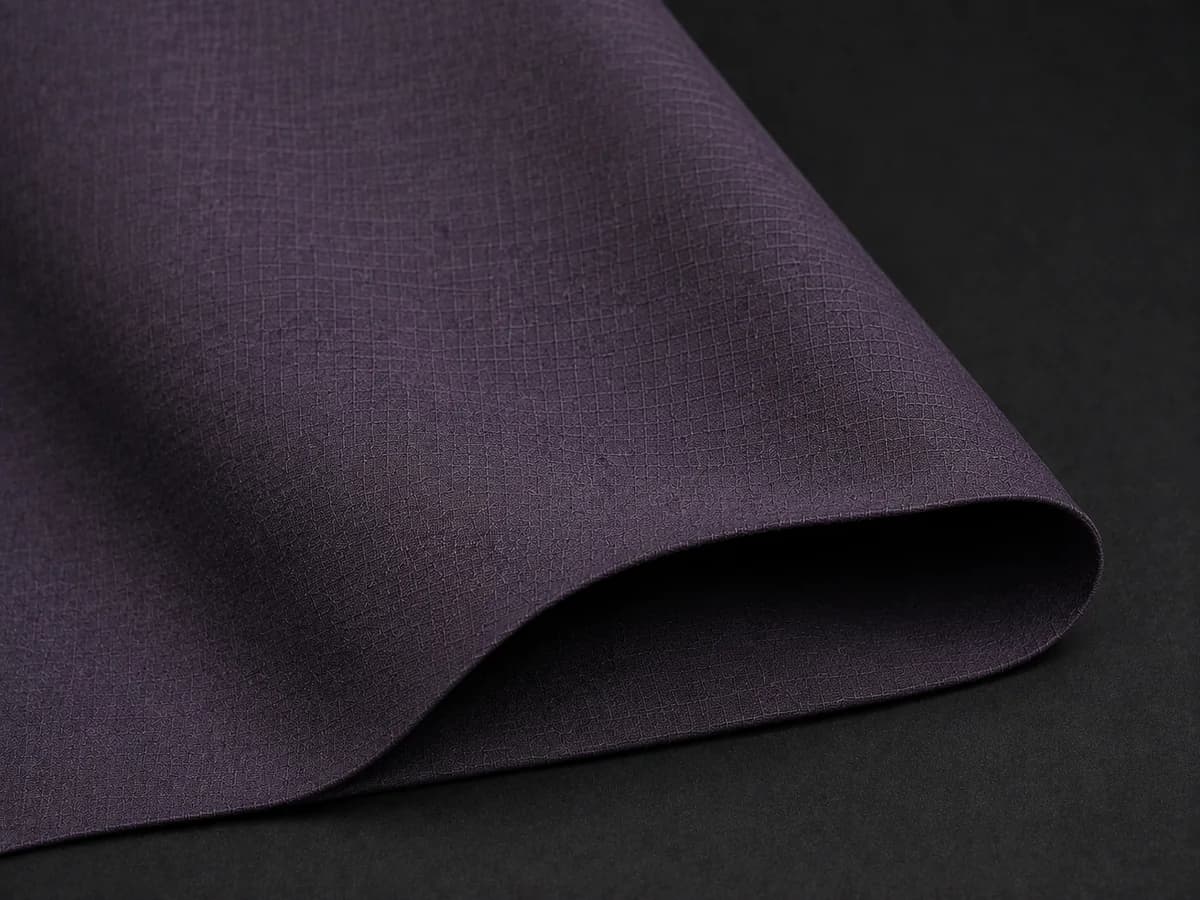
Ripstop
Surface / Structure: Reinforced grid structure for tear resistance with lightweight body.
Best For: Puffers, technical shells, lightweight outerwear and functional streetwear.
Layer Compatibility: Compatible with lining and filling; grid may be visible through light colours.
Construction Consideration: Confirm grid density, weight, coating, colour, filling compatibility and seam construction.
Confirmation Required: Grid visibility, weight, coating, colour, filling retention and wash result.
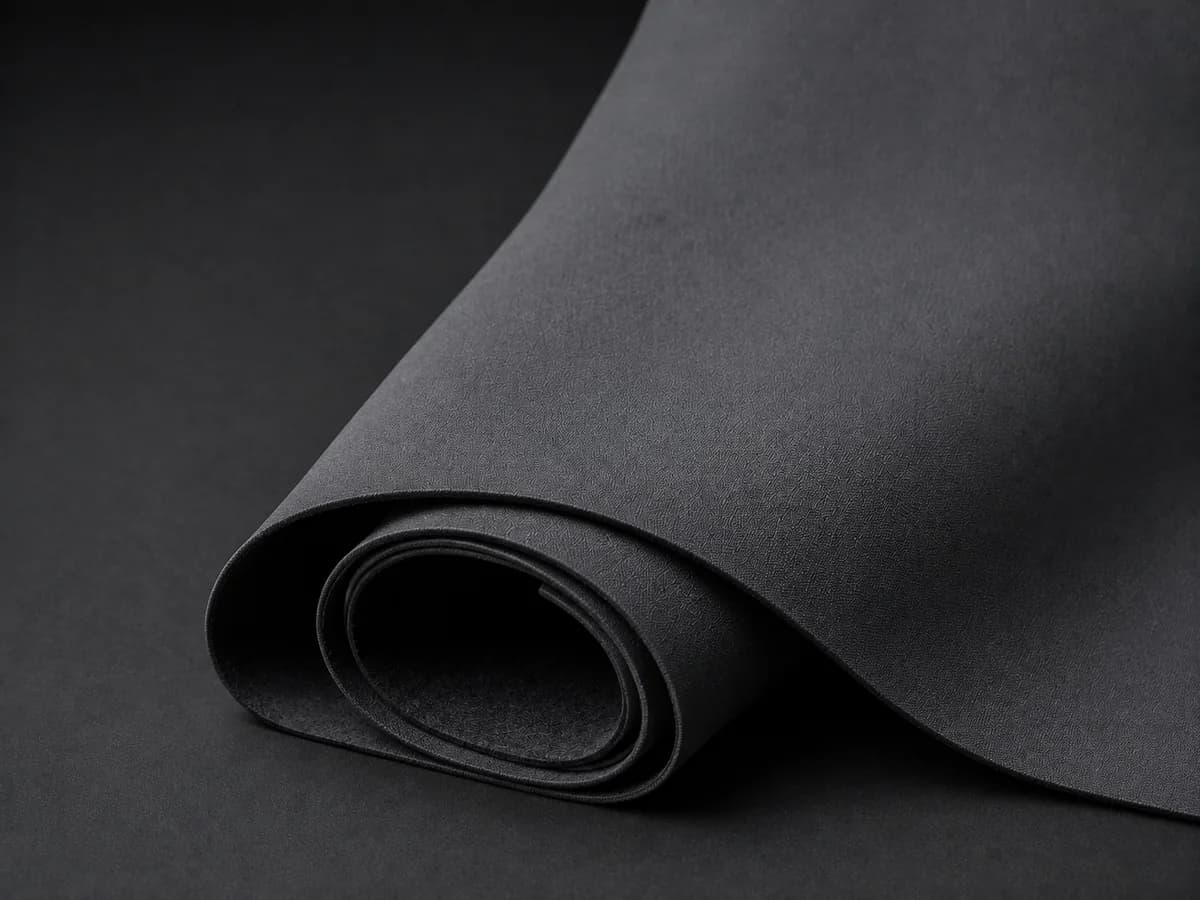
Softshell Direction
Surface / Structure: Composite or bonded construction with varied surface and interior characteristics.
Best For: Technical outerwear, performance streetwear and styles requiring stretch or weather resistance.
Layer Compatibility: Construction may combine shell, membrane and interior in one fabric; confirm layer compatibility.
Construction Consideration: Confirm composition, stretch, breathability, water resistance, seam compatibility and wash behaviour.
Confirmation Required: Composition, performance, stretch, seam construction, layer compatibility and testing requirements.
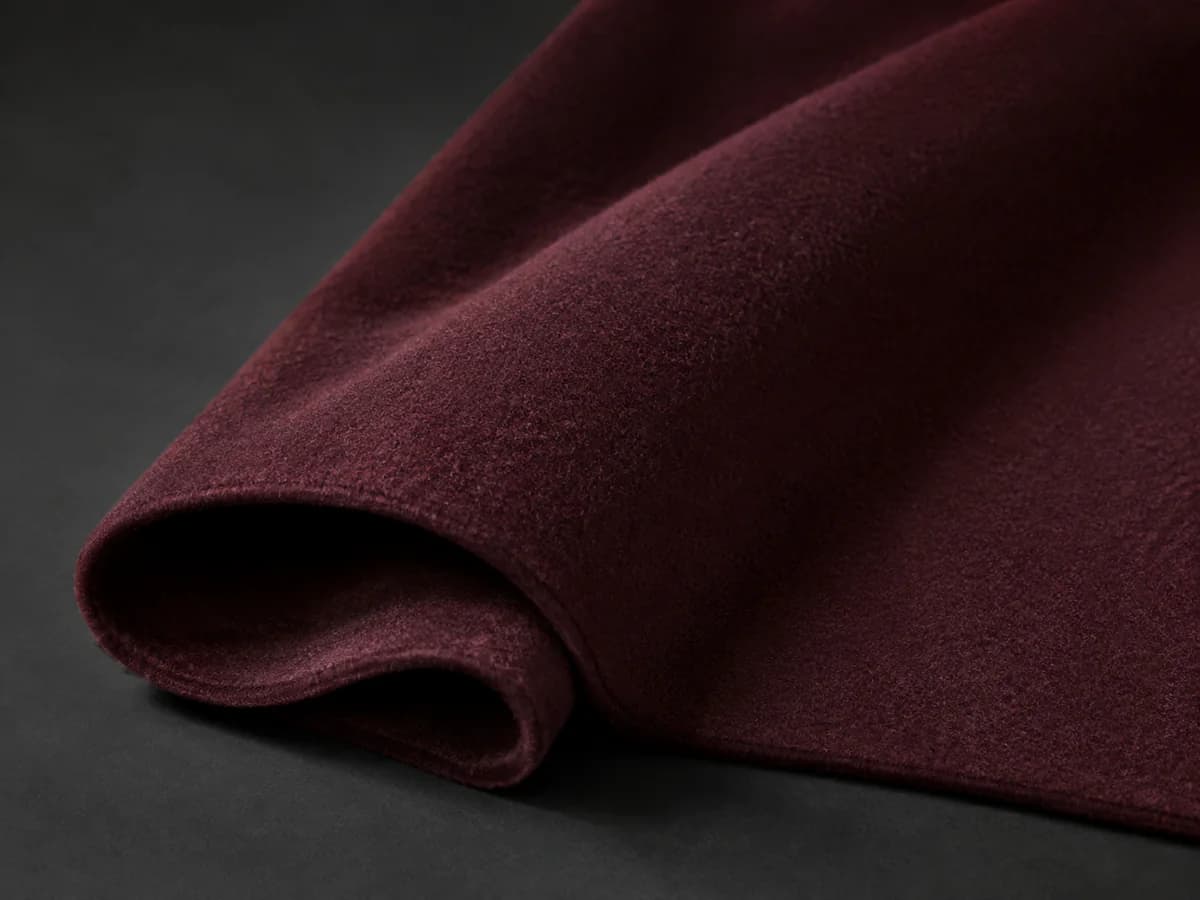
Wool Blend / Melton
Surface / Structure: Dense, felted or woven wool-rich surface with natural warmth and structured body.
Best For: Varsity jackets, peacoats, structured outerwear and premium streetwear pieces.
Layer Compatibility: Typically lined; may require specific lining and interlining for structure and comfort.
Construction Consideration: Confirm wool content, weight, density, colour, shrinkage, lining compatibility and care requirements.
Confirmation Required: Composition, weight, colour, shrinkage, lining, interlining and care labelling.
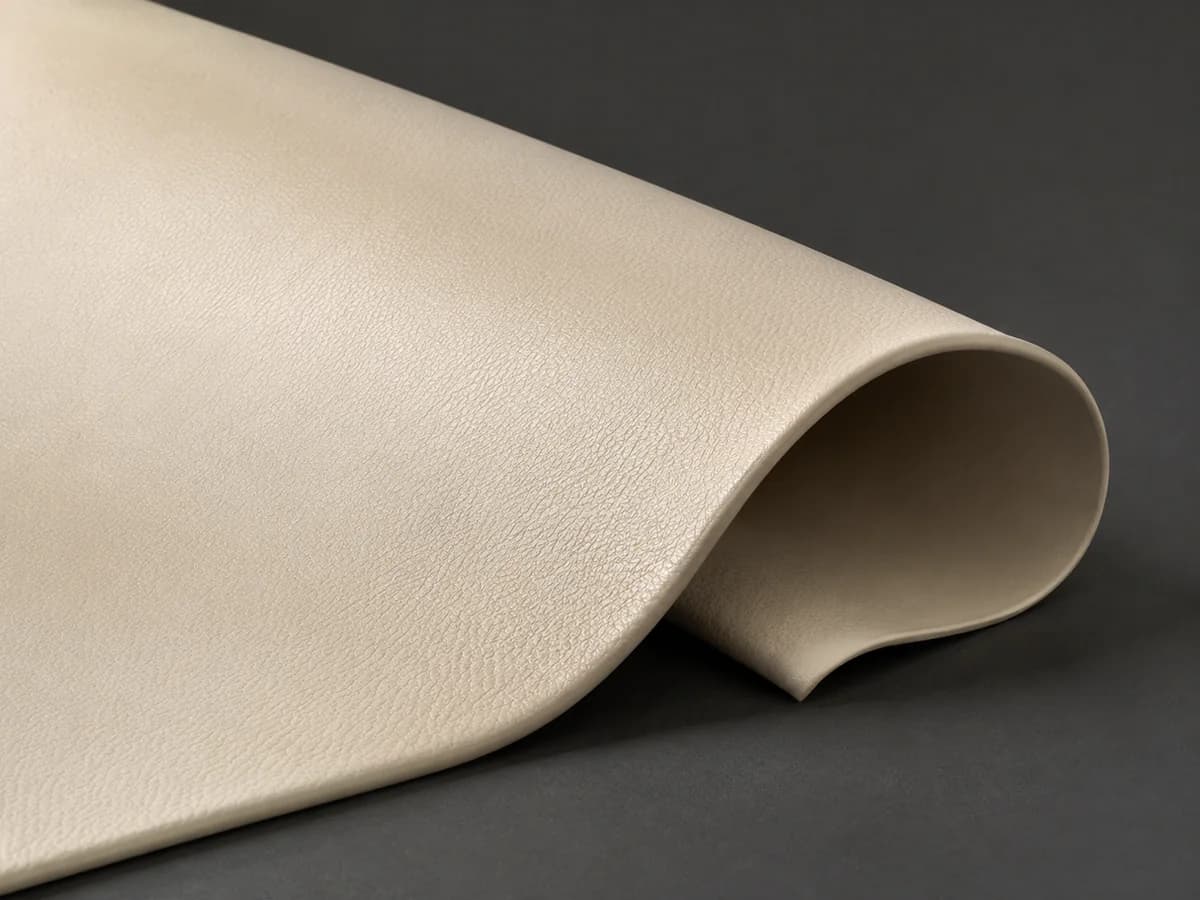
PU / Leather Direction
Surface / Structure: Synthetic or genuine leather surface with distinct visual and tactile character.
Best For: Varsity sleeves, statement outerwear and collections where leather character is a design requirement.
Layer Compatibility: Confirm lining compatibility for leather; PU may have specific backing and seam requirements.
Construction Consideration: Confirm material type, thickness, colour, seam construction, needle requirements, lining compatibility and care.
Confirmation Required: Material type and availability, thickness, colour, construction method, lining, care and minimums.
LINING DIRECTIONS
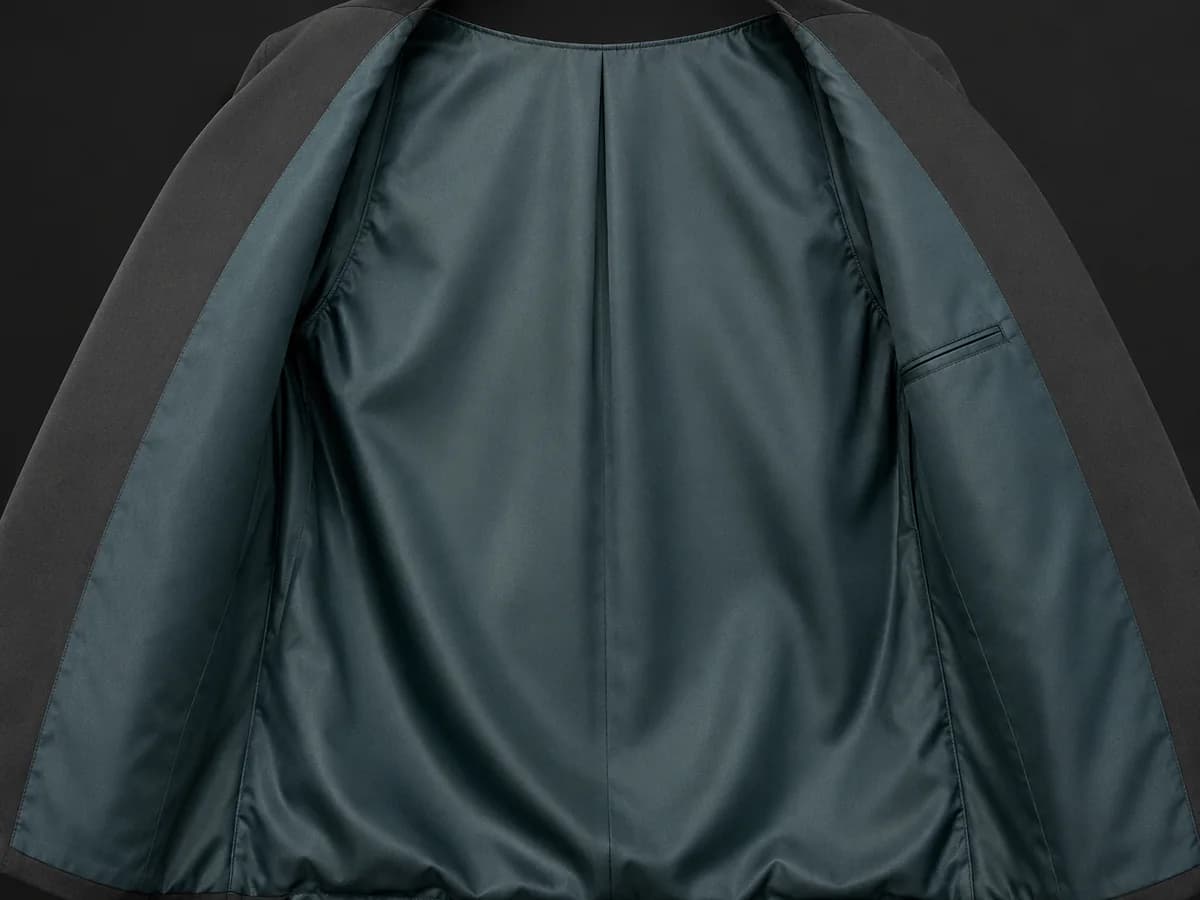
Polyester Taffeta Lining
Smooth, lightweight and low-friction for easy layering over inner garments.
Best For: Most jacket and outerwear types requiring clean interior finish.
Confirm: Weight, colour, static control, breathability and wash compatibility.
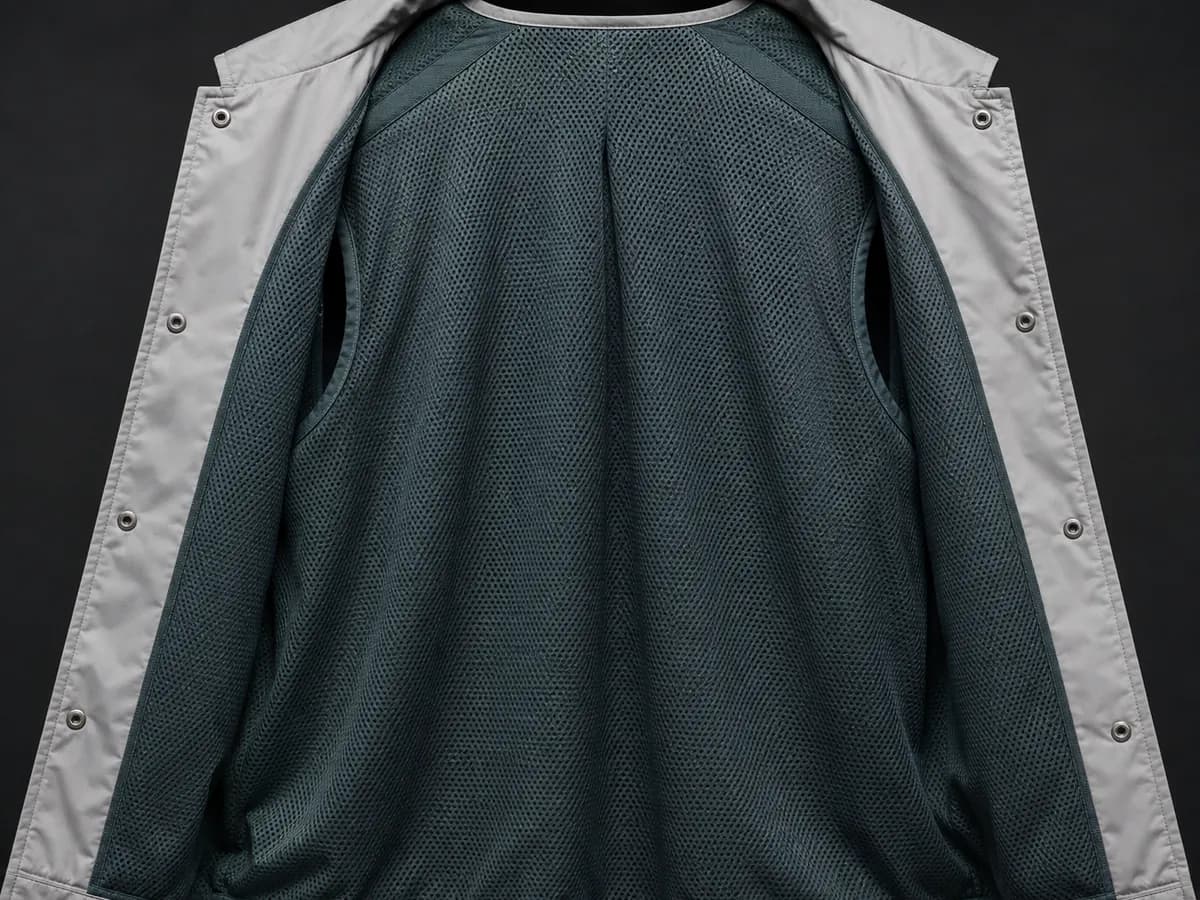
Mesh Lining
Open structure for ventilation and reduced internal heat build-up.
Best For: Windbreakers, lightweight outerwear and styles requiring breathability.
Confirm: Mesh weight, colour, breathability, snagging resistance and layer compatibility.
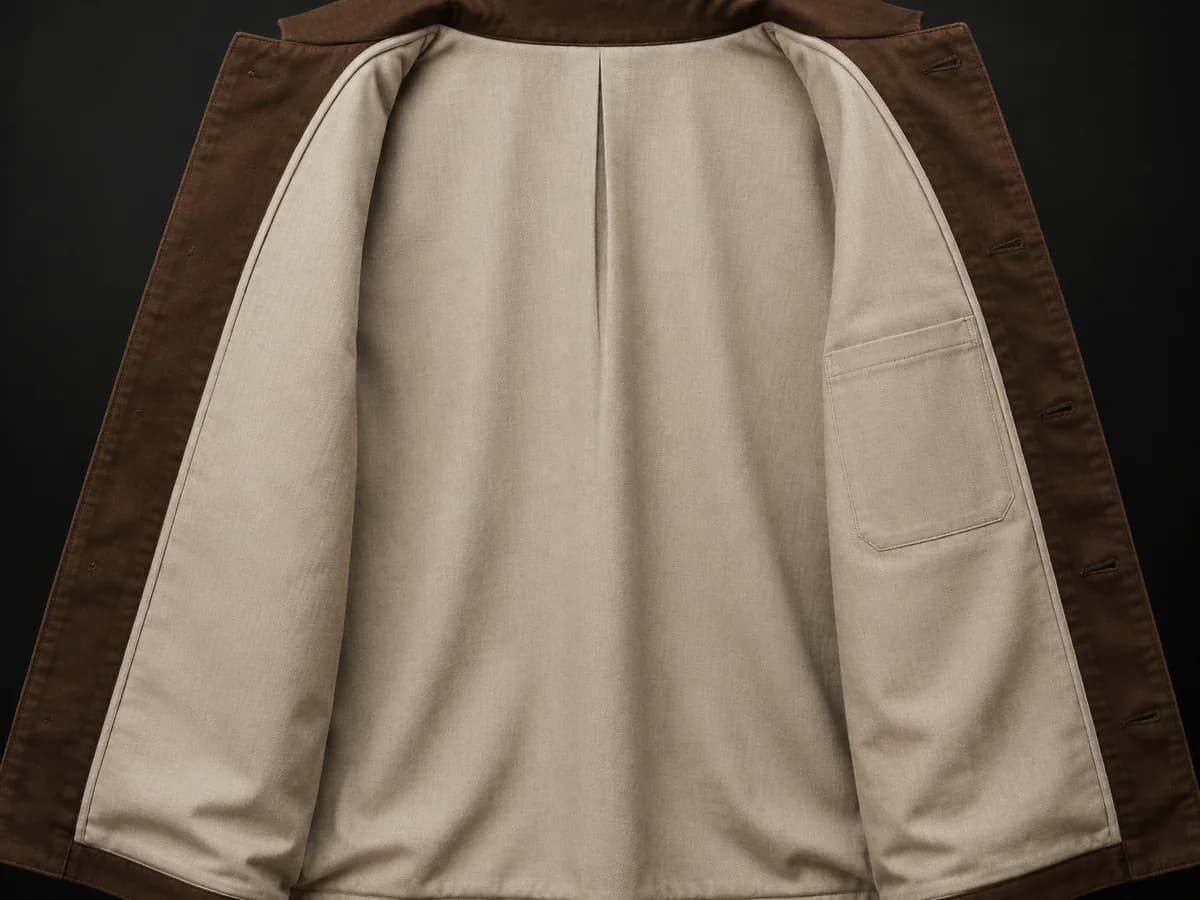
Cotton / Blended Lining
Natural hand feel with comfort-oriented interior finish.
Best For: Premium outerwear, workwear and styles where interior feel is a brand characteristic.
Confirm: Composition, weight, shrinkage, colour fastness and friction with inner layers.
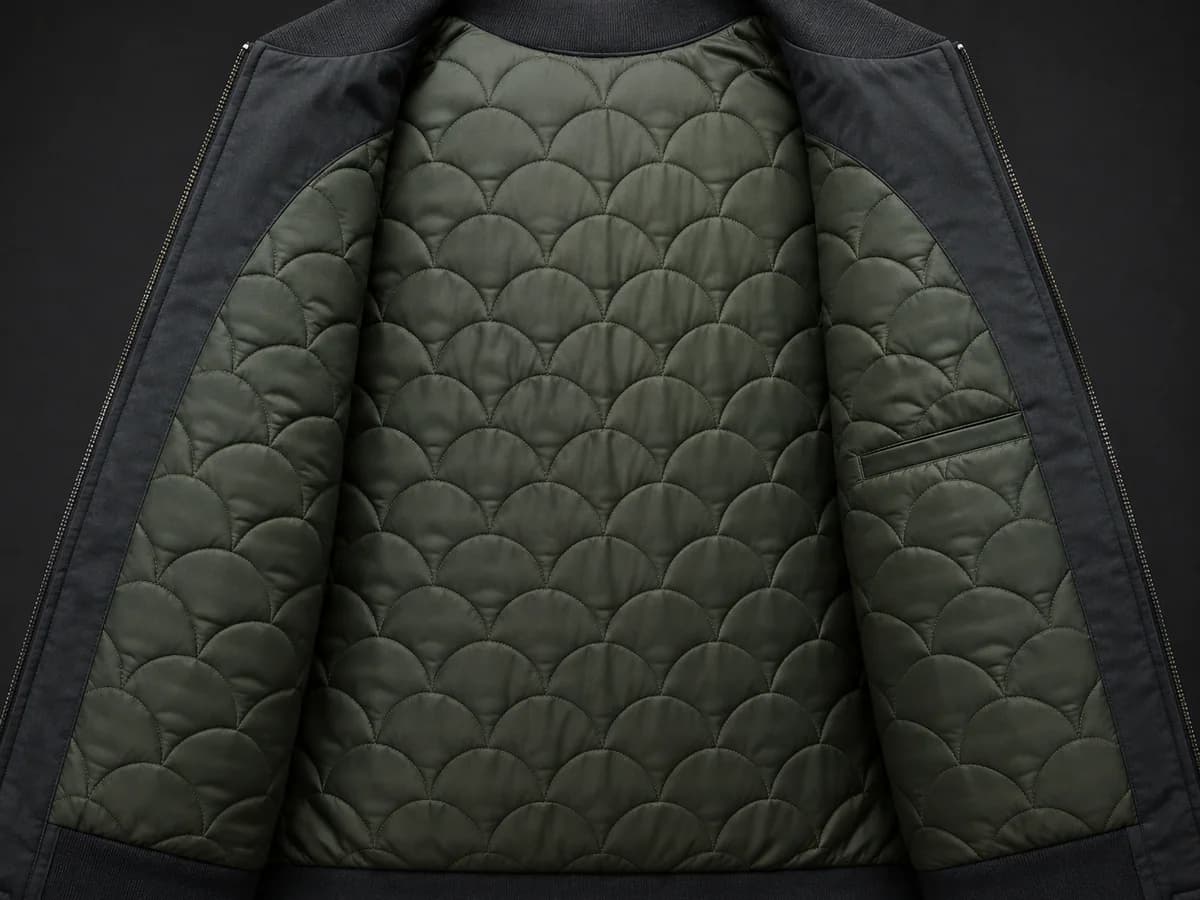
Quilted Lining
Lining with integrated lightweight padding for added warmth without full insulation.
Best For: Bombers, varsity jackets and outerwear requiring interior warmth direction.
Confirm: Quilting pattern, filling weight, lining fabric, thickness and wash compatibility.
INSULATION DIRECTIONS
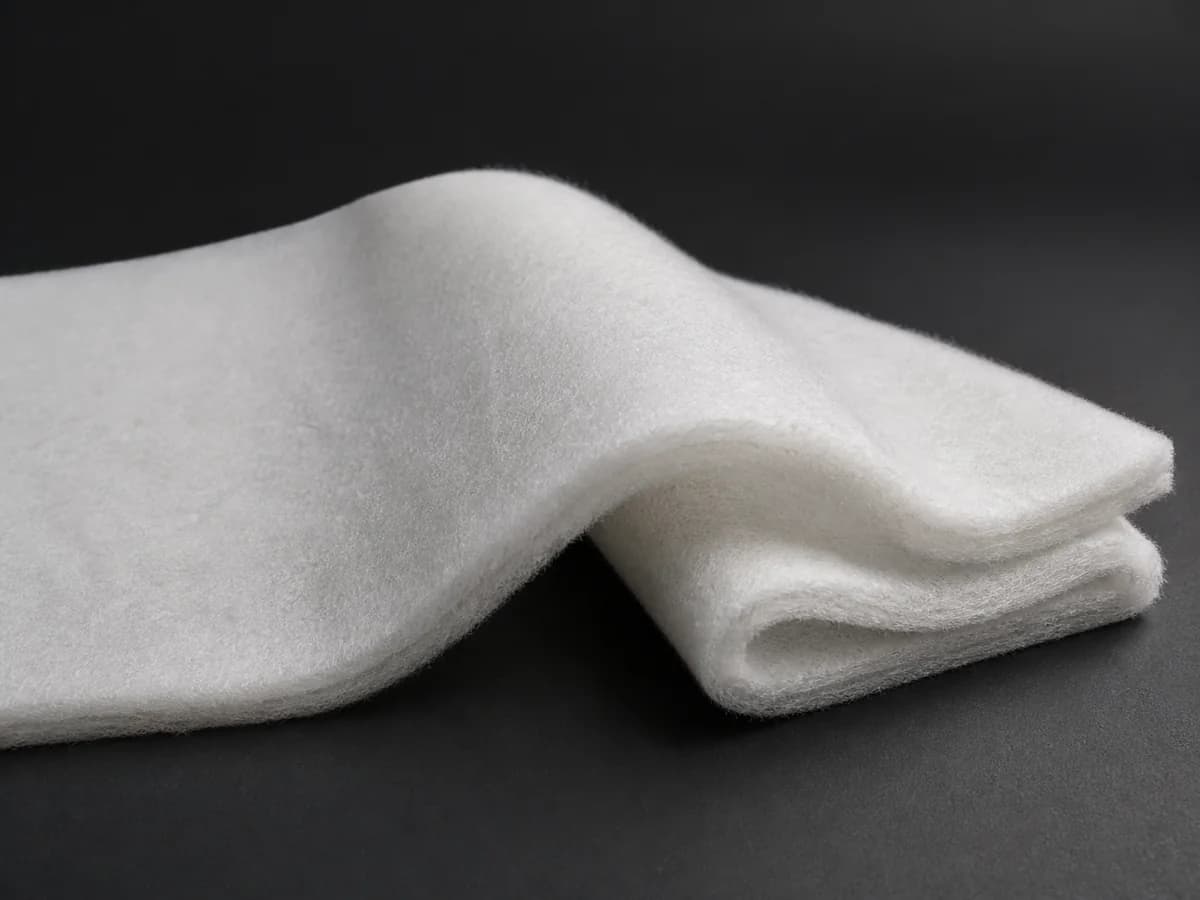
Lightweight Polyester Padding
Low-loft, lightweight polyester filling for mild-weather outerwear and lining integration.
Best For: Bombers, coach jackets and transitional outerwear.
Confirm: Weight, loft, distribution, quilting needs and wash behaviour.
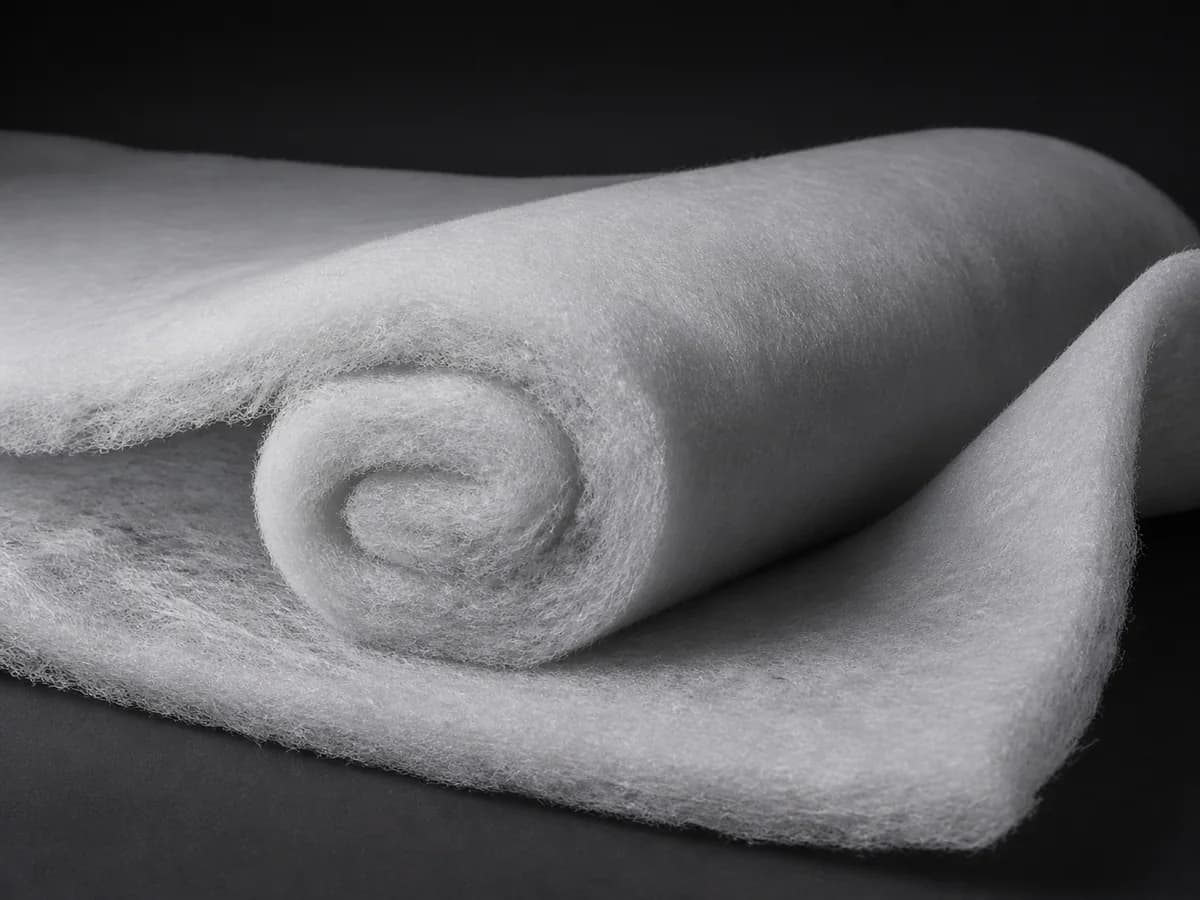
Synthetic Insulation
Medium-to-high loft synthetic filling with warmth retention and moisture resistance.
Best For: Puffer jackets, cold-weather outerwear and styles requiring reliable insulation.
Confirm: Type, weight, loft, breathability, quilting compatibility and performance claims.
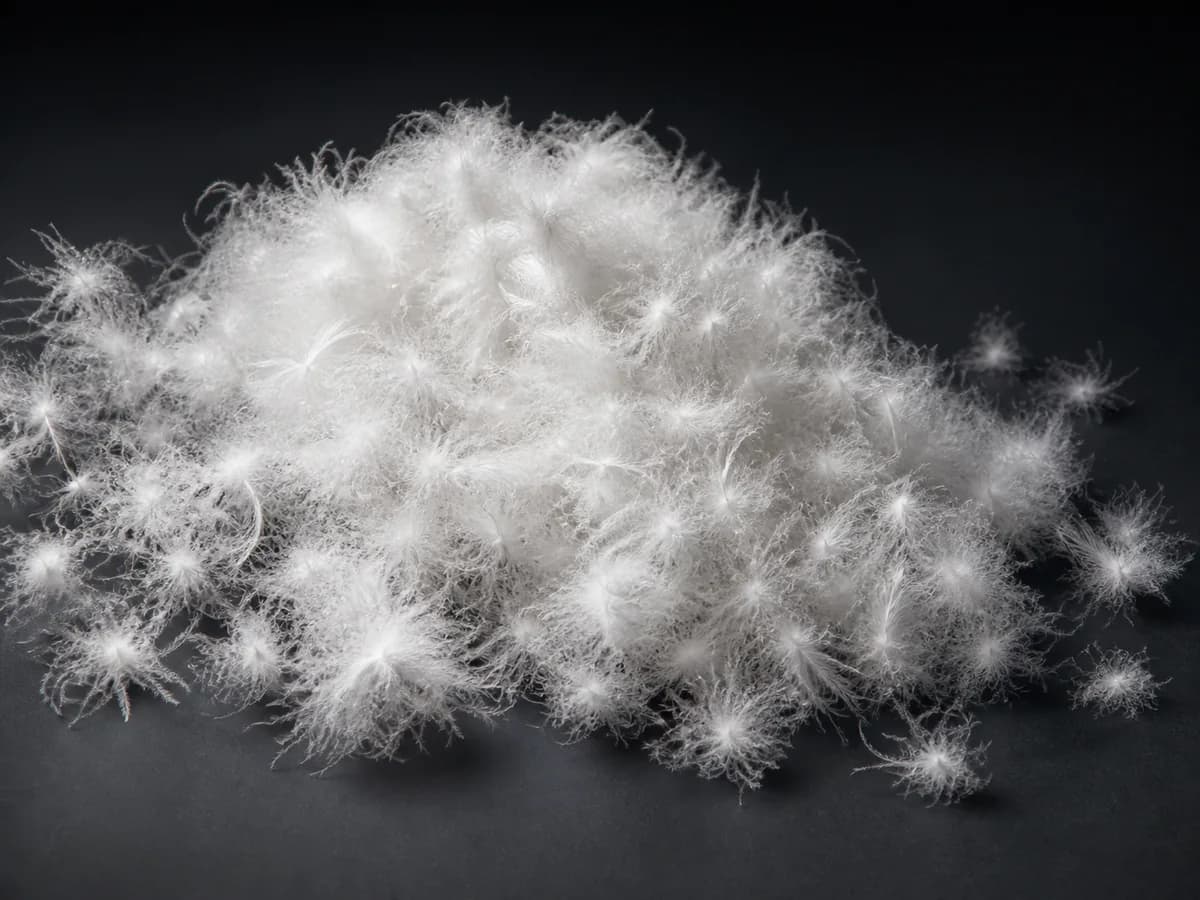
Down Filling Direction
Natural down filling evaluated for fill power, fill weight, down-to-feather ratio and sourcing.
Best For: Premium puffer jackets and outerwear where down fill is a brand requirement.
Confirm: Fill power, fill weight, ratio, sourcing, shell density, quilting pattern and testing requirements.
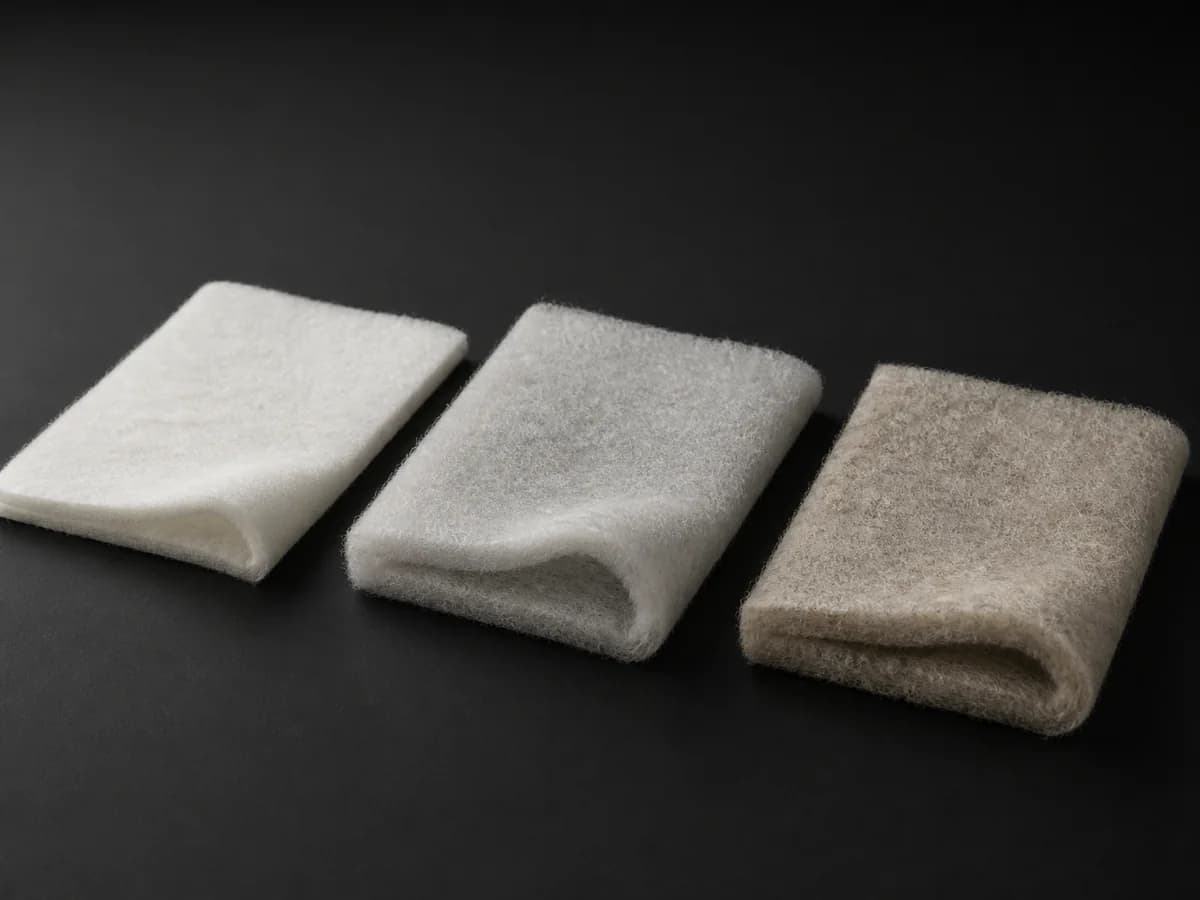
Project-Specific Filling
Specialist or blended filling evaluated according to project performance, weight and cost requirements.
Best For: Projects with specific insulation, sustainability or performance requirements beyond standard options.
Confirm: Composition, performance, availability, minimums, testing and documentation.
Shell, lining and insulation must be reviewed as one system. Composition, weight, shrinkage, colour response, friction, static, wash compatibility and required performance are confirmed per project.
Sustainable Material Directions
Recycled shell, lining or insulation options can be reviewed according to supplier availability and project requirements. Claims and certifications must be supported by valid documentation for the selected material.
FIT & LAYERING
Outerwear must work over the layers underneath.
Jacket and outerwear fit is developed with the intended inner layers in mind. Lining and insulation occupy internal space — every measurement point must account for what is worn inside.
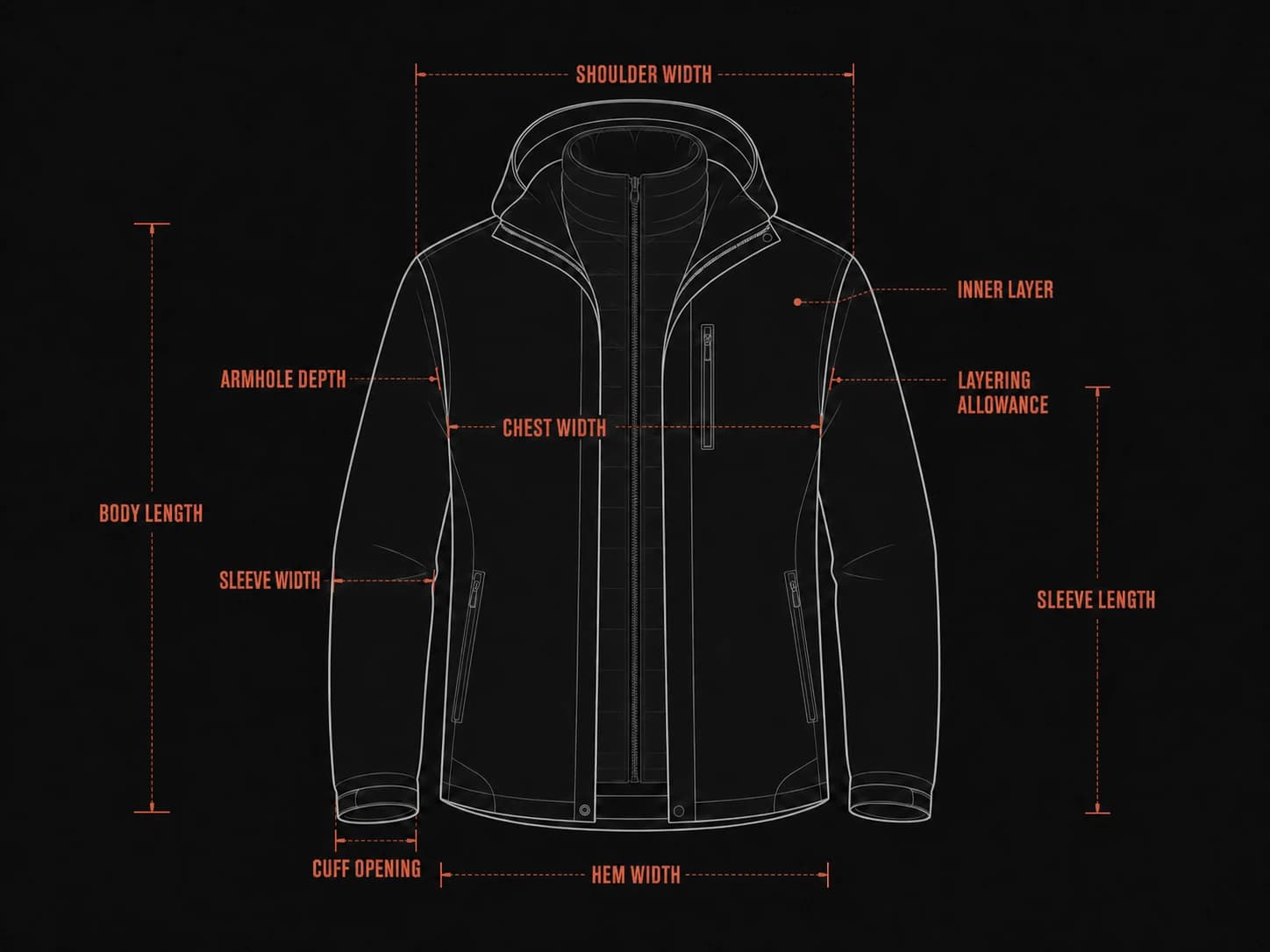
- 01Shoulder Width — Defines the outer frame of the jacket. Must accommodate inner layers without dropping beyond the intended silhouette.
- 02Chest Ease — Controls body volume and movement. Outerwear chest ease accounts for lining, insulation and the layers worn underneath.
- 03Armhole Depth — Deeper armhole allows layering but reduces arm mobility if too deep. Confirmed with the target base layer and mid layer.
- 04Sleeve Shape — Bicep width, elbow room and sleeve taper define arm character and layering comfort. Lining and filling reduce internal sleeve volume.
- 05Body Length — Front and back length establish the jacket's vertical proportion. Back length may differ from front for coverage and movement.
- 06Cuff Opening — Cuff width and closure type affect how the sleeve sits. Rib, elastic, snap or Velcro each behave differently through wear and washing.
- 07Hem Width — Hem width and closure define the lower silhouette. Drawcord, elastic or rib hem each pull the body shape differently.
- 08Layering Allowance — The full measurement specification must account for the intended layers worn inside — T-shirt, hoodie or mid-layer each affect the required internal space.
Final measurements are confirmed against the approved sample and the agreed measurement chart. Chest ease, armhole depth and bicep width affect mobility. Shoulder width, body length and hem width define the overall silhouette. The measurement specification accounts for lining, insulation and the intended layers worn underneath.
COLLAR, HOOD & CUFF
Frame the jacket through the neckline and openings.
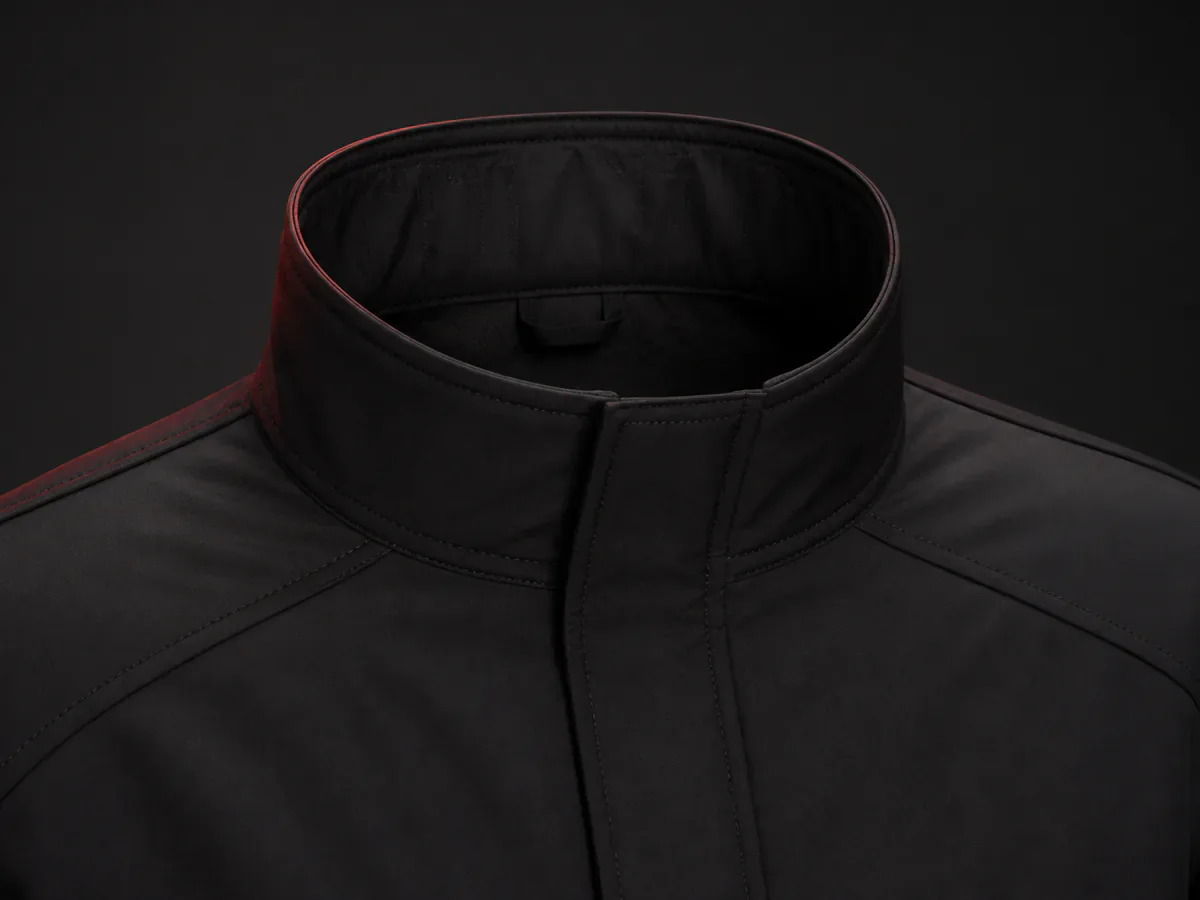
Collars
- Shirt Collar
- Stand Collar
- Rib Collar
- Varsity Rib Collar
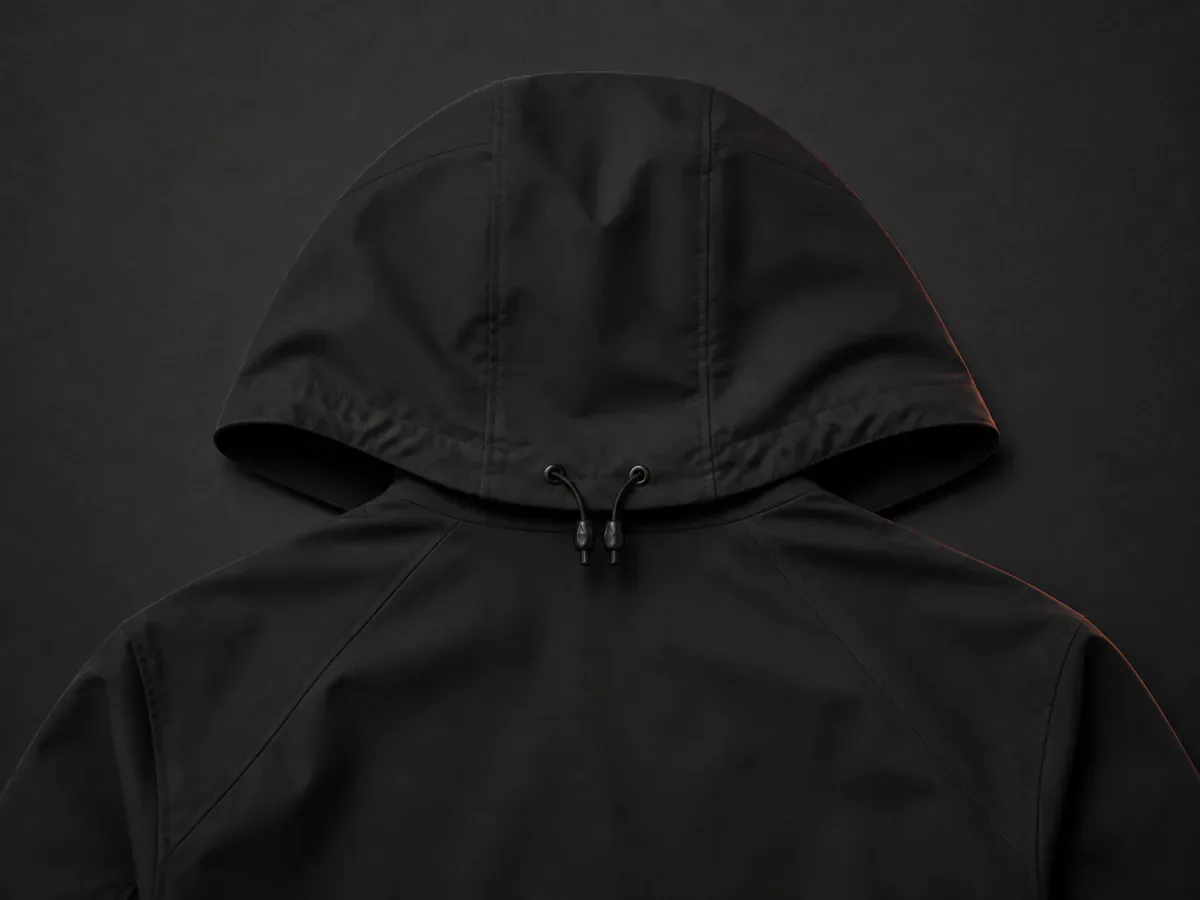
Hoods
- Fixed Hood
- Detachable Hood
- Lined Hood
- Adjustable Hood
- Concealed Hood Direction
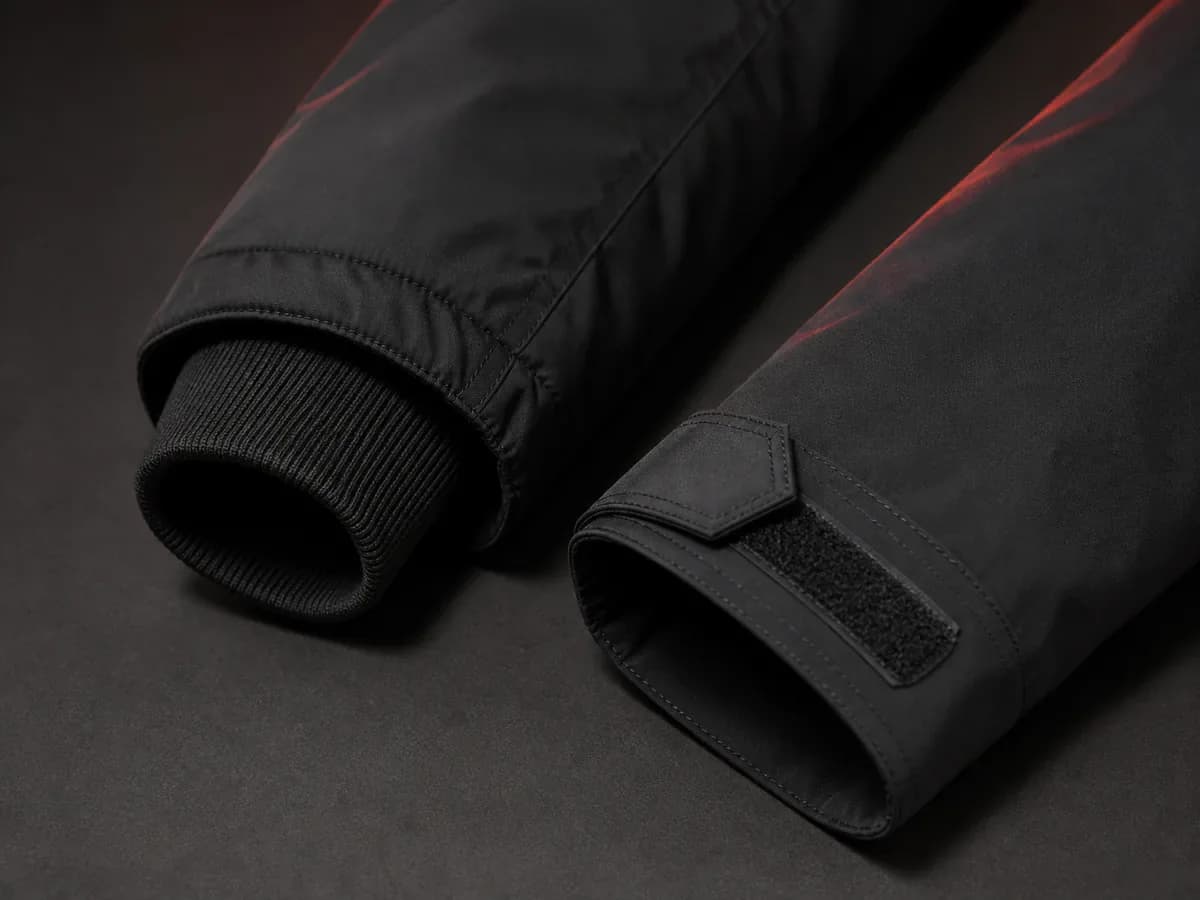
Cuffs
- Rib Cuff
- Elastic Cuff
- Snap-Adjustable Cuff
- Velcro-Adjustable Cuff
- Straight Sleeve Opening
- Inner Storm Cuff
Collar depth and height, hood depth and opening, drawcord configuration, cuff width and recovery must be coordinated with the overall fit, fabric selection and intended use. Each opening affects how the jacket sits, moves and layers.
CLOSURES & POCKETS
Choose closures and pockets for function, balance and brand character.
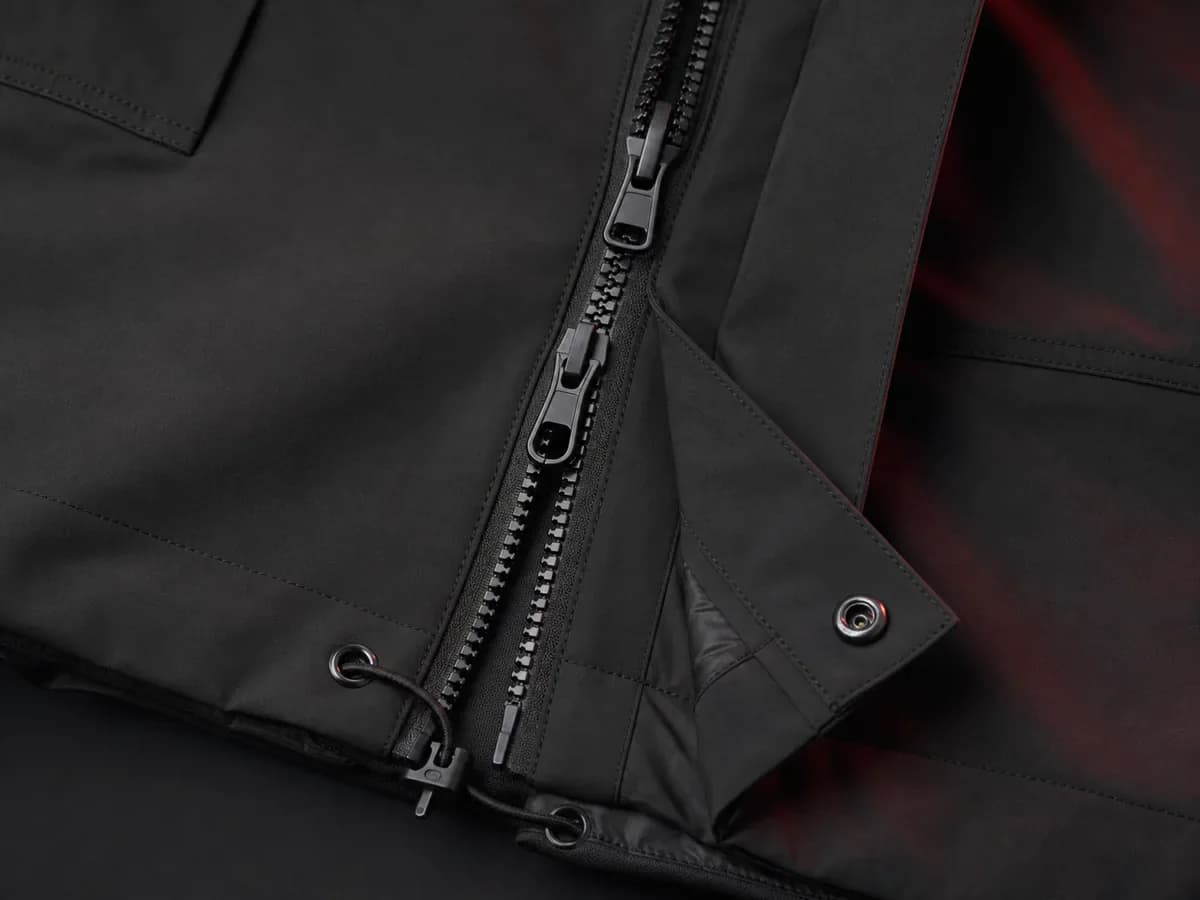
Closures & Hardware
Zipper, snap, button and hardware types evaluated per project for function, material compatibility and brand coordination.
- 01One-Way Zipper — Single slider opens from bottom to top. Straightforward and cost-efficient.
- 02Two-Way Zipper — Two sliders for adjustable opening from top and bottom. Enables hem adjustment and sitting comfort.
- 03Snap Front — Press-stud closure with visible or concealed snap placement.
- 04Button Front — Traditional button-through closure with buttonhole or loop construction.
- 05Concealed Zipper — Zipper hidden behind a placket or flap for clean front appearance.
- 06Storm Flap — Fabric flap covering the front closure for wind and weather protection.
- 07Custom Zipper Puller — Branded or custom-shaped puller replacing the standard slider pull.
- 08Cord Lock / Buckle / Metal Hardware — Functional hardware for hem drawcords, hood adjustments and removable components.
Zipper length, slider direction, left- or right-hand insertion, tape colour, plating, puller design, snap strength and wash compatibility are confirmed according to each project.
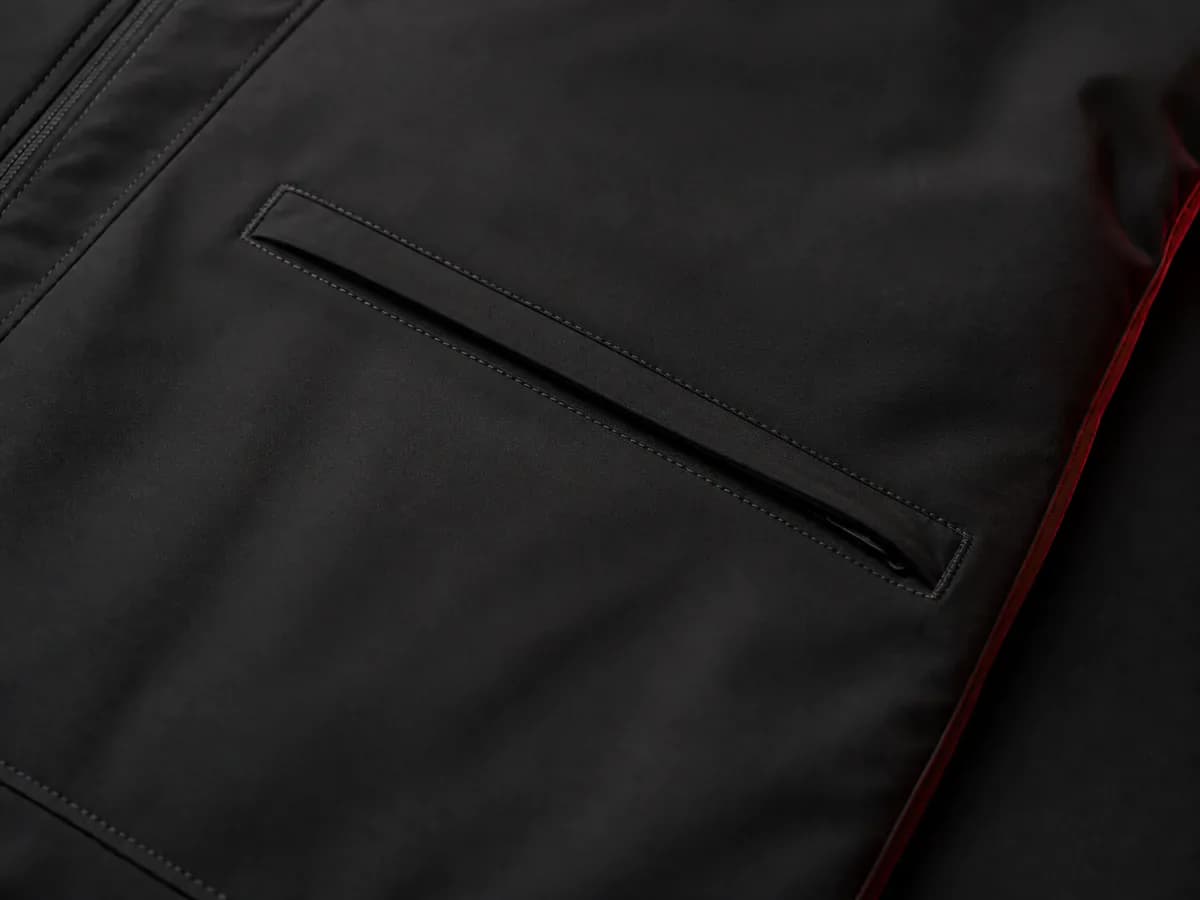
Pockets
Pocket types evaluated for placement, function, visual effect and silhouette compatibility.
- 01Patch Pocket — Applied pocket stitched to the garment exterior with visible topstitching.
- 02Flap Pocket — Pocket with a fabric flap covering the opening; flap may be secured with snap, button or Velcro.
- 03Welt Pocket — Bound opening cut into the garment panel with a clean, tailored finish.
- 04Zipper Pocket — Pocket opening finished with an exposed or concealed zipper for secure closure.
- 05Side-Entry Pocket — Diagonal or vertical opening at the side body for hand access.
- 06Chest Pocket — Pocket positioned on the upper chest, either patch or welt construction.
- 07Internal Pocket — Pocket constructed inside the jacket, accessed from the interior.
- 08Utility / Hidden Pocket System — Multiple concealed or visible pockets arranged for specific function and storage.
Pocket position, scale, closure type, reinforcement and construction confirmed per project and design.
Zipper length, slider direction, left- or right-hand insertion, tape colour, plating, puller design, snap strength and wash compatibility are confirmed according to each project.
MODULAR CONSTRUCTION
Add function without losing the silhouette.
MODULAR CONSTRUCTION DIRECTIONS
Detachable Sleeves
Zipper or snap attachment at the armhole. Must be verified for operation, arm movement, structural strength and appearance with and without sleeves.
Detachable Hood
Zipper, snap or button attachment at the collar. Must be verified for fit, neckline coverage, wind protection and appearance with and without the hood.
Reversible Construction
Both sides finished for wearing. Requires reversible shell, lining, zipper, pocket and label construction. All details must work on both faces.
Convertible Vest Direction
Sleeves detach to convert the jacket into a vest. Requires compatible armhole construction and verification across wearing, movement and appearance.
Adjustable Hem
Drawcord, elastic or snap adjustment at the hem. Must be verified for function, cord routing, cord-lock operation and effect on body silhouette.
Removable Utility Details
Detachable pockets, panels or accessories. Must be verified for attachment strength, function, wash compatibility and wearing experience.
Modular construction must be verified during sample development for operation, movement, structural strength, wash compatibility and wearing experience. Not all modular features are compatible with all shell fabrics, linings or insulation types.
QUILTING & FILLING
Control warmth and volume through filling and quilting.
Garment thickness is not determined by filling weight alone. Shell fabric, quilting spacing, filling type and fit all contribute to the final volume and warmth.
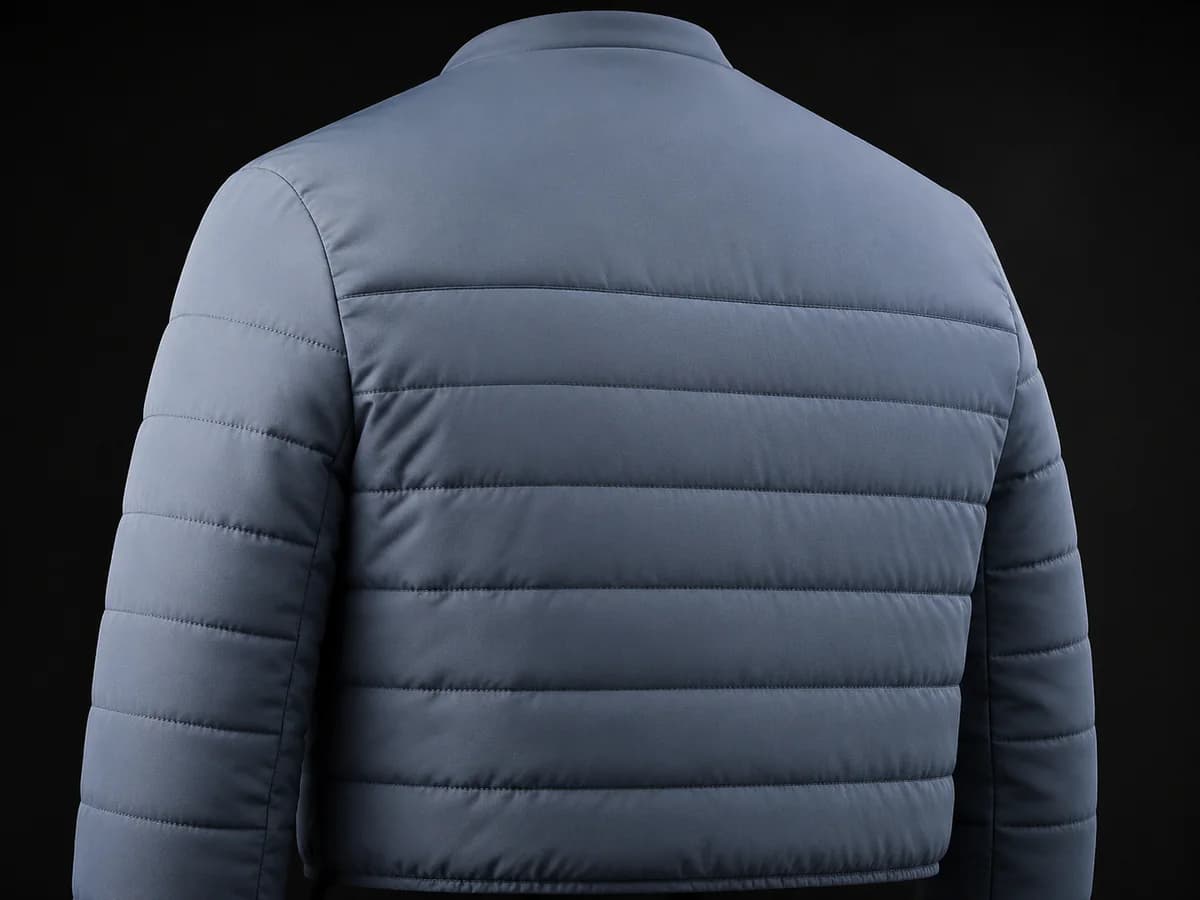
Horizontal Quilting
Visual Effect: Parallel horizontal stitch lines creating clean, linear surface character.
Construction Purpose: Controls filling distribution in a predictable, production-friendly pattern.
Suitable Direction: Bombers, puffer jackets and padded outerwear with clean horizontal visual.
Key Confirmation: Stitch spacing, thread colour and tension, filling loft between lines and surface appearance after washing.
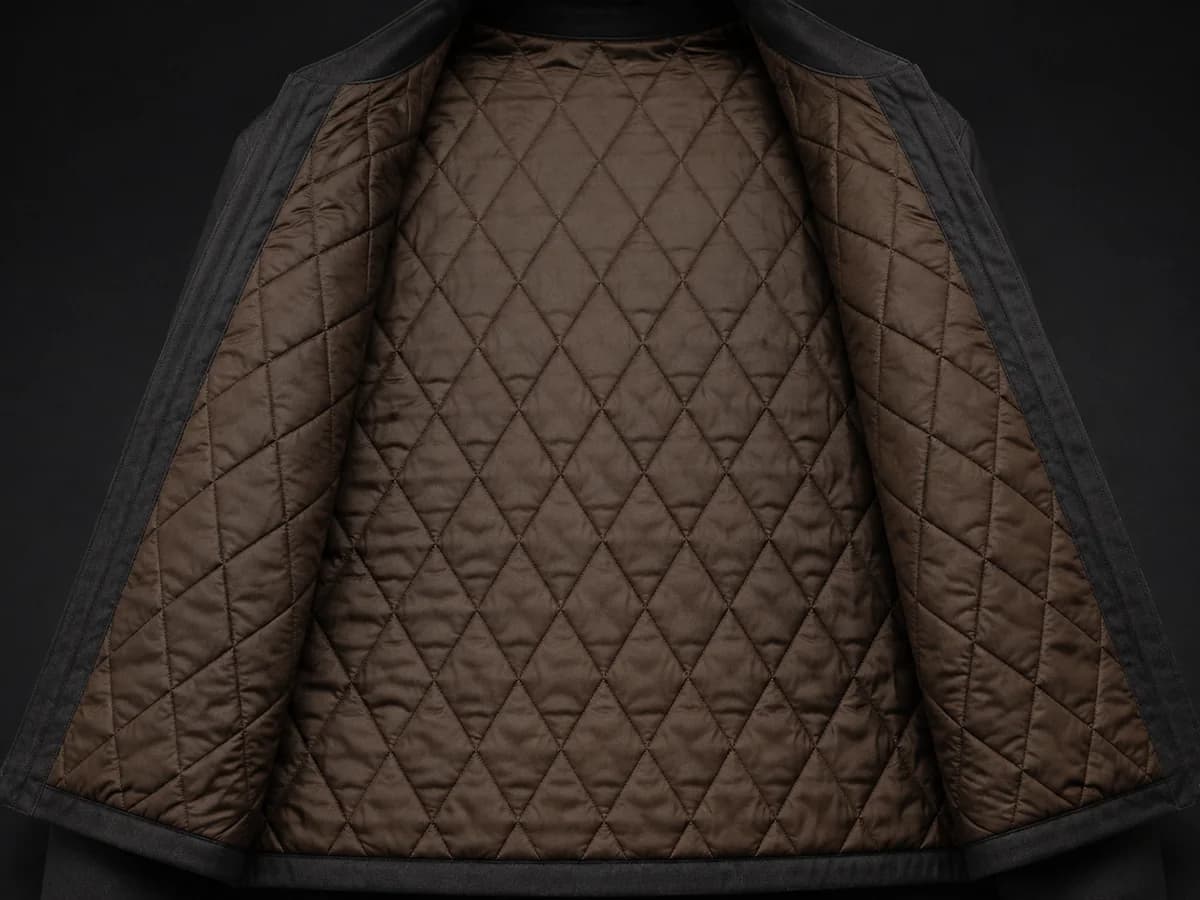
Diamond Quilting
Visual Effect: Intersecting diagonal stitch lines forming a diamond grid pattern.
Construction Purpose: Distributes filling evenly with a more decorative, textured surface.
Suitable Direction: Puffer jackets, varsity linings and styles where quilting is a visible design element.
Key Confirmation: Diamond size, stitch intersection accuracy, filling distribution in each diamond and wash appearance.
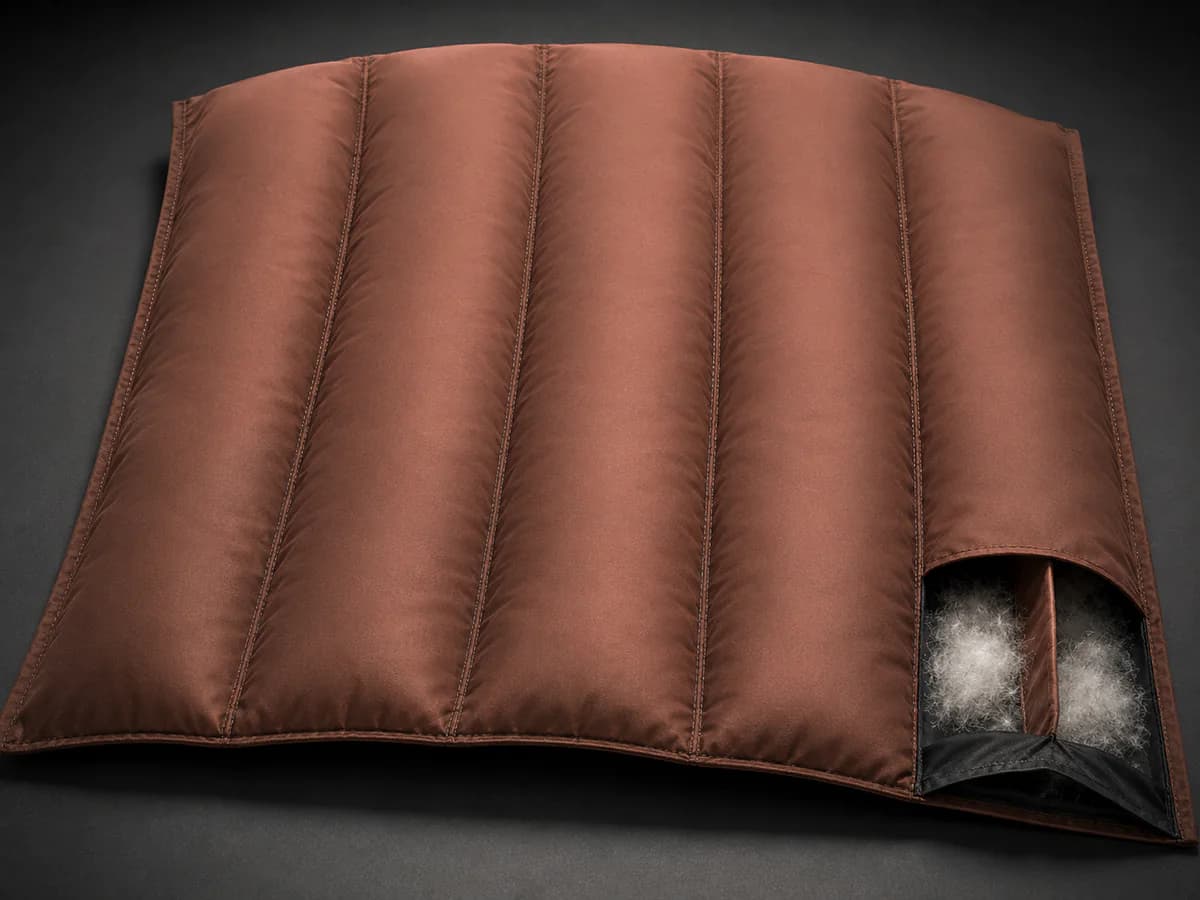
Channel / Baffle Construction
Visual Effect: Vertical or horizontal channels with defined depth and volume between stitch lines.
Construction Purpose: Creates pronounced loft and volume; baffle construction adds internal walls to control filling migration.
Suitable Direction: Down-filled and high-loft puffer jackets where volume is a design feature.
Key Confirmation: Channel width, baffle height, filling density per channel, shell fabric density and down-proof requirement.
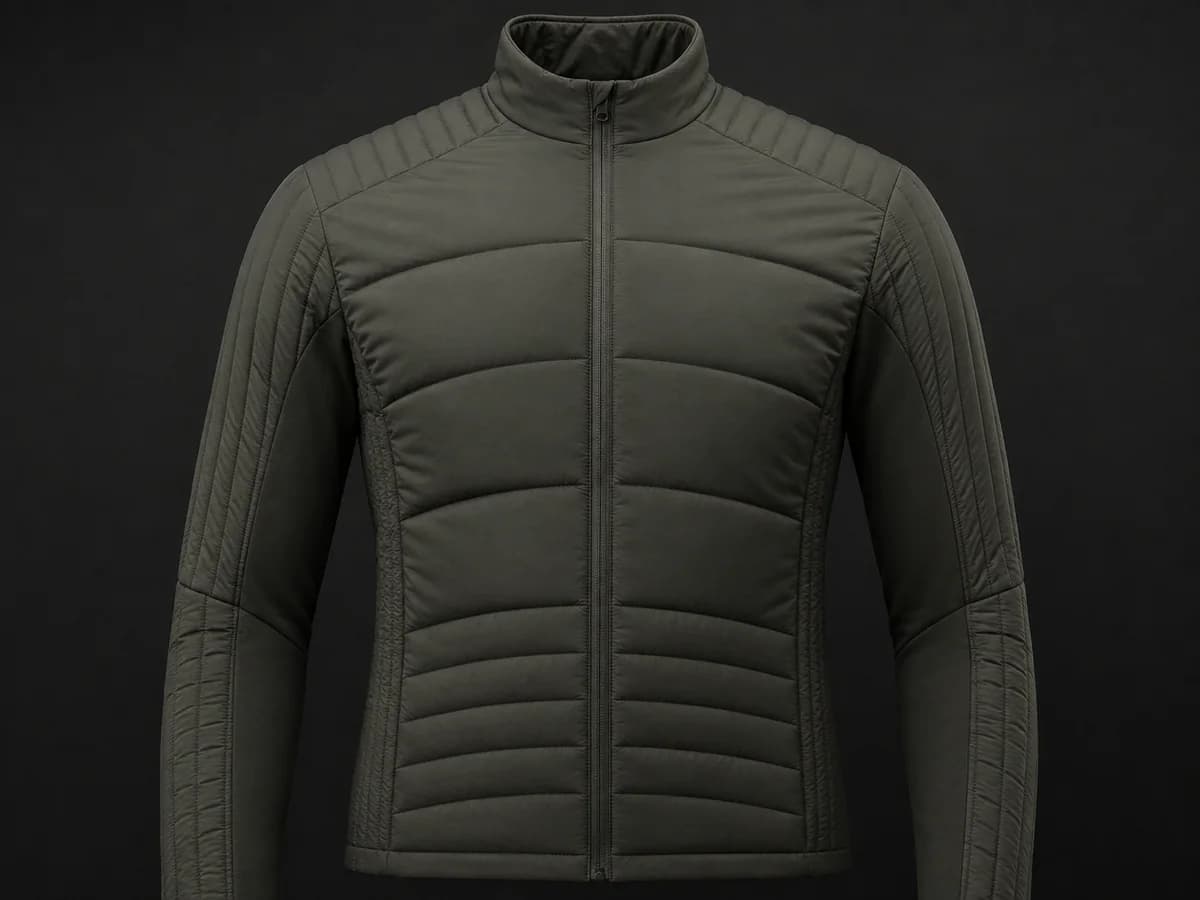
Body-Mapped Quilting
Visual Effect: Quilting pattern that varies across the body — denser in some areas, more open in others.
Construction Purpose: Controls warmth, volume and movement according to body zones.
Suitable Direction: Performance outerwear, technical puffers and styles with targeted insulation.
Key Confirmation: Zone pattern, quilting density per zone, filling distribution, movement allowance and visual balance.
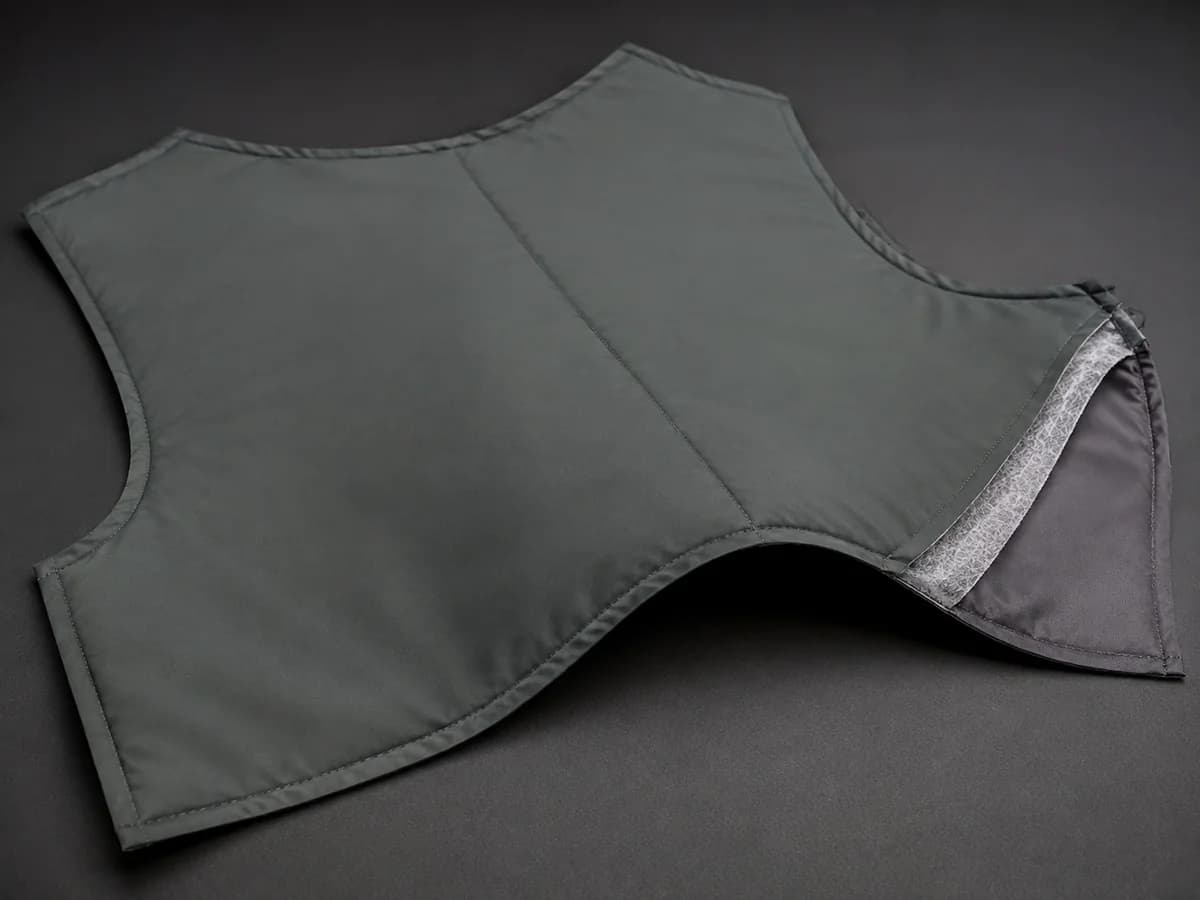
Lightweight Padding
Visual Effect: Minimal visible quilting with low-loft, lightweight filling.
Construction Purpose: Adds light warmth and body without significant volume change.
Suitable Direction: Bombers, coach jackets and transitional outerwear.
Key Confirmation: Padding weight, loft, quilting requirement, lining compatibility and wash behaviour.
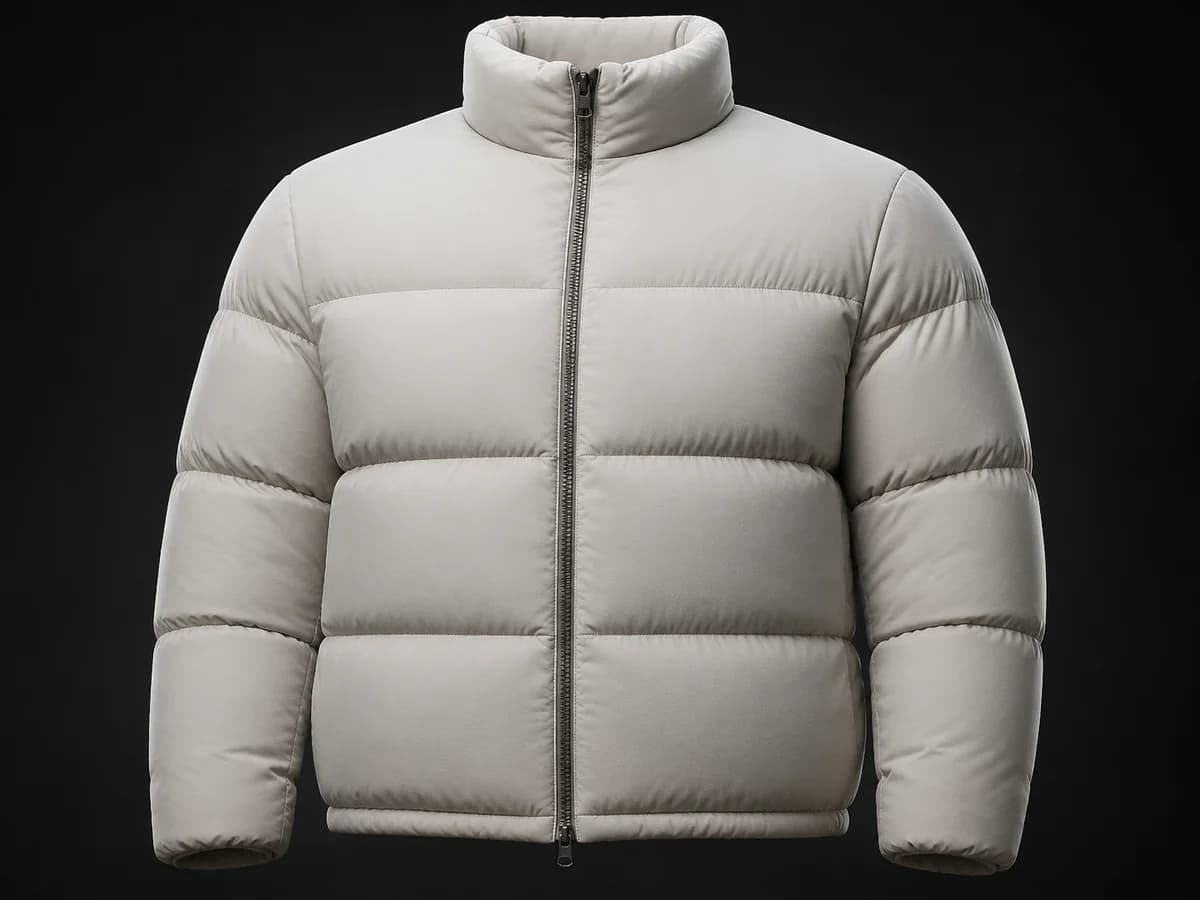
Heavy Padding Direction
Visual Effect: Pronounced volume and defined quilting lines with substantial loft.
Construction Purpose: Provides significant warmth and a strong outerwear silhouette.
Suitable Direction: Cold-weather puffers and statement outerwear pieces.
Key Confirmation: Filling type and weight, quilting pattern, shell fabric density, garment weight and wear comfort.
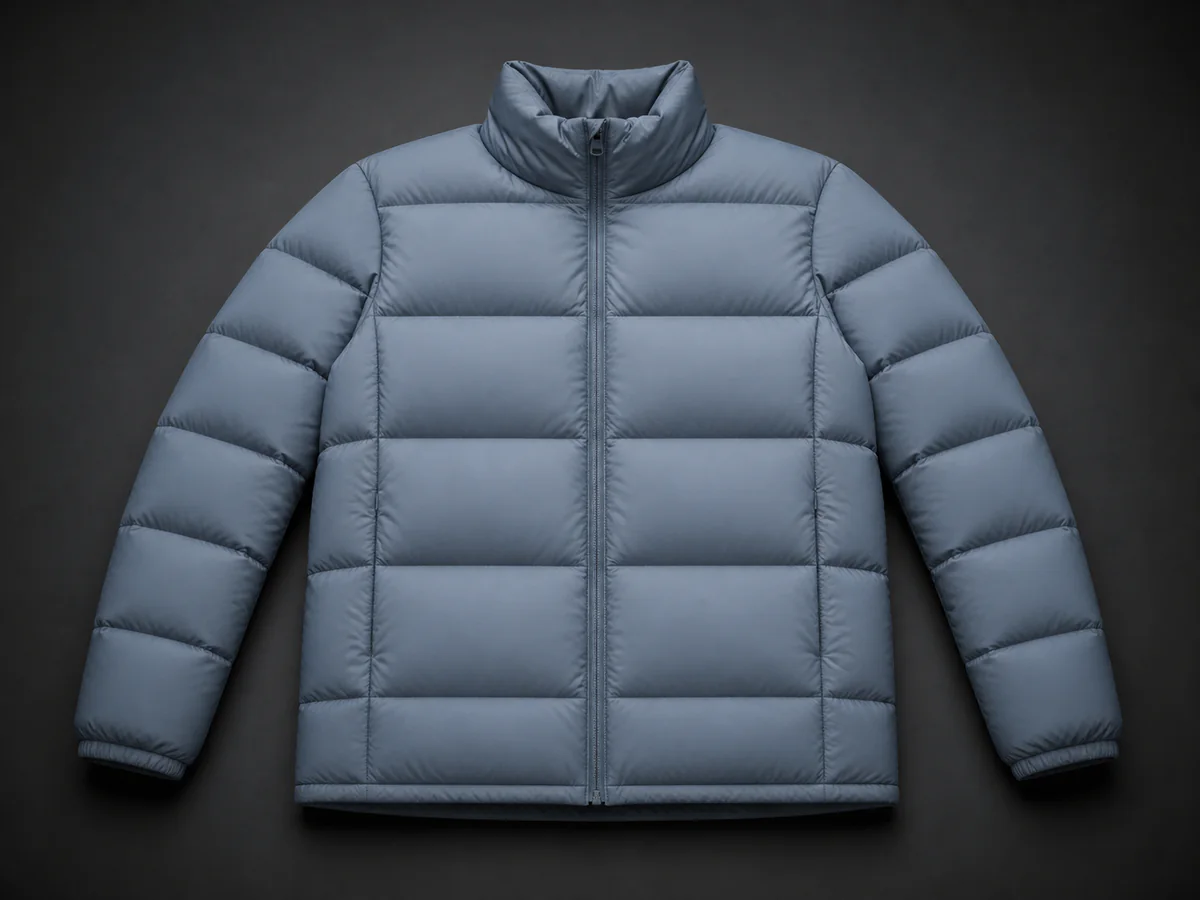
Filling Distribution
Visual Effect: Even distribution of filling across all body panels and sleeves.
Construction Purpose: Ensures consistent warmth, weight and appearance throughout the garment.
Suitable Direction: All padded and filled outerwear.
Key Confirmation: Distribution method, panel-by-panel filling weight, quilting pattern and post-wash distribution.
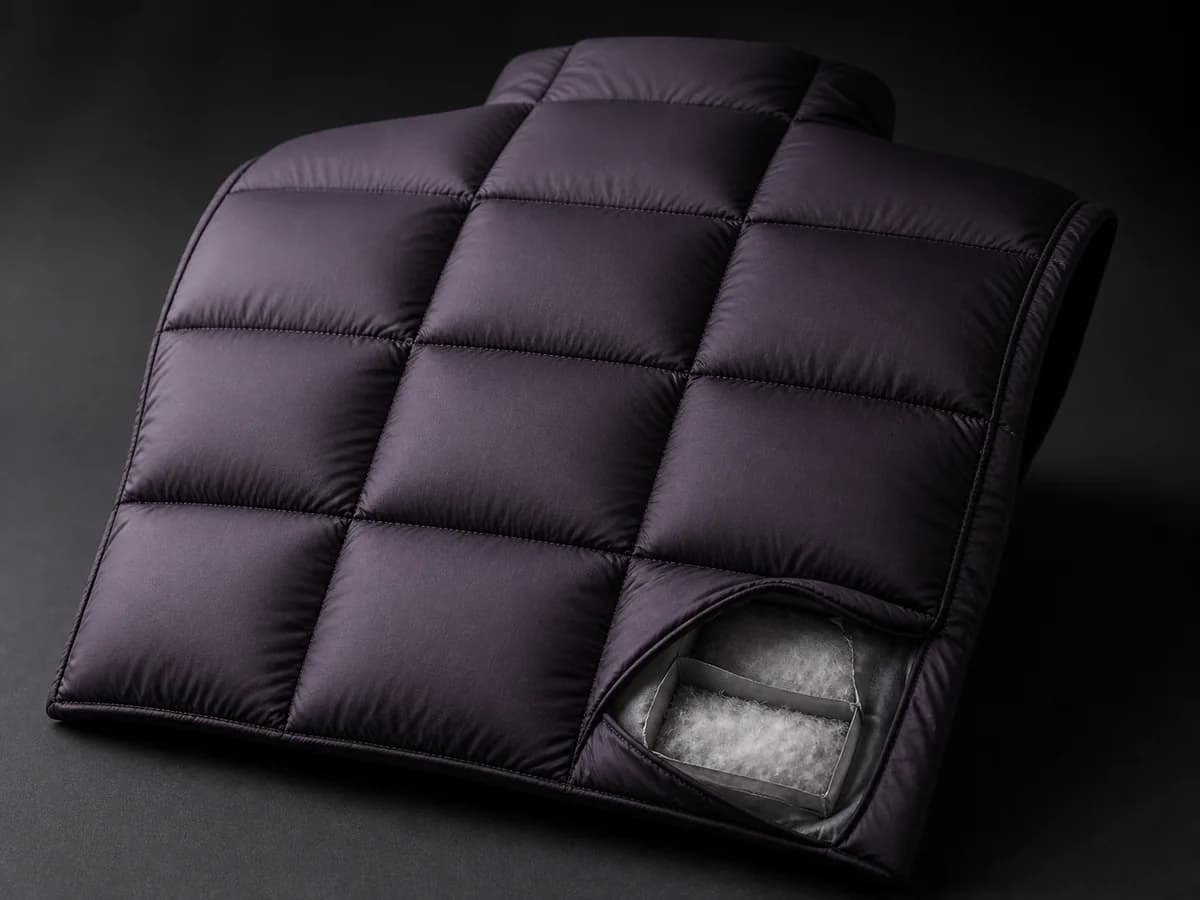
Migration and Cold-Spot Control
Visual Effect: No visible areas where filling has shifted or compressed.
Construction Purpose: Prevents filling from moving through wear and washing, which creates uneven warmth and appearance.
Suitable Direction: All filled outerwear, especially down-filled and high-loft synthetic insulation.
Key Confirmation: Shell density, quilting pattern, baffle construction, filling type and post-wash migration testing.
Down fill power, fill weight, warmth rating and performance claims must be supported by material documentation and testing. KAOUYOU does not make unverified temperature or warmth claims. Filling type, quilting pattern, shell density and lining must be reviewed as one system.
PERFORMANCE & WEATHER PROTECTION
Define the required protection before making a performance claim.
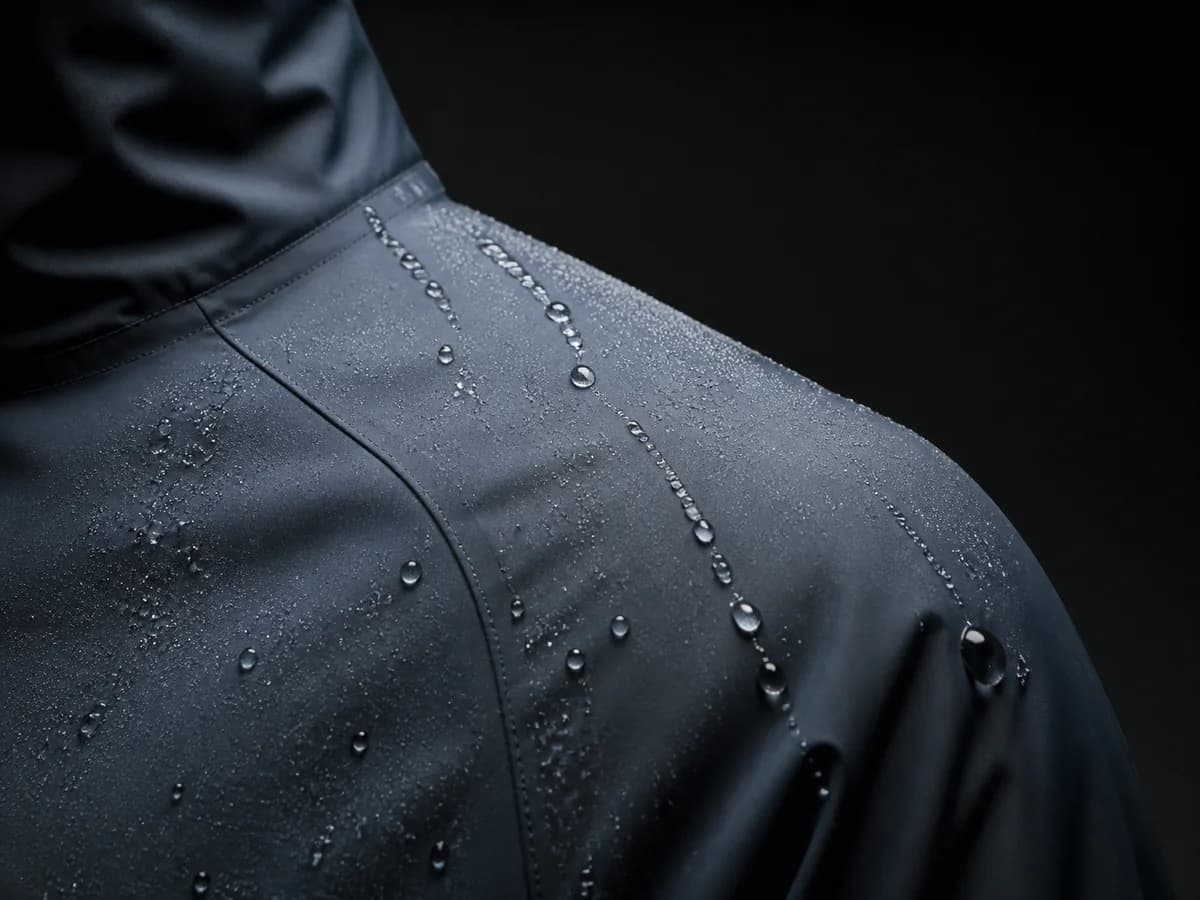
Water-Repellent Direction
Intended Function: Surface treatment or fabric finish that causes water to bead and roll off. Water-repellent is not waterproof.
Development Method: DWR finish, coating or fabric-integrated repellency. Performance depends on the selected material and treatment.
Compatibility Requirement: Confirm compatibility with the selected shell fabric, lining, insulation and wash process.
Testing Note: Spray rating or specific test standard confirmed per project. Claims must be supported by test documentation.
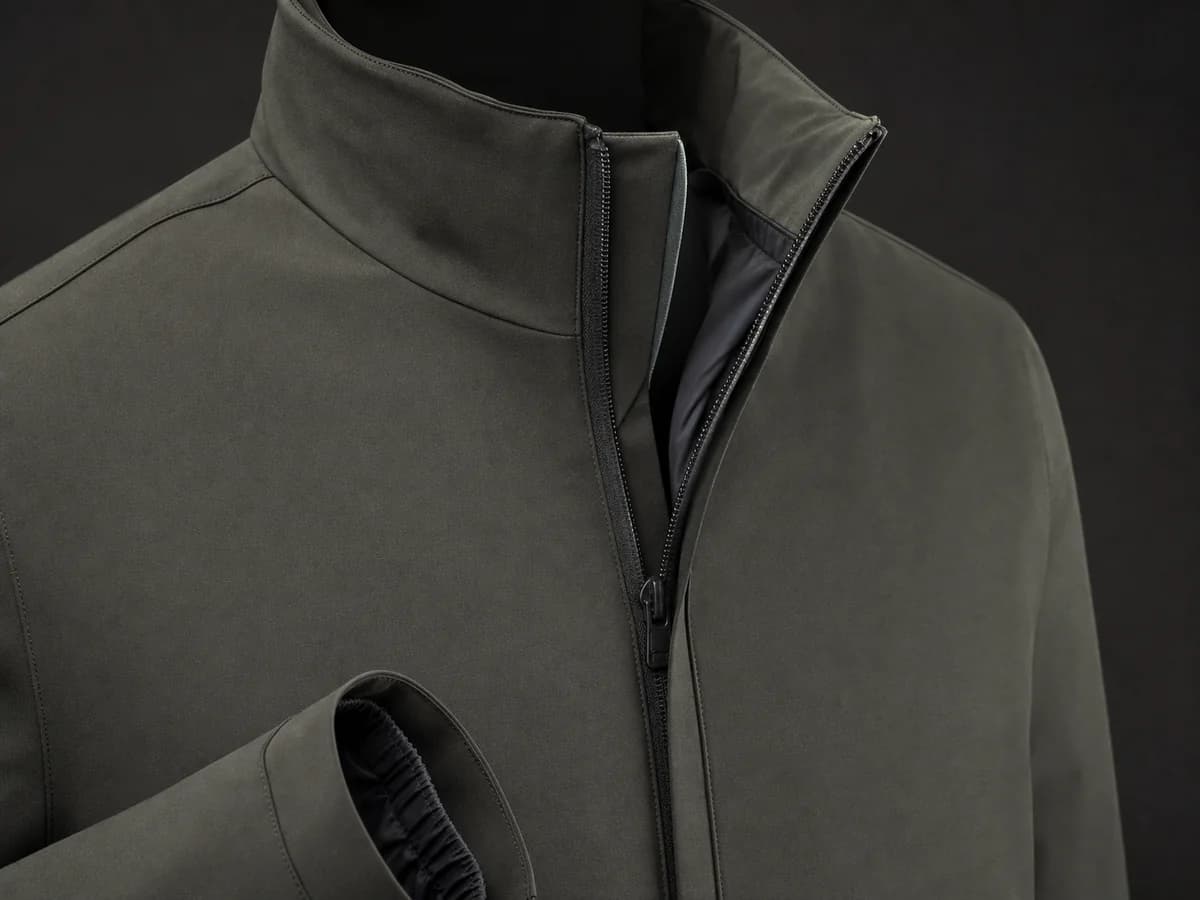
Wind-Resistant Construction
Intended Function: Tight-weave shell, membrane or lining that reduces wind penetration through the garment.
Development Method: Dense fabric construction, bonded membrane or wind-blocking interlining.
Compatibility Requirement: Confirm compatibility with breathability, insulation and overall wearing comfort.
Testing Note: Wind resistance is not windproof. Specific values require testing to a named standard.
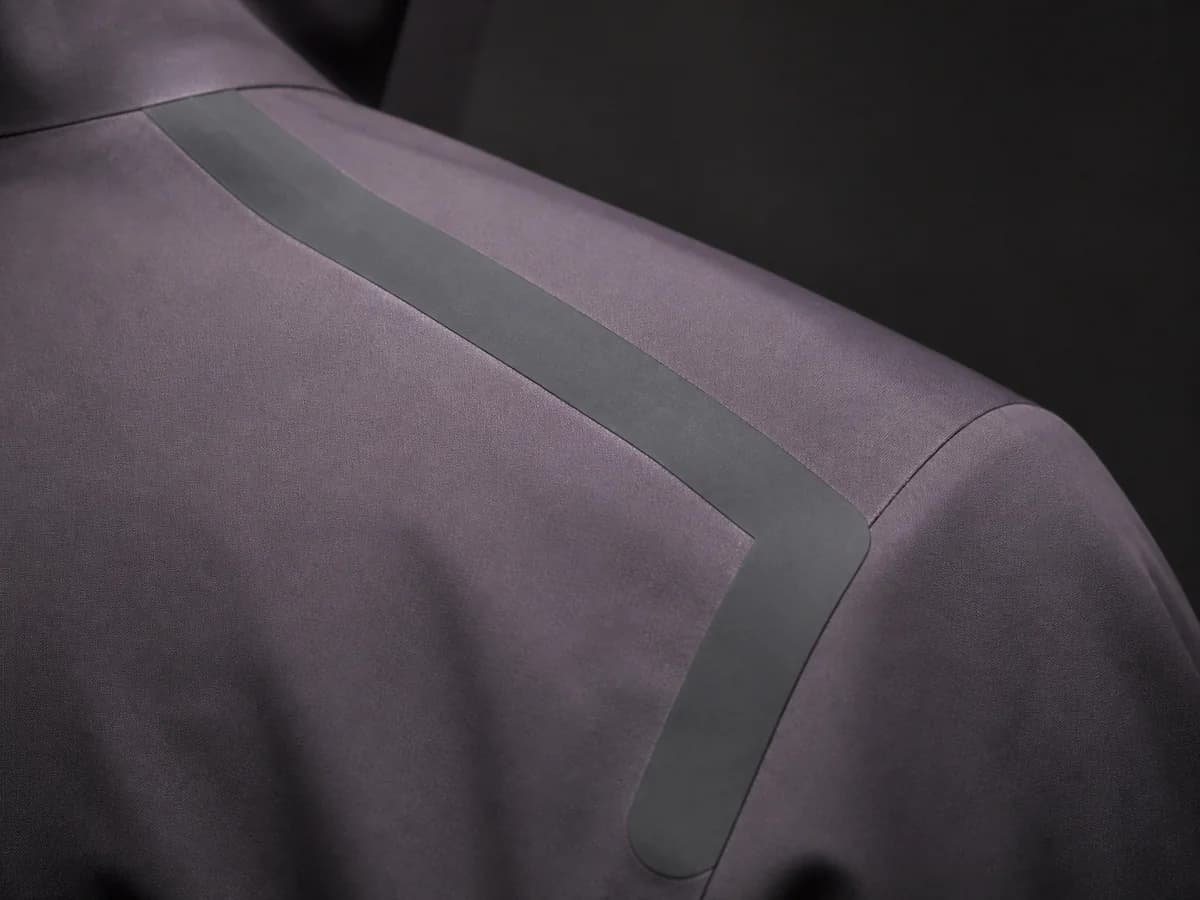
Seam Tape / Seam Sealing
Intended Function: Applied tape over internal seams to reduce water or air penetration through stitch holes.
Development Method: Heat-applied tape on critical seams. Not all fabrics, threads and seam constructions are compatible.
Compatibility Requirement: Confirm fabric coating, thread type, seam type and tape compatibility before development.
Testing Note: Seam taping does not make a garment waterproof. Performance must be tested on the complete garment.
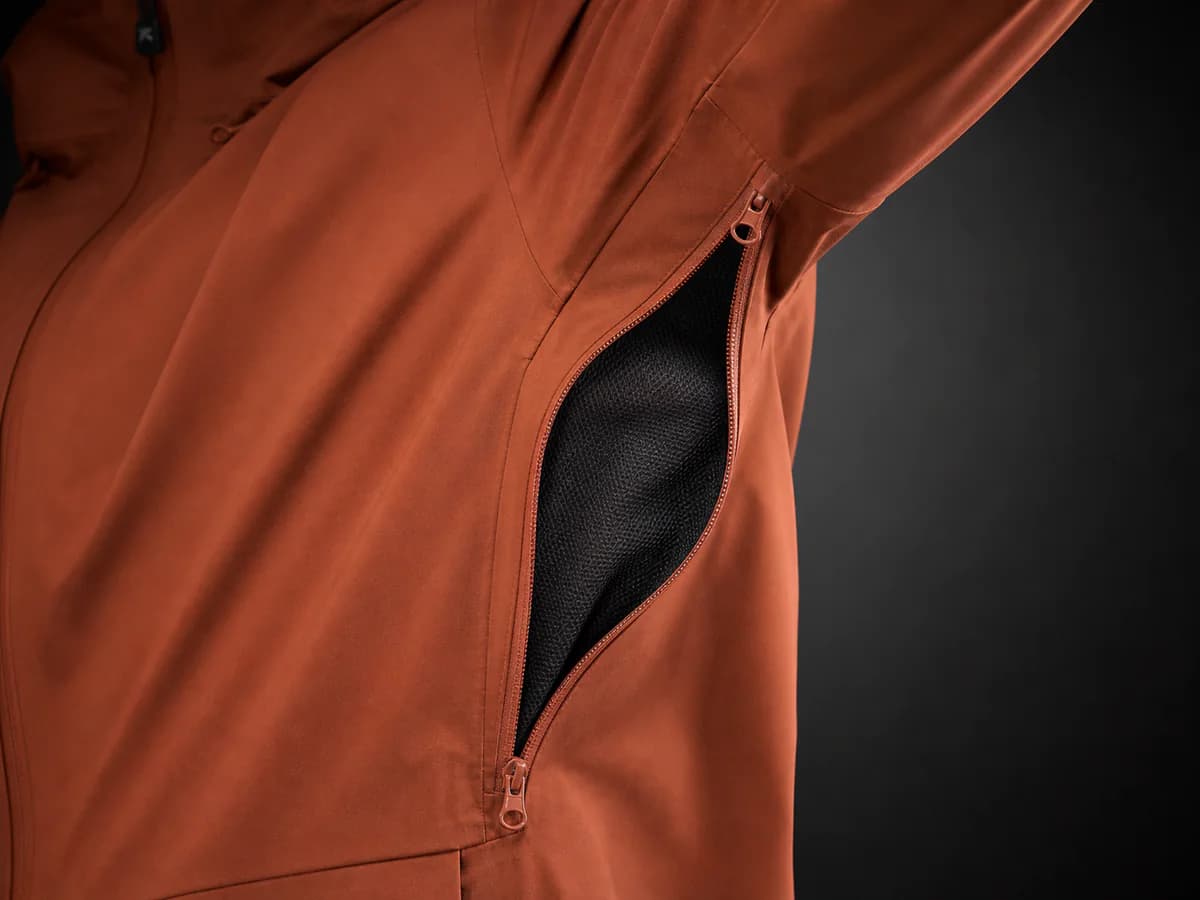
Breathability / Ventilation Direction
Intended Function: Moisture vapour transmission or physical ventilation to reduce internal heat and humidity build-up.
Development Method: Breathable membrane, mesh-lined vents, underarm openings or back vents.
Compatibility Requirement: Confirm vent placement against pocket, lining and insulation layout. Mesh lining does not automatically equal certified breathability.
Testing Note: Breathability claims require testing to a named standard. Vent placement and size are confirmed per design.
Water-repellent is not waterproof. Specific values for water resistance, wind resistance and breathability require testing to named standards. Not all fabrics, threads and seam constructions are compatible with seam tape. Mesh lining, vents and ventilation features do not automatically equal certified breathability performance.
DECORATION & FINISHING
Complete the outerwear through decoration and finishing.
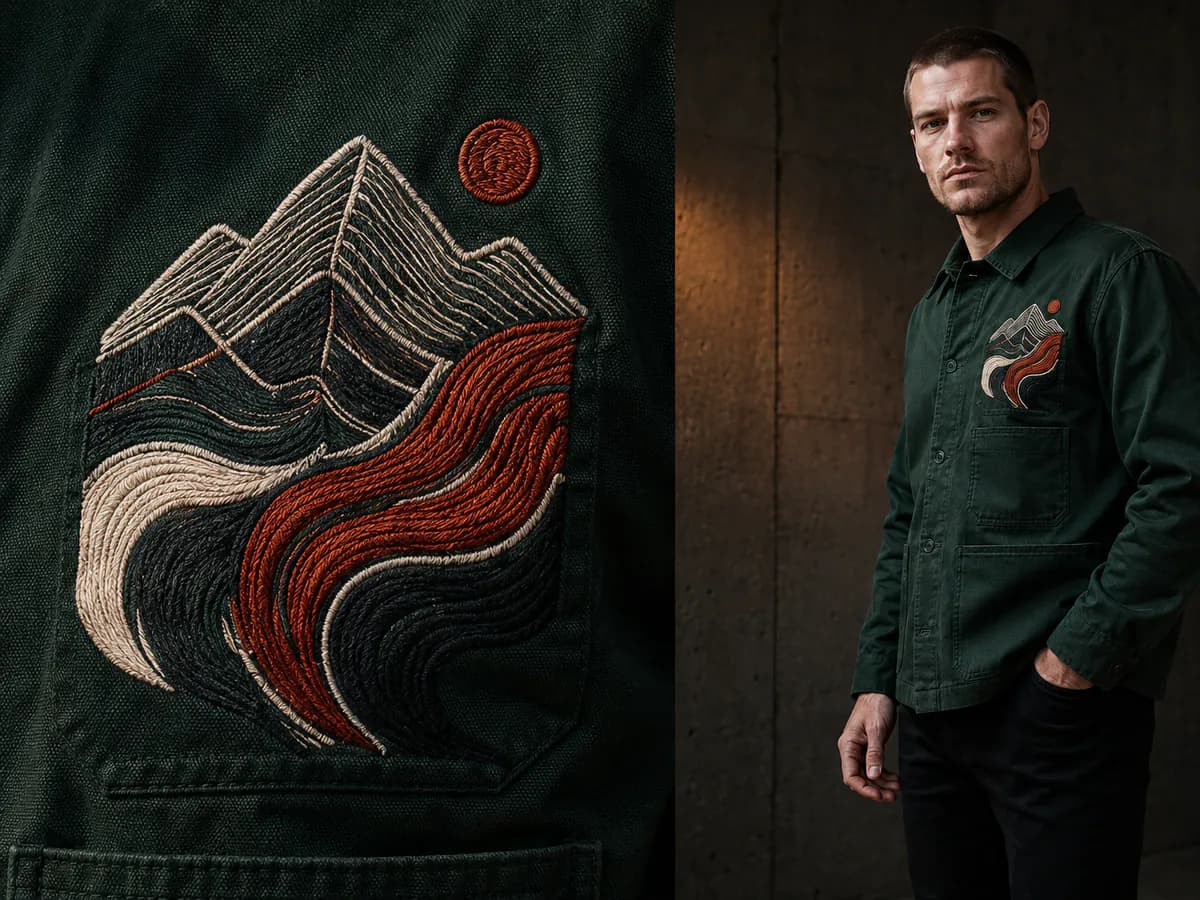
Embroidery
Visual Effect: Dimensional, tactile and durable brand presence with clean stitch definition.
Best Placement: Left chest, centre chest, sleeve, back and hood.
Material Compatibility: Stable shell fabrics support denser embroidery; lightweight or filled areas require backing consideration.
Development Consideration: Stitch count, size, backing, placement on padded areas and wash durability on the target shell and filling.
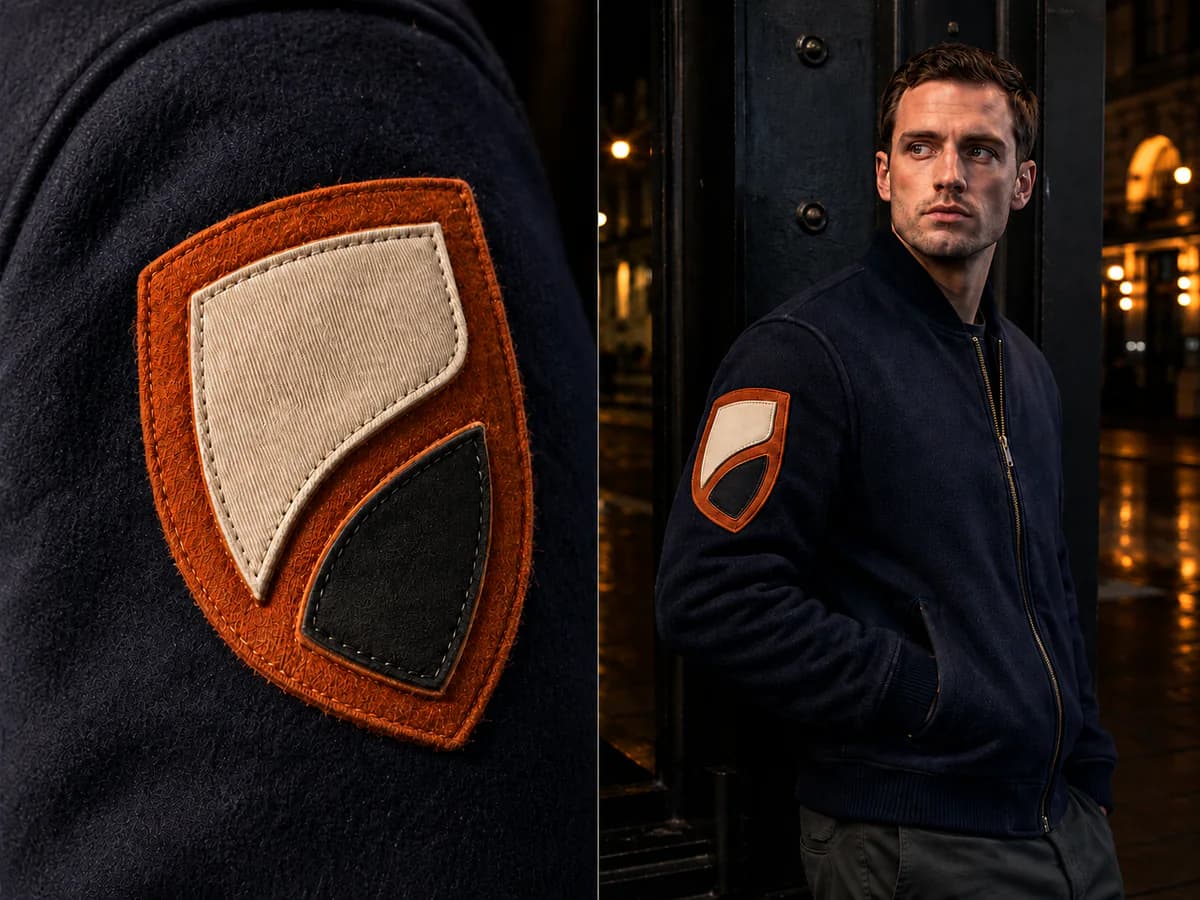
Appliqué / Patch
Visual Effect: Layered fabric pieces or patches stitched or attached to the jacket for tactile dimension.
Best Placement: Chest, sleeve, back and hood.
Material Compatibility: Confirm attachment method (stitch, heat-seal or combination) on the target shell fabric and any filling or lining behind the placement.
Development Consideration: Material, attachment method, placement, wash durability and effect on the surrounding fabric surface.
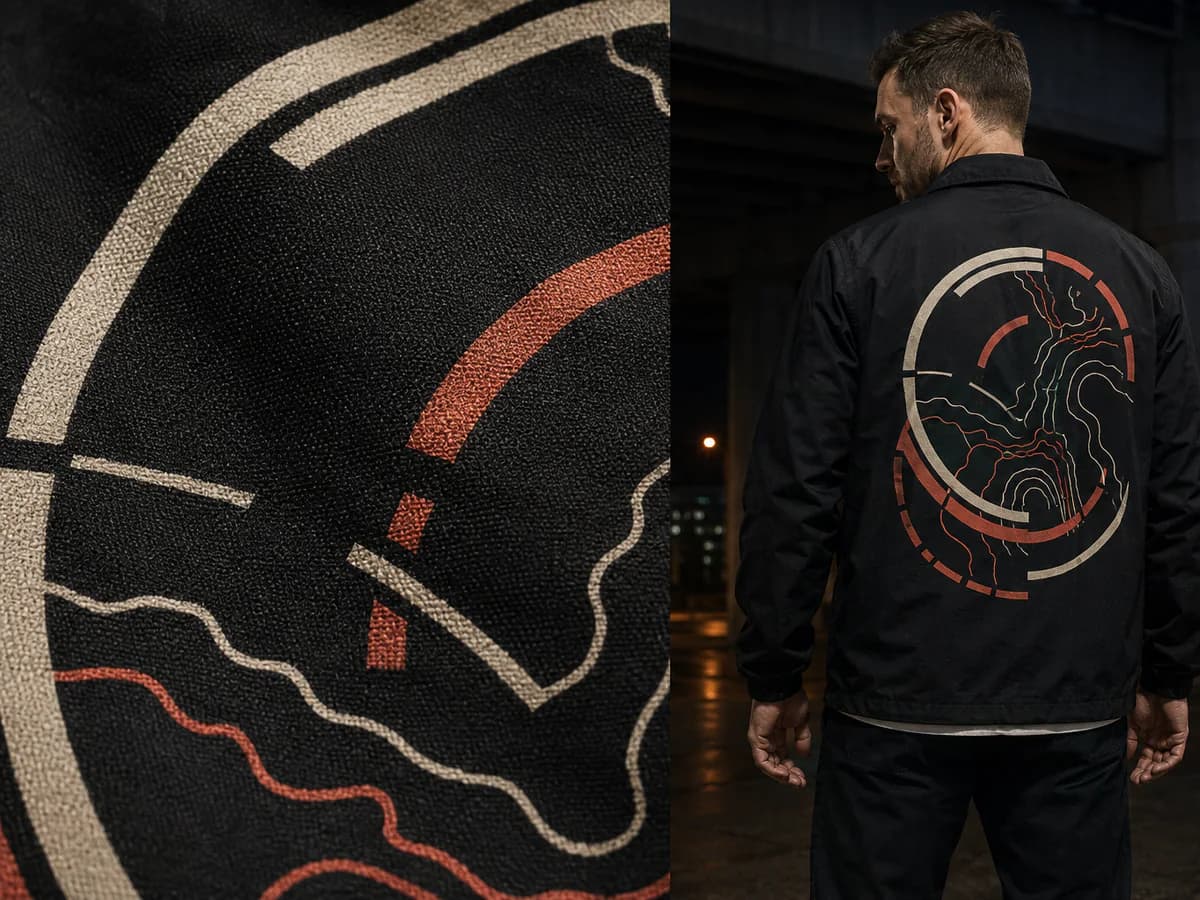
Screen Printing
Visual Effect: Ink applied directly to the fabric surface with varied opacity, texture and hand feel.
Best Placement: Back, chest and sleeve.
Material Compatibility: Works on smooth shell surfaces; confirm adhesion on coated, water-repellent or textured fabrics.
Development Consideration: Ink type, colour, adhesion on the target shell, wash durability and hand feel.
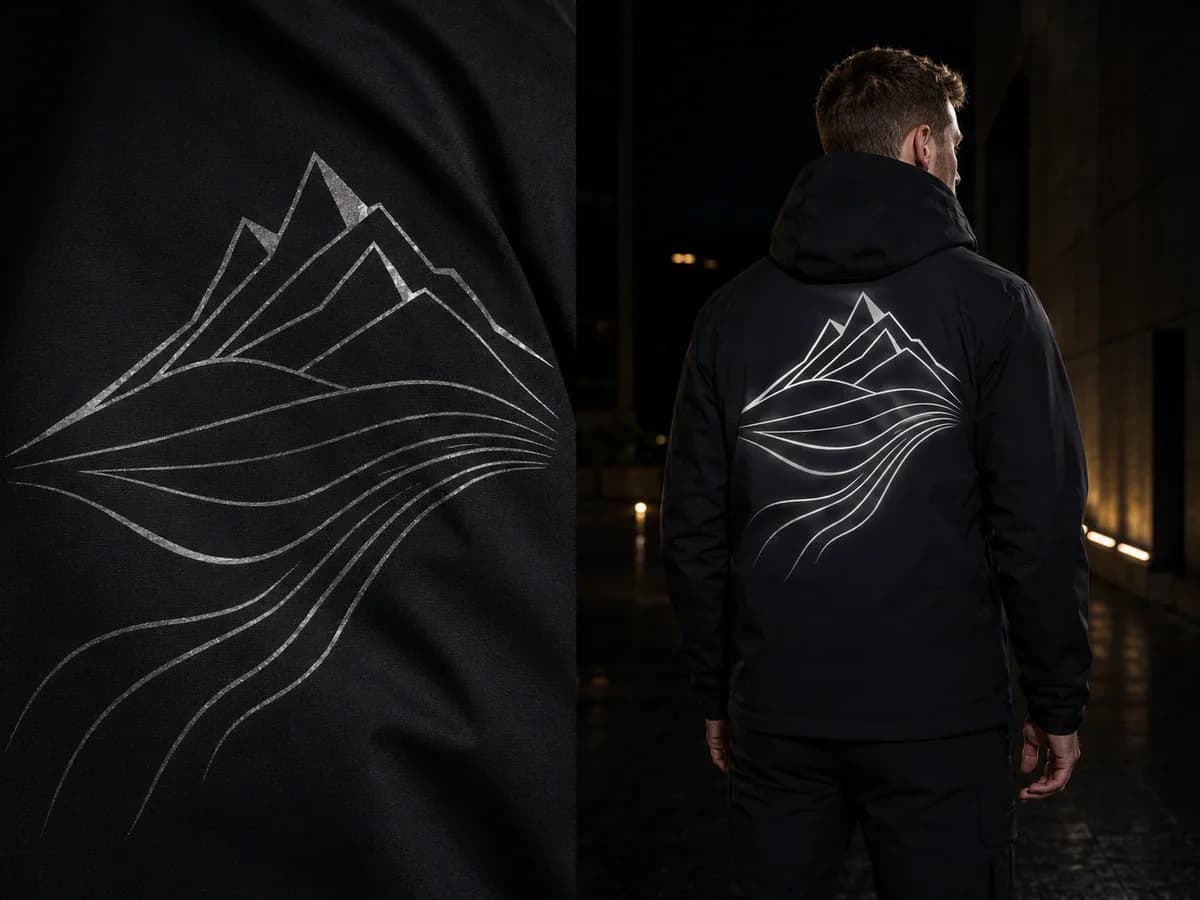
Heat Transfer / Reflective Effect
Visual Effect: Heat-applied graphic or reflective material for visibility and brand presence.
Best Placement: Chest, back, sleeve and hood.
Material Compatibility: Confirm adhesion on the target shell fabric; coated and water-repellent surfaces may require specific transfer types.
Development Consideration: Adhesion, stretch compatibility, wash durability and reflective performance retention.
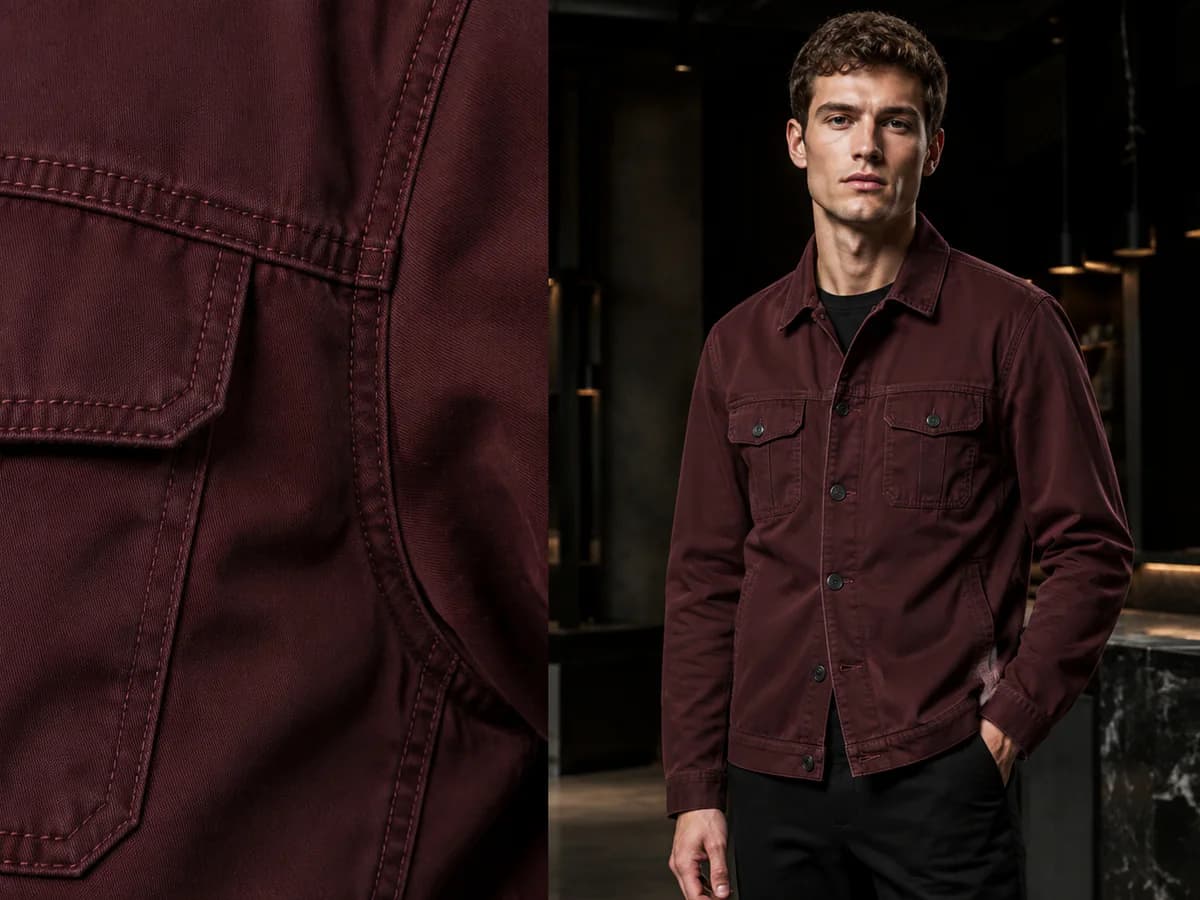
Garment Dye Direction
Visual Effect: Entire jacket dyed after construction for a unified, lived-in colour character.
Best Placement: Applied to the whole garment.
Material Compatibility: All components — shell, lining, filling, rib, thread, zipper tape and hardware — must be compatible with the dye process.
Development Consideration: Colour result, component compatibility, shrinkage, dimensional change and acceptable variation per project.
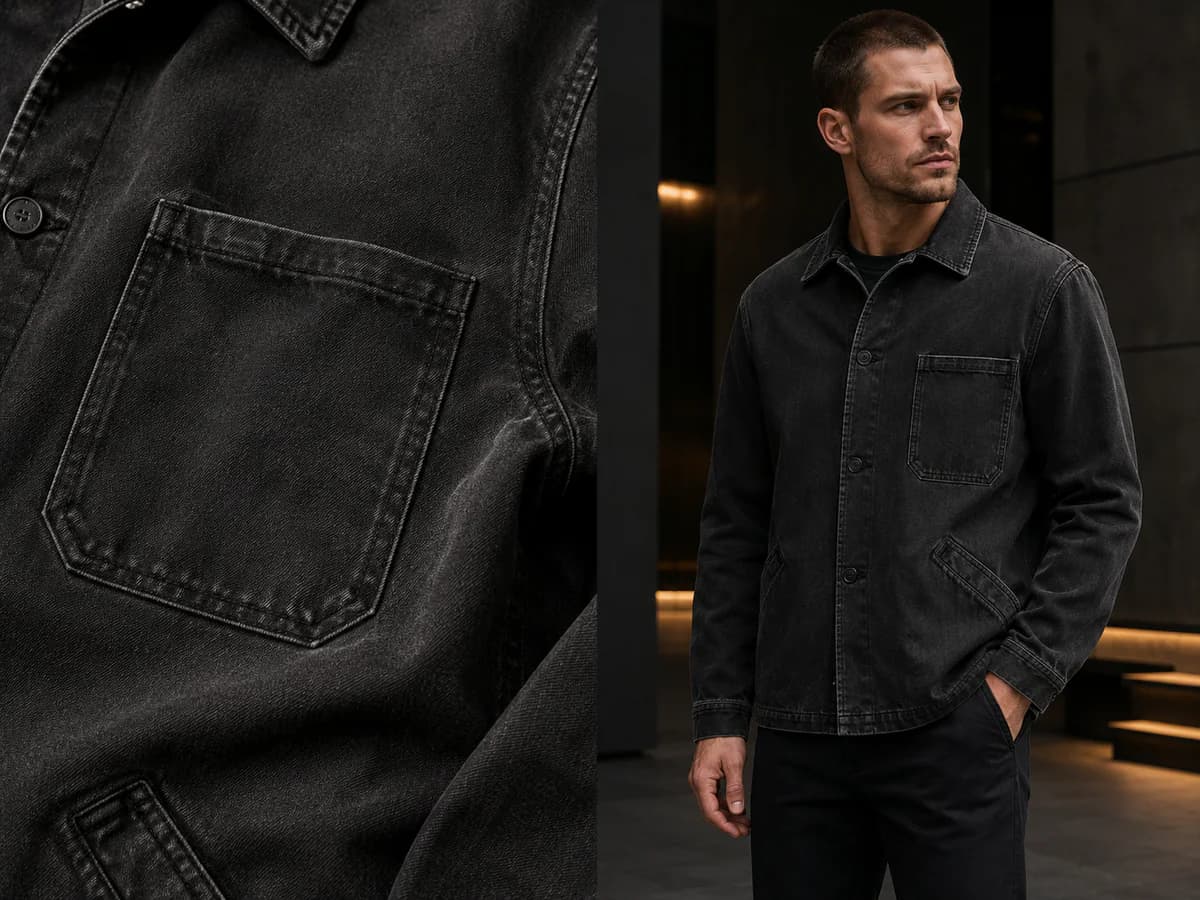
Vintage Wash
Visual Effect: Controlled fading, softening and surface character for a worn-in appearance.
Best Placement: Applied to the whole garment.
Material Compatibility: Shell fabric, lining, filling, rib, thread and hardware must each be evaluated for wash compatibility.
Development Consideration: Wash effect, colour change, component compatibility, shrinkage and acceptable tolerance.
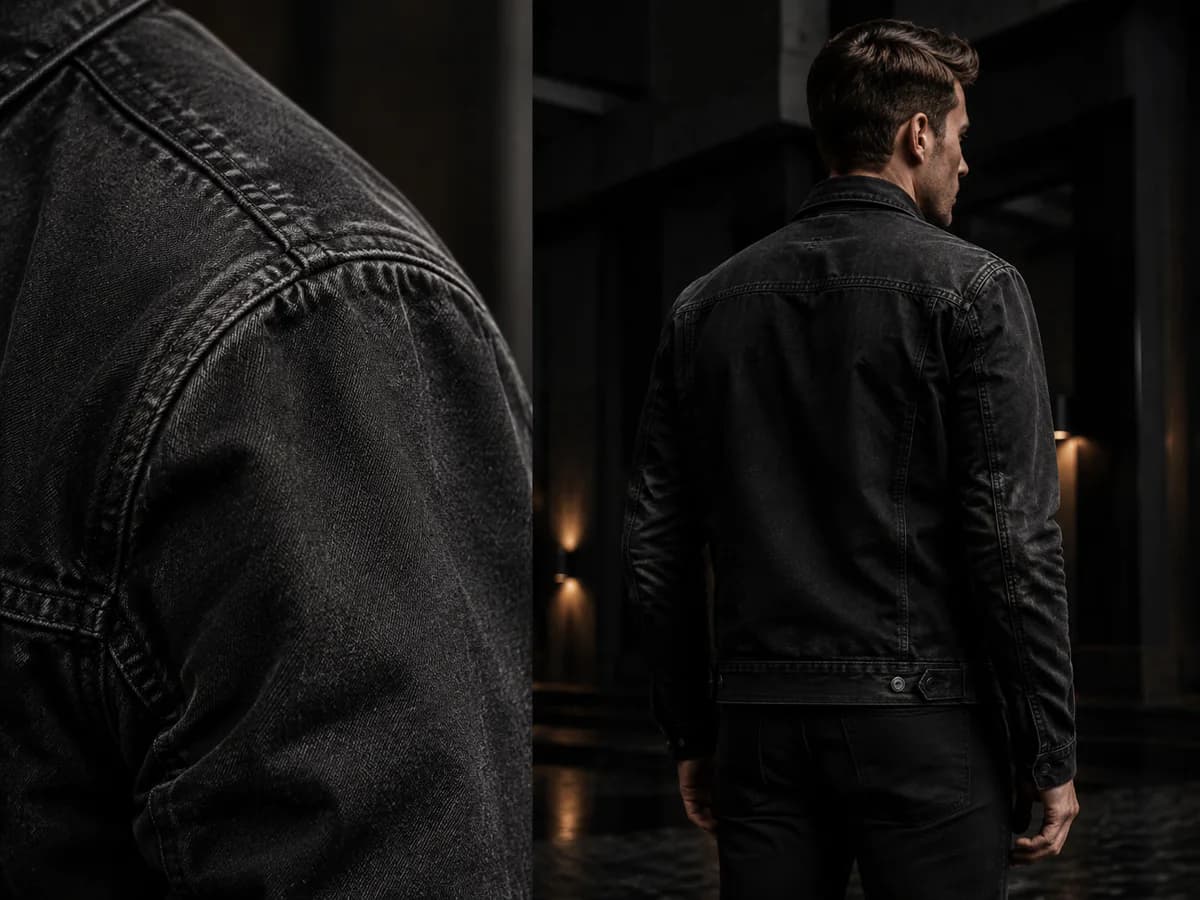
Faded / Distressed Effect
Visual Effect: Localised or all-over fading, abrasion and surface character for a heavily worn appearance.
Best Placement: Targeted areas or all-over.
Material Compatibility: Shell fabric must be compatible with the selected abrasion or fading method. Lining and filling may be affected.
Development Consideration: Effect location, intensity, repeatability, component compatibility and agreed tolerance.
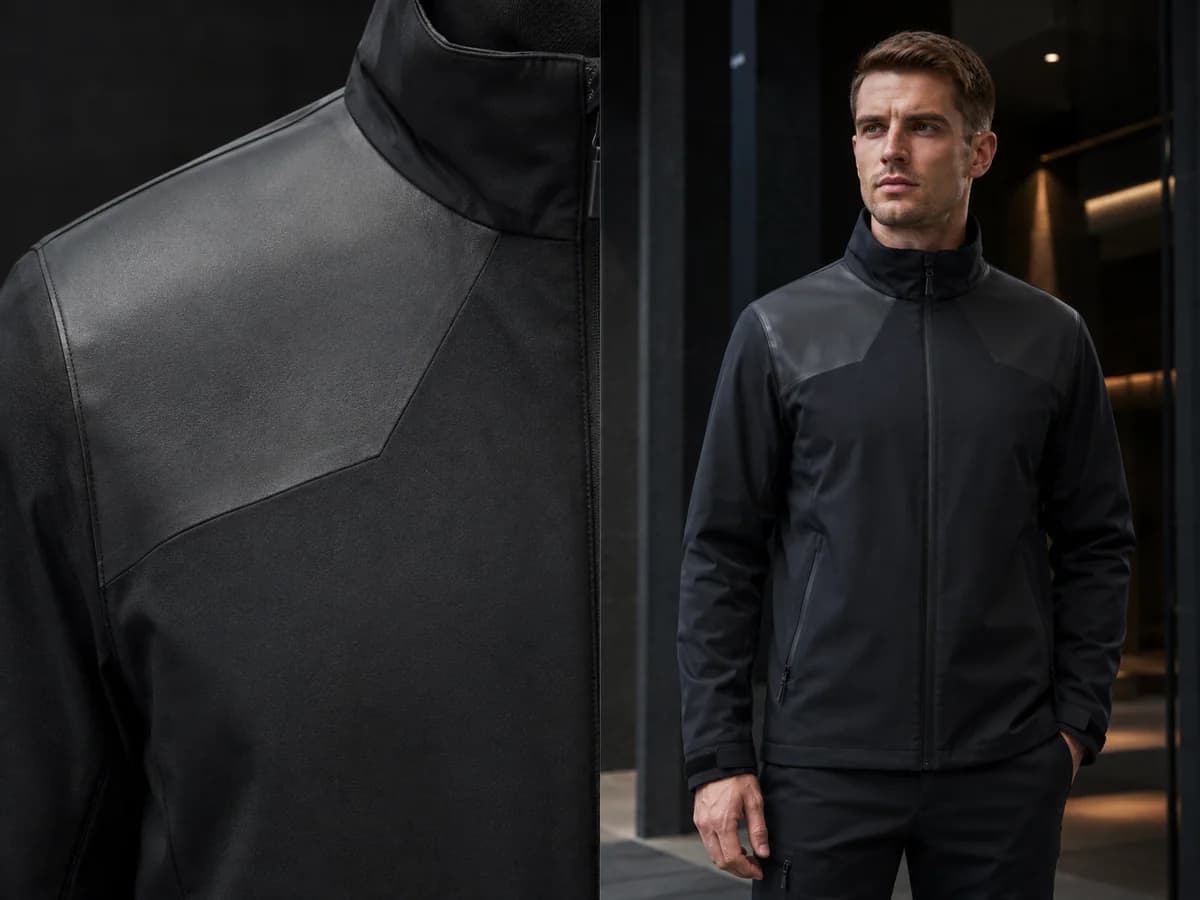
Project-Specific Finishing
Visual Effect: Direction-dependent finish evaluated against the selected materials, construction and target effect.
Best Placement: Confirmed per project.
Material Compatibility: Sample approval is required. Feasibility, minimums, lead time and cost are confirmed per project.
Development Consideration: Specialist finishing may be coordinated with professional process partners under KAOUYOU production follow-up.
Wash treatment may affect shell fabric, lining, insulation, rib, thread, hardware, dimensions and surface appearance. Compatibility and acceptable variation must be confirmed through sampling.
Specialist decoration, finishing and wash processes may be coordinated with professional process partners under KAOUYOU project management and production follow-up. Not all processes are completed inside KAOUYOU-owned factories.
PRIVATE-LABEL FINISHING
Prepare the jacket for your brand and delivery channel.
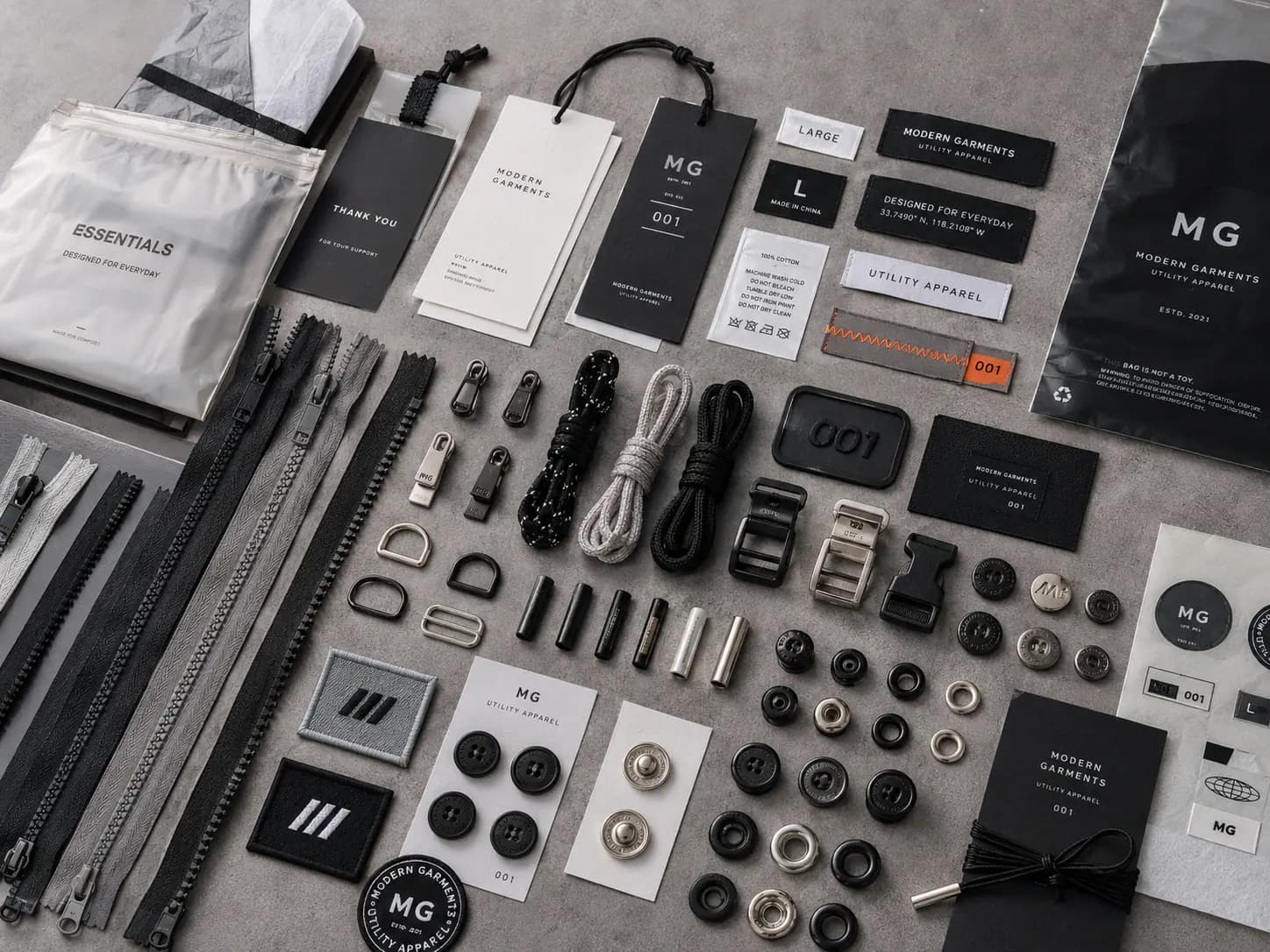
- Main Label
- Size Label
- Care and Content Label
- Filling Information Label
- Woven / Embroidered / Rubber Patch
- Custom Zipper Puller
- Hangtag
- Polybag / Garment Bag
- Folding or Hanging Requirement
- Carton and Packing Requirement
Availability, tooling, MOQ, finish and delivery requirements are confirmed per project. Specialist decoration, hardware and finishing may be coordinated with suitable process partners under KAOUYOU project management and production follow-up.
EXPLORE FABRICS, TRIMS & PACKAGINGFROM REFERENCE TO PRODUCTION
A focused development path for custom outerwear.
Review Product Direction
Confirm product type, target season, quantity, market, reference materials and timeline requirements before development begins.
Confirm Layers and Construction
Confirm shell, lining, insulation, fit, collar and hood, closures, hardware, pockets, decoration and functional requirements.
Develop and Revise the Sample
Produce the sample and adjust layering space, silhouette, movement, construction, thickness and appearance according to brand feedback.
Approve for Bulk Production
Confirm the final sample, materials, insulation, hardware, workmanship and order requirements before moving into bulk production.
QUALITY FOCUS
Control the layers, hardware and balance before shipment.
- 01Left-right body and sleeve balance
- 02Front zipper and placket alignment
- 03Lining twist, exposure and allowance
- 04Filling distribution across body, sleeves and hood
- 05Quilting stitch consistency and spacing
- 06Pocket position and left-right symmetry
- 07Collar and hood shape against approved sample
- 08Rib and cuff recovery after wear simulation
- 09Snap, zipper and hardware function
- 10Seam tape or functional construction appearance
- 11Wash appearance and dimensional stability against approved sample
- 12Bulk silhouette checked against the approved sample
- 13Labels and filling information accuracy
- 14Final packing condition and folding or hanging requirement
Measurements are checked according to order requirements. Bulk production references the approved sample, material direction and process specifications. Final garments receive visual and workmanship inspection. The reference sample sets the measurable standard for every subsequent order.
EXPLORE OUR QUALITY CONTROL SYSTEMBefore you send the outerwear brief.
01What is your MOQ for custom jackets?
Typical jacket and outerwear projects can start from around 100 pieces, depending on shell fabric, lining, insulation, construction complexity, hardware, decoration and size range. Final MOQ is confirmed after the project scope is reviewed.
02Can you develop a jacket from a reference image or physical sample?
Yes. Clients can begin with reference images, physical samples, sketches, tech packs or a product concept. Each starting point leads to a different development path, and KAOUYOU will advise on what is most practical for your project.
03How long does jacket sampling take?
Sampling time is confirmed after the materials, construction, hardware, filling and decoration requirements are reviewed. A straightforward first sample may take approximately 12–20 days after the sample fee and required details are confirmed. More complex directions — such as custom hardware, down filling, leather, specialist wash or modular construction — may require additional testing or revision time, and this is discussed before sampling begins.
04Which shell and lining materials can you source?
Common development directions include cotton twill, canvas, nylon, polyester woven, ripstop, softshell, wool blend and PU/leather directions for shells, with polyester taffeta, mesh, cotton blend and quilted lining options. Materials are sourced according to project requirements — not every option is available in stock at all times. Availability, minimums, lead time and cost are confirmed per project.
05Can you manufacture padded and puffer jackets?
Yes. Padded and puffer jackets can be developed with polyester padding, synthetic insulation or down filling direction. Shell fabric, lining, filling type and weight, quilting pattern and baffle construction must be reviewed as one system. Garment thickness is not determined by filling weight alone — shell fabric, quilting spacing, filling type and fit all contribute.
06Can you evaluate down-filled jacket projects?
Down filling direction can be evaluated according to fill power, fill weight, down-to-feather ratio, shell fabric density, quilting pattern, baffle construction and project quantity. Down fill power, fill weight, warmth rating and performance claims must be supported by material documentation and testing. KAOUYOU does not make unverified temperature or warmth claims.
07Can you develop PU or genuine-leather directions?
PU and leather directions can be evaluated according to material type, thickness, construction requirements, needle and thread compatibility, lining coordination and project quantity. These directions typically require specialist construction methods and may involve longer lead times and higher minimums. Genuine leather availability is confirmed per project.
08What is the difference between water-repellent and waterproof?
Water-repellent means the fabric surface causes water to bead and roll off — it is not a guarantee against water penetration under pressure or prolonged exposure. Waterproof requires a membrane or coating that prevents water penetration under specified conditions, and claims must be tested to a named standard. KAOUYOU does not claim waterproof performance without verified testing.
09Can you make taped or sealed seams?
Seam taping or sealing can be evaluated according to fabric coating, thread type, seam construction and tape compatibility. Not all fabrics, threads and seam structures are compatible with seam tape. Seam taping does not make a garment waterproof — overall performance must be tested on the complete garment.
10Can you customize zippers, snaps, buttons and pullers?
Yes. Zipper tape colour, teeth material, slider finish, custom puller design, snap size and plating, button material and finish can be specified. Custom hardware typically involves tooling, MOQ and lead time requirements that are confirmed per project. Not all hardware is produced inside KAOUYOU-owned factories.
11Can you make reversible or detachable jackets?
These directions can be evaluated. Reversible construction requires both sides to be finished for wearing — shell, lining, zipper, pocket and label all work on both faces. Detachable sleeves, hoods and components must be verified for operation, movement, structural strength, wash compatibility and wearing experience during sample development.
12Can you coordinate embroidery, patches, labels and packaging?
Yes. Main labels, size labels, care and content labels, filling information labels, woven or embroidered patches, custom zipper pullers, hangtags, polybags, garment bags and carton requirements can be coordinated. Specialist decoration, hardware and finishing may be coordinated with suitable process partners under KAOUYOU project management and production follow-up.
OUTERWEAR CATALOG
Browse the outerwear product catalogue for development reference. Each product can be adapted to your brand’s fit, materials and details.
BROWSE OUTERWEAR CATALOG →START YOUR OUTERWEAR DEVELOPMENT
Build every layer around your product direction.
Share your reference, target quantity, wearing season, shell direction, insulation requirements, key construction details and delivery target. Our team will review the most practical next step.
Product references
Jacket and outerwear samples available for development.
Open a real sample reference to compare visible fit, construction and finishing directions before defining your own development brief.
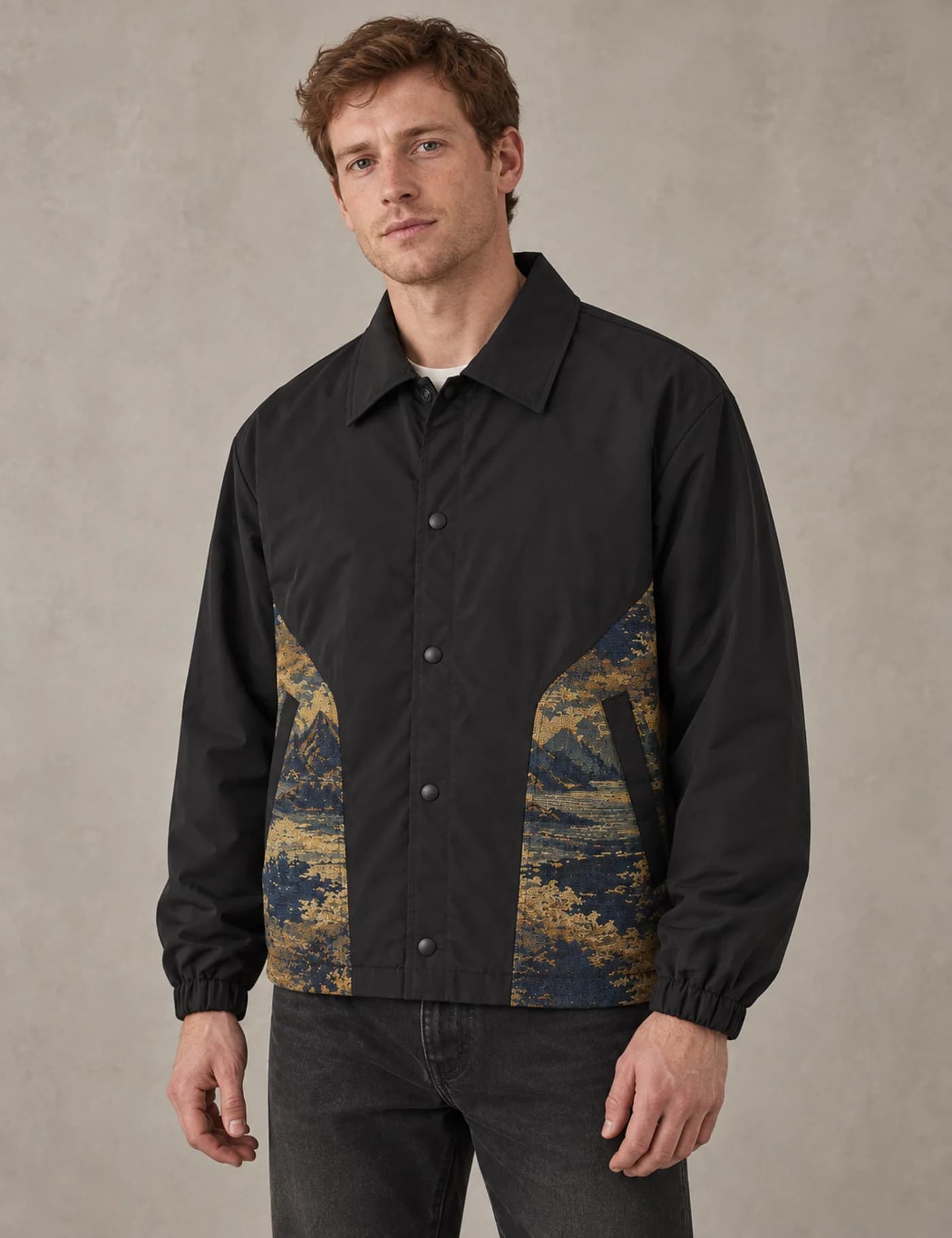
PK-094
Tapestry Landscape-Panel Coach Jacket
View product details →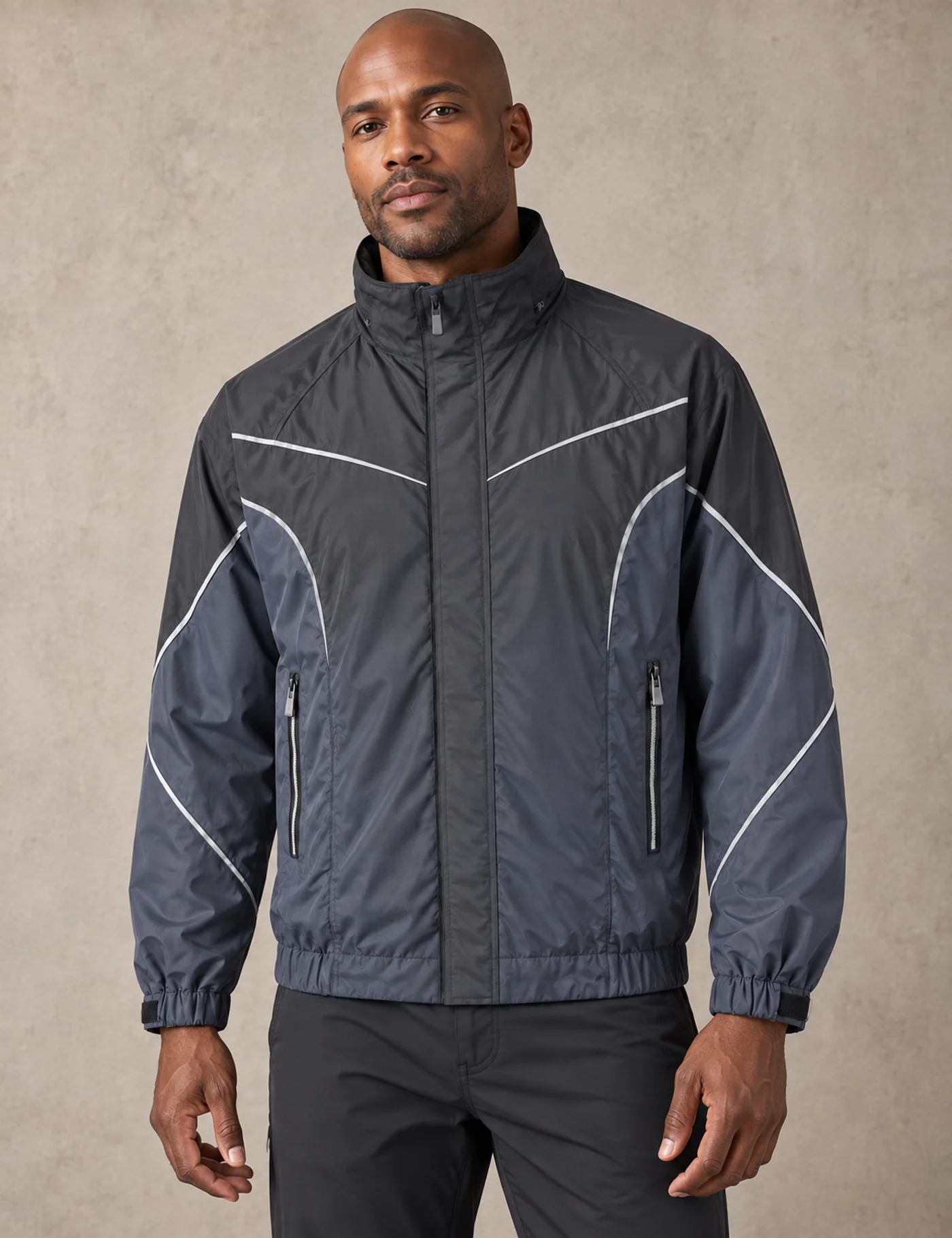
PK-093
Reflective Curved-Panel Windbreaker Jacket
View product details →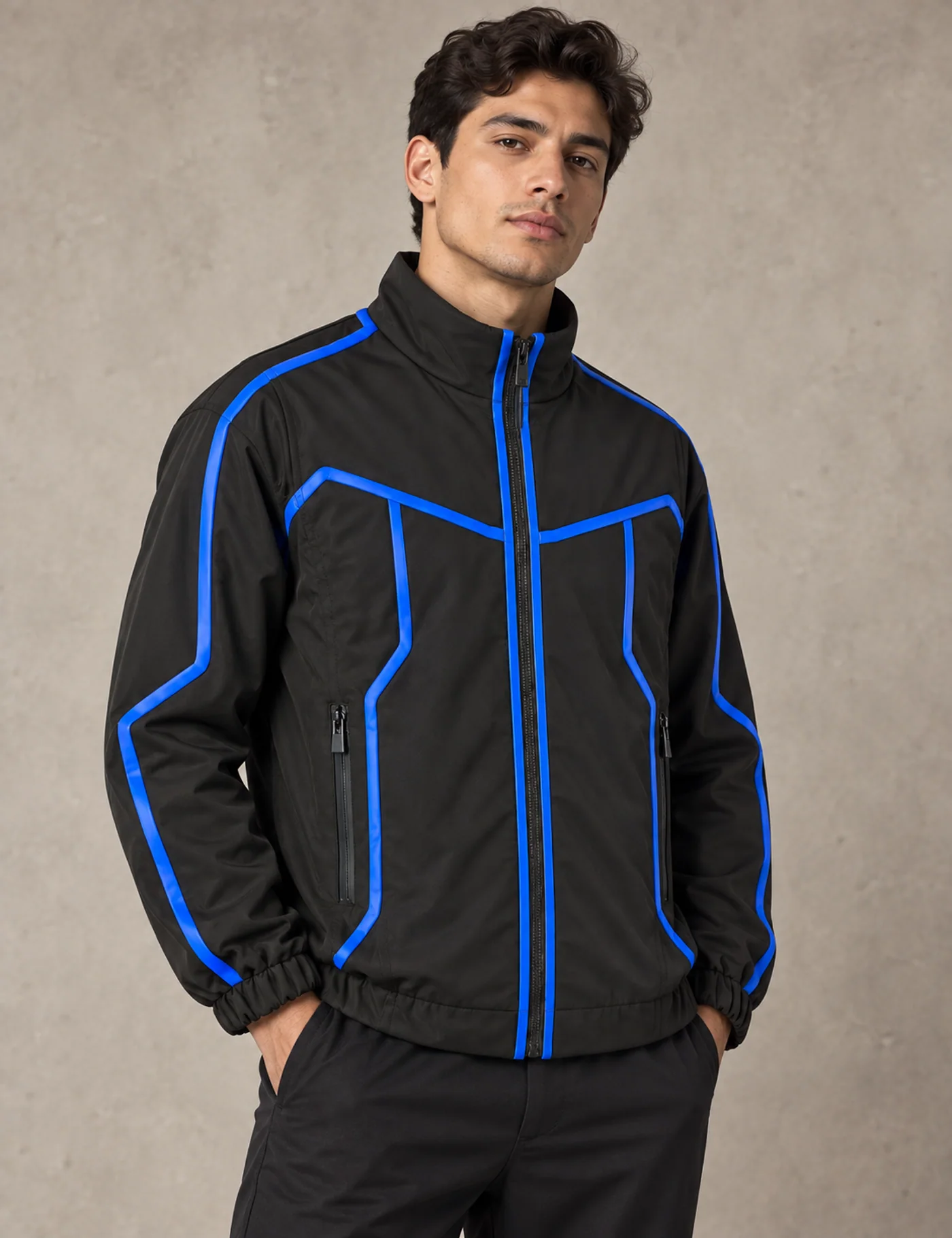
PK-092
Electric-Blue Piping Technical Track Jacket
View product details →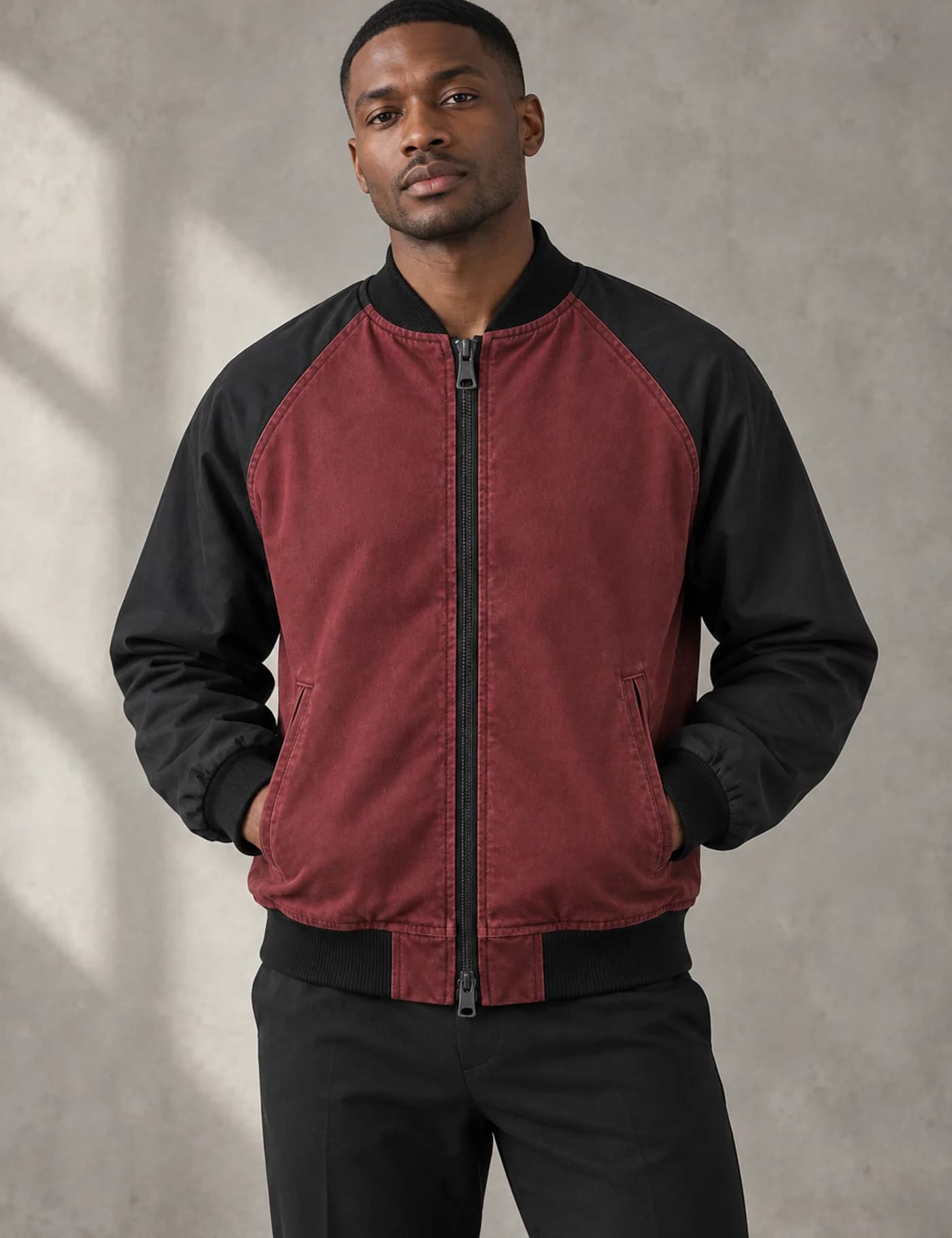
PK-081
Washed Two-Tone Raglan Bomber Jacket
View product details →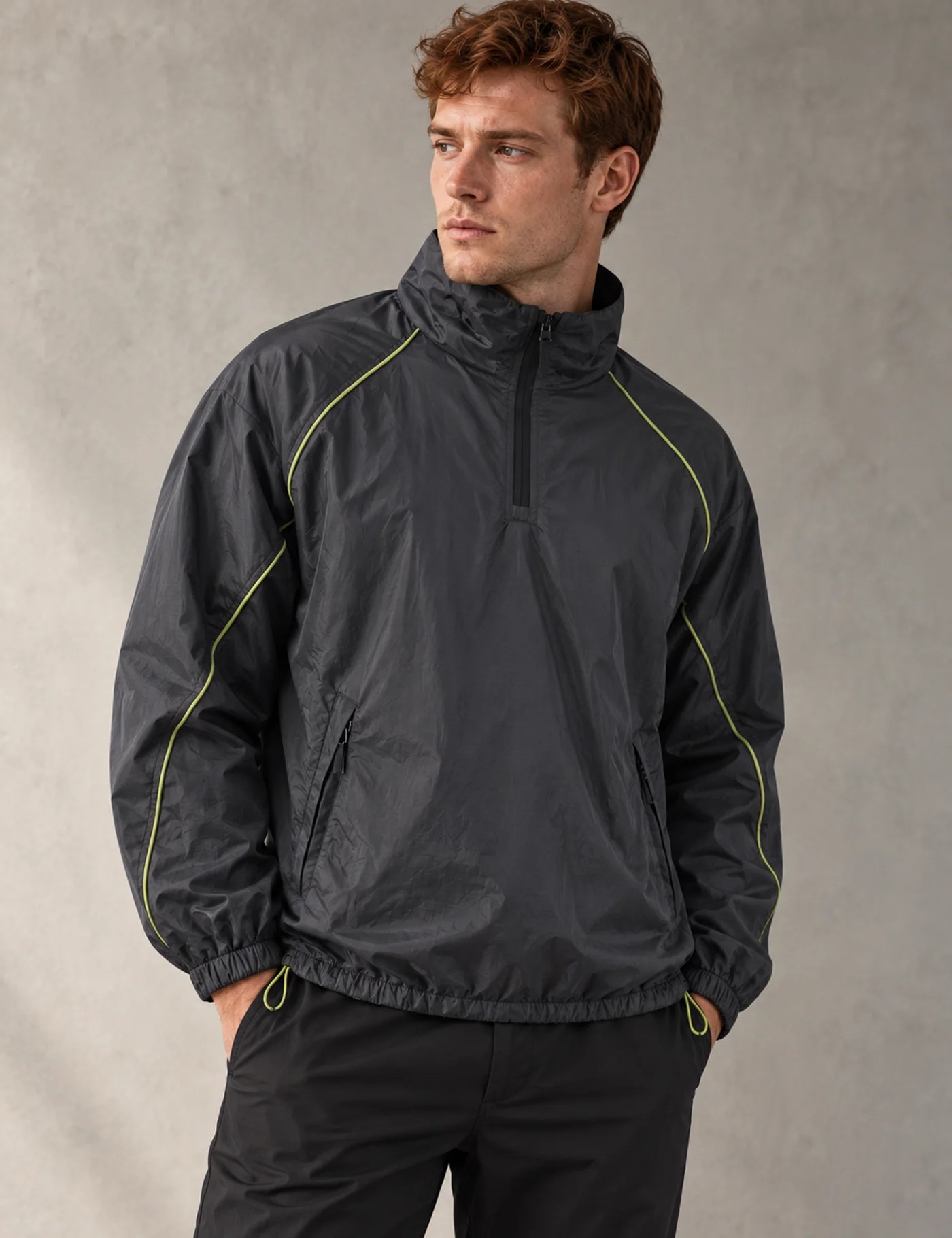
PK-080
Contrast-Piping Half-Zip Windbreaker
View product details →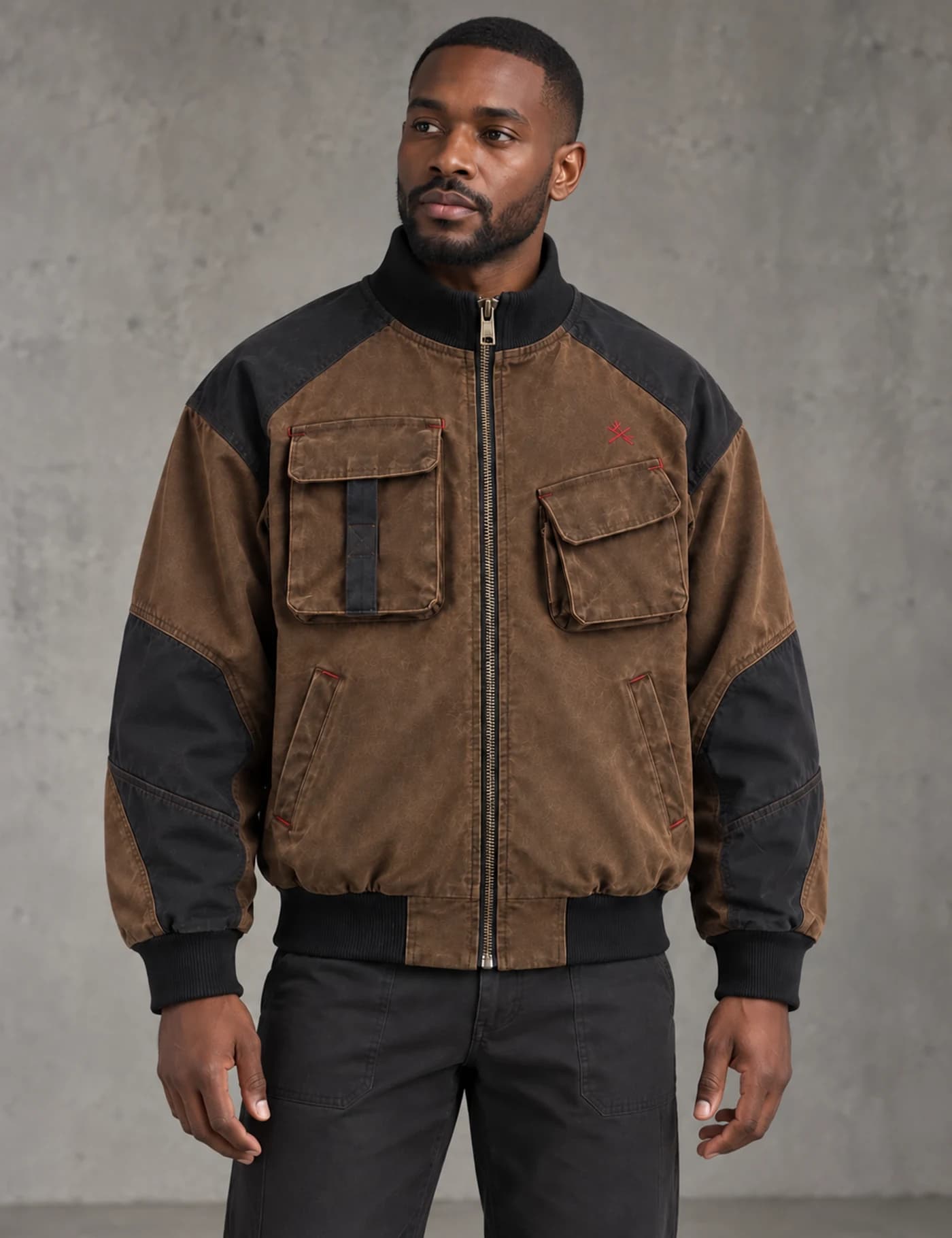
PK-069
Washed Color-Block Utility Bomber Jacket
View product details →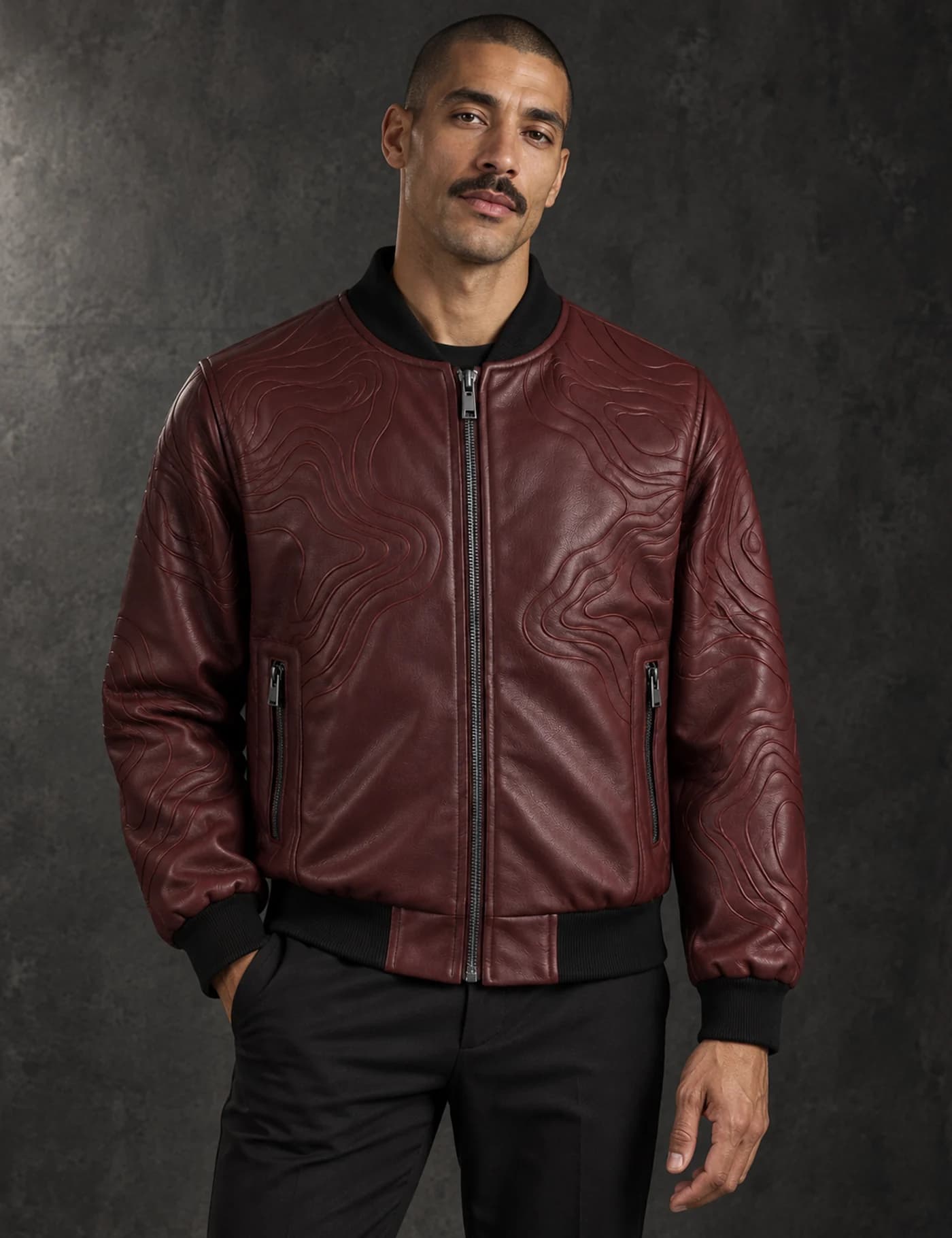
PK-067
Embossed Faux-Leather Bomber Jacket
View product details →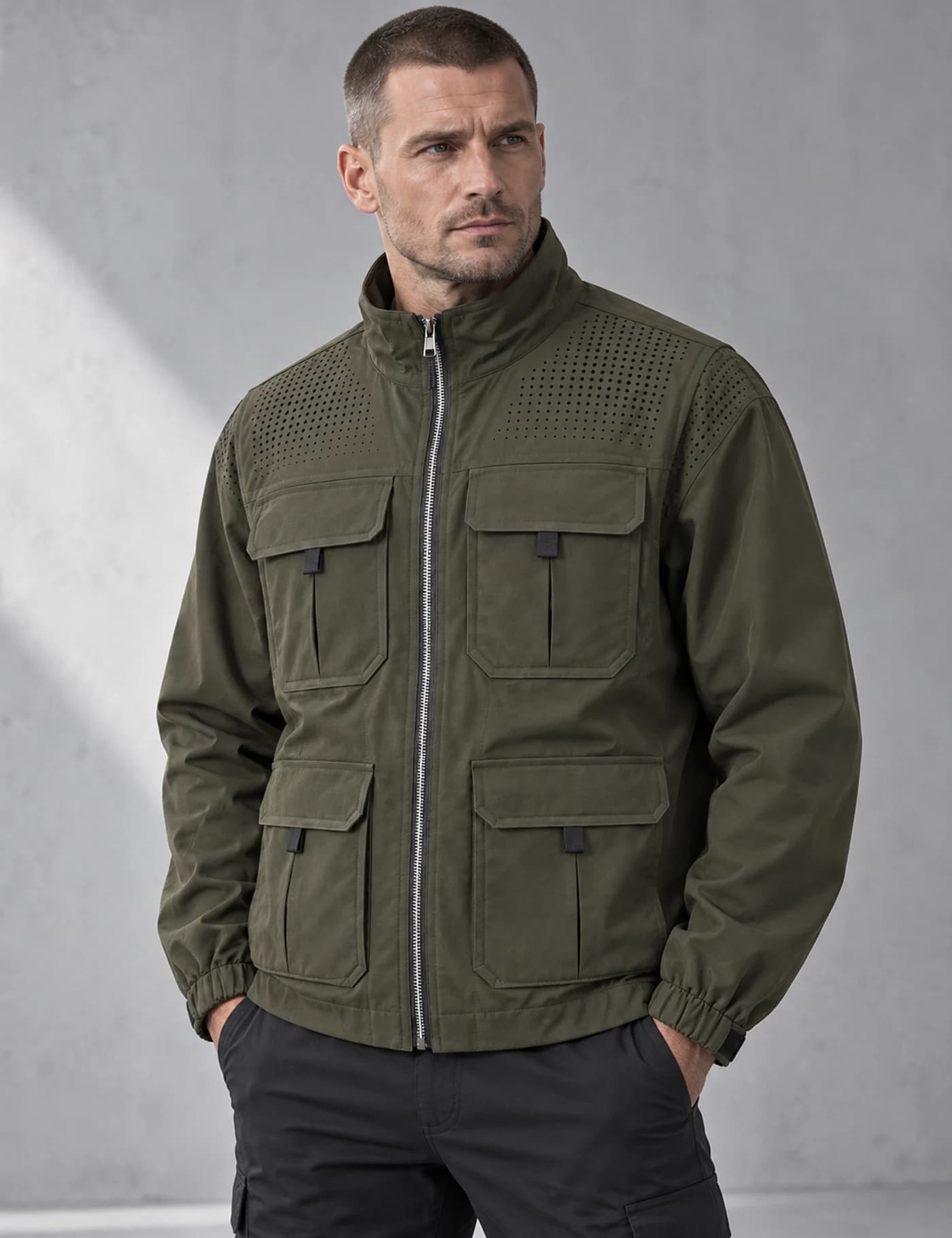
PK-066
Multi-Pocket Stand-Collar Utility Jacket
View product details →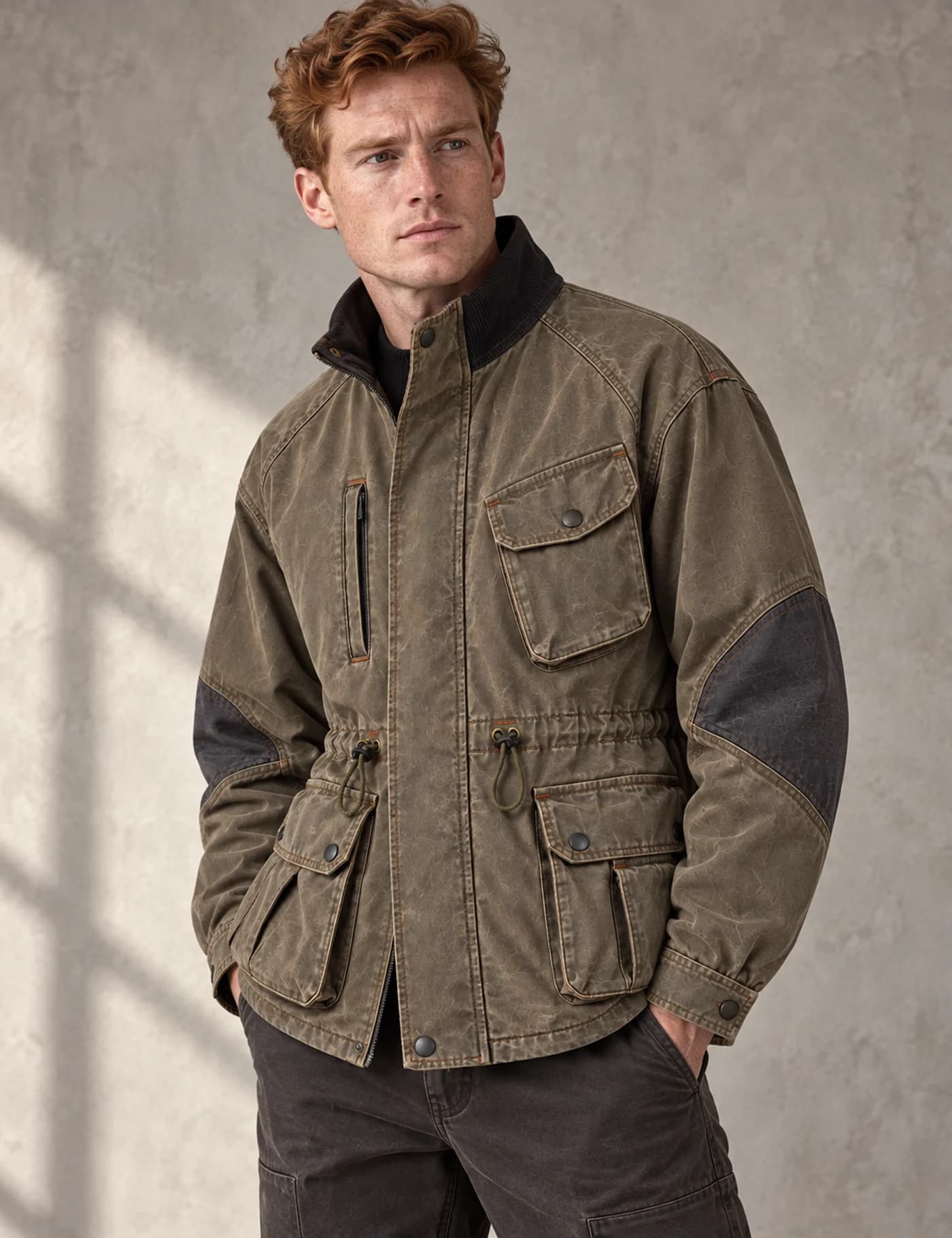
PK-064
Washed Multi-Pocket Field Jacket
View product details →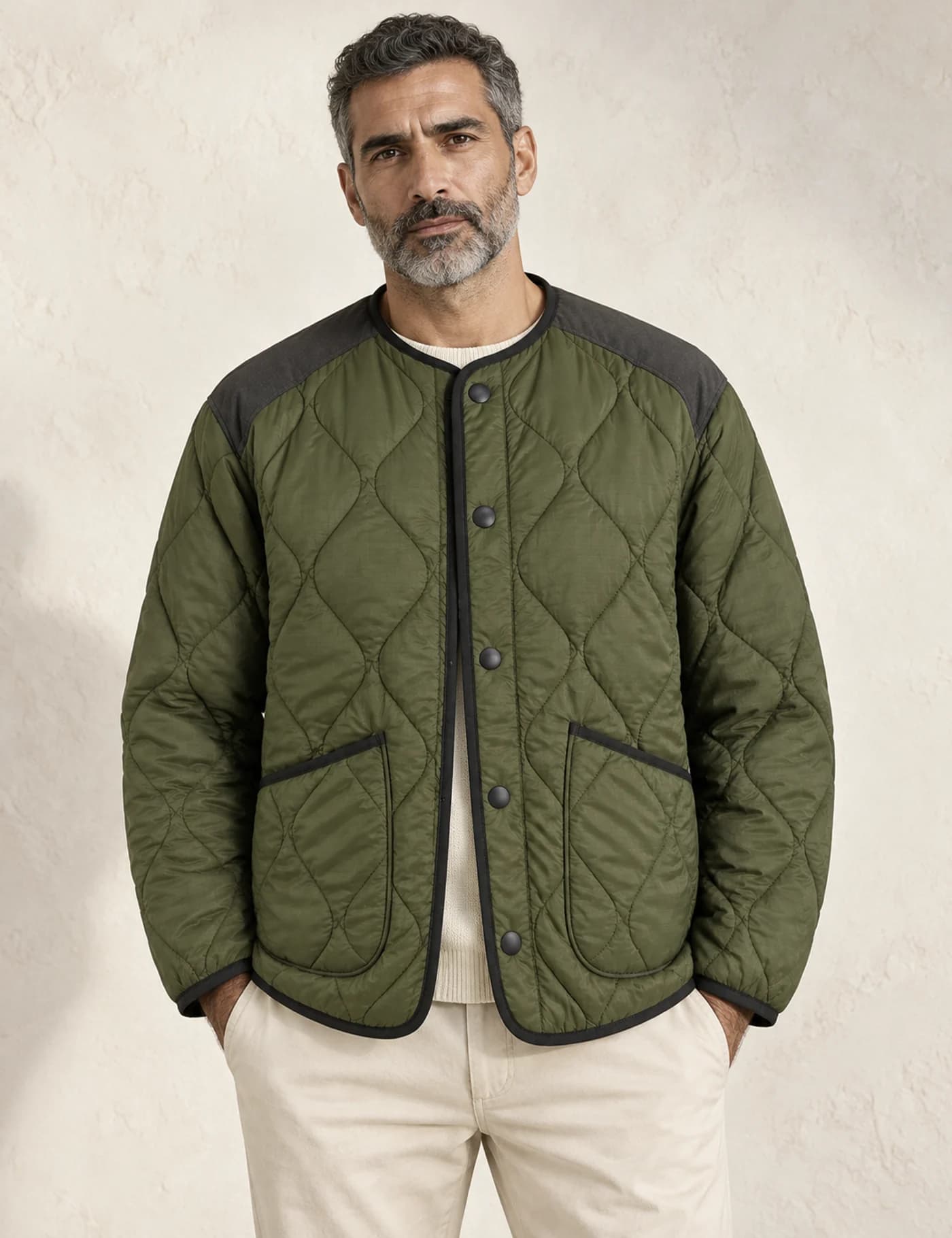
PK-063
Diamond-Quilted Liner Jacket
View product details →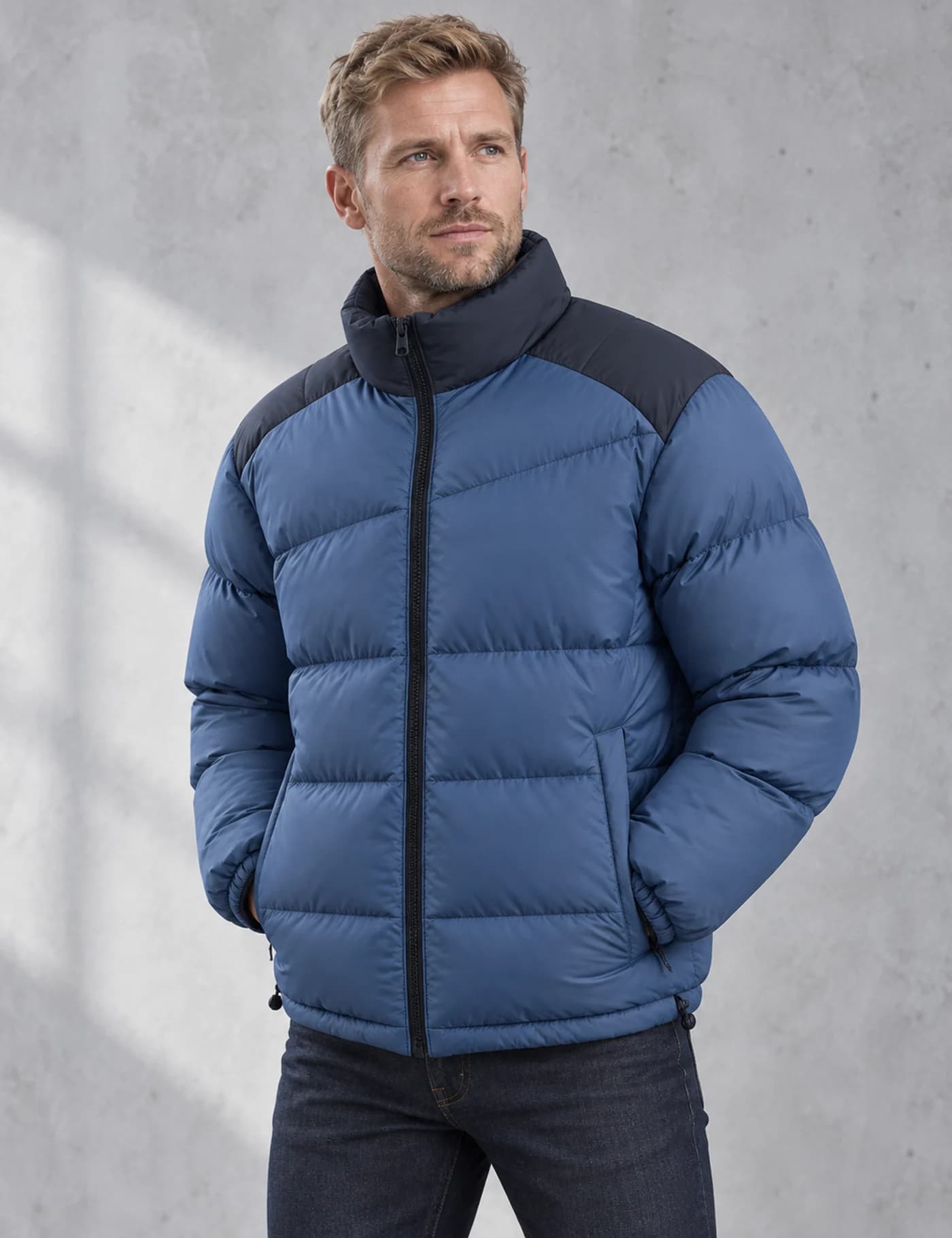
PK-062
Lightweight Color-Block Puffer Jacket
View product details →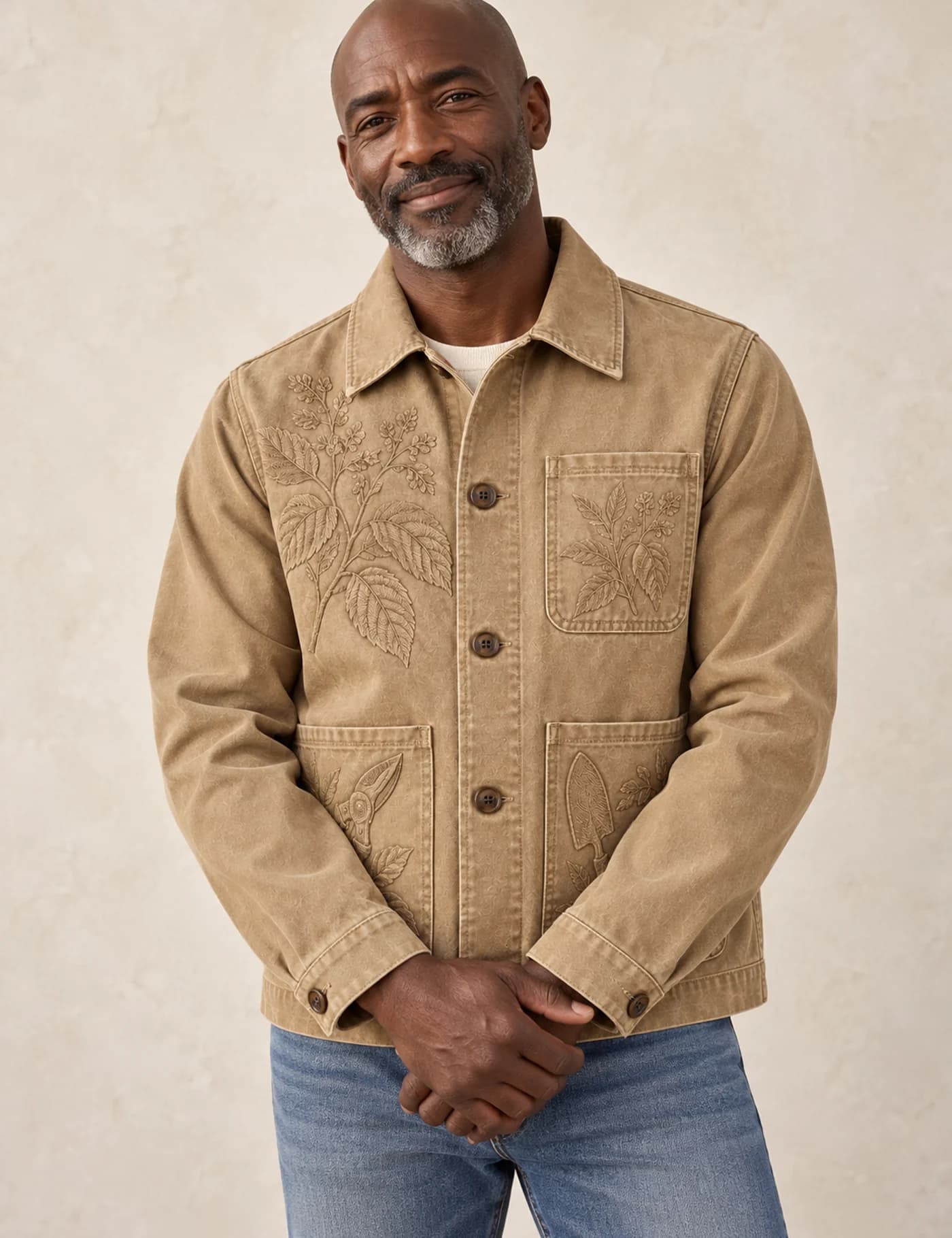
PK-056
Tonal Embroidery Chore Jacket
View product details →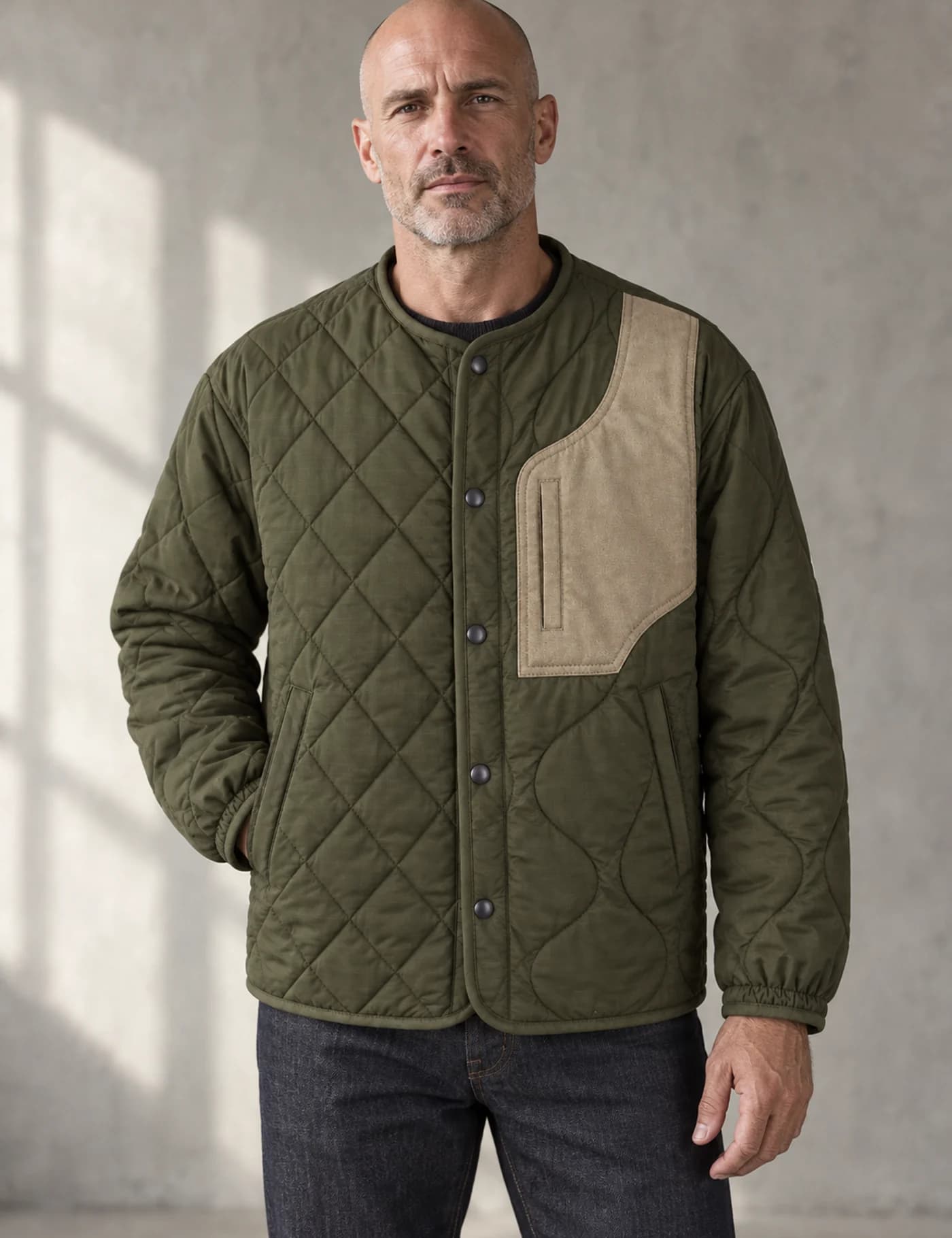
PK-055
Quilted Patchwork Jacket
View product details →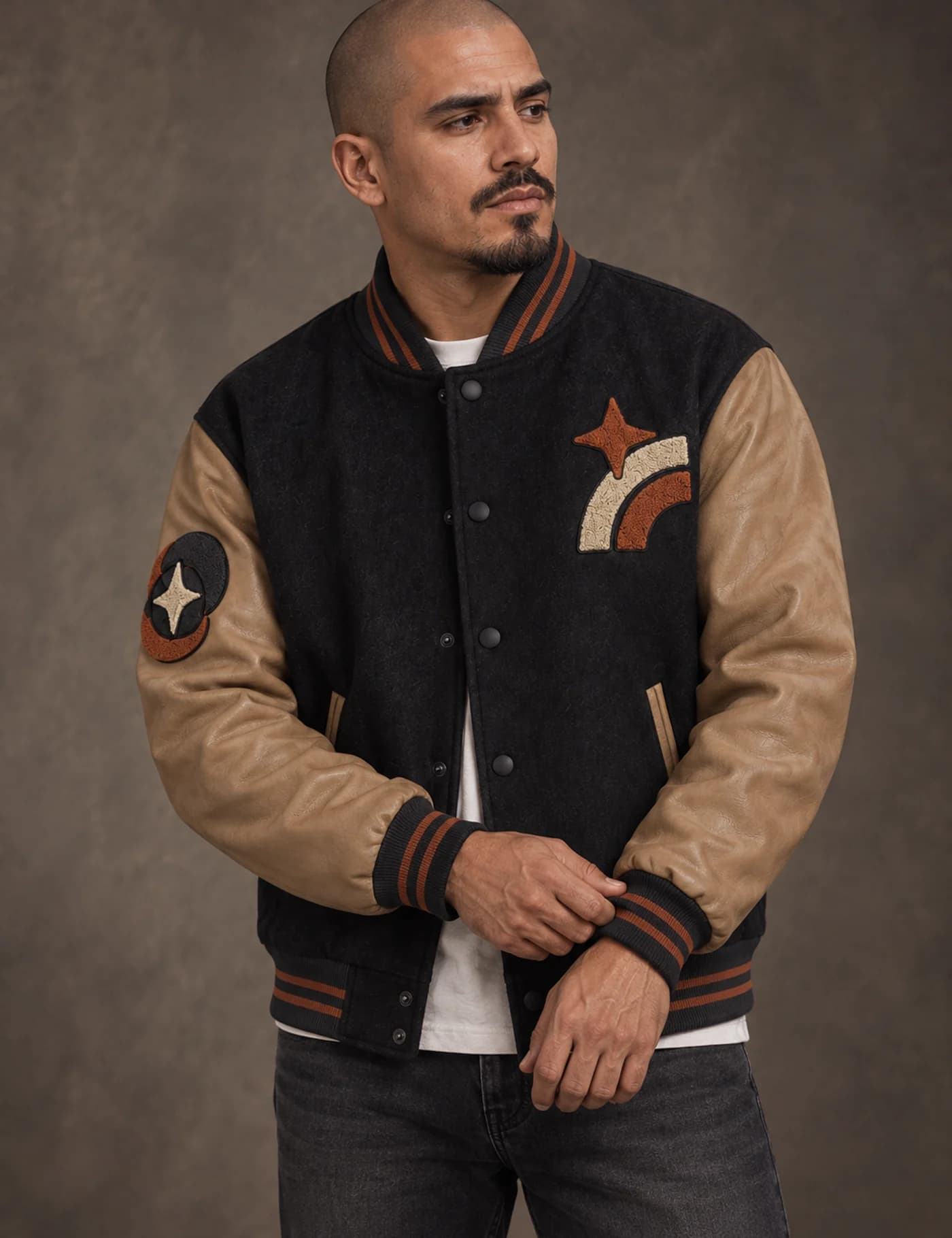
PK-053
Embroidered Patch Varsity Jacket
View product details →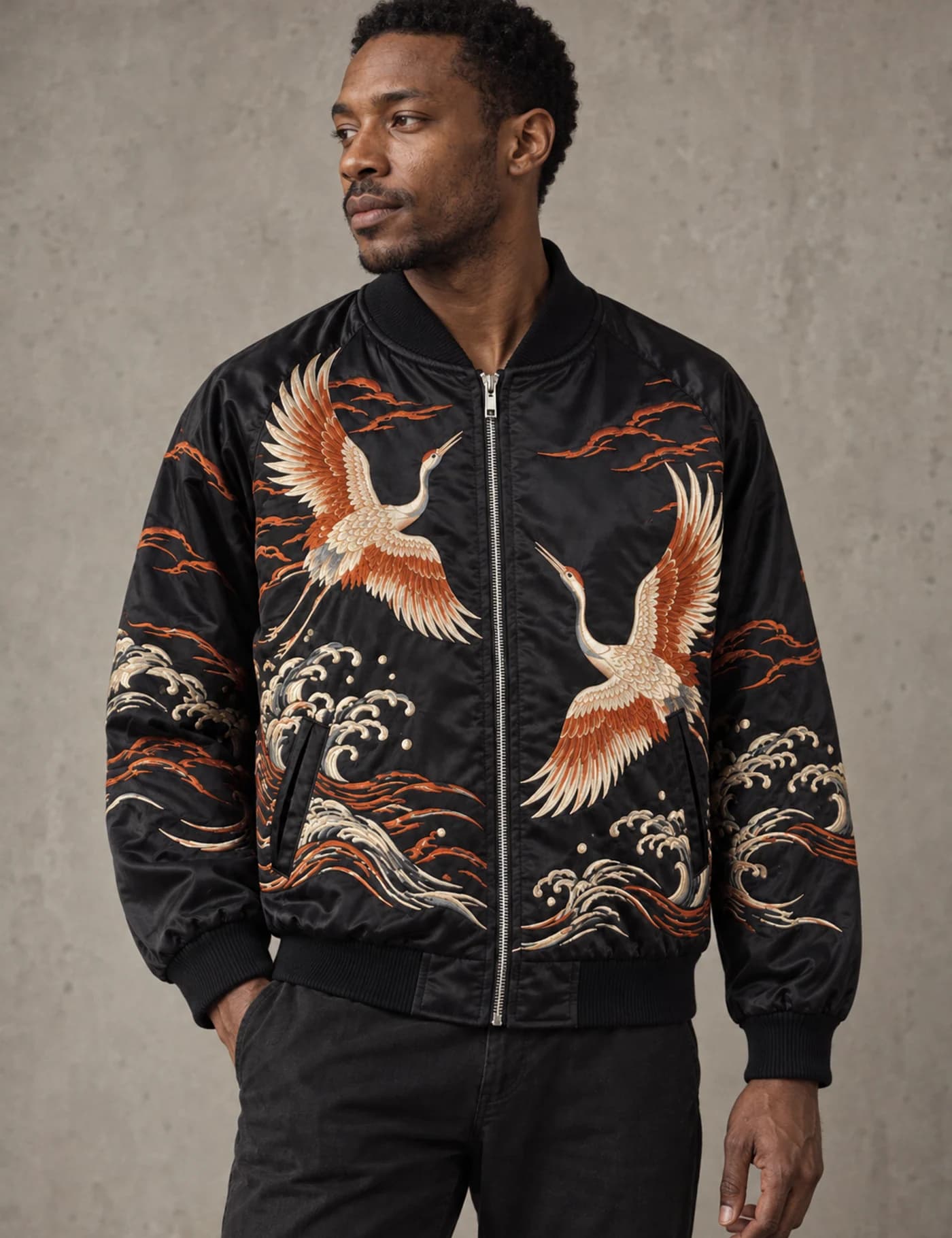
PK-047
Embroidered Souvenir Jacket
View product details →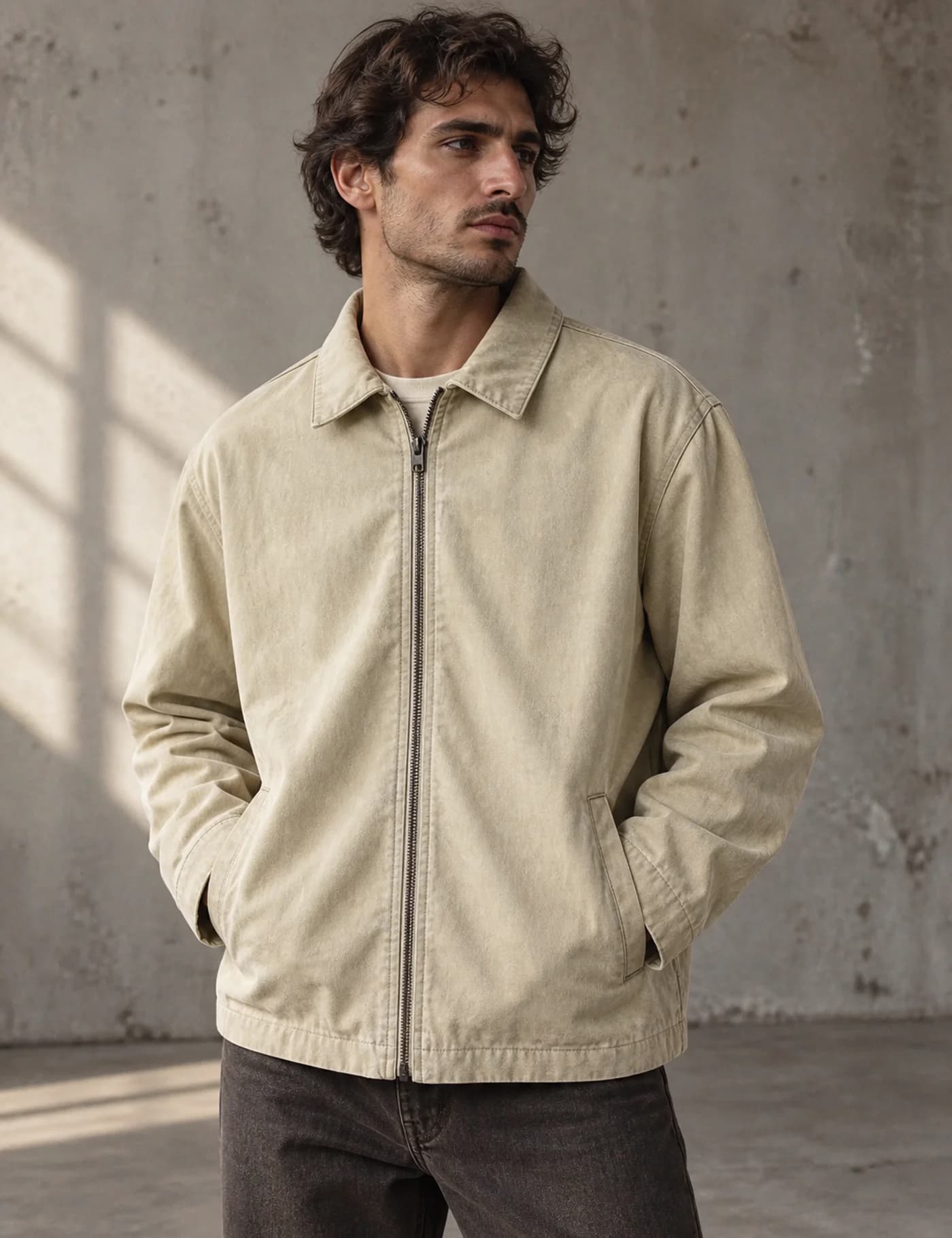
PK-037
Beige Washed Zip Coach Jacket
View product details →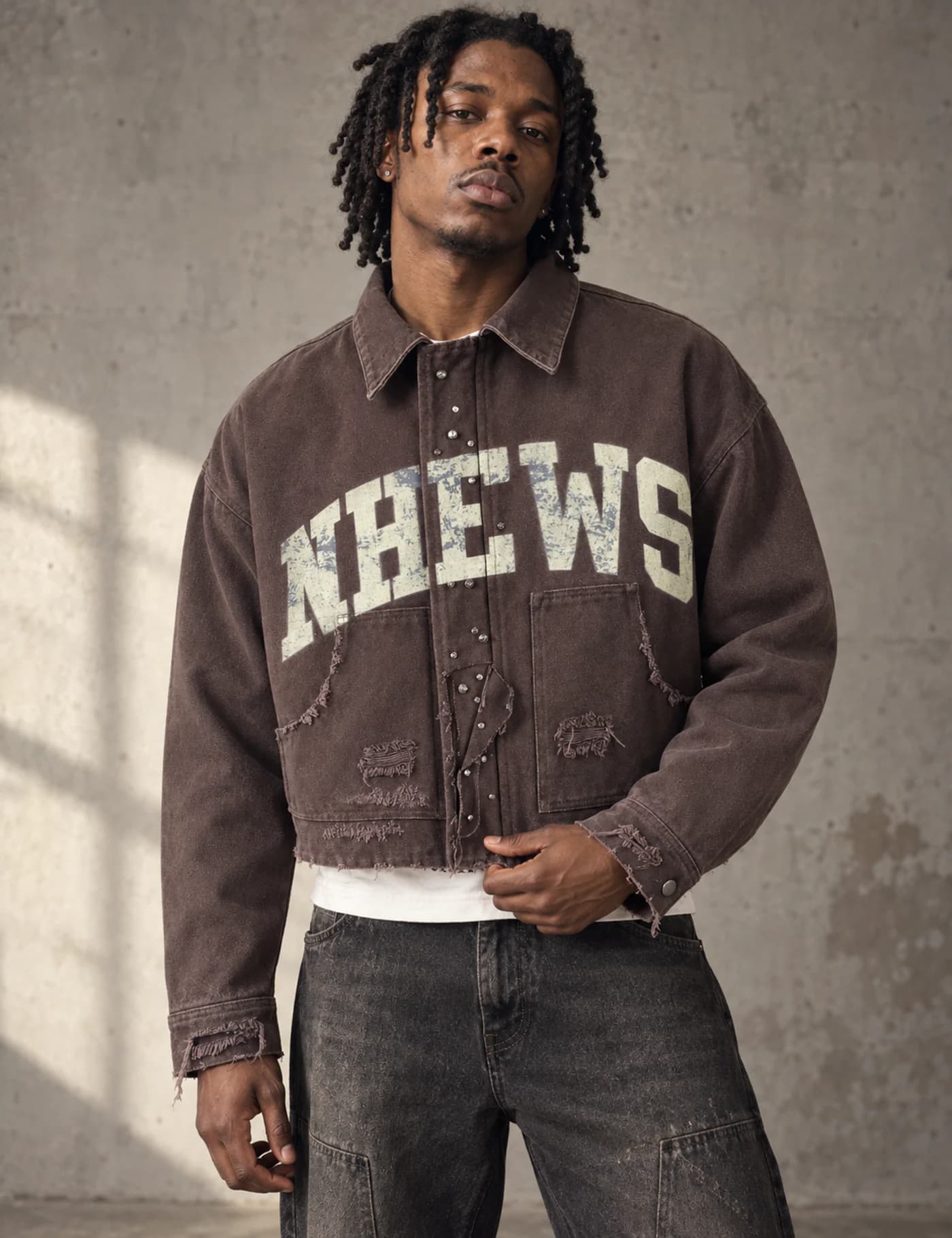
PK-036
Brown Cropped Graphic Workwear Jacket
View product details →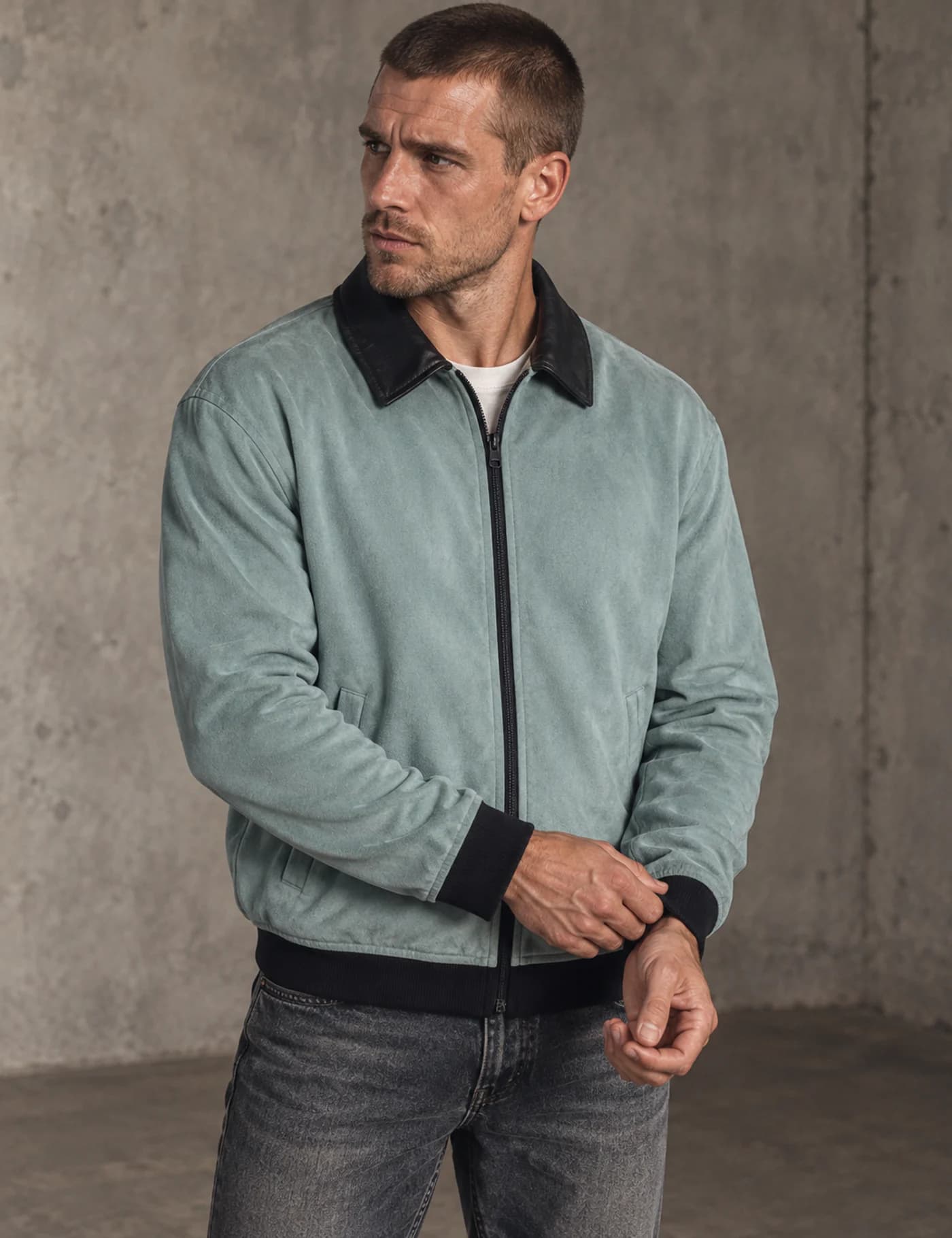
PK-033
Contrast Collar Bomber Jacket
View product details →
PK-028