01
Outline artwork
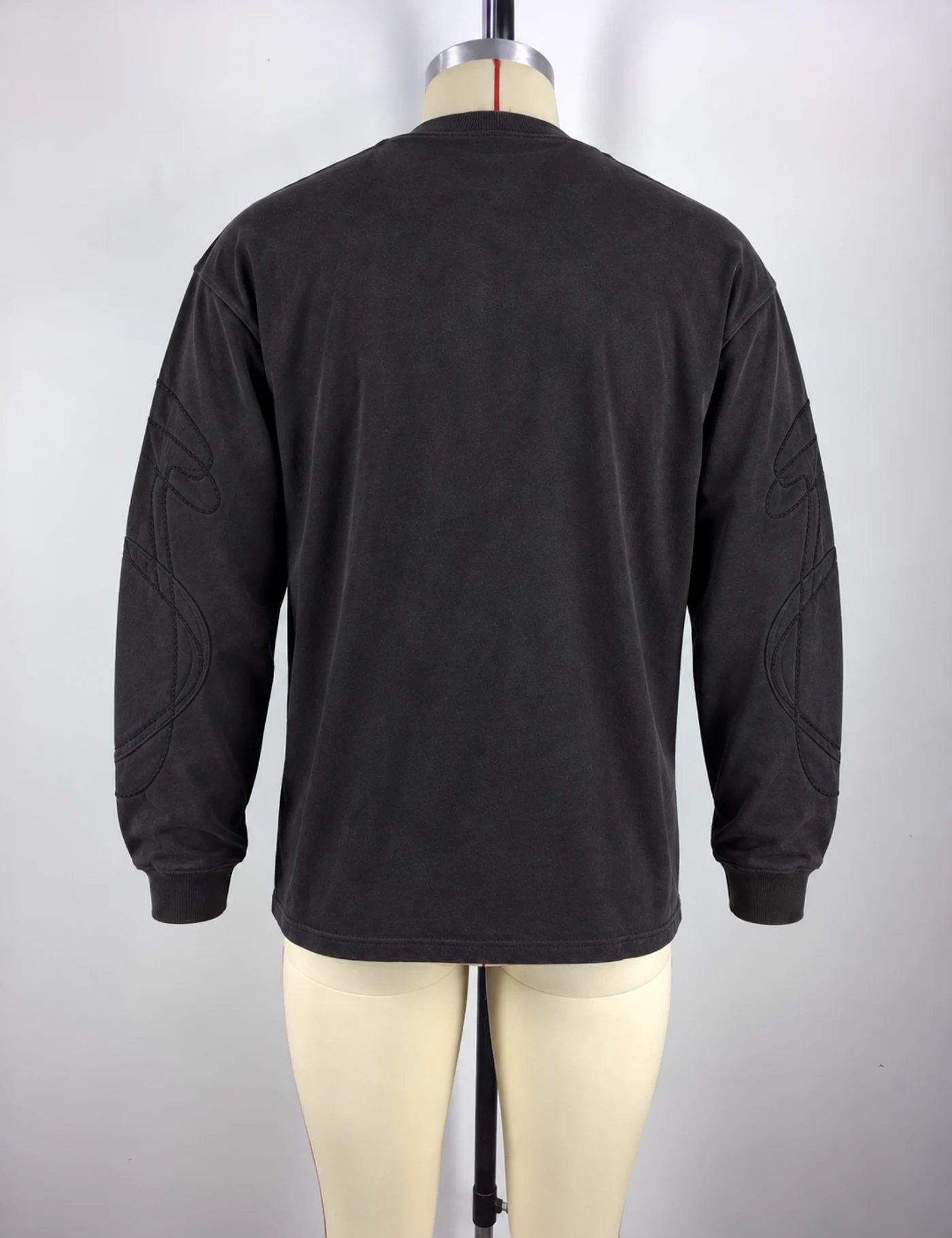
Map the complete motif on an opened sleeve pattern, including the portion that turns away from the front view.
Custom Menswear Manufacturing / OEM & ODM / Worldwide Delivery
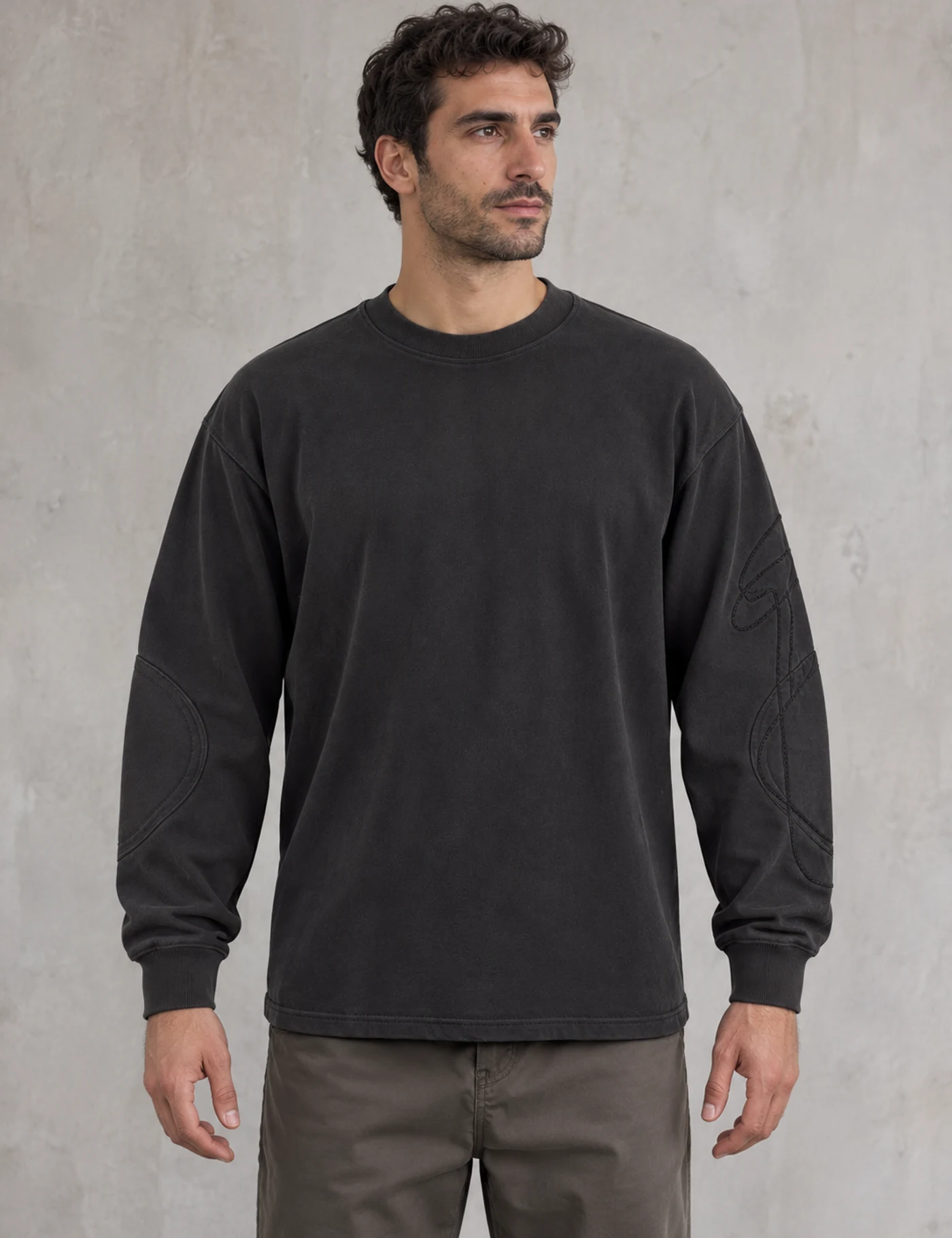
PK-117 / Actual sample reference
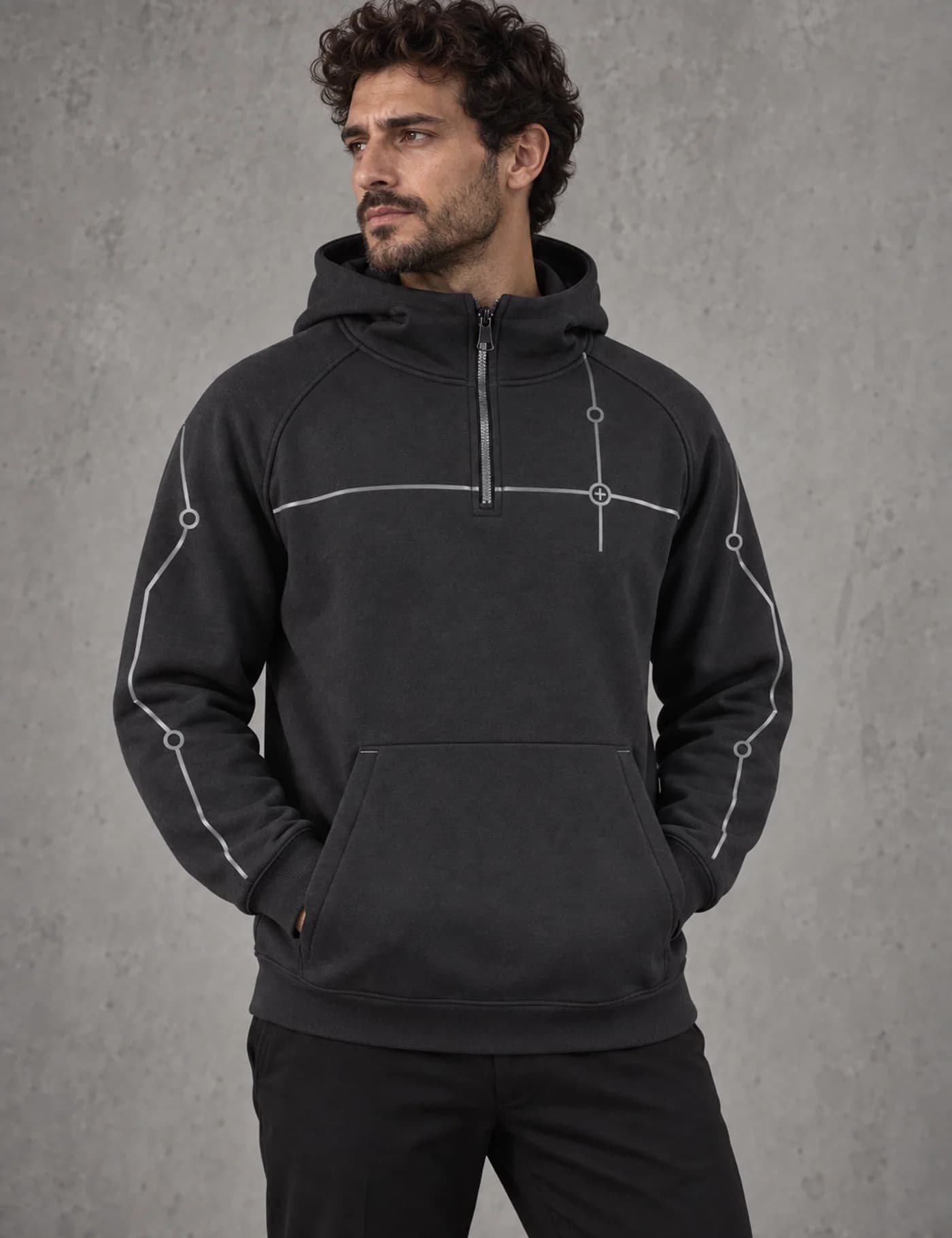
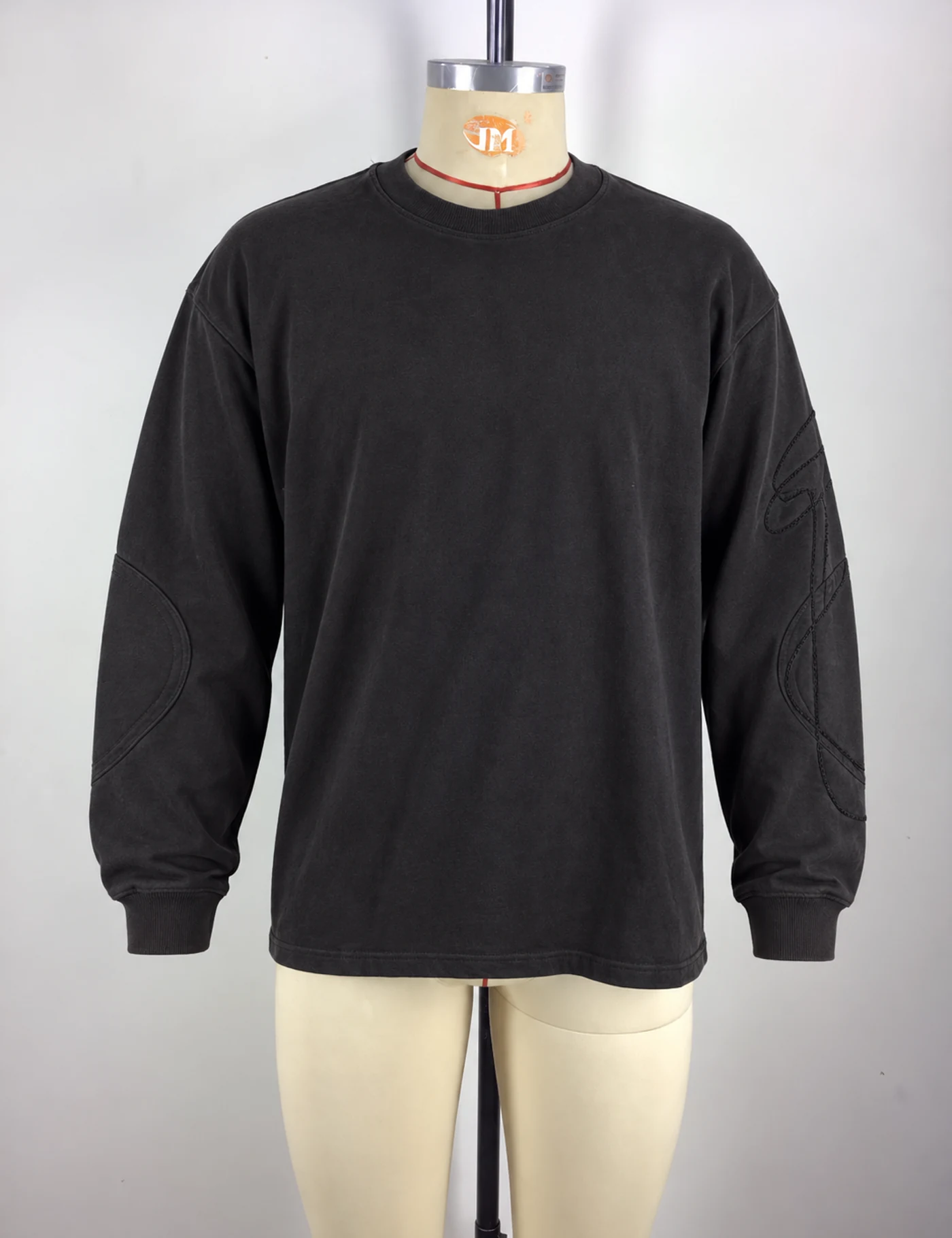
A plain washed-charcoal body keeps attention on the oversized tonal outlines running around both sleeves. The crewneck has dropped shoulders and rib cuffs, while the lower edge is straight rather than gathered into a rib band. For a quieter alternative to a chest-print sweatshirt, this reference makes sleeve placement and wash contrast the main development decisions.
01
Actual sample shown
02
Custom development
03
Sample approval before bulk
04
Project-specific quotation
Actual sample evidence
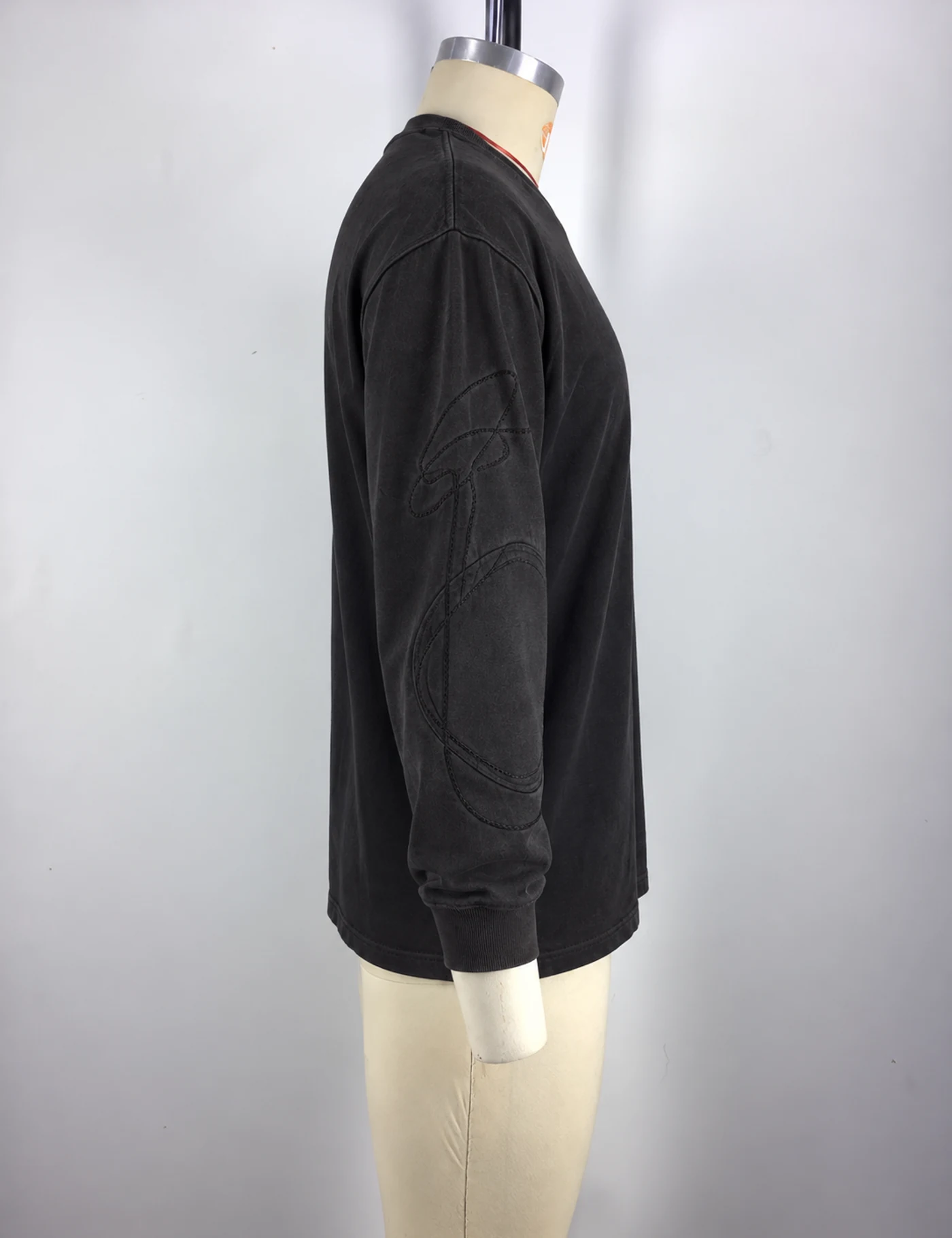
The three views show where the tonal motif turns around the arm and how the straight hem falls.
Visible on the sample
Confirmed for your project
Customization map
Unlike a front graphic sweatshirt, this style depends on sleeve pitch and the visibility of dark artwork on a faded surface.
01
Map the complete motif on an opened sleeve pattern, including the portion that turns away from the front view.
02
Approve the outline against a washed body swatch; a dark mark may disappear when viewed at a distance.
03
Set body length and hem allowance together so the lower edge hangs without a ribbed blouson effect.
04
Check that changing sleeve volume does not stretch the motif around the elbow or interrupt it at the underarm seam.
05
Compare rib width and recovery with the relaxed sleeves while keeping the straight body hem independent of rib tension.
06
Choose the back-of-fabric handle and assess any decoration backing against the skin before approving the sleeve treatment.
Specification status
The reference pairs a straight-hem sweatshirt body with tonal sleeve artwork. Fabric, finish and decoration method are agreed separately.
Related product references
Development path
Develop the sleeve graphic and fit as one system, then review how both read after the chosen finish.
Place the left and right artwork separately on the sleeve patterns.
Confirm the decoration method and test the tonal mark with the intended wash.
Review shoulder drop, sleeve pitch and the straight lower edge on a worn sample.
Record outline visibility, seam rotation and finished dimensions after the agreed care cycle.
Quality checkpoints
Review the finished garment from several angles, checking that subtle artwork remains legible without compromising sleeve balance.
Compare dark outlines in diffuse light against the approved washed standard.
Measure the motif from shoulder and cuff references on each sleeve.
Bend the arm and inspect how the outlined shapes cross the elbow.
Check waviness and body length without relying on rib tension to hold the hem.
Assess panel shade differences and surface changes after care.
Buyer questions
The images establish an outlined surface detail, not its production method. Review a physical sample or process trial before choosing stitching, printing or another execution. The approved route should preserve the subdued contrast.
The motif wraps around a moving, tapered panel. A flattened sleeve drawing lets the buyer set its relationship to the shoulder, elbow and cuff instead of approving only the visible front portion.
Yes, but that produces a different silhouette. The pictured straight hem falls from the body without gathering; changing it calls for another body-length and fit review.
Continue the evaluation
Explore the hoodies & sweatshirts range for other silhouettes and construction references.
Open reference →Review how project briefs, sample revisions and approvals are coordinated.
Open reference →Read about inspection planning and checks against approved samples.
Open reference →Custom development / PK-117
Send your reference, size chart and quantities, together with your requirements for tonal sleeve outlines.