01
Knee panel
Set overlay top and bottom positions relative to the wearer's knee rather than copying a fixed distance across all sizes.
Custom Menswear Manufacturing / OEM & ODM / Worldwide Delivery
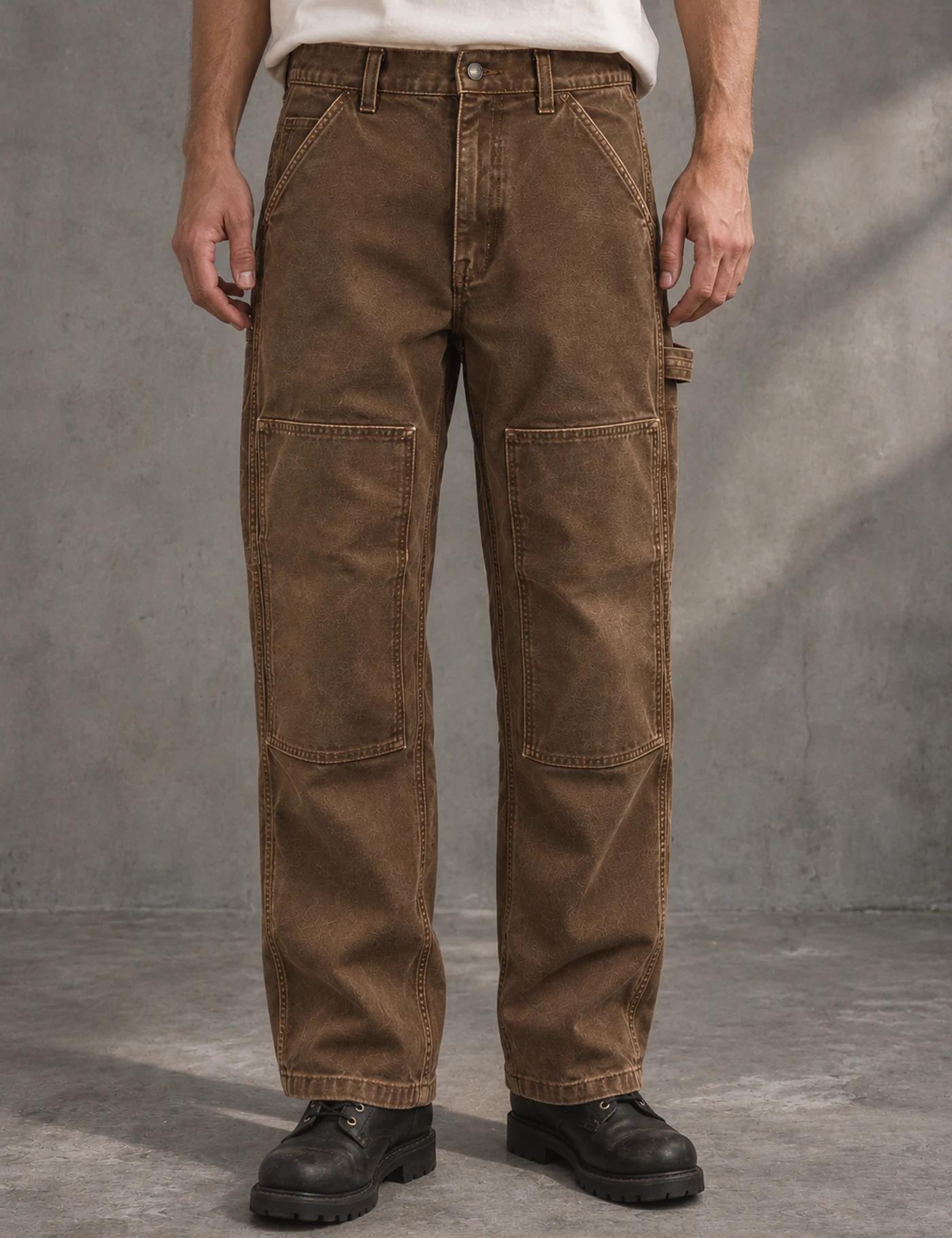
PK-120 / Actual sample reference
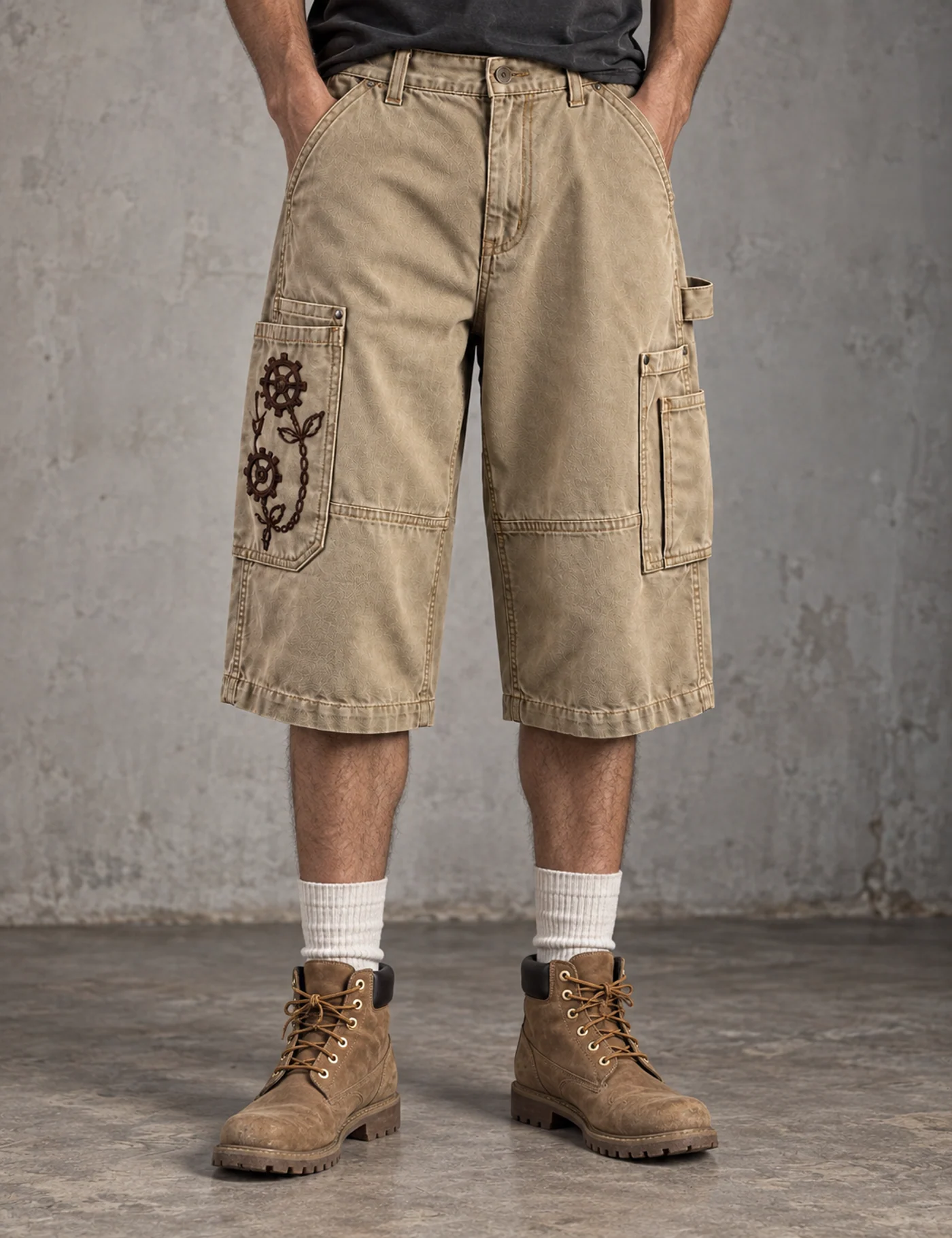
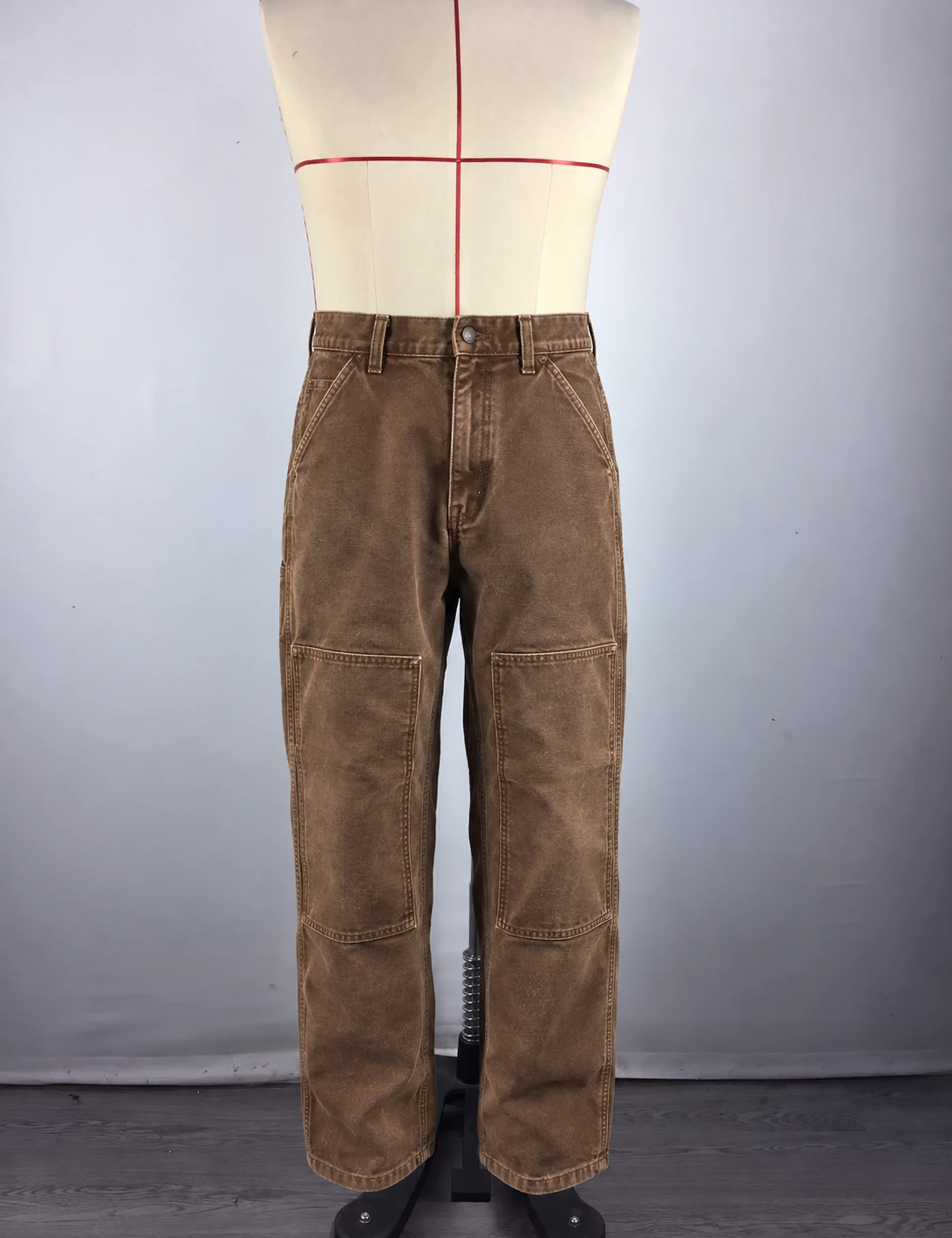
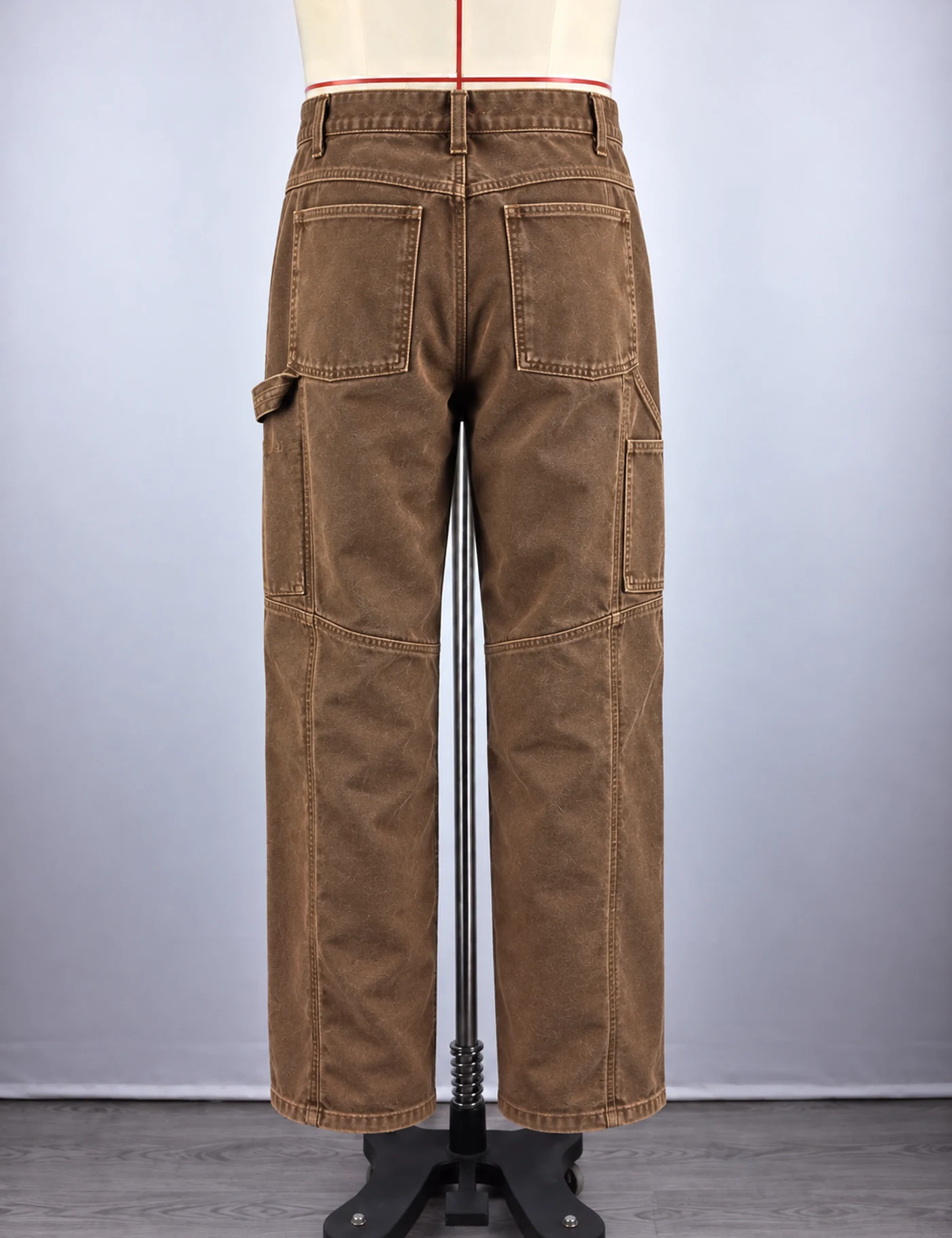
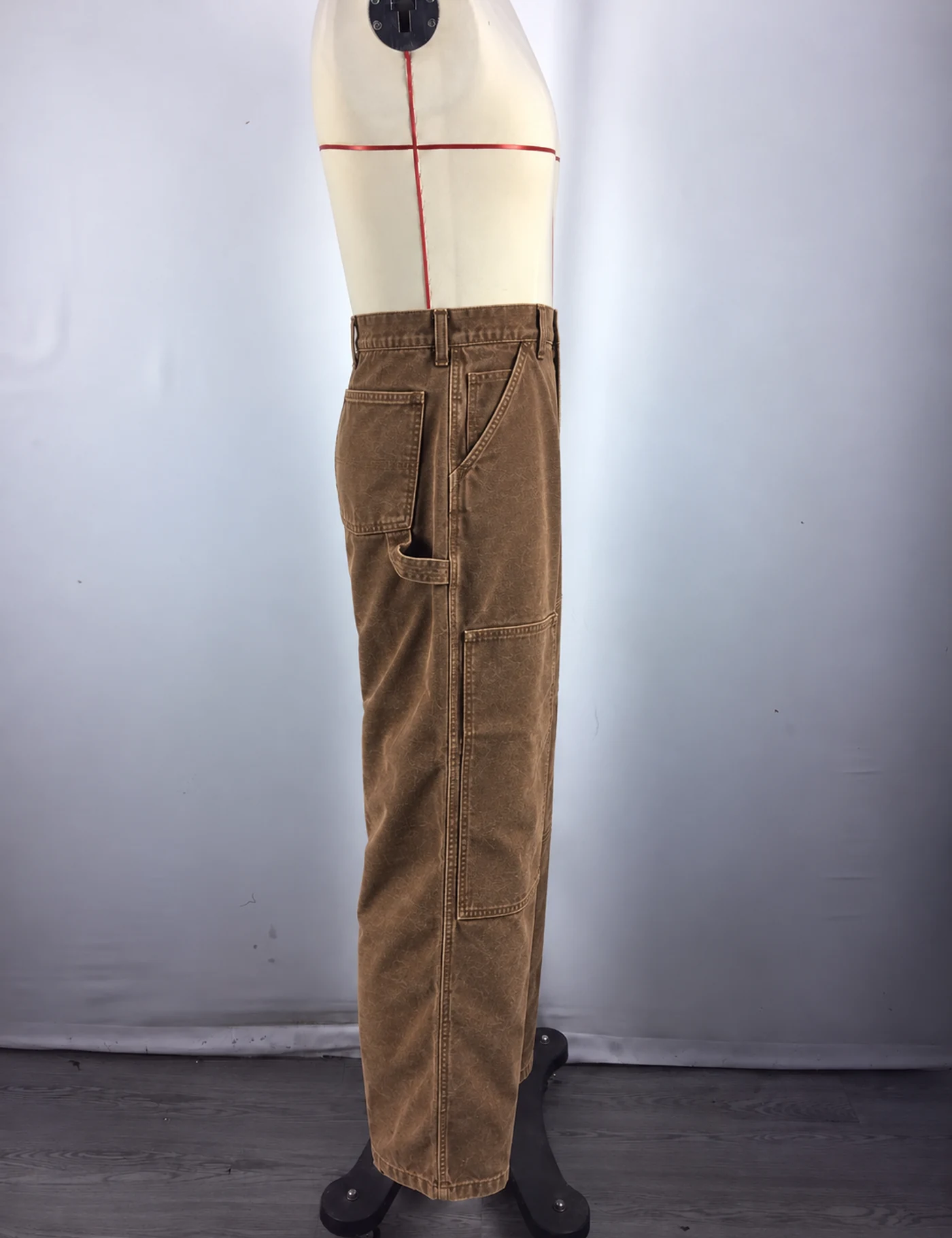
Large rectangular knee overlays and tan topstitching define these brown washed carpenter trousers. A button-and-fly waist, slanted front pockets, rear patch pockets and side tool storage complete the workwear layout. Compared with flap-pocket cargo pants, the emphasis is on flat knee reinforcement and tool placement without a bulky thigh-pocket silhouette.
01
Actual sample shown
02
Custom development
03
Sample approval before bulk
04
Project-specific quotation
Actual sample evidence
Use all three views to distinguish flat knee panels, rear storage and the narrow side details.
Visible on the sample
Confirmed for your project
Customization map
A double-knee carpenter block prioritizes overlay position and tool attachments rather than large flap cargo pockets.
01
Set overlay top and bottom positions relative to the wearer's knee rather than copying a fixed distance across all sizes.
02
Choose which loops and narrow pockets are useful for the intended fashion or workwear brief.
03
Approve edge fading on the double-layer panel as well as on the single-layer leg.
04
Fit the straight hem over the intended shoe before fixing the final inseam.
05
Choose the rise, waistband width and fly opening for the intended base block, allowing for dimensional change during washing.
06
Trial stitch spacing and reinforcement at knee-overlay corners so the added layers remain flat after finishing.
Specification status
Knee overlays and tool-storage details establish the carpenter direction. Their dimensions and the washed fabric specification remain open to development.
Related product references
Development path
Build the workwear details around the fitted leg, then assess the complete layered construction after finishing.
Fit the base block and mark the knee level in standing and seated positions.
Trial panel corners, tool pockets and the loop attachments on the chosen cloth.
Review shade at multiple-layer areas and record dimensional change.
Lock panel positions, thread contrast, loop dimensions and final measurements.
Quality checkpoints
Review reinforcement, storage and leg hang on the same finished sample, including the effects of added fabric layers.
Check the two knee overlays against the graded placement chart.
Inspect curling and puckering around washed overlay edges.
Check bartacks or other approved reinforcement at pocket and loop stress points.
Inspect waist closure, zipper clearance and topstitch symmetry.
Review side seam twist and hem level after washing.
Buyer questions
No protective rating is established here. The images show an additional fabric layer; any occupational or abrasion claim needs a defined construction and supporting tests.
The knee overlays and pocket corners contain more layers than the surrounding leg. They can fade or shrink differently, so a single flat cloth swatch does not show the whole result.
Yes. Confirm the revised side-pocket layout and stitch positions so the garment reads as a deliberate straight workwear trouser rather than an unfinished tool-pocket design.
Continue the evaluation
Explore the pants & shorts range for other silhouettes and construction references.
Open reference →Review how project briefs, sample revisions and approvals are coordinated.
Open reference →Read about inspection planning and checks against approved samples.
Open reference →Custom development / PK-120
Send your reference, size chart and quantities, together with your requirements for rectangular double-knee panels.