A prototype tests whether a clothing design can become the intended garment. A pre-production sample confirms the approved direction that will control bulk production. The first is built to discover and correct; the second is built to authorize and reproduce.
That distinction is useful, but real development is not always a rigid chain of seven separate garments. For a simple low-volume order, the latest correct approval sample can sometimes become the sealed production reference. What cannot be skipped is an explicit record of the final garment, materials, techniques and permission to begin bulk.
Key takeaways
- An initial sample tests design, fit, material suitability and manufacturing feasibility.
- A PP sample should represent the confirmed bulk standard, with any physical label or packaging exceptions documented.
- Seven named stages do not always mean seven separate samples; low-risk stages can be combined with written agreement.
- Bulk begins only after the PO, final controlling sample approval and explicit client authorization.
What Is the Difference Between a Prototype and a PP Sample?
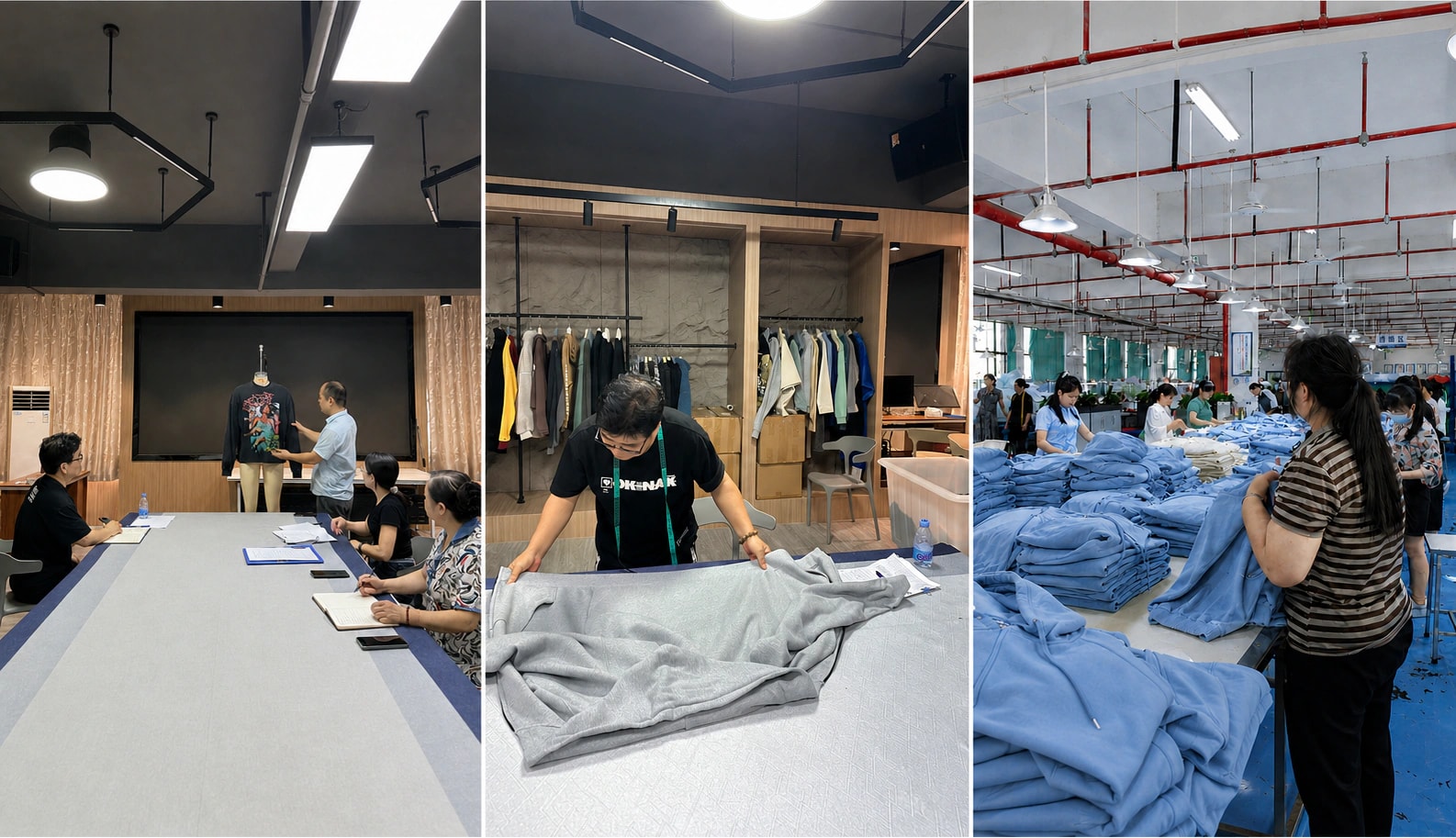
The difference is not simply “early sample” versus “better sample.” It is the decision each garment supports. A prototype helps the brand and factory identify what needs to change. A PP sample, also called a pre-production sample, shows what both sides have agreed to reproduce.
| Control point | Prototype / initial sample | Pre-production sample |
|---|---|---|
| Primary purpose | Test the first physical interpretation of the design | Set the approved production reference before bulk |
| Fit and proportion | Preliminary; corrections are expected | Final approved direction |
| Fabric and color | Production-intent where practical; substitutes may be declared | Approved bulk fabric and final color standard |
| Trims and hardware | Functional substitutes may be used to save development time | Approved bulk components, except documented physical-label or packaging exceptions |
| Print, embroidery and wash | Placement, scale and initial feasibility | Final approved method, color, hand and effect |
| Labels and packaging | Usually not required | Requirements must be confirmed; physical production items may follow later when supplier MOQ applies |
| Approval role | A development checkpoint | The sealed factory reference for production and quality control |
A prototype can be visually convincing and still not be ready for bulk. If its fabric was temporary, its print was only a placement test or its measurements were not formally approved, it remains a development sample rather than a production release.
What Is the Complete Clothing Sample Sequence?
A complete control sequence can be written as Initial Sample → Fit Sample → Revised Sample → Approval Sample → PP Sample → Size Set Sample → Shipment Sample. Each name answers a different production question.
- Initial Sample
Tests the first physical interpretation of design, material, fit and construction. - Fit Sample
Focuses on silhouette, wearing effect, measurements and balance on the body. - Revised Sample
Applies the agreed corrections from the previous review. - Approval Sample
Records the latest correct garment direction accepted by the brand. - PP Sample
Translates the approved direction into the factory's bulk-production reference. - Size Set Sample
Checks the graded measurements and proportions across selected sizes. - Shipment Sample
Shows an actual bulk garment with the final labels, packing and production finish.
No. The sequence is a control framework. A fit and revised sample may be the same development round, and a final approval sample may also become the PP reference for a simple low-volume order. Combining stages is safe only when the approval purpose is named and recorded.
What Must a Brand Check on the Initial Sample?
The first sample is the earliest complete physical test of the style. It should not be judged only by whether it “looks close” to a reference image. KAOUYOU reviews it against a practical set of questions:
- Does the garment structure match the design drawing?
- Does the preliminary fit, silhouette and wearing effect work?
- Are key measurements and the overall proportions reasonable?
- Are the fabric thickness, hand, drape and end use suitable?
- Can the construction and sewing method be produced reliably?
- Are decoration placement, size and first effect correct?
- Do the proposed trims, hardware and functional details work?
- Which points require modification before approval?
If the first sample already uses formal materials—as is common in many KAOUYOU projects—it may resolve more decisions in one round. It is still an initial sample until the brand gives a clear approval and every open bulk condition is closed.
Can a Prototype Use Substitute Materials?
Yes. Substitute fabric, hardware or trims can be appropriate when the correct custom item has a long supplier lead time or a high minimum order. The substitute allows pattern, fit, construction or placement work to continue without paying and waiting for a component that may change after the first review.
Every substitute should be declared. The review note should say what the temporary item is testing, what it cannot prove and what production-intent item will replace it. For example, a temporary zipper can confirm opening length and construction, but it cannot approve the final puller finish, tape color or durability.
What Must a Pre-Production Sample Match?
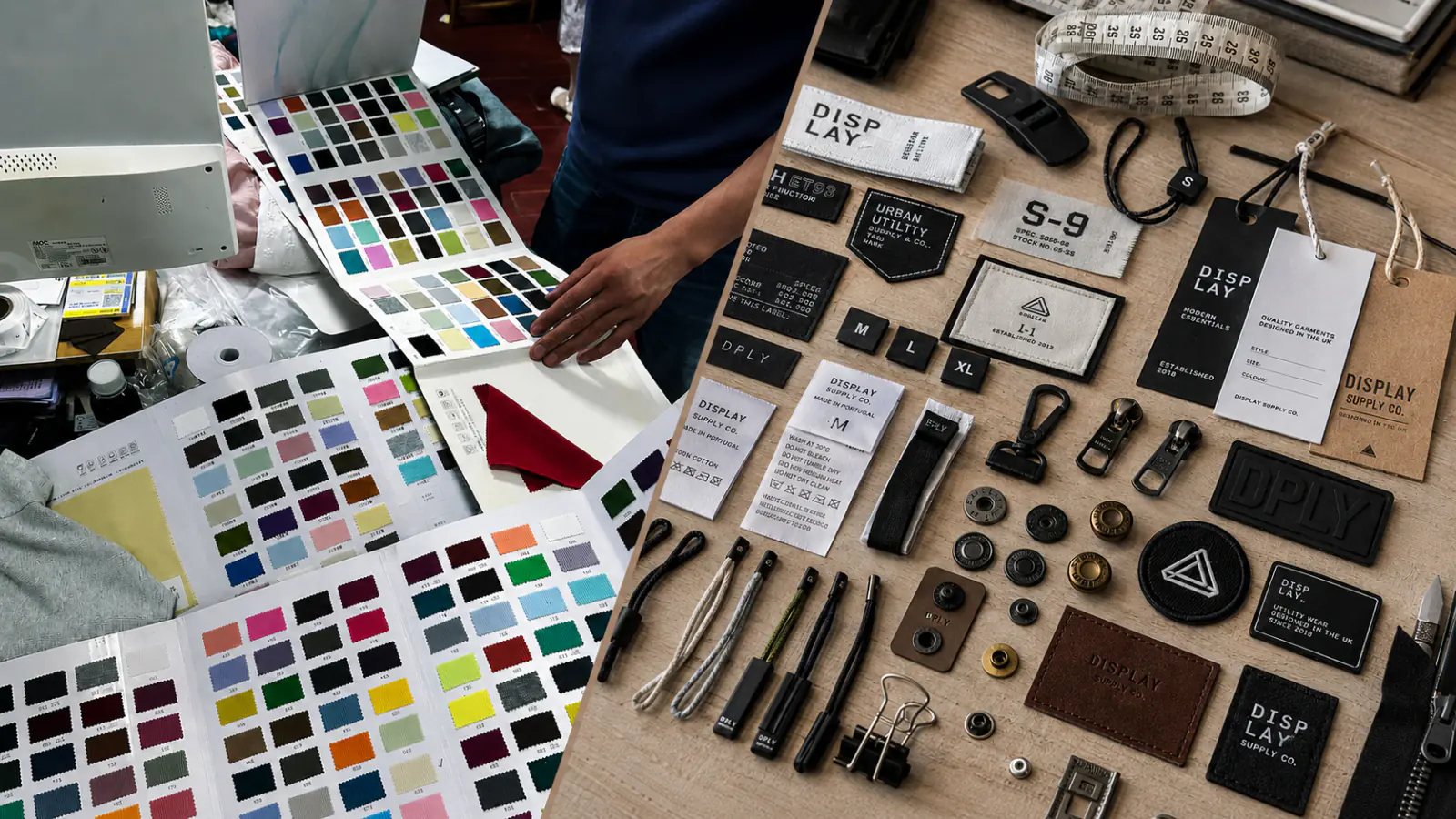
In principle, the PP sample should be made to the confirmed bulk standard. It is not only an appearance sample. It should allow the factory to reproduce the approved size, fit, color, hand, construction and technique while giving quality control a physical comparison reference.
- Approved bulk fabric, final color, lining, rib and pocketing
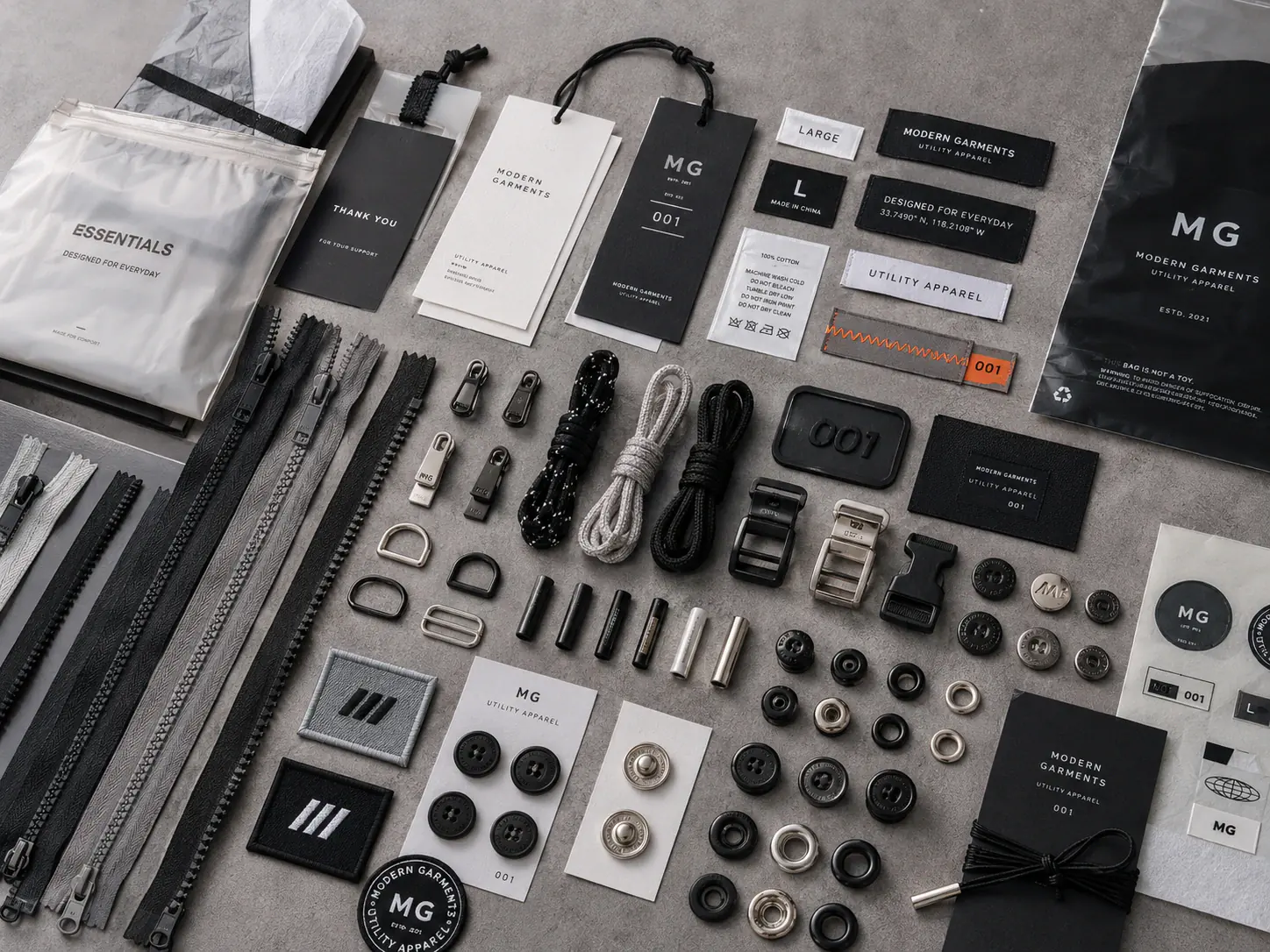
- Approved zippers, buttons, snaps, cords and functional hardware
- Correct sewing thread, interlining, filling and internal materials
- Final print, embroidery, wash, dyeing and other surface techniques
- Confirmed label content, position and compliance information
- Confirmed hangtags, polybags, stickers, barcodes, folding and packing method
KAOUYOU normally makes one PP sample in an agreed base size and retains a matching sealed reference while the client receives the other. Grading and the size-set check follow before bulk where the project requires them.
Do Final Labels and Packaging Have to Be on the PP Sample?
The specification, content and placement must be decided before production release, but the physical items do not always have to be attached to a one-piece PP sample. Custom woven labels, hangtags, stickers and printed packaging often carry supplier minimums that make producing one correct set impractical.
In that case, the PP sample may use a clearly documented placeholder while the approved artwork and placement remain in the production file. The shipment sample—taken from actual bulk—should show the fully correct labels, barcode, folding and packaging configuration.
What Must Be Approved Before the PP Sample Is Made?
A PP sample should not be used to discover every unresolved material and decoration choice at once. The controlling standards normally need approval first:
Minor color variation between an approved standard and a production batch can occur. KAOUYOU submits a visible difference for client review; a slight variation may be accepted in writing, while a serious mismatch should be remade by the material supplier rather than silently absorbed into bulk.
Can a Small Clothing Order Skip a Separate PP Sample?
Sometimes. For a simple order below 100 pieces, a final revised or approval sample can also become the sealed production reference when it already represents the intended material, construction and technique. KAOUYOU can also execute low-risk details from approved annotated references or dimensioned artwork where the style is simple and the controlling information is unambiguous.
The factory still needs one controlling sample or unambiguous record, confirmation of all production materials and techniques, and the client's explicit permission to proceed. Complex fit, custom fabric, wash effects, color-sensitive decoration or specialist hardware increases the value of a separate PP round.
Prototype and PP production time and sample cost are usually similar because both require pattern, material, cutting and sewing work. The saving comes from avoiding a duplicate round when the latest approved sample already serves the same control purpose—not from lowering the garment standard.
What Should a Brand Approve on the Final Sample?
Review the garment in a fixed order so that an attractive surface result does not hide a measurement, material or functional problem:
- Overall appearance and design intent
- Fit, silhouette and wearing effect
- Measurements and garment proportions
- Fabric, color and acceptable batch variation
- Construction, sewing and reinforcement
- Print, embroidery, wash or dyeing result
- Trims, hardware and functional details
- Labels, packaging and applicable compliance information
- An explicit approval status and permission to proceed
Approval must be explicit. “Looks good,” a comment on one detail or silence after receiving photographs is not a complete bulk release. The response should identify the sample or document version and state whether it is approved, approved with a named condition or rejected for revision.
What Happens If the Brand Changes the Product After PP Approval?
A change can still be requested, but it commonly adds cost and affects the calendar. The factory may already have booked fabric, ordered trims, prepared patterns, graded sizes or scheduled production. A measurement adjustment is not the same risk as changing fabric, zipper, wash or decoration after those items have entered production.
The change should be issued as a new controlled revision. Depending on risk, it may require a complete sample, a technique strike-off, a new component confirmation or only a written production note. The client should approve the revised cost, timing and controlling version before work continues.
When Can Bulk Clothing Production Actually Start?
At KAOUYOU, bulk release requires three clear gates: the client has placed the purchase order, the final controlling sample is correct and approved, and the client has explicitly authorized the factory to start bulk production.
This release gate protects both sides. It separates development discussion from the point at which material and production commitments become real.
What Should a Brand Ask About Samples in an RFQ?
Use questions that reveal the supplier's approval system rather than asking only for one sample price:
- Which sample stage is included in your quotation?
- Can the initial prototype use substitutes, and how will they be identified?
- Which materials and techniques must be approved before the PP sample?
- Will this quantity and style require a separate PP sample?
- Are lab dips, print strike-offs, embroidery swatches or wash tests quoted separately?
- Who receives and who retains the sealed production sample?
- How are changes after approval priced and recorded?
- What exact approvals release bulk production?
These questions make two factory quotations easier to compare because they define what “sample approved” actually means. They also prevent a prototype price from being mistaken for a complete production-approval process.
Frequently Asked Questions
What is the difference between a prototype and a pre-production sample?
A prototype or initial sample tests the design, preliminary fit, materials and construction feasibility, so corrections are expected and declared substitutes may be used. A pre-production sample represents the approved bulk-production direction and becomes the factory reference for manufacturing and quality control.
Does every clothing order need all seven sample stages?
No. The seven-stage sequence is a control framework, not a requirement to make seven separate paid garments. Simple or low-volume styles may combine stages, provided the brand and factory clearly record what has been approved and which sample controls bulk production.
Can a prototype use substitute fabric, trims or hardware?
Yes. A declared substitute can reduce cost or avoid waiting for a custom component during early development. The factory should identify every substitute and explain what still requires confirmation before bulk production.
Can a brand skip a separate PP sample?
Sometimes. For a simple order below 100 pieces, the latest correct revised or approval sample may serve as the sealed production reference when it already represents the intended materials and techniques. This removes a duplicate garment, not the need for written final approval.
Does a PP sample need final labels and packaging?
The label content, placement and packaging requirements must be confirmed. In practice, physical production labels, hangtags or packaging may not be attached to the PP sample when supplier minimums make one set impractical. The shipment sample should show the fully correct bulk configuration.
Can a brand change the garment after PP sample approval?
A change can be requested, but it normally creates additional cost and may affect the schedule, material booking or work already completed. The revised item should be documented and, where the risk is material, confirmed through another sample or technique test.
When can a clothing factory start bulk production?
KAOUYOU releases bulk only after the purchase order is placed, the final controlling sample is approved, required materials and specifications are confirmed, and the client gives explicit authorization to start production.