01
Jersey base
Choose composition, weight and handfeel around the intended drape and embroidery support.
Custom Menswear Manufacturing / OEM & ODM / Worldwide Delivery
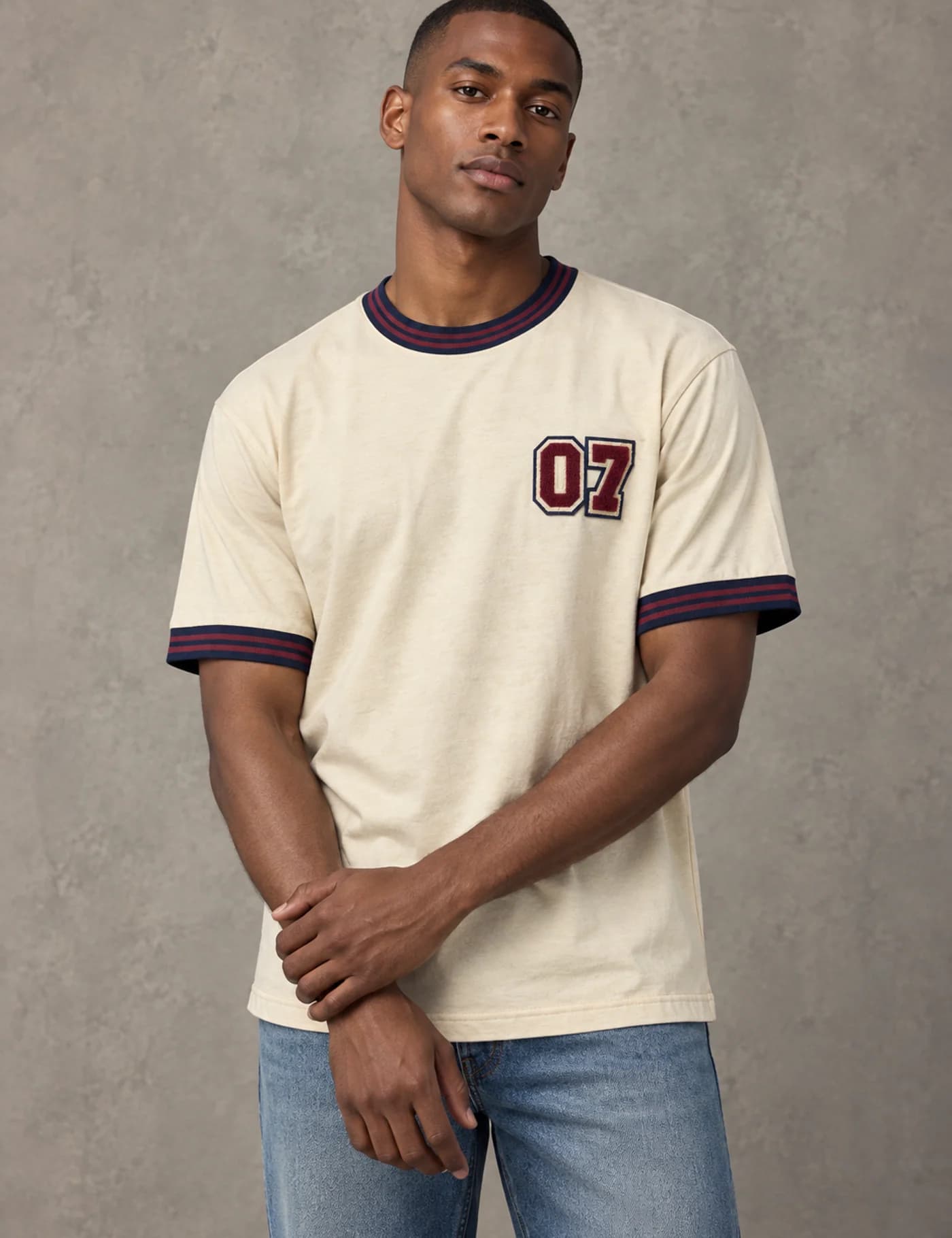
PK-040 / Actual sample reference
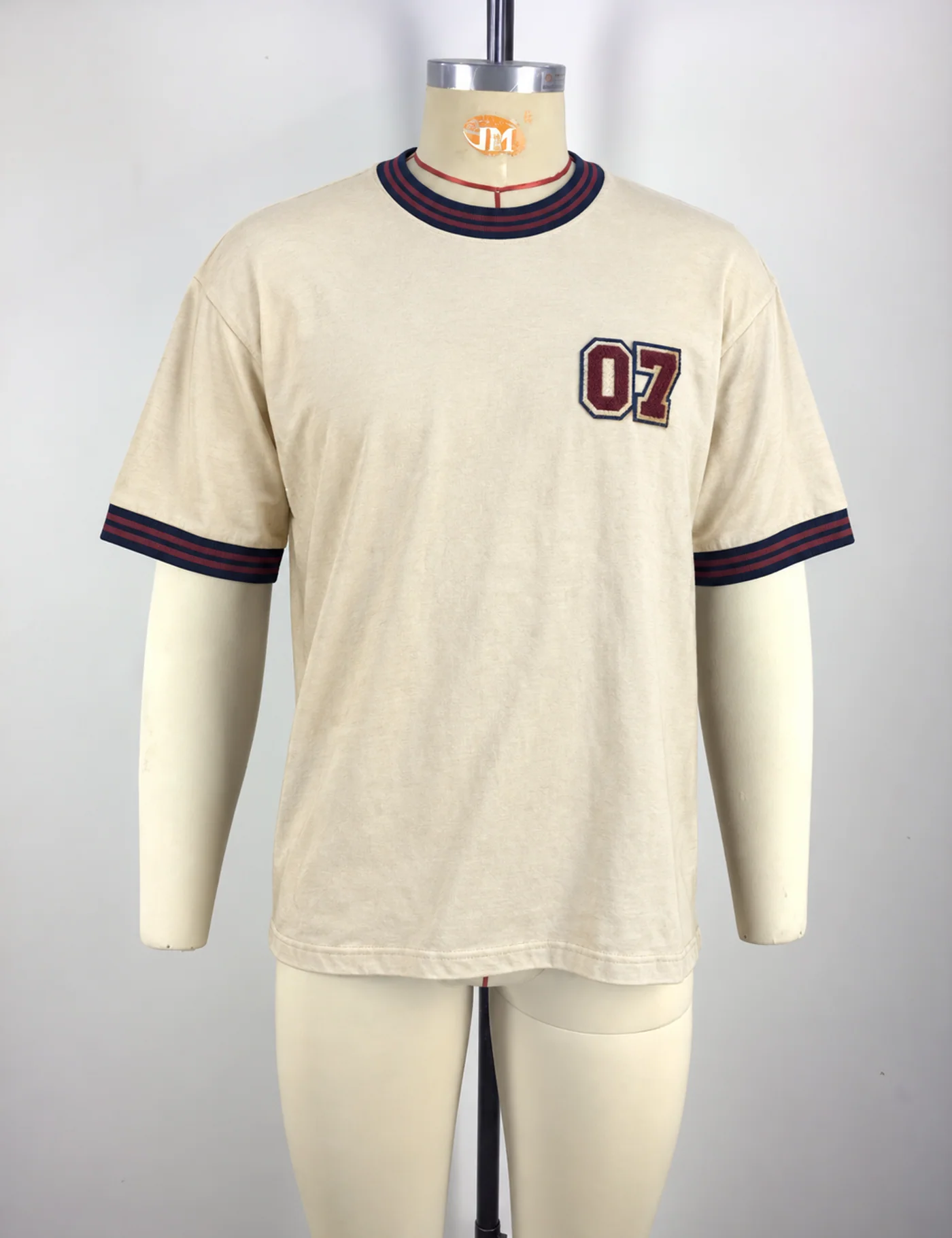
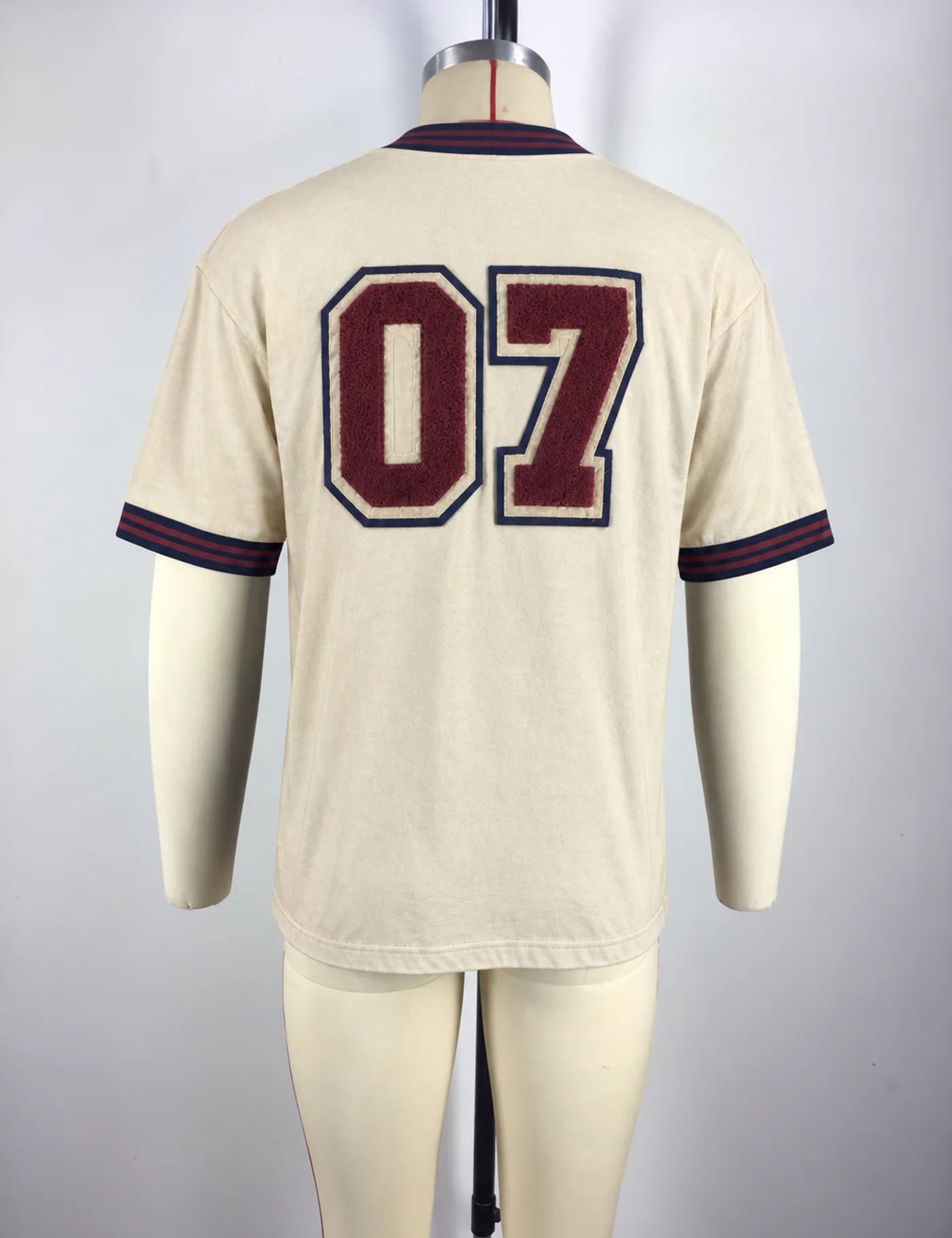
This cream ringer T-shirt reference uses burgundy striped neck and sleeve bands with raised 07 towel-like chenille embroidery. The physical sample establishes trim proportion, motif scale and placement; jersey, yarn, backing, stitch density and finished measurements are confirmed for each project.
01
Actual sample shown
02
Custom development
03
Sample approval before bulk
04
Project-specific quotation
Actual sample evidence
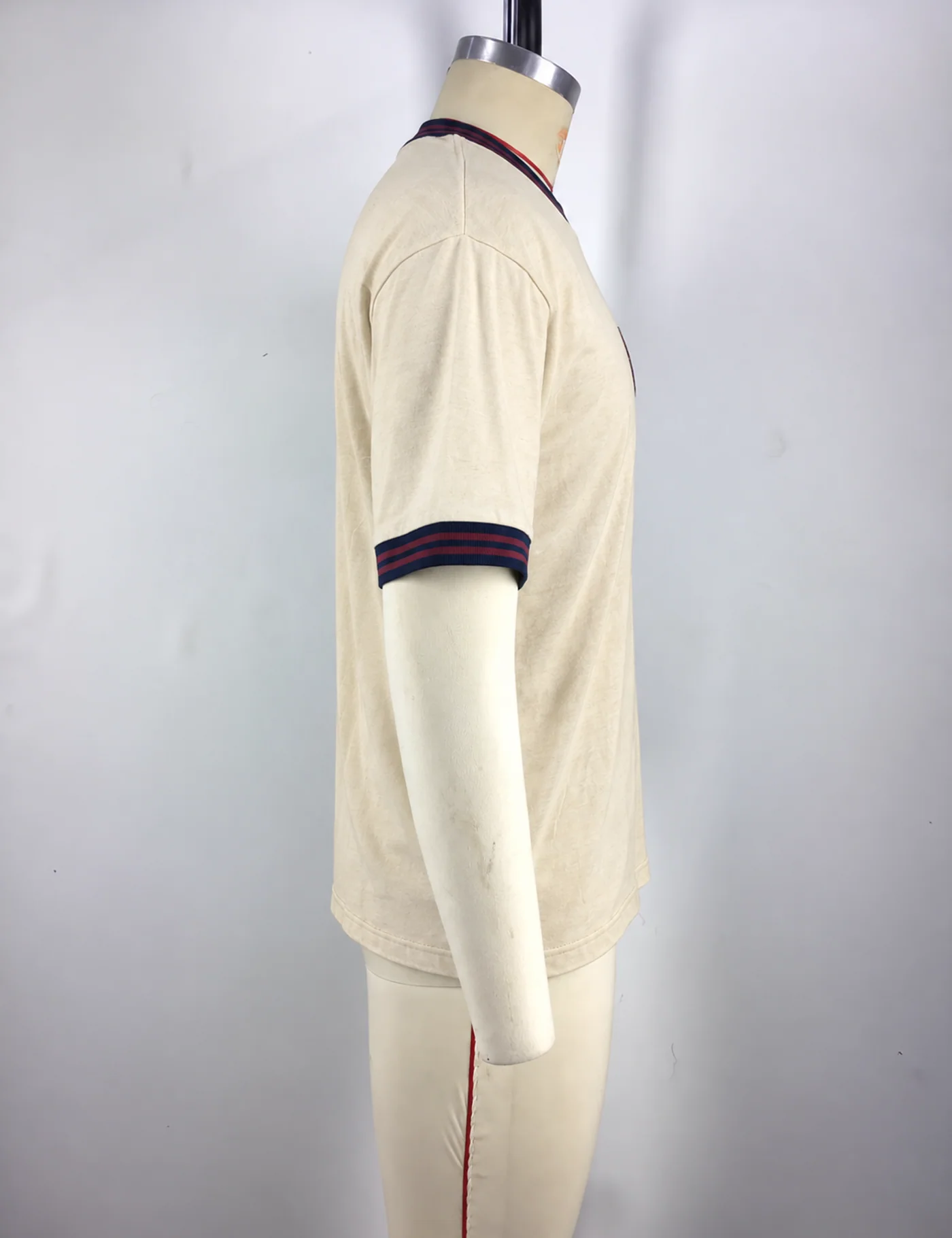
The three sample views show the physical embroidery pile, outlined number, ringer trims and garment proportions.
Visible on the sample
Confirmed for your project
Customization map
A clean result depends on trim recovery, stitch engineering, backing and fabric stability working together.
01
Choose composition, weight and handfeel around the intended drape and embroidery support.
02
Set neck and sleeve rib colors, stripe widths, stretch and finished dimensions.
03
Convert approved artwork into stitch zones, pile areas, outlines and color assignments.
04
Test yarn texture and stabilizer to protect shape without creating excessive stiffness.
05
Confirm motif size and position on the physical garment rather than from a flat artwork file alone.
06
Coordinate labels, hangtags and packing with the approved ringer and embroidery colors.
Specification status
The reference confirms the visual target while yarn, density, backing and fabric data require approval.
Related product references
Development path
Body construction and stitched decoration are tested separately, then signed together on the finished garment.
Review body measurements, jersey, rib stripe plan, embroidery files and quantity.
Check neckline, sleeve bands and relaxed fit before decoration approval.
Test yarn, pile, outline, backing and scale on the selected fabric.
Confirm motif appearance, placement, trim recovery and finished measurements.
Control pile consistency, edge definition, distortion and garment presentation.
Quality checkpoints
Inspection focuses on chenille texture, edge definition, placement, rib recovery and distortion.
Pile height, density and surface consistency compared with the approved stitched sample.
Border stitches and number shape checked for clean, stable definition.
Embroidery center, height and orientation verified on the finished garment.
Neck and sleeve bands checked for stretch, symmetry and stripe alignment.
Puckering and backing visibility controlled around the embroidery area.
Threads, labels, marks, folding and packaging inspected before shipment.
Buyer questions
No. The reference uses raised chenille or towel embroidery with a visible pile surface and stitched outline.
Yes. Production uses buyer-approved artwork converted into a suitable chenille embroidery file.
Yes. Body color, rib ground, stripe colors and widths are project variables.
Yes, subject to a stitched test that confirms backing, density and garment stability.
Provide artwork, size and placement, jersey and rib direction, size chart, quantities and branding details.
Continue the evaluation
Review KAOUYOU's development and manufacturing capabilities for t-shirts.
Open reference →Move a visual reference through specification, sampling, revision and approval.
Open reference →Confirm material, trim, label and packaging directions before bulk approval.
Open reference →Custom development / PK-040
Share your artwork, fit, jersey, trim colors and quantity for an embroidery review.