Answer in 30 Seconds
To develop an appliqué hoodie, specify the actual fabric pieces, layer order, finished graphic size, edge treatment, attachment stitches and garment position. Review those choices on a technique sample, then approve the complete hoodie for appearance, weight, comfort and the intended washed finish.
At KAOUYOU, a reference image starts the discussion; it does not establish the production standard. Clean edges, exposed raw edges and textured patches need different material and finishing decisions. The hoodie body, applied fabrics, thread and backing must work together so the approved graphic does not distort the garment or interfere with its pockets and zipper.
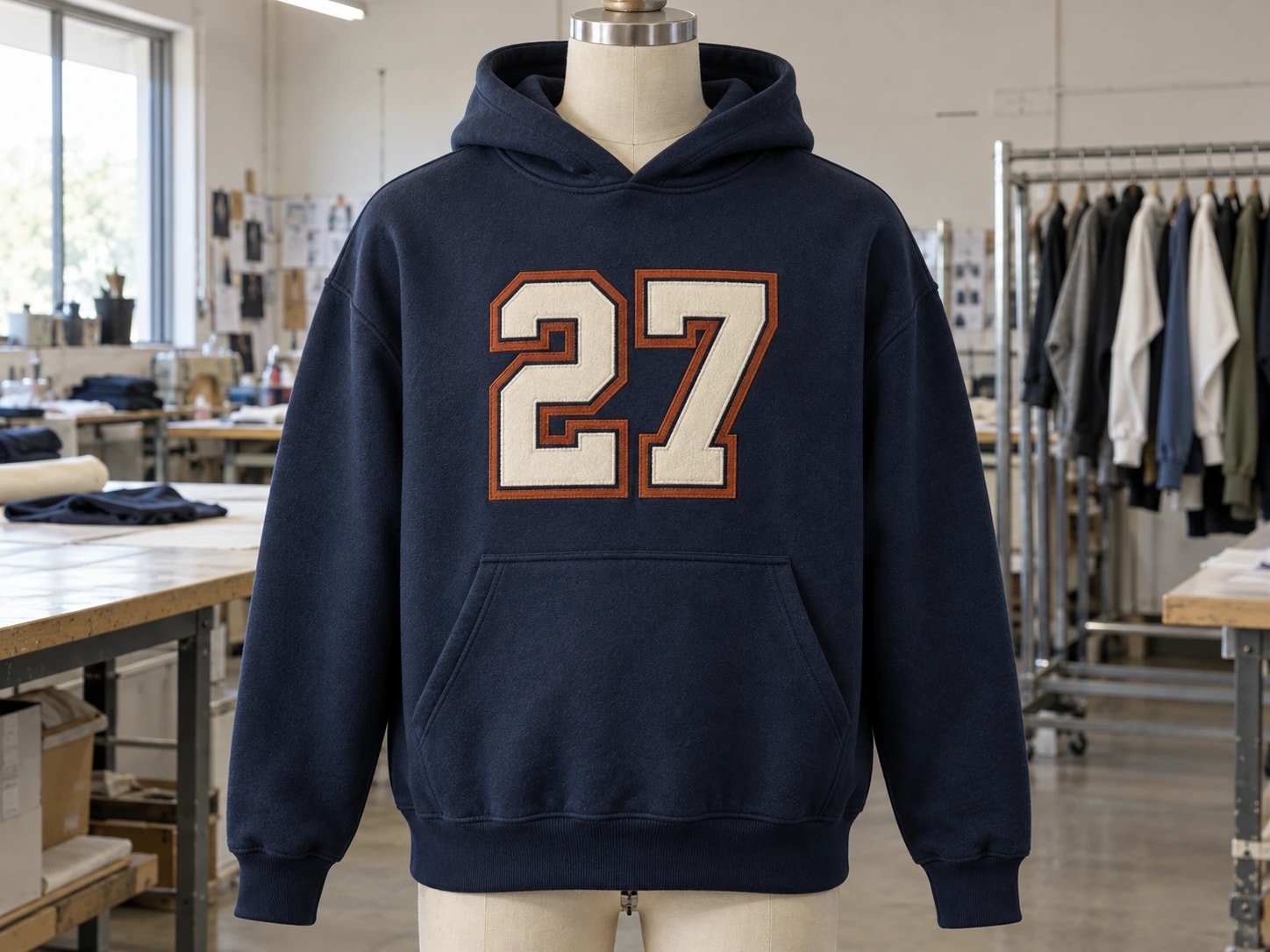
What should a brand define before developing an appliqué hoodie?
KAOUYOU has produced fabric letters, numbers, geometric motifs, mixed-fabric graphics, hand-finished raw edges and chenille patches. Common briefs include collegiate lettering, varsity numbers and fabric graphics combined with embroidery or printing.
Start by describing the intended result: flat or raised, clean or visibly frayed, restrained or heavily layered. Then confirm that the customer wants real fabric pieces rather than a printed image that imitates their texture. Those directions may look similar in a mockup but require different development.
Also separate the graphic construction from the processing stage. An appliqué motif is attached to a base; a structural panel becomes part of the garment body. A separately prepared patch may be sewn onto an assembled body, while larger motifs or designs interacting with garment construction may be positioned on cut panels before assembly.
KAOUYOU commonly uses cut-panel processing for T-shirt appliqué because positioning and access are more stable. For a hoodie, confirm the workable stage against its actual design, pocket and fastening construction rather than copying the T-shirt sequence automatically.
The chenille shooting-star zip hoodie offers a reference for raised patches and coordinated placements. It is one texture direction, not a substitute specification for a layered fabric graphic. Agree on the actual materials and edge result for the new project.
How should clean edges, raw edges and attachment stitches be specified?
“Appliqué” alone does not define what the edge should look like. KAOUYOU may use folded edges, binding, overlocking or dense embroidered borders for a more contained outline. A raw-edge direction leaves the cut edge exposed and uses stitching to control how far it can open.
| Edge direction | What the buyer should specify | What the sample should establish |
|---|---|---|
| Contained or covered edge | Visible border, finish method, thread color and outline | Edge coverage, clean curves and the intended graphic shape |
| Exposed raw edge | Exposed width, attachment-line position and permitted fraying | Edge character after the intended finishing and washing |
| Layered outline | Material order, reveal of each layer and stitch positions | Consistent spacing, manageable thickness and a readable motif |
For a worn edge that should remain controlled, KAOUYOU may prepare the edge in advance and place one or more fixing lines inside it. Production instructions record the agreed edge width, stitching positions and approved reference photographs. Natural variation can be accepted within that reference; spreading damage or a changed graphic outline needs further review.
Attachment options include straight stitching, paired lines, zigzag stitching, overlocking, embroidered borders and decorative lines. Material weight and fraying behavior can require adjustments to the stitching or local reinforcement. Confirm the result on the chosen materials instead of specifying a stitch name without checking its effect.
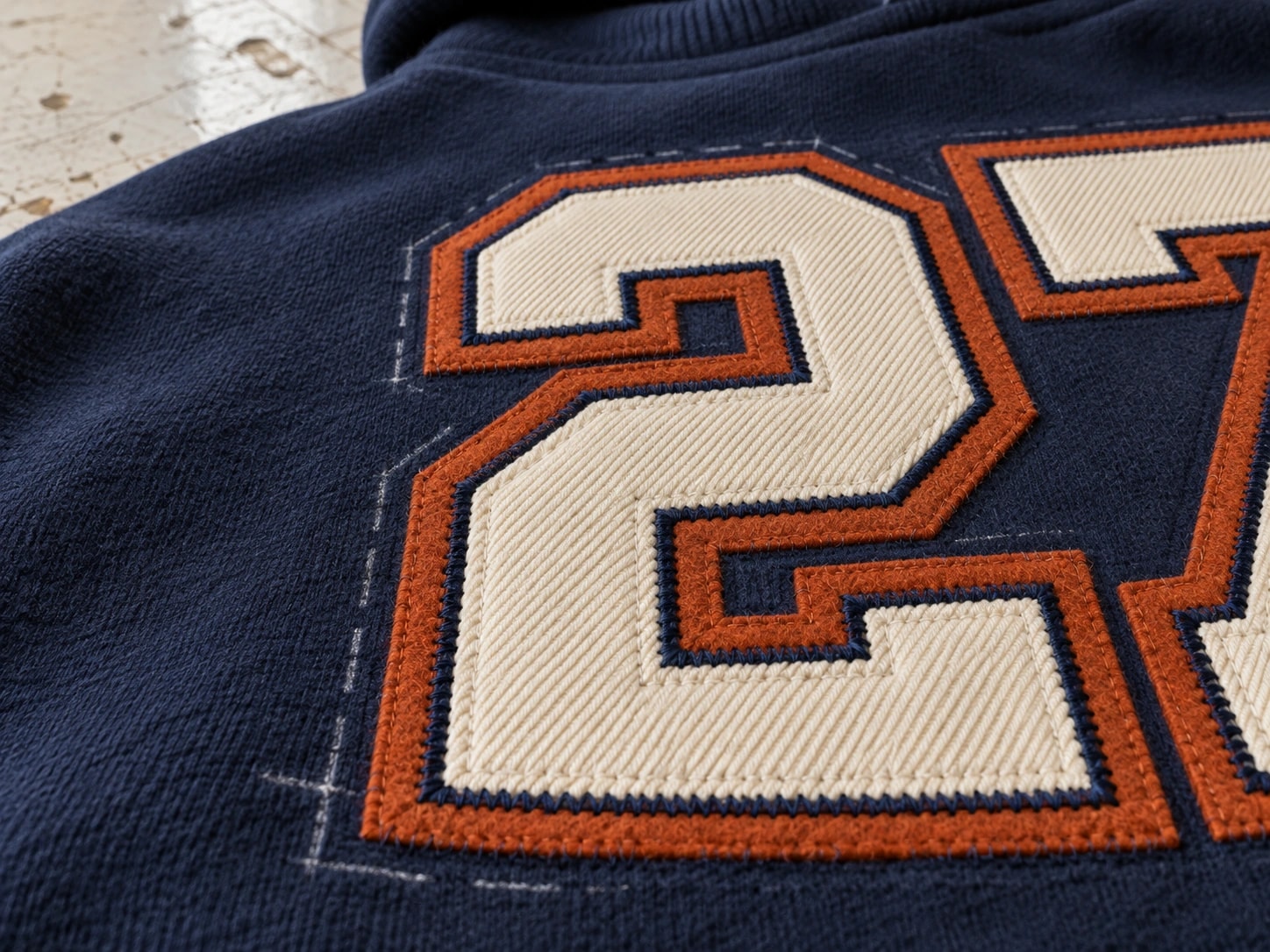
Thread can blend into the fabric or deliberately outline it. Approve its color together with the applied layers: a contrasting line changes the visible shape and can become a major part of the design.
How should the hoodie body and appliqué materials be paired?
KAOUYOU considers material weight, density, stretch, thickness, shrinkage and the desired hand together. A body that cannot support the selected graphic may pucker or hang unevenly. A stable patch on a stretchy base can also restrict movement where the graphic covers the garment.
Potential appliqué materials include cotton twill, canvas, knitted fabric, felt, imitation suede, polyurethane-based materials, mesh, denim and chenille materials. The material name is a starting point; the actual quality and complete combination still need approval.
| Design direction | Materials KAOUYOU may consider | Development priority |
|---|---|---|
| Collegiate letters or varsity numbers | Twill, felt or a chenille patch direction | Texture, border definition, weight and color combination |
| Worn or mixed-fabric graphic | Cotton fabrics, denim or exposed-edge layers | Controlled fraying and compatible washed behavior |
| Clean layered motif | Selected fabrics with a contained edge | Shape, layer reveal and local thickness |
| Sport or technical appearance | Mesh, reflective or other specified materials | Compatibility with the intended attachment, finishing and care |
KAOUYOU checks the base and appliqué separately for thickness, stretch, shrinkage, colorfastness and washed changes. Where shrinkage differs substantially, the team may prewash the appliqué material or choose a closer match. A flexible body and a less flexible motif also require attention to graphic coverage and how densely it is fixed.
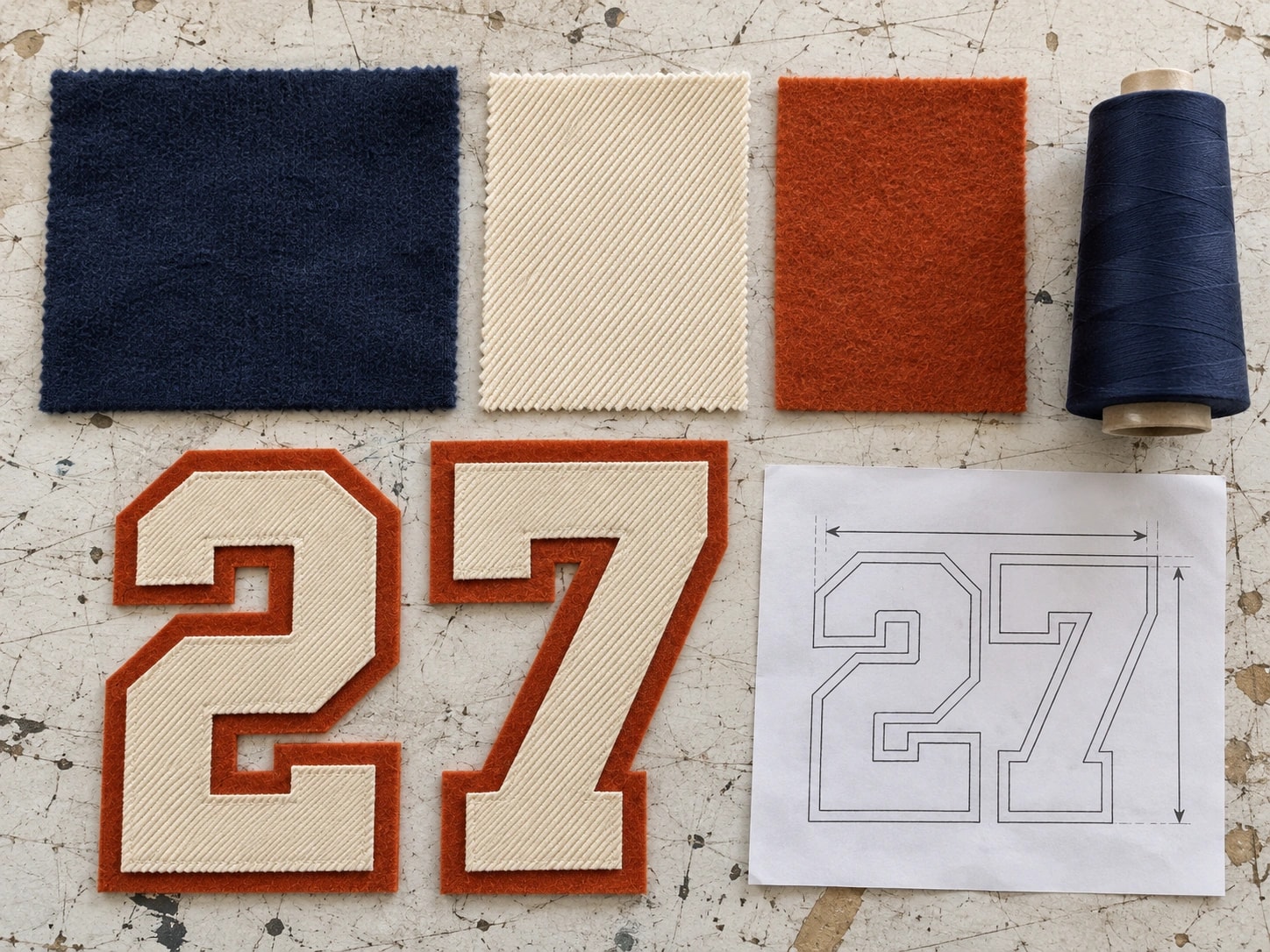
The fabric swatch evaluation guide covers the earlier material review. For a T-shirt extension, KAOUYOU often considers a sufficiently supportive cotton jersey or another stable cotton base for larger appliqué. That does not establish a universal hoodie weight. The raw-edge appliqué T-shirt illustrates how mixed-fabric graphics can extend across product categories, with the base and attachment developed for each garment.
What artwork and placement information should the brand provide?
Provide vector artwork, such as AI or a suitable PDF, with the finished width and height. Identify each fabric layer, color, stacking order, thread color, requested stitching and edge appearance. Include a placement drawing locating the graphic on the garment.
KAOUYOU can help split the motif into workable pieces, suggest materials, revise difficult details and prepare placement drawings and technique samples. Brand fonts, logo proportions and the final appearance still require customer approval.
Very small lettering, narrow lines, sharp points and tiny color sections can lose their shape during cutting and attachment. The team may enlarge or thicken details, simplify corners or combine small areas. Gradients can be better handled through printing rather than being split into many small fabric pieces. Embroidery, screen printing or direct-to-film (DTF) can supply details that the chosen appliqué cannot reproduce clearly.
Placement must include construction. For graphics near or across a kangaroo pocket, zipper or side seam, KAOUYOU first reviews break points and matching positions on the pattern. A crossing design may need to be split between panels and aligned during assembly. Letters, faces, circles and regular geometric forms make misalignment particularly visible. Pocket access, zipper operation and movement take priority when deciding whether the proposed layout works.
Adjacent garment sizes often share a graphic size to control preparation and processing costs. A broad size range may need smaller and larger graphic groups. Recheck the distance from the neck, armhole and hem, and record any size-group changes in the tech pack. Use the boxy hoodie fit guide when the graphic also needs to work within a shorter, wider body.
How can large appliqué stay comfortable without pulling the hoodie down?
More fabric layers and dense embroidery can increase local weight and stiffness. If a sample feels too heavy, KAOUYOU may reduce the layer count, choose lighter applied materials, decrease the graphic area or replace a solid shape with a more open outline. The aim is to preserve the design while making the finished garment wearable.
A thin or stretchy base, or a heavy motif, may need backing or another local stabilizing material. KAOUYOU considers light, soft reinforcement and limits its area where possible. The inside should not become excessively stiff or abrasive. Where needed, a soft cover can protect skin from the embroidery reverse.
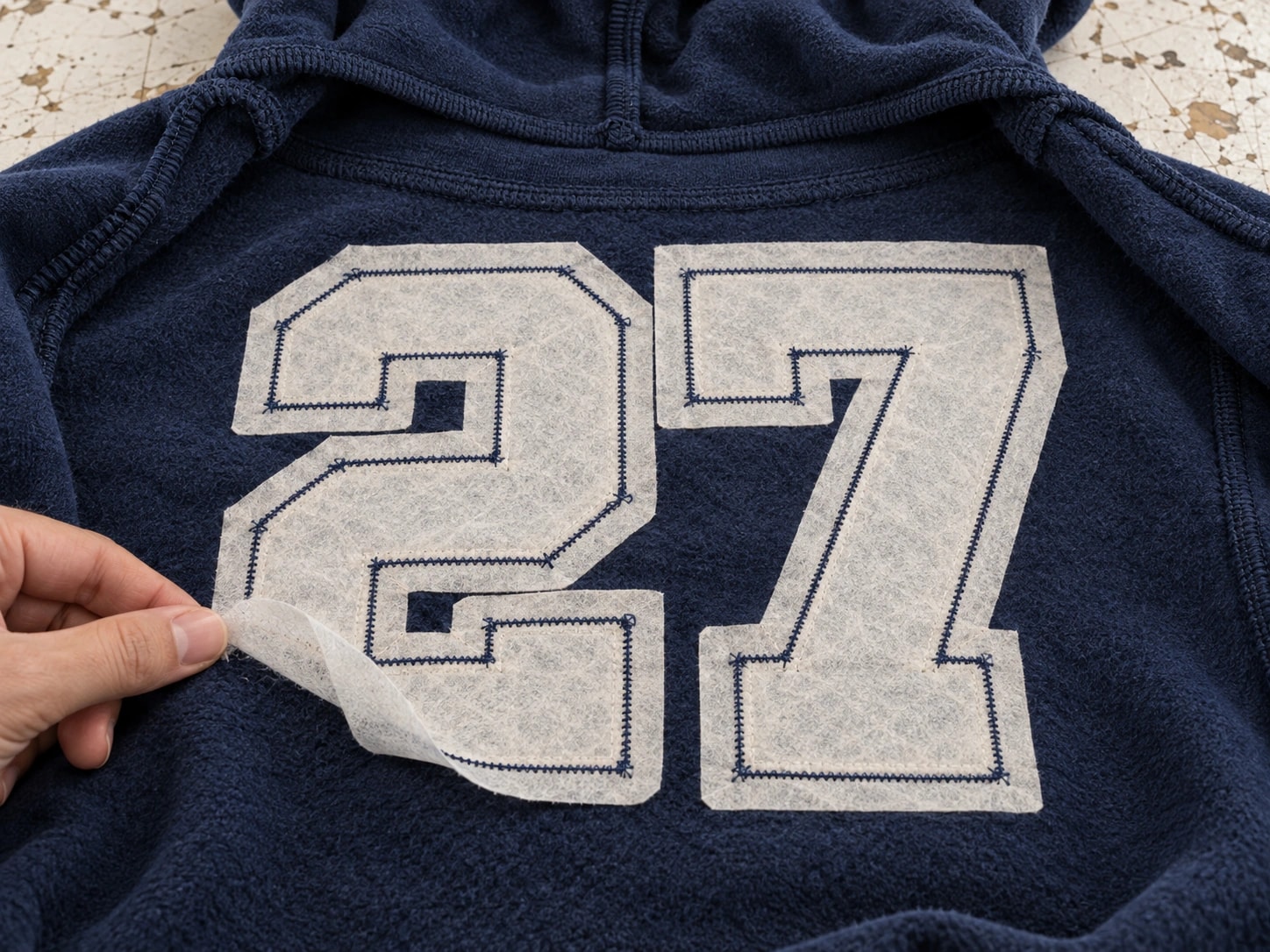
Backing is part of the sample review, not a complete answer to a heavy graphic. If the front hangs down noticeably, reassess the motif, body material and fit together. Added reinforcement alone may create more bulk without correcting the underlying balance.
The large embroidery crewneck sweatshirt provides a different coverage reference for buyers comparing a thread-led design with fabric-led artwork. Choose the visible result and hand first, then test a suitable combination rather than assuming full embroidery or appliqué is always lighter.
Should appliqué be attached before or after garment washing?
KAOUYOU may attach appliqué before garment washing when the pieces should fade, develop raw edges or acquire a worn appearance with the body. When the buyer wants the applied colors and edges to remain cleaner, attachment after garment dyeing or washing may be considered.
The decision depends on wash resistance, colorfastness, shrinkage, access for attachment and the intended result. Approve a complete sample made in the proposed order. A clean, unwashed technique sample does not establish the final appearance of a graphic that will be washed afterward.
Approve the base fabric, applied pieces and thread as a physical combination. Dark and light materials need checks for staining, fading, thread coloration and whether the colors still work together after washing. KAOUYOU uses wash trials or complete samples to review those changes before bulk production.
What should be approved on a technique sample and a complete hoodie?
A technique sample checks the decoration itself: materials, colors, edge treatment, stitching, embroidered detail, attachment and washed effect. A complete hoodie adds the questions that a small panel cannot answer, including scale, position, garment balance and how it feels when worn.
| Review stage | What to check | What the approval should record |
|---|---|---|
| Technique sample | Material pairing, colors, layers, edges and attachment | Agreed graphic construction and visible finish |
| Complete garment | Scale, position, weight, drape, inside comfort and access to pockets or zipper | Finished layout and wearable result |
| Intended washing and finishing | Puckering, lifted edges, loose stitching, staining and fray extent | Acceptable finished appearance and any permitted variation |
| Production reference | Consistency with the agreed samples and instructions | Retained samples, material references and written approval |
KAOUYOU reviews puckering, lifted edges, loose stitching and excessive fraying in flat, worn and washed states. An edge that looks acceptable on a flat panel can behave differently on the garment. A raw-edge brief still needs an agreed limit; it does not make uncontrolled detachment or damage acceptable.
Retain the approved technique sample, complete garment, material swatches, production instructions and written customer confirmation. The quality control service explains the wider inspection process. For this decoration, those retained references give the production team a practical basis for comparing the finished pieces.
What affects appliqué hoodie cost, MOQ and sample revisions?
Quotation depends on material selection, graphic dimensions, layer count, colors, number of individual pieces, attachment method, embroidery stitch work, hand finishing, washing and order quantity. A simple-looking outline can still involve several cutting, positioning and stitching operations.
KAOUYOU's usual garment minimum order quantity (MOQ) is 100 pieces per style, per color. Special appliqué materials, chenille patches, custom colors or subcontracted processes can bring higher supplier minimums. Confirm those requirements against the actual material and artwork brief.
Recurring sample revisions include a stiff or heavy graphic, puckering after washing, excessive fraying and an unbalanced scale. Depending on the cause, KAOUYOU may reduce layers, choose lighter materials, revise embroidery density, prewash the applied fabric, move fixing lines, resize the graphic or rematch the base material.
Make the feedback specific: identify the affected layer, edge, area or finished behavior. A comment such as “less heavy” becomes more useful when the customer also identifies whether the concern is physical weight, stiffness or visual bulk. The product development service brings the artwork and garment decisions into one sampling brief.
Frequently Asked Questions
Is raw-edge appliqué supposed to keep fraying after washing?
The exposed edge can have some natural variation, but its intended extent should be approved on a finished sample. Continued fraying beyond that range, loose attachment or a changed graphic shape needs review. Specify the edge exposure and fixing-line position together.
Can one appliqué graphic size cover every hoodie size?
Adjacent sizes often share a graphic. A broad size range or limited space near a pocket, armhole or hem may require separate size groups or adjusted positions. Confirm those groups in the tech pack before production.
Is appliqué always cheaper than a fully embroidered graphic?
No. The quote depends on the actual materials, number of cut pieces, layers, attachment work, embroidery and finishing. Compare samples that achieve the required appearance rather than assuming one technique has a fixed cost advantage.
Is a technique sample enough to approve bulk production?
It helps approve the decoration, but it cannot establish the full hoodie's graphic proportion, weight, drape or pocket and zipper access. Approve the complete garment and the intended washed result as well, then retain the supporting samples and written confirmation.
Send an appliqué hoodie brief with the material and edge direction
Send front and back references, vector artwork, actual graphic dimensions, material and color directions, a layer map and the desired edge appearance. Include placement, any wash requirements, the size range and quantities by color.
Explore the hoodie and sweatshirt collection, then send your appliqué hoodie brief. KAOUYOU can review the workable construction, develop the technique sample and coordinate the complete garment for approval.