To evaluate fabric swatches before sampling, compare the material specification with its actual surface, structure, drape and stretch behavior. Shortlist a fabric that supports the intended T-shirt or hoodie, then check the selected material and approve it on the complete sample garment. A swatch is a starting reference, not final product approval.
Most overseas KAOUYOU clients begin with design drawings rather than sending a physical reference garment. The practical challenge is translating a visual idea into fabric that feels right and produces the intended shape. Photos and videos support that discussion, but they cannot replace touch.
Answer in 30 seconds
- Use composition and grams per square meter (GSM) together with construction, finishing and actual hand.
- An A4-size swatch normally supports initial comparison, not full-garment approval.
- Select the material before developing decoration trials on it.
- Approve the body, rib and finishing together on the complete sample.
- A fabric change requires a revised sample and approval before bulk production.
What Should a Brand Confirm Before Comparing Swatches?
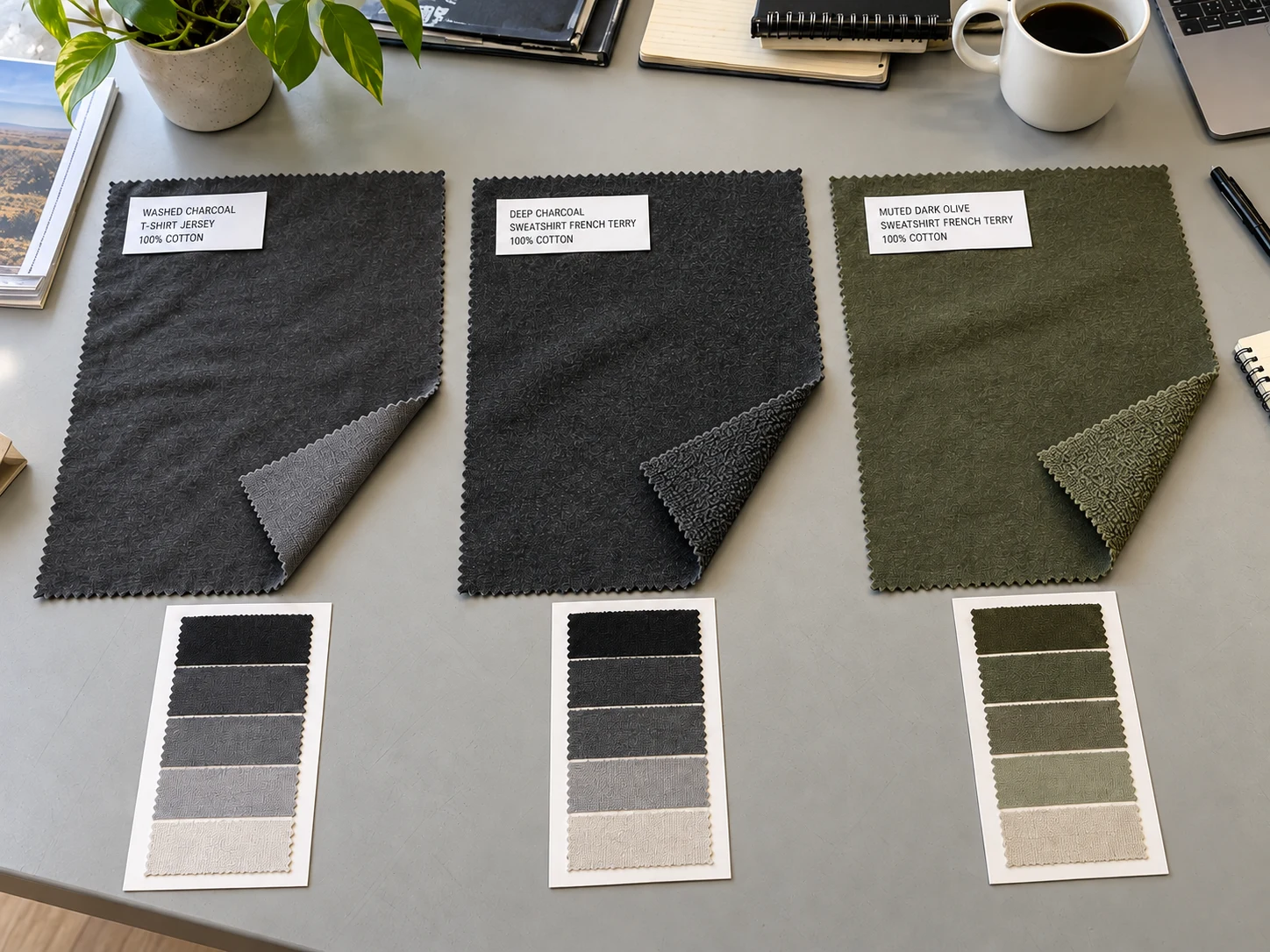
Start with the garment, not an isolated fabric number. Send the design drawing, intended fit, season, target customer, color direction and desired feel. Describe whether the body should hold a boxy shape, fall softly, feel smooth against skin or have a substantial sweatshirt hand.
If the composition and GSM are already specified, KAOUYOU uses them as sourcing inputs. If the client is unsure, the team recommends several options based on the intended effect. There is no fixed shortlist count: the alternatives should make the trade-offs understandable rather than create more choices without a reason.
Keep each option identifiable through its fabric reference, composition, nominal weight, structure, color and finish. Clarify availability and commercial requirements before committing to a sample. A name such as “premium cotton” is not a reproducible production specification.
The fabrics and trims reference helps define sourcing directions. For a deeper weight discussion, see the T-shirt GSM guide; the decision here is how to compare the actual options, not which number is universally best.
How Do You Compare T-Shirt and Hoodie Fabric Swatches?
KAOUYOU normally finds an approximately A4-size piece adequate for initial comparison. Examine both faces, fold the material and let part of it hang. Compare options under similar viewing conditions so lighting, handling and presentation do not become the main differences.
| Review point | T-shirt direction | Hoodie direction |
|---|---|---|
| Shape and drape | Does the knit support the intended structured or fluid body? | Does it provide the intended volume without unwanted stiffness? |
| Surface and inside | Review visible texture, fuzz and skin-side feel | Review the face plus looped or brushed inside finish |
| Opacity and thickness | Check coverage in the intended color and under stretch | Compare thickness and loft, not only stated weight |
| Stretch and stability | Observe extension and recovery during handling | Consider body stability together with cuffs and hem |
| End use | Relate the hand to season, fit and decoration | Relate warmth, shedding concerns and bulk to season and fit |
For T-shirts, pay particular attention to firmness, drape, opacity, surface hairiness and stretch. For hoodies, compare the inside finish, apparent thickness, loft and any shedding concerns. Two materials with similar composition and GSM can still produce different garments, so do not approve them as interchangeable on those two fields alone.
A hand pull is KAOUYOU’s usual initial stretch check. It is a practical screening observation, not a calibrated recovery percentage or formal laboratory result. If quantified performance matters, agree the required method separately.
What Can Photos, Videos and Color Cards Confirm Remotely?
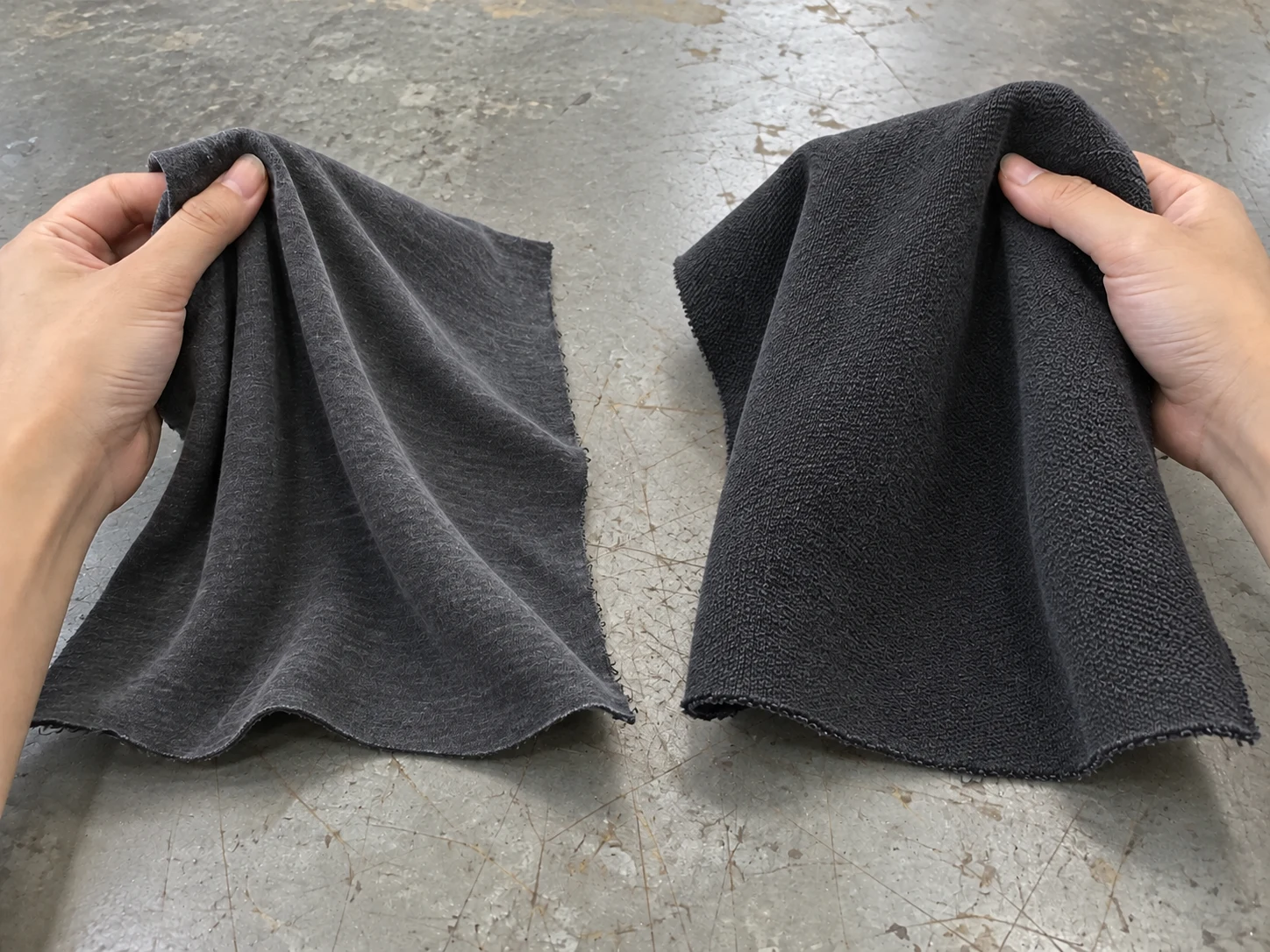
KAOUYOU can film the options to show movement, folding and texture. Ask for the same handling sequence and visible reference labels so each clip can be connected to the correct material. A moving view is more informative about how a fabric falls than a single flat photograph.
However, cameras do not communicate actual softness, friction against skin or perceived comfort. Lighting and screens also affect apparent shade. Use photos and video to narrow the direction and record visible decisions, not to claim that hand feel has been physically confirmed.
KAOUYOU does not normally ship separate fabric pieces before sampling; the complete sample garment is usually sent after development. Color cards can be supplied free of charge when the customer pays shipping. If touch is a decisive requirement, discuss physical review instead of relying only on a screen.
Color selection follows the customer’s chosen reference and agreed standard. Keep that reference attached to the material decision, and assess the finished garment when dyeing or washing changes the appearance. A computer mockup alone should not become an unqualified promise of an exact final shade.
Should Body Fabric and Ribbing Be Reviewed Together?
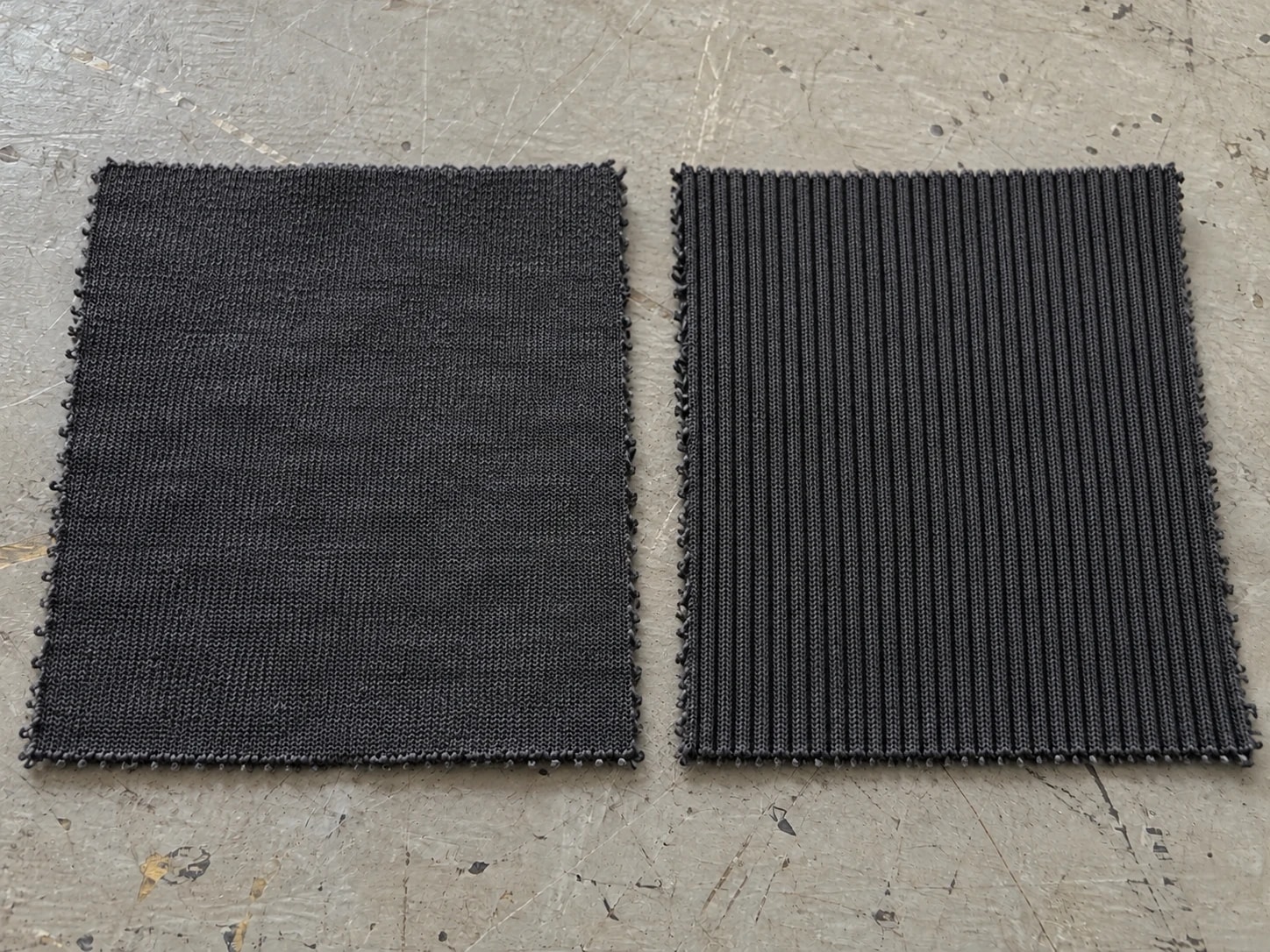
Yes. A hoodie body can look suitable by itself while its cuffs or hem feel too thin, too tight or visually mismatched. KAOUYOU checks the pairing internally; the customer normally confirms the combined result on the complete garment.
Review shade, texture, thickness, stretch behavior and compatibility with the intended wash. Matching colors do not imply matching shrinkage or recovery. The hoodie ribbing guide covers the separate rib construction decisions.
When Should Testing and Decoration Trials Take Place?
At KAOUYOU, the material is selected first, then checked for the project. Shrinkage testing follows selection rather than being promised for every candidate before the shortlist. Internal checks also address concerns such as colorfastness, pilling and shedding as relevant to the product.
These internal observations are not automatically certified test results. When a client requires a formal report, KAOUYOU arranges third-party testing. Agree the test method, conditions and acceptance requirements in advance; this workflow does not promise a universal grade, wash count or recovery percentage.
Develop printing or embroidery trials after choosing the fabric. A decoration result on another knit cannot reliably approve the chosen surface. The trial should reflect the intended material and finishing route, especially when garment washing is part of the design. See the T-shirt shrinkage control guide for the separate dimensional checks.
Why Must the Complete Sample Be Approved?
The complete garment combines material, pattern, seams, ribbing, decoration and finishing. It answers questions a small swatch cannot: whether the shoulders hold their shape, whether the body falls as expected, whether the hood feels too bulky and whether the finished product is comfortable.
KAOUYOU normally uses the intended material for its sample rather than a substitute fabric. After the sample is completed, it is sent to the customer for whole-garment review. Assess actual hand, fit and finish together, and keep the decision by email.
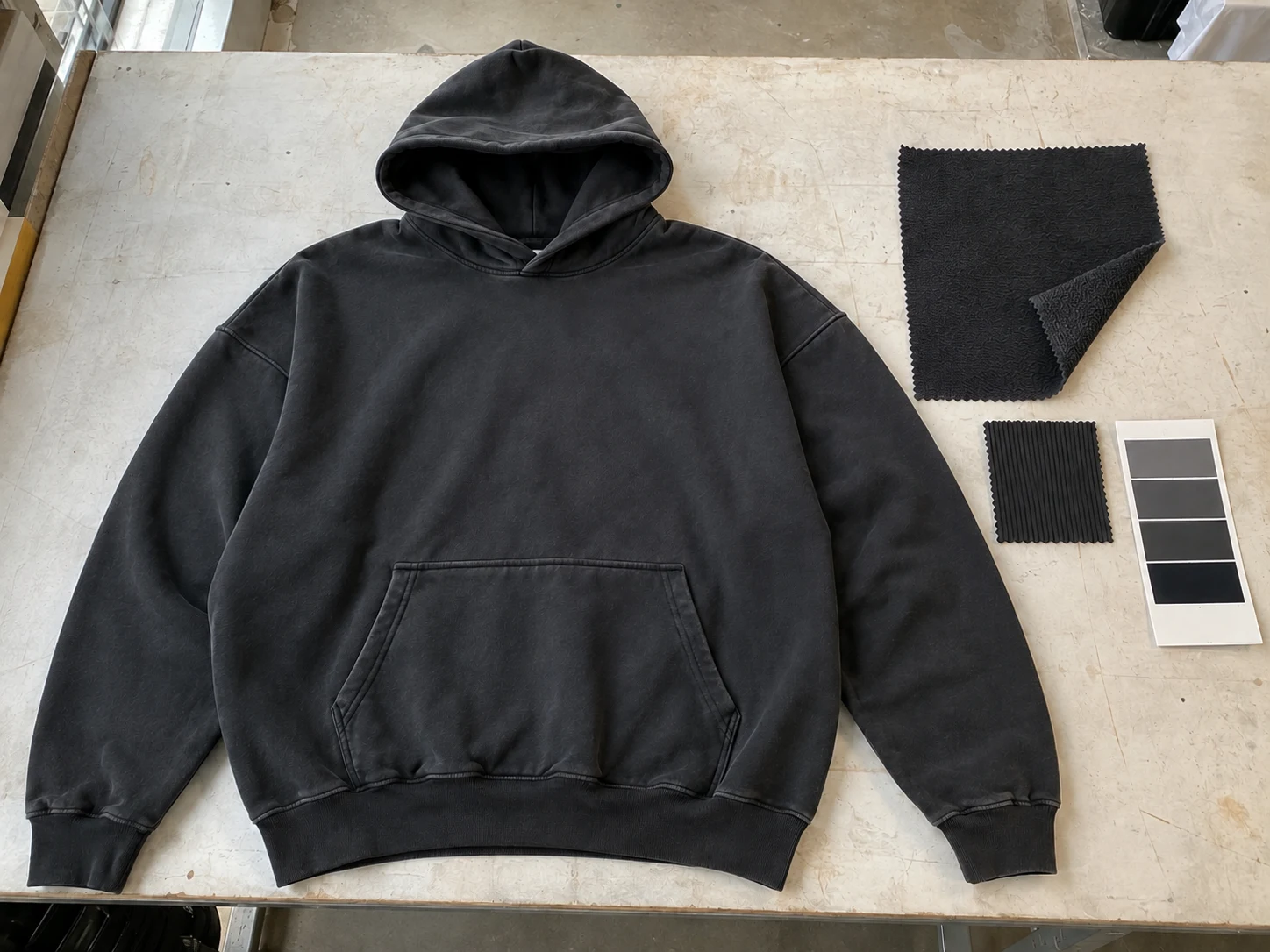
Distinguish approval from a change request. If the fit is accepted but the hand is not, record that difference rather than treating a general message as approval of the complete specification. The prototype and pre-production sample guide explains why development acceptance and production readiness are different decisions.
What Happens When the Customer Wants a Different Fabric?
KAOUYOU has encountered projects where the customer reviewed the sample and still wanted a different hand or texture. The team discusses alternatives and may send several color-card books for reference. The replacement should be selected with the customer, not silently substituted.
A change can also arise when the supplier’s minimum quantity does not fit the garment order. Discuss a suitable alternative and its implications before proceeding. Recheck the material, pattern and decoration assumptions that the change affects; an earlier sample does not automatically approve the new cloth.
For small-order projects, KAOUYOU can make a revised production sample using the newly selected material and typically obtain approval through photographs and videos before bulk production. Keep the revised fabric reference and approval by email. Remote approval covers the agreed visible result, but does not reproduce physical touch. If hand remains unresolved, discuss physical confirmation.
- Identify the concern: hand, texture, structure, color, availability or another requirement.
- Agree the replacement fabric and update the material reference.
- Recheck affected tests, pattern and decoration; make the revised production sample.
- Obtain the customer’s approval of that revision before releasing bulk production.
How Is the Approved Fabric Carried Into Bulk Production?
KAOUYOU compares incoming bulk fabric with the retained sample reference. Serious differences are grounds for returning or exchanging the material, rather than assuming the same composition and GSM make it acceptable.
Keep the approved material, sample and email decisions connected. Record whether approval applies to a selected swatch, the complete development sample or a revised production sample. Include any agreed finish and testing requirements so the production team can follow the actual decision.
For a useful product development brief, send the design, garment category, desired fit and feel, composition and GSM if known, color reference, decoration, wash direction and order quantity. Highlight anything the sample must resolve. Browse T-shirt and hoodie and sweatshirt directions when explaining the silhouette, but keep the material decision specific to your project.
Frequently Asked Questions
Is an A4 fabric swatch enough to select a hoodie fabric?
An approximately A4-size swatch is normally sufficient for KAOUYOU's initial material comparison. It cannot establish the finished hoodie silhouette, fit, seam bulk or wearing comfort. Confirm those on the complete garment sample.
Can I choose fabric without knowing the composition or GSM?
Yes. Send the design, intended silhouette, season and desired hand. KAOUYOU can recommend several fabric directions that may achieve the effect. The chosen composition, weight and finishing direction should be clarified before sampling.
Does KAOUYOU send fabric swatches before making a sample?
Not routinely. KAOUYOU normally sends the complete sample garment after development. Color cards can be provided free of charge when the client covers shipping; discuss the references needed for the project.
Can photos and videos confirm fabric hand feel?
They help compare visible texture, movement and folding, but do not communicate actual touch. If softness, surface feel or comfort is decisive, physical review remains more informative. State what a remote approval does and does not cover.
Does every fabric option receive a third-party test report?
No. KAOUYOU normally performs internal checks and tests the selected material for the project. Third-party testing is arranged when the customer requires it. Specify the method, conditions and acceptance requirements before testing.
Can bulk production start after changing the sample fabric?
Only after the revised production sample is approved. For small-order projects, KAOUYOU may obtain that approval through photos and videos and keep the decision by email. This does not mean the client's physical hand-feel assessment has been reproduced remotely.