Good hoodie ribbing is not selected by calling it 1×1 or 2×2 alone. A brand must match the rib structure, composition, thickness, stretch, recovery, color and shrinkage to the sweatshirt body, fit and wash process. The cuff and hem length must then be developed from the actual opening and approved silhouette—there is no universal cutting percentage for every hoodie.
This guide is for brands developing custom pullover, zip-up, heavyweight, washed or boxy sweatshirts. KAOUYOU reviews the rib and body fabric as one system before bulk production. Brands comparing product directions can also review the custom hoodies and sweatshirts collection before preparing a development brief.
Answer in 30 seconds
- Use 1×1 for a finer, cleaner rib direction and 2×2 for a wider, more visible texture.
- Match heavier sweatshirt bodies with suitably substantial rib rather than a thin, weak trim.
- Specify composition and recovery; the knit notation alone does not define performance.
- Test body and rib shrinkage separately, then approve them together in a complete washed sample.
- Set cuff and hem dimensions from the intended fit instead of applying a fixed factory ratio.
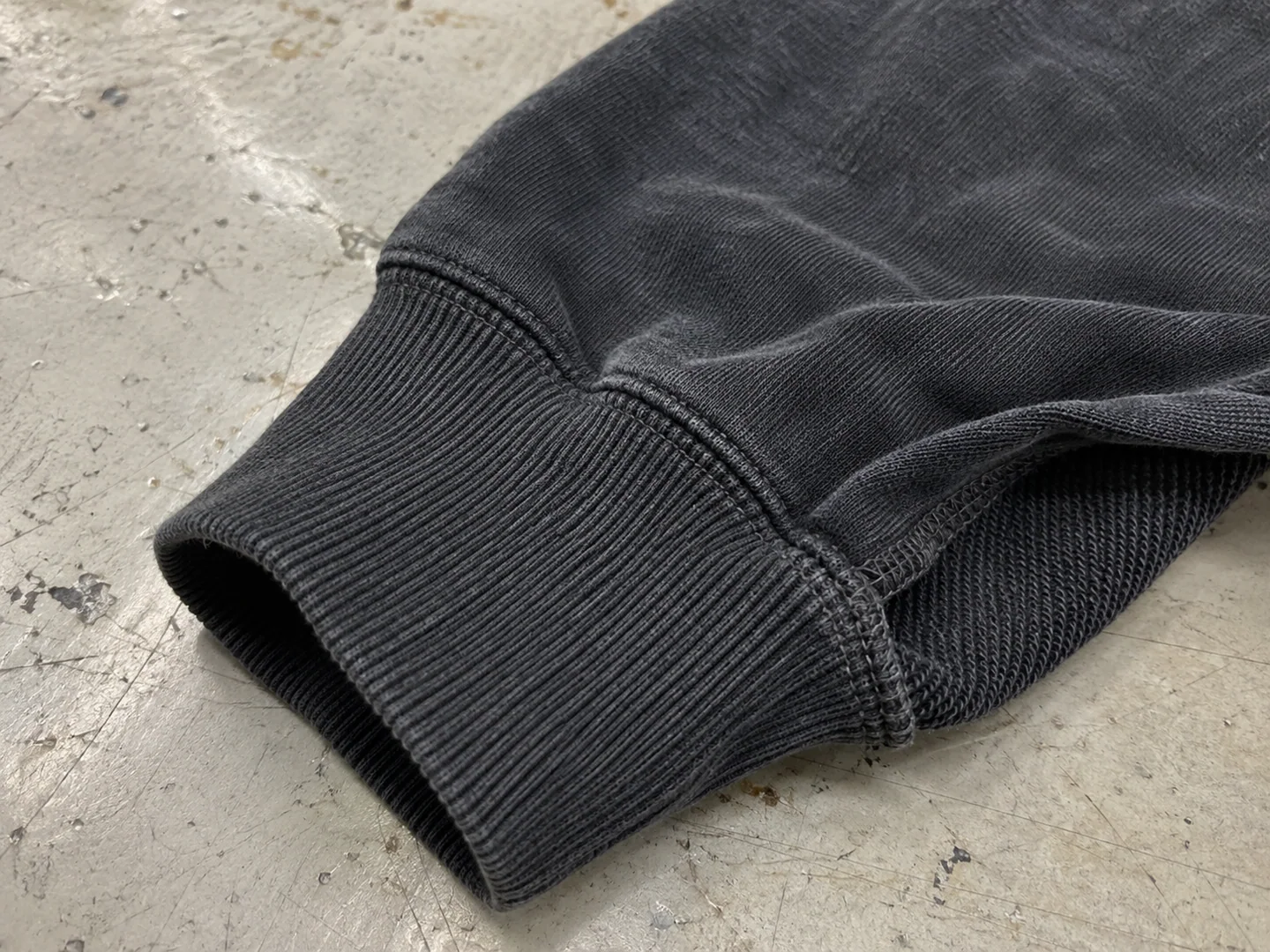
1×1 vs 2×2 Rib: What Changes on a Hoodie?
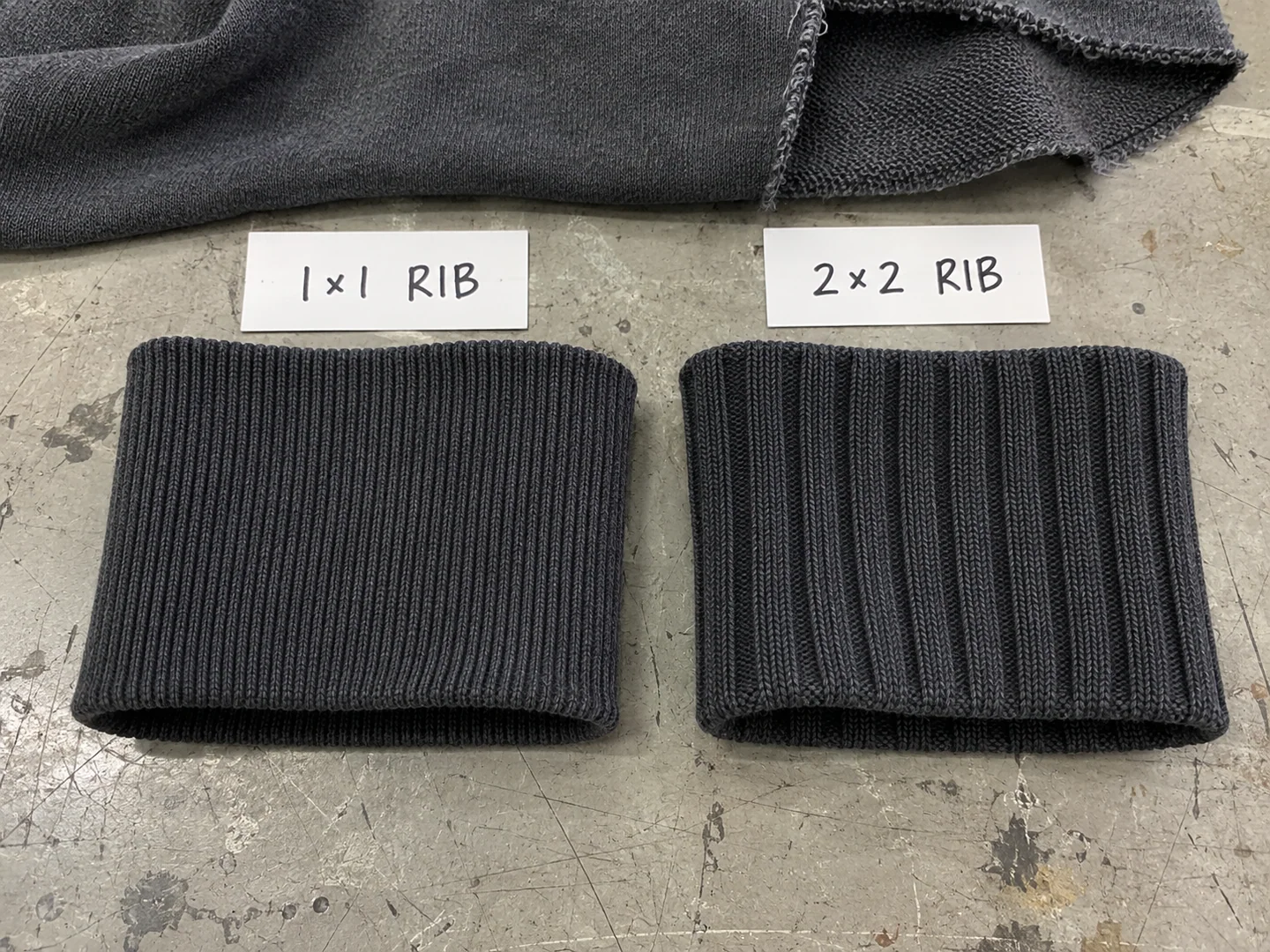
The notation describes the knit structure, but it does not by itself guarantee thickness, elasticity or quality. Yarn, fiber content, elastic percentage, knitting density, finishing and finished width all affect how the rib behaves. The comparison below describes common design directions rather than fixed rules for every material.
| Rib direction | Typical appearance | Design effect | Common use |
|---|---|---|---|
| 1×1 rib | Finer, closer ribs with a relatively clean surface | Even stretch and a close, restrained appearance | Crewneck collars, narrower cuffs and light- to midweight sweatshirts |
| 2×2 rib | Wider, more visible ribs with a fuller appearance | A heavier visual line and stronger vintage or streetwear character | Heavyweight hoodies, wider cuffs and wider hem bands |
| 2×1 or custom rib | A project-defined rhythm between common structures | Selected to reproduce a reference or create a specific surface | Custom silhouettes, branded trims and non-standard proportions |
| Engineered or custom-knit rib | Can include stripes, jacquard, extra thickness or special texture | More distinctive branding and controlled construction | Programs that can support separate development and material MOQ |
KAOUYOU commonly uses the same rib direction for a hoodie's cuffs and hem. Different specifications are possible when the client intentionally wants a contrast in structure, weight, color or performance.
How Does KAOUYOU Match Rib to the Hoodie Body?
KAOUYOU originally began in rib knitting and operates its own rib-knitting machines. The team uses a yarn color card containing thousands of shades to identify a close yarn match and can knit rib to the approved product direction when the quantity, structure and development requirements are suitable. For smaller orders, matching a practical stock rib is often more efficient than developing a special color.
Color is only one part of the match. The factory also checks thickness, weight, density, stretch, recovery and shrinkage against the main sweatshirt fabric. A close visual shade can still fail if the rib feels too thin, contracts too strongly or reacts differently during garment dyeing and washing.
Which Rib Composition Should a Brand Specify?
The body composition is a starting point, not an automatic answer. A 100% cotton sweatshirt may use cotton rib for a natural garment-dye direction or cotton-spandex rib when stronger recovery is required. Mixed-fiber bodies may benefit from a blend that improves dimensional stability, but the hand and dye response must remain visually compatible.
| Composition direction | Why a brand may choose it | Risk to approve |
|---|---|---|
| 100% cotton | Natural hand and good compatibility with cotton garment-dye or vintage directions | Recovery may be weaker, so cuffs and hems can relax more during wear |
| Cotton-spandex | Common choice for stronger stretch, recovery and shape retention | Spandex performance must remain compatible with wash, heat and drying conditions |
| Cotton-polyester blend | Improved dimensional stability and abrasion resistance for CVC or TC sweatshirts | Hand feel and dye response may differ from a high-cotton body fabric |
| Polyester or functional blend | Durability, quick drying and stable dimensions for sport or uniform directions | Usually gives a less cotton-like hand and may require separate color approval |
KAOUYOU checks elasticity by hand during development and uses wash testing to review whether the rib retains the required shape. When a client supplies a formal test method or numerical recovery requirement, that client requirement should be confirmed before sampling and production.
How Should Rib Weight Match Hoodie Weight and Fit?
As the sweatshirt body becomes heavier, the rib normally needs greater substance. A thin or low-recovery rib can look weak beside heavyweight fleece or French terry, while an excessively tight rib may pull the hem inward, create waves or change the intended silhouette. This is why brands should specify finished fabric condition, not simply request a “heavy rib.” The French Terry versus fleece guide explains how the body construction changes the complete hoodie direction.
A product such as a black oversized pullover hoodie can help a buyer discuss body volume, sleeve fullness and rib-trim direction. It should not be treated as a fixed rib specification for another order; the actual knit and dimensions remain project-defined.
How Is Hoodie Rib Cut Length Determined?
KAOUYOU does not use one fixed percentage for every cuff and hem. The pattern and sewing team considers the actual body or sleeve opening, rib elasticity and recovery, intended tightness, finished opening measurement, body silhouette and wash result. The same cut ratio can produce a loose cuff in one rib and an excessively tight cuff in another.
The client normally decides the visible cuff height, hem-band height and intended appearance. When the client supplies only a reference image, KAOUYOU discusses the practical dimensions and expected silhouette before the complete sample is made. For attachment, the opening and rib are divided into matching sections so the operator can distribute the rib evenly instead of pulling heavily at one point.
How Do Garment Dye and Vintage Wash Affect Ribbing?
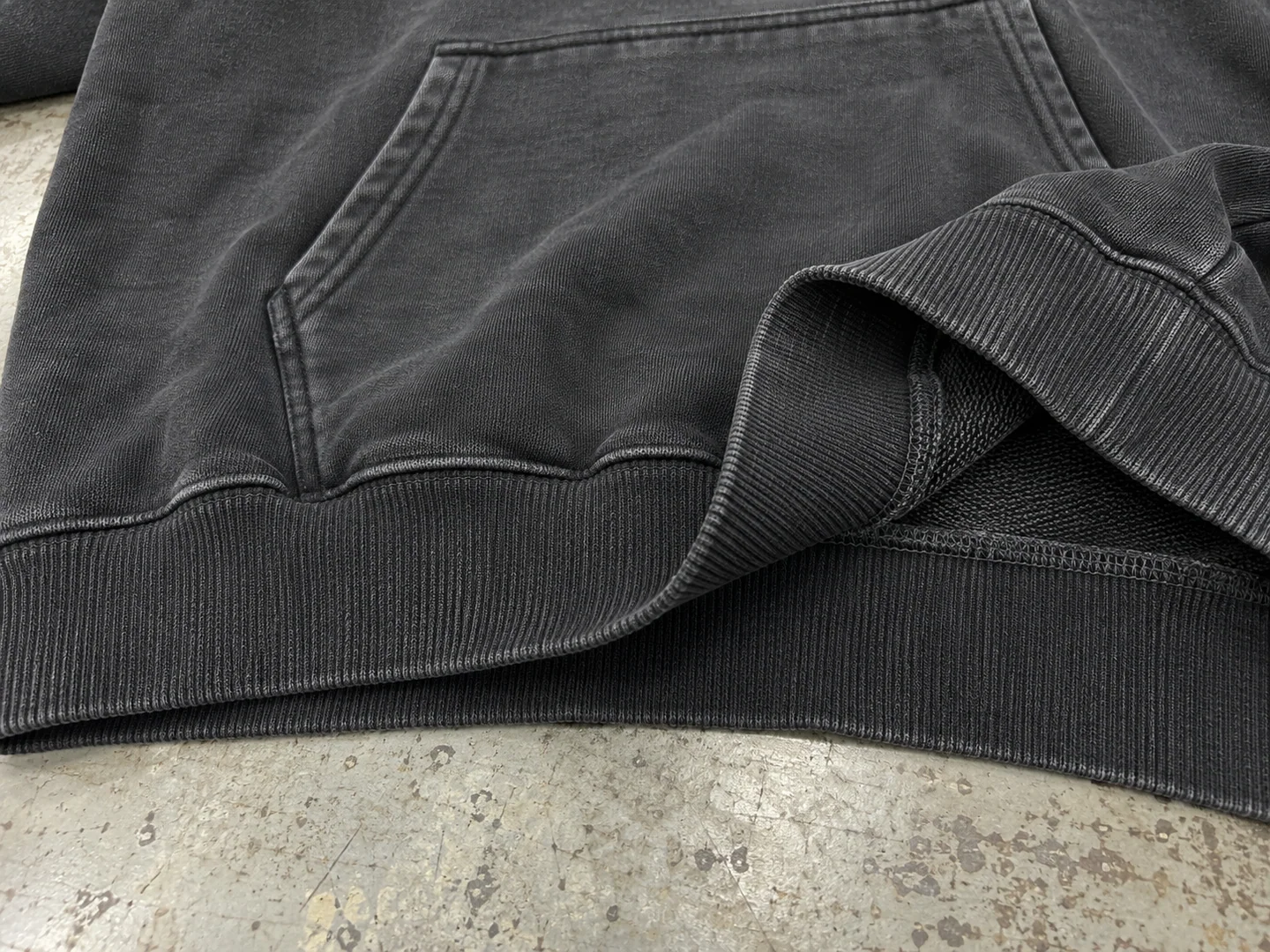
In many KAOUYOU sweatshirts, the rib is attached before garment dyeing or washing so the brand can approve the color, shrinkage, recovery and complete finished shape together. Body and rib still need separate shrinkage checks because their constructions, density, fibers and elastic content differ.
If the body shrinks more than the rib, the hem may relax or turn outward. If the rib shrinks more, the neckline, cuff or hem can become tight and puckered. Different fibers can also absorb dye or fade at different rates. A polyester-containing rib may appear lighter than a cotton body, while strong heat or chemical treatment can damage elastic recovery.
KAOUYOU therefore reviews a color sample, process sample or complete washed garment for garment dye, enzyme, acid and vintage effects. When joint processing cannot produce an acceptable result, the team can discuss a different rib composition, dye or wash recipe, or a revised production sequence. Rib may be attached after washing when a contrast trim must remain clean or when the approved process would damage it. For the broader dimensional workflow, see how factories control garment shrinkage in production.
Why Are Zip-Hoodie Hem Intersections More Difficult?
A heavyweight body, thick rib and zipper can create several layers where the center-front zipper meets the hem band. Without a controlled construction, that point can cause broken needles, skipped stitches, uneven topstitching, different left and right hem heights, a bulky zipper base or a front that does not close naturally.
KAOUYOU adjusts seam allowance and layer count to the construction. Depending on the approved design, the team may reduce local bulk, narrow the rib seam allowance or select suitable needles, presser feet and sewing equipment for the material. A construction sample or first garment is checked for zipper movement, front alignment and equal hem length before the operation continues in bulk. The gray full-zip hoodie reference can help brands discuss the visible relationship between zipper, split pocket and rib hem without implying one universal internal construction.
What Hoodie Rib Defects Should a Brand Watch For?
Rib defects often come from a system mismatch rather than the cuff alone. Material specification, cutting direction, cut length, feeding, body-to-rib shrinkage and wash conditions all influence the result.
| Visible problem | Likely cause to investigate | Typical corrective direction |
|---|---|---|
| Loose cuff or poor recovery | Rib is too long, knitted too loosely, lacks suitable elastic recovery or loses elasticity in washing | Review the rib length and specification; a finished garment may require the cuff to be removed and replaced |
| Wavy hem | Rib-to-body length balance is wrong, sewing tension is uneven or the two materials shrink differently | Correct the length allocation and sewing tension; severe distortion normally requires reattachment |
| Twisted rib | Incorrect cutting direction, fabric skew, a misaligned join or uneven stretching during sewing | Pressing may improve a slight issue, but visible twist usually requires replacement |
| Uneven gathering | Too few matching points or inconsistent distribution and feeding during sewing | Divide both openings into matching sections and distribute stretch evenly during attachment |
| Loss of shape after washing | Weak recovery or excessive heat, chemical exposure or drying conditions | Retest the rib and wash process; severely damaged elastic rib normally cannot be restored by pressing |
| Body-to-rib shade difference | Different fibers, dye uptake, material lots or wash response | Obtain client approval for an acceptable difference or replace/redevelop visibly mismatched rib |
Corrective action depends on severity and production stage. Pressing can improve a slight appearance issue, but it cannot reliably restore damaged elastic fibers or correct a materially wrong cut length. A visibly twisted, loose or mismatched rib often needs to be removed and remade.
What Hoodie Ribbing Details Belong in a Tech Pack?
A complete specification reduces interpretation between sourcing, pattern making, sampling, washing, sewing and quality control. If the client does not have every field, KAOUYOU can discuss and confirm the missing decisions before production. The broader heavyweight hoodie Tech Pack guide places these trim details inside the complete product specification.
- Rib structure, such as 1×1, 2×2, 2×1 or an approved custom reference
- Fiber composition and whether elastic fiber is required
- Target weight, thickness, density and approved hand-feel reference
- Color standard and whether the rib is stock-matched, custom knitted or specially dyed
- Finished cuff width, cuff height, hem-band height and relaxed opening dimensions
- Intended degree of gathering, snugness or straight boxy appearance
- Stretch and recovery requirement or the client-specified test method
- Lengthwise and widthwise shrinkage requirements for body and rib
- Garment-dye, enzyme, acid, vintage or other wash sequence
- Attachment seam, visible topstitching and any zipper-to-rib intersection detail
How Should Ribbing Be Approved and Checked in Bulk?
A rib swatch is useful for checking texture, color and hand, but KAOUYOU normally asks the client to approve the complete sample. The full garment reveals whether the cuff suits the sleeve volume, whether the hem supports the intended fit and whether dyeing or washing changes the shade, recovery or seam shape.
- 01
Incoming rib
Check structure, composition reference, color, thickness, width, surface condition and lot consistency before sewing.
- 02
Material testing
Review body and rib shrinkage separately, then check stretch, recovery and the combined wash response.
- 03
First garment
Confirm cuff and hem dimensions, gathering, symmetry, seam flatness, zipper intersections and the intended silhouette.
- 04
Inline inspection
Watch for repeated loose cuffs, uneven feeding, twisting, wavy hems, skipped stitches or left-right differences.
- 05
After dyeing or washing
Recheck shade balance, recovery, finished measurements, seam shape and any damage caused by heat or chemicals.
- 06
Before packing
Inspect the finished appearance and sample measurements before the garments enter final packing.
The first garment is especially important. If a repeated problem appears, the relevant operation should be corrected before more pieces are produced. The complete inspection system—not a single final check—is covered in the clothing manufacturing quality-control checklist.
Frequently Asked Questions
Is 1×1 or 2×2 rib better for a hoodie?
Neither structure is universally better. A 1×1 rib usually gives a finer and cleaner appearance, while 2×2 provides a wider, more visible rib line. Composition, density, weight, elastic content, recovery, finished width and the hoodie silhouette matter as much as the knit notation.
Should heavyweight hoodies use heavier ribbing?
Usually the rib should become thicker and more substantial as the sweatshirt body becomes heavier, otherwise the cuff and hem may look weak or relax too easily. The final match still needs a physical sample because two ribs with similar weight can have different density and recovery.
What percentage shorter should hoodie ribbing be than the opening?
There is no universal percentage. KAOUYOU determines the cut length from the actual opening, rib elasticity and recovery, desired snugness, finished dimensions and wash result. A fixed ratio can make one rib loose and another rib excessively tight.
Can hoodie cuffs and hem use different rib specifications?
Yes, when the client intentionally specifies different structures, weights, colors or performance. KAOUYOU normally uses the same rib direction for both areas unless the approved design requires a difference.
Does an oversized hoodie need loose ribbing?
Not automatically. Oversized and boxy garments need rib dimensions that support the intended outline. Strong hem contraction can create a balloon shape, while minimal contraction preserves a straighter boxy body. The cuff also needs to balance the sleeve volume rather than simply copying a regular-fit specification.
Should ribbing be installed before or after garment washing?
Most KAOUYOU sweatshirts have the rib attached before garment dyeing or washing so the complete result can be approved. Rib may be installed afterward when a contrast color must remain clean, the elastic fiber is not compatible with the process, or testing shows that joint washing causes unacceptable shade, shrinkage or recovery problems.
Can KAOUYOU develop matching rib for a custom hoodie?
Yes. KAOUYOU began with rib knitting and has its own rib-knitting machines plus a yarn color card containing thousands of shades. Suitable yarn can be selected for a close match and knitted to the required direction. For smaller quantities, matching an available stock rib is often more practical. Final feasibility depends on structure, color, quantity and approval requirements.
Is a rib swatch enough for bulk approval?
A swatch helps confirm structure, color and hand, but the complete sample should normally be approved. Only a finished garment shows the actual gathering, cuff fit, hem shape, wash response, zipper intersection and interaction between the rib and body fabric.