A clothing manufacturing quality control checklist should connect each inspection to an approved reference, a responsible person, a written result and a corrective action. It should cover incoming materials, cutting, first-piece approval, inline production, finished garments, measurements, final sampling and packing—not wait until the order is ready to ship.
This guide explains KAOUYOU's working process for custom clothing orders. Client manuals and order-specific inspection plans take priority. The examples below describe control points, not a universal sample size, defect allowance or test method for every garment order.
Answer in 30 seconds
- Freeze one production standard before cutting: approved sample, final measurements, materials, workmanship, decoration and packing information.
- Inspect quality while the order can still be corrected—not only after all garments are finished.
- Trace findings to the affected dye lot, cutting bundle, sewing operation or external process.
- Separate 100% finished-garment inspection from measurement sampling and AQL lot acceptance.
- Record failures, repairs, reinspection and shipment-release evidence.
1. Set the Clothing Quality Standard Before Production
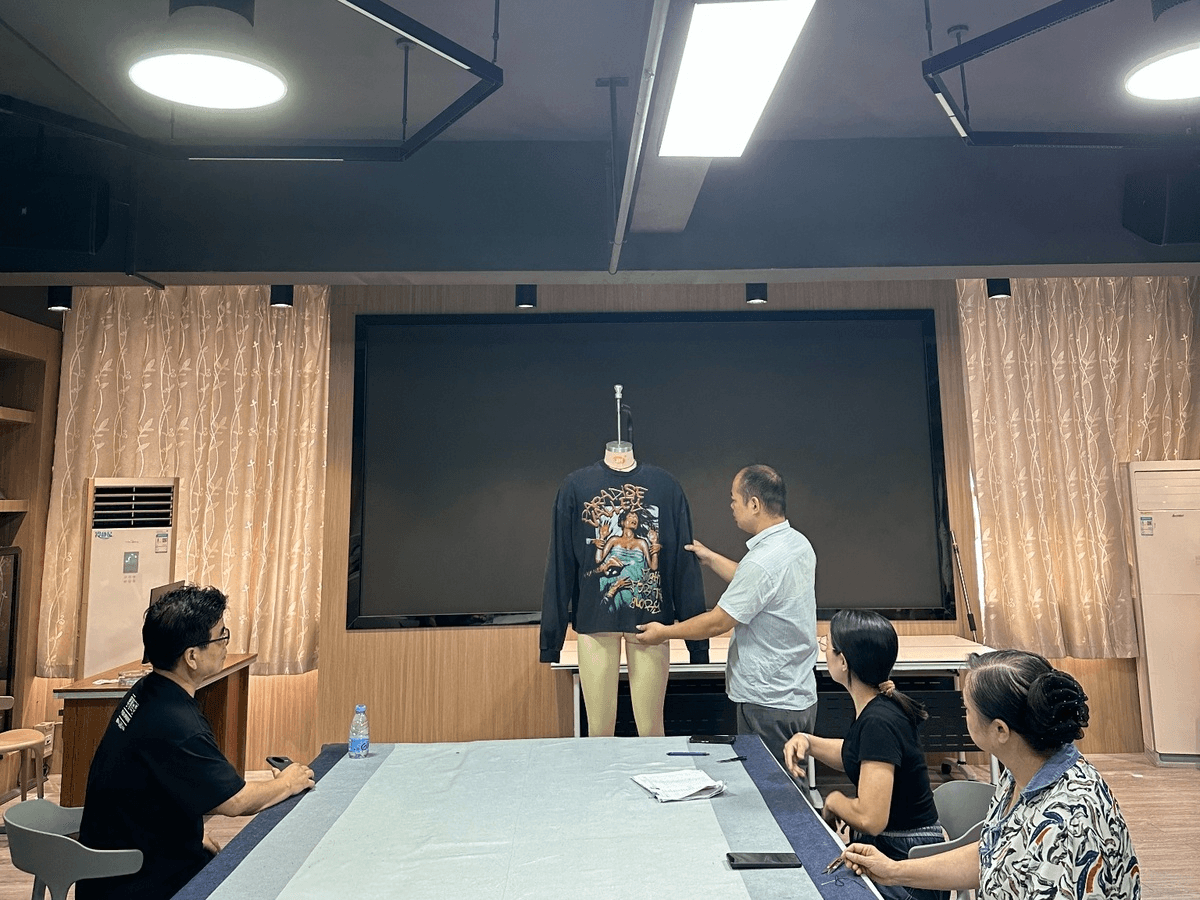
A garment cannot be inspected against a vague promise of “good quality.” The inspection team needs a controlled standard that identifies what was approved and what variation is acceptable. When a client supplies a quality manual, defect classification, testing protocol or third-party inspection plan, KAOUYOU aligns the order with those requirements before production.
When there is no separate client manual, the working standard is built from the approved production or PP sample, final PO and order breakdown, final size chart and tolerances, fabric and trim approvals, workmanship instructions, print or embroidery approvals, wash standard, labels, barcodes and packing instructions. These references must agree. If two files conflict, the team resolves the version before the affected process begins.
2. Assign Owners, Records and Release Decisions
Quality information is prepared across sales, production, management and QC, while KAOUYOU's QC team normally maintains the inspection data. The factory manager, sales team and management participate in major approval or release decisions. Day-to-day production inspection remains a QC responsibility, supported by the department that owns the affected operation.
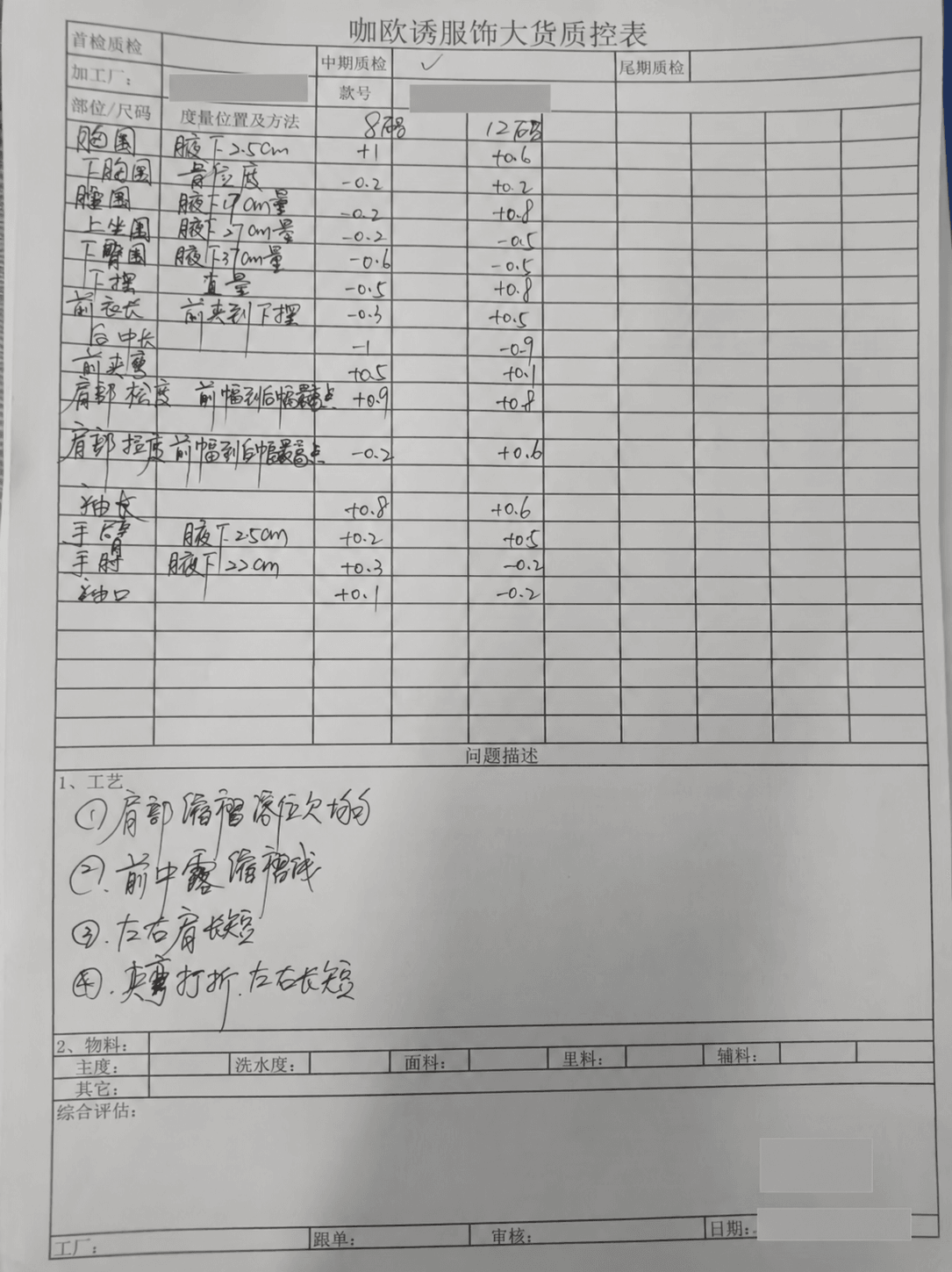
A useful apparel quality control checklist does not only ask whether a checkpoint passed. It records the reference used, finding, affected scope, responsible department, action taken, reinspection and final disposition. This is what turns a list of checks into a traceable control plan.
| Quality gate | Controlling references | Evidence or decision |
|---|---|---|
| Specification release | PO, final size chart and tolerances, approved production sample, materials, workmanship, decoration and packing requirements | One controlled production standard; unresolved conflicts are closed before use |
| Incoming materials | Fabric and trim approvals, shade references, purchasing and receipt information | Inspection notes, test results where required, lot separation and supplier action when material fails |
| Cutting | Approved patterns, marker, fabric direction, shrinkage allowance, shade or dye-lot identity | Cutting, bundle and batch records that support traceability |
| First piece | Production sample, construction sheet, size chart and placement references | First-piece result, corrections and release decision before continuous sewing |
| Inline production | Approved first piece and current production instructions | QC findings, affected bundles or operations, repair and follow-up inspection |
| Finished garment | Approved sample, measurement tolerances and workmanship standard | 100% appearance/workmanship check, measurement records and segregated nonconforming pieces |
| Final and packing | Client inspection plan, labels, barcode data, folding, polybag and carton instructions | Final inspection result, packing checks, carton data and supporting photos or reports |
3. Incoming Fabric and Trim Quality Control
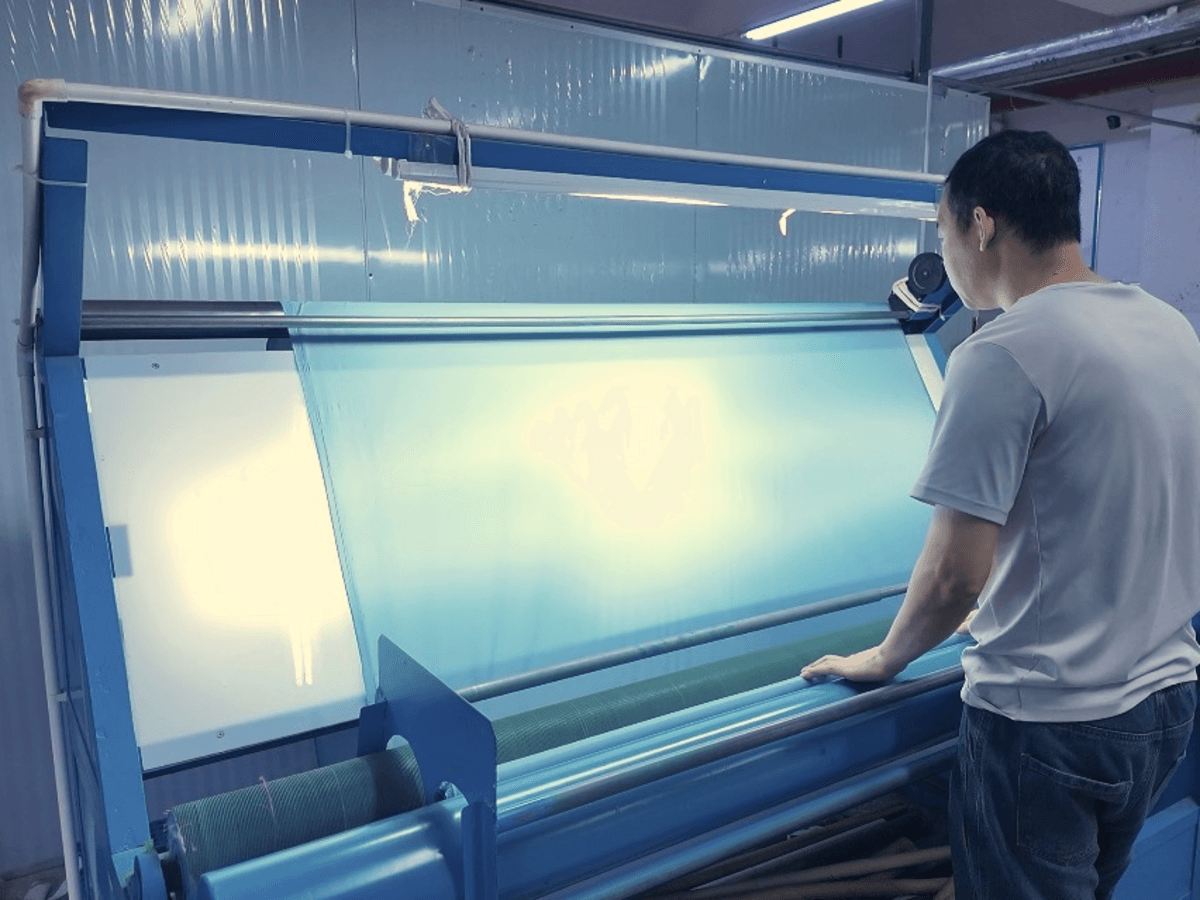
KAOUYOU covers essentially all incoming bulk fabric through its inspection process, using spot checks across the received material. Higher-risk fabric may receive full inspection. The appropriate coverage depends on the fabric, known risk, customer requirement and order—not one claim that every metre of every fabric is always inspected in the same way.
The team compares the bulk fabric with the production-sample reference and checks the applicable items: fabric type, color, hand feel, GSM, usable width, quantity and visible defects. Internal checks can include GSM, shrinkage and pilling. Colorfastness and other required performance testing are arranged through a third-party laboratory when applicable. The required method and pass criteria should be confirmed with the client before testing.
For large orders with dye-lot or shade variation, the lots are identified and controlled during cutting. The aim is to prevent visibly different shades from being combined in one garment. Shade management also supports later tracing if a color concern appears during sewing or finishing.
Trims are checked against the approved bill of materials and sample for type, color, size, logo or wording, quantity, application and function. Zippers, buttons, snaps, cords and hardware need relevant functional checks rather than a purely visual match.
4. Cutting, Bundling and Shade Control
Before cutting, the team confirms the final pattern, grading, marker, fabric direction, shrinkage allowance and any nap, one-way print, stripe or check requirement. Fabric relaxation is arranged when the material condition requires it; it is not imposed as one fixed waiting time for every woven and knit fabric.
After cutting, panels are organized by style, color, size and production batch. Bundle records help prevent size mixing and let QC trace a repeated measurement or sewing issue back to an affected group. When dye lots must remain separate, identification continues through sewing so panels from different shade groups are not combined in the same garment.
5. First-Piece Inspection and Inline Garment QC
The sewing line first produces a garment for QC review. The check covers construction, measurements, sewing method, stitch and thread direction, symmetry, pockets, labels, zipper or hardware function, decoration placement and consistency with the approved production sample. Continuous production proceeds only after the first piece is accepted. If the result is not acceptable, KAOUYOU can stop the affected operation and reconvene the pre-production meeting to align the correction.
Inline garment inspection is then handled by QC throughout production. The exact timing and coverage depend on the style, process and risk. When the same problem repeats, QC focuses on the responsible operation, affected bundles and completed quantity; the team corrects the method and reinspects the relevant scope. KAOUYOU does not describe one fixed inspection interval or defect trigger as a rule for every order.
A visually simple style moved quickly through its pre-production discussion. When QC placed the first sewn garment on a dress form, the fabric's drape caused the garment to drop and the measurements moved outside the required range. QC immediately alerted production, and the workshop corrected the handling and construction during production—before the issue spread through a finished order.
6. Print, Embroidery, Dyeing and Wash Checks
External processing does not remove factory responsibility. KAOUYOU sends the specialist supplier the confirmed artwork, dimensions, color, position, quantity and approved effect, then checks the returned work before it moves forward.
Print inspection can include color, dimensions, position, registration, coverage, missing areas, cracking, lifting, stains, heat marks and the agreed hand feel. Embroidery checks include position, size, color, density, puckering, loose thread, backing and fabric distortion. Washing or garment dyeing is compared with the approved color, contrast, hand feel and distress level, while measurements, twisting, accessories and decoration are reviewed again after processing.
The controlling reference is the client-approved sample or effect standard. A visually similar web image is not a measurable bulk-production standard. Brands preparing print projects can also use the garment printing artwork guide to lock file version, dimensions, placement and color approval before this QC gate.
7. Finished-Garment Appearance, Function and Measurements
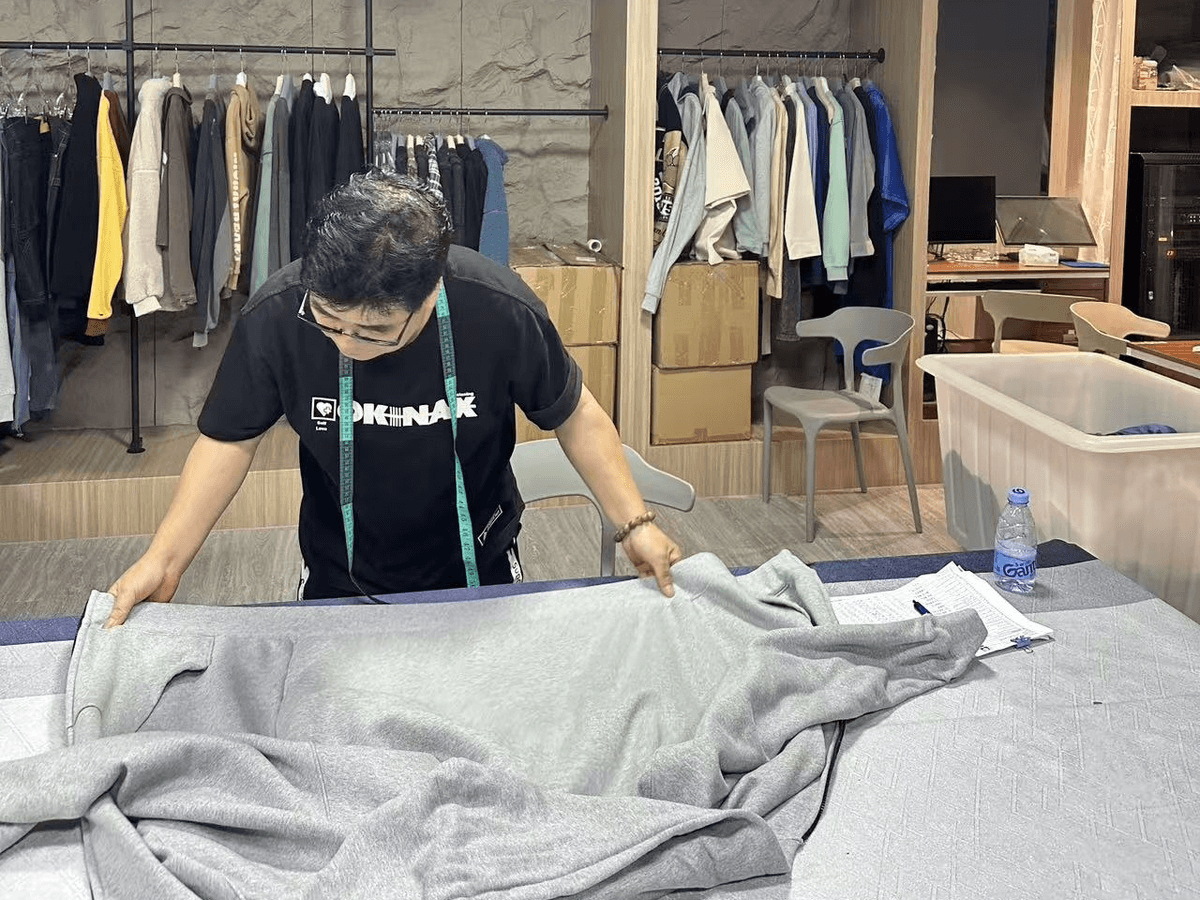
KAOUYOU conducts a 100% finished-garment appearance and workmanship check before accepted pieces proceed to final packing. Inspectors look for sewing, stains, holes, symmetry, labels, decoration, wash appearance and relevant zipper, button or snap function. Nonconforming pieces are separated into controlled areas for repair, rejection or further review. Repaired garments return for inspection before they can rejoin accepted goods.
Measurements are checked at first-piece, production and final stages against the client-approved chart and tolerances. The sample selection reflects the order and risk; this article does not invent a universal number of garments per size or color. If repeated deviations indicate a systematic cause, the team traces the issue to pattern, cutting, sewing, pressing, washing or material behavior and expands the check around the affected production scope.
8. Final AQL Inspection, Packing and Shipment Release
100% inspection and AQL answer different questions
The 100% finished check is intended to find and separate individual garment problems. An AQL inspection uses a random sample to support an accept-or-reject decision for the production lot. KAOUYOU follows its established internal sampling process and adjusts the inspection plan when the client supplies its own manual, AQL limits or third-party requirements.
The current ISO 2859-1:2026 defines AQL-indexed acceptance-sampling schemes for lot-by-lot inspection. It does not mean that one sample quantity or acceptance table should be copied into every clothing order. Lot size, inspection level, AQL, switching rules and the agreed plan determine the applicable sample and decision numbers. Our AQL inspection guide for clothing brands explains that distinction without presenting an illustrative table as a universal KAOUYOU rule.
Internal final QC occurs before cartoning
KAOUYOU normally completes its internal final checks after garments have been prepared for packing but before accepted units are sealed into shipping cartons. A client-appointed or third-party final random inspection may require a specified production-completion and packing ratio so the inspector can select finished cartons. Those are separate inspection routes and should not be described as the same checkpoint.
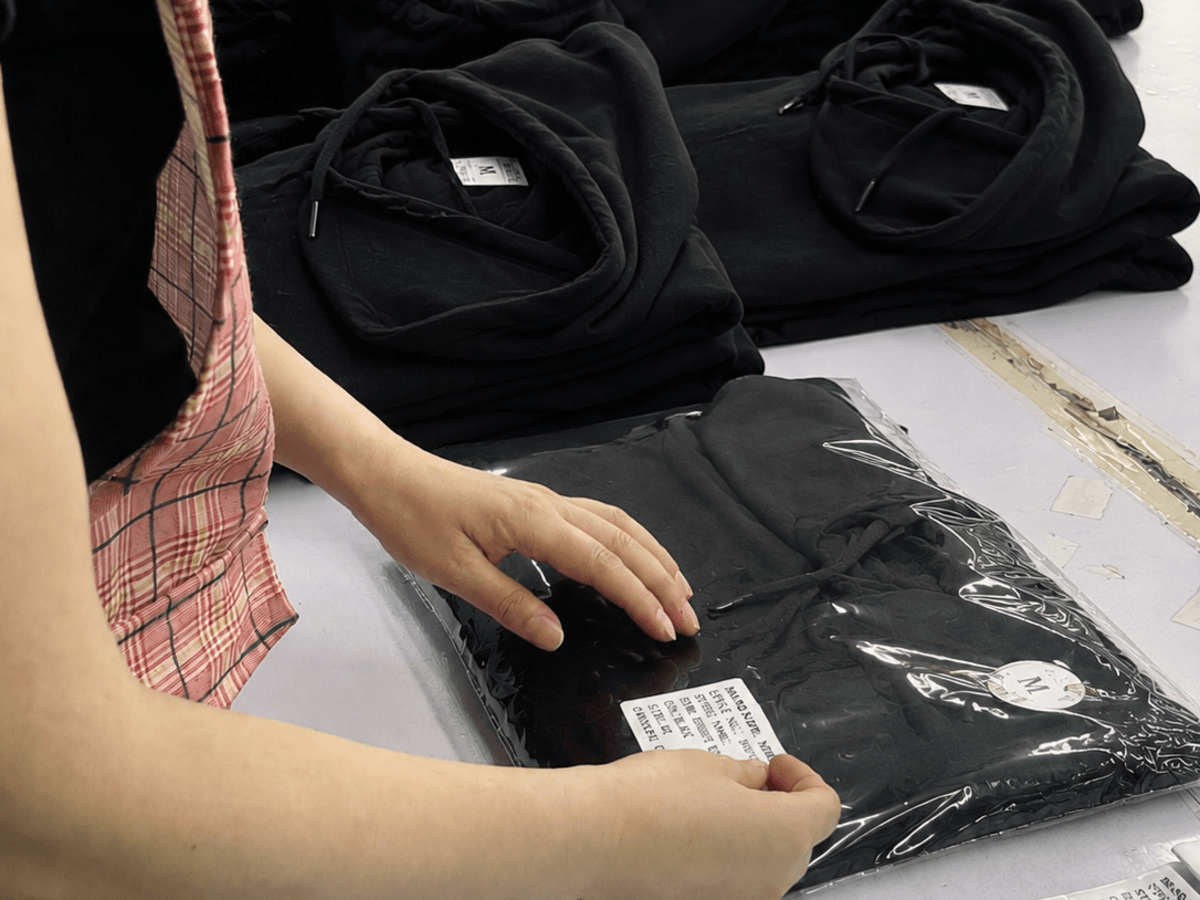
Packing control verifies the approved fold, tag and label placement, size sticker, barcode or SKU data, polybag, assortment, carton quantity, shipping mark, carton number, dimensions and weight as applicable. Needle or metal detection is arranged when the customer, product or market requires it, and records are retained according to the order requirement. See the apparel packaging checklist for a fuller packing handoff.
9. Adapt the Checklist to the Product
A generic garment quality control checklist is only a starting point. Product construction and finishing determine which risks deserve more attention. These examples show how product pages can support a technical conversation; they do not create one fixed checklist for every order.
| Product direction | Additional QC focus | Relevant example |
|---|---|---|
| Acid-wash hoodie | Wash range, shade consistency, seam and rib appearance, post-wash measurements, hardware function and surface damage | Black acid-wash pullover hoodie |
| Graphic cargo pants | Pocket construction and symmetry, stress-point reinforcement, hardware, leg balance, artwork position and functional access | Graphic wide-leg cargo pants |
| Embroidered jacket | Embroidery puckering and density, satin surface marks, rib alignment, zipper operation, lining and panel balance | Custom embroidered souvenir jacket |
10. What Happens When a Quality Check Fails?
- Stop or isolate the affected operation, bundle, batch, dye lot or finished-goods area.
- Compare the finding with the approved sample, final specification and client requirement.
- Trace the likely source: material, pattern, cutting, sewing, decoration, washing, finishing or packing.
- Define the affected scope instead of repairing only the garment that revealed the problem.
- Correct the method and repair recoverable products; segregate items that cannot meet the standard.
- Reinspect the corrected product and expand the check when the issue is repetitive or systematic.
- Record the result and obtain the required release decision before the next production stage or shipment.
This feedback loop is one reason a factory's bulk production process should be reviewed as a series of quality gates rather than a straight line from fabric to cartons.
11. Buyer's Pre-Production QC Checklist
Before authorizing bulk production, a clothing brand should confirm these points in writing:
- Final PO, style, color, size breakdown and quantity
- Approved production or PP sample and the exact approval record
- Final measurement chart with a tolerance for each point of measure
- Approved fabric, color, hand feel, trims and functional components
- Workmanship and appearance requirements, including defect definitions where supplied
- Approved print, embroidery, wash or garment-dye references
- Required material or garment tests and the responsible laboratory
- AQL, inspection level or third-party inspection plan when specified by the client
- Label, barcode, folding, bagging, carton and shipping-mark instructions
- Needle or metal detection requirement, report format and any market-specific rules
- Required pre-shipment evidence and the person authorized to approve release
Depending on the order, KAOUYOU can provide internal inspection information, measurement records, defect or repair photos, bulk and packing photos, packing lists, fabric test reports and a third-party report when the client has arranged that inspection. Confirm the required evidence before production rather than after the shipment deadline.
For a broader view of how these controls fit the factory, review KAOUYOU's quality-control service, production workflow and product-development process.
Frequently Asked Questions
What is included in a clothing quality control checklist?
A usable checklist covers the approved specification, incoming fabric and trims, cutting, first-piece approval, inline sewing, decoration or washing, finished-garment appearance, measurements, final sampling, packing and corrective-action records. It should also state who owns each decision and which reference controls acceptance.
Does KAOUYOU inspect every finished garment?
KAOUYOU performs a 100% finished-garment appearance and workmanship check before accepted pieces move to final packing. This is separate from measurement sampling and the later AQL or client-specified final random inspection.
Is AQL the same as checking every garment?
No. AQL is an acceptance-sampling method used to make a lot-level decision from a defined random sample. A 100% finished inspection examines individual garments for visible or functional problems. One does not automatically replace the other.
Who provides the clothing quality standard?
The client’s approved quality manual, inspection plan and product requirements take priority when supplied. If the client does not provide a separate manual, KAOUYOU builds the working standard from the approved production sample, final size chart and tolerances, PO, material and trim approvals, workmanship instructions, decoration references and packing requirements.
How often is inline garment inspection performed?
KAOUYOU follows its internal QC process, while the exact timing and coverage depend on the style, production stage and risk. A repeated problem receives focused inspection and corrective follow-up. The factory does not present one fixed frequency as a universal rule for every order.
Can a clothing brand arrange third-party inspection?
Yes. A client can appoint a third-party inspector and specify the required completion and packing conditions. KAOUYOU prepares the goods, final documents, approved reference, inspection area and packed cartons required for random selection.
What quality-control documents can a buyer request?
Depending on the order, KAOUYOU can provide internal inspection information, measurement records, defect and repair evidence, garment or packing photos, packing lists, fabric test reports and a third-party inspection report when the client has arranged one.