Clothing bulk production turns one approved product into a repeatable commercial order. At KAOUYOU, the working sequence is: confirm the production sample and final files, inspect bulk materials, hold the pre-production meeting, grade and plan the marker, cut and bundle, complete applicable decoration, approve the sewing-line first piece, sew with inline QC, wash when required, finish and inspect, then pack and release the shipment.
The value of the process is not the number of factory steps. It is the control between them. Each team must know which version is final, what evidence permits the next operation and what happens if material, measurements or workmanship move away from the approved standard.
Bulk production in five points
- The deposit starts purchasing and scheduling; cutting starts physical bulk production.
- KAOUYOU does not normally add a separate trial-cut stage before every order.
- Material, pattern and first-piece controls prevent one error from multiplying across a production line.
- Decoration, washing, testing and detection routes depend on the actual product and client standard.
- Finished-garment inspection and AQL sampling serve different quality-control purposes.
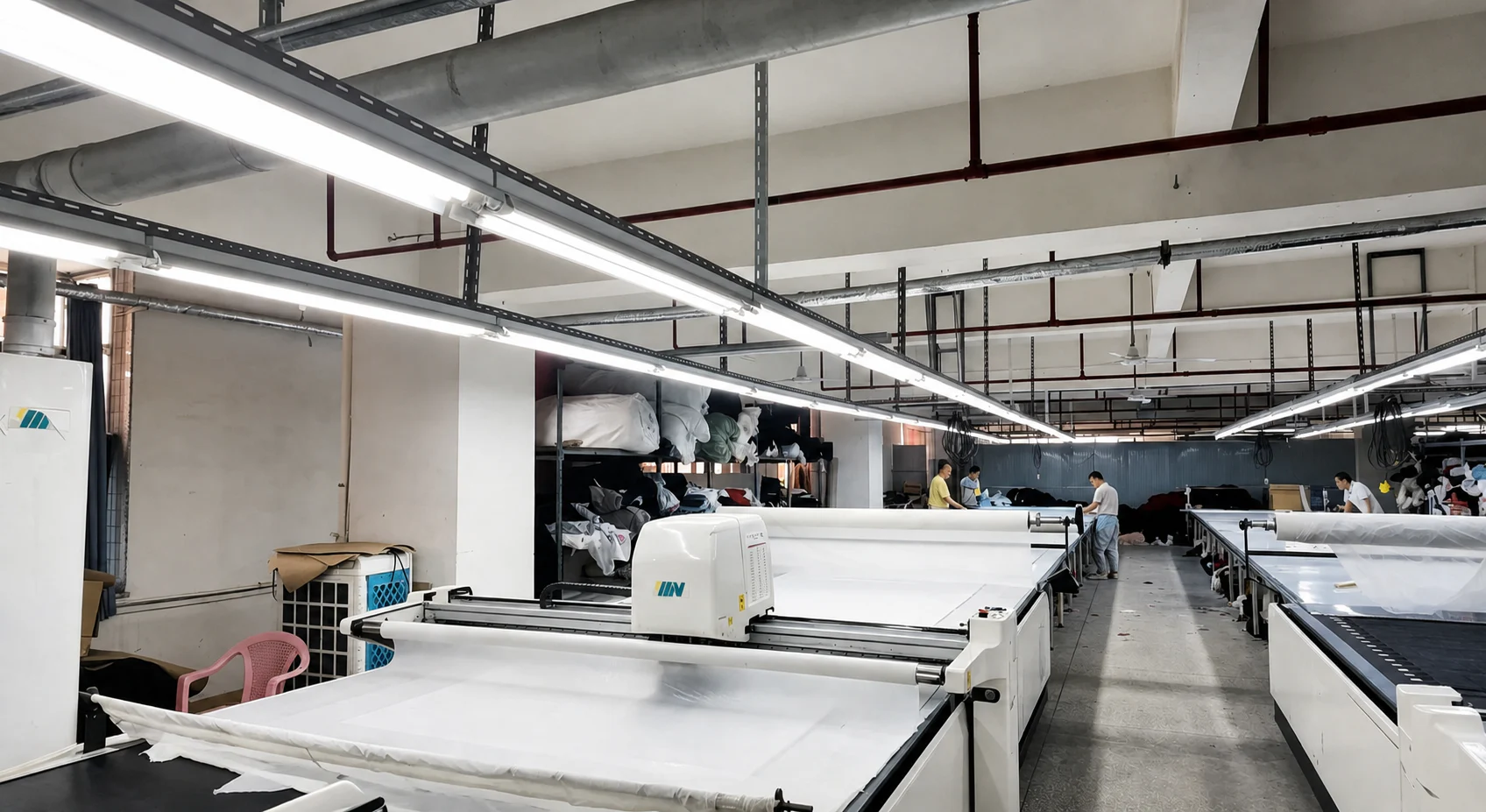
What Does Clothing Bulk Production Mean?
Bulk garment manufacturing is not simply making the sample many times. A sample maker can build one garment from beginning to end and adjust handling during the work. Bulk production divides the garment into repeated operations across cutting, decoration, sewing, finishing and quality teams. That division improves output, but an unclear method or unchecked error can also repeat across many units.
At KAOUYOU, receiving the normal 50% deposit means that the order is activated: purchasing and scheduling can begin. The on-floor bulk process starts at cutting. Before cutting is released, the final production sample must be confirmed, the bulk fabric must match it and pass inspection, final production information must be distributed, and the pre-production meeting must be complete.
Order activation: deposit received and purchasing or capacity planning begins. Physical bulk-production start: approved bulk fabric is released for cutting. Treating these as the same moment hides the approvals that still control the schedule.
What Is the Complete Bulk Clothing Production Process?
This is KAOUYOU's normal process framework, not a rule that every garment follows an identical route. A basic T-shirt may move directly from panel printing to sewing and finishing. A garment-dyed hoodie adds small-lot wash confirmation and wet processing. Denim, jackets, special hardware and complex packaging create different handoffs. The order-specific production sheet defines the applicable route.
What Must Be Approved Before Bulk Cutting?
Before the cutting room receives a release, KAOUYOU consolidates the order into one production sheet and technique sheet supported by the final references. The production sample is the physical standard; the written files are the execution standard. If an old size chart, unapproved artwork or conflicting label file is found, the conflict must be closed before cutting.
- Client PO and final style-color-size order sheet
- Final style drawing, measurement chart and tolerances
- Client-approved production sample
- Fabric, trim and component list
- Printing, embroidery, dyeing and washing instructions
- Construction and sewing requirements
- Labels, hangtags, barcode and packing files
- Special quality, testing or inspection requirements
What happens in the pre-production meeting?
KAOUYOU normally brings together the factory manager, QC, production merchandiser, production and workshop supervisors, finishing supervisor, pattern-room supervisor, cutting-room supervisor and sales representative. They review construction, materials, measurements, sewing, printing or embroidery, washing, packing and special client requirements, then flag positions where errors are most likely to occur.
This meeting connects the buyer's approval to the people who will actually purchase, cut, sew, finish, inspect and pack the order. It should not be replaced by forwarding a chat screenshot to one department.
How Are Bulk Fabric and Trims Checked?
When bulk fabric arrives, KAOUYOU cuts an approximately A4-size swatch for the production merchandiser to compare with the production sample while fabric inspection is arranged. The purpose is to stop an incorrect or visibly defective material before its value is multiplied through cutting and sewing.
Shrinkage, skew, colorfastness and other performance checks are selected according to the fabric type, product process and customer requirement. They are not presented as one mandatory test package for every adult garment. If bulk fabric does not match the production sample or has a material quality problem, KAOUYOU normally returns it to the fabric supplier and requests compliant replacement rather than silently cutting it to protect the schedule.
Does every fabric need the same relaxation time?
No. Rolled knits, stretch fabrics or material carrying visible tension may need to relax so the fabric can recover before cutting. A stable woven fabric may not need the same treatment. KAOUYOU decides from the actual material condition rather than assigning one universal number of hours to every fabric.
How Do Grading, Marker Planning and Cutting Work?
The pattern room prepares bulk patterns from the final production sample and measurement chart. Checks cover base-size dimensions, grade rules, left-right and paired pieces, critical structures such as pockets, necklines and armholes, seam allowances, notches and shrinkage allowance. No single reference works alone: pattern, measurement chart and production sample must correspond.
Marker planning then combines the order's color and size ratio with usable fabric width, grain direction, one-way print or nap, stripe or plaid matching, shrinkage and reasonable cutting loss. A change in size ratio, usable width or fabric direction can change actual consumption even when the style drawing is unchanged.
KAOUYOU does not normally cut a separate small trial batch before the formal lay. After fabric acceptance, pattern review and the pre-production meeting, the cutting room follows the released production sheet. Risk is controlled before cutting and again through the sewing-line first piece. Extra trials can still be arranged for a special material or higher-risk project.
Cut components are bundled by style, color, size and production batch. Those records help the team trace a repeated measurement or shade issue back to relevant components, fabric batches and operations. Material with visible dye-lot or roll variation should not be mixed carelessly within one garment.
How Do Printing, Embroidery and Sewing Move Through Bulk Production?
Large front and back prints or embroidery are commonly completed on cut panels because flat pieces are easier to position and handle. Cross-seam designs, small special placements or processes that require the finished garment may occur later. The sequence must be decided before production because decoration order can affect placement, seam assembly and the final washed appearance.
For specialist printing, embroidery, dyeing and washing, KAOUYOU supplies the partner facility with the production file, artwork dimensions, color and placement, approved technique sample, quantity, schedule and applicable finish standard. KAOUYOU checks the processed work for color, position, size, appearance and durability and remains responsible for the finished product delivered to the client.
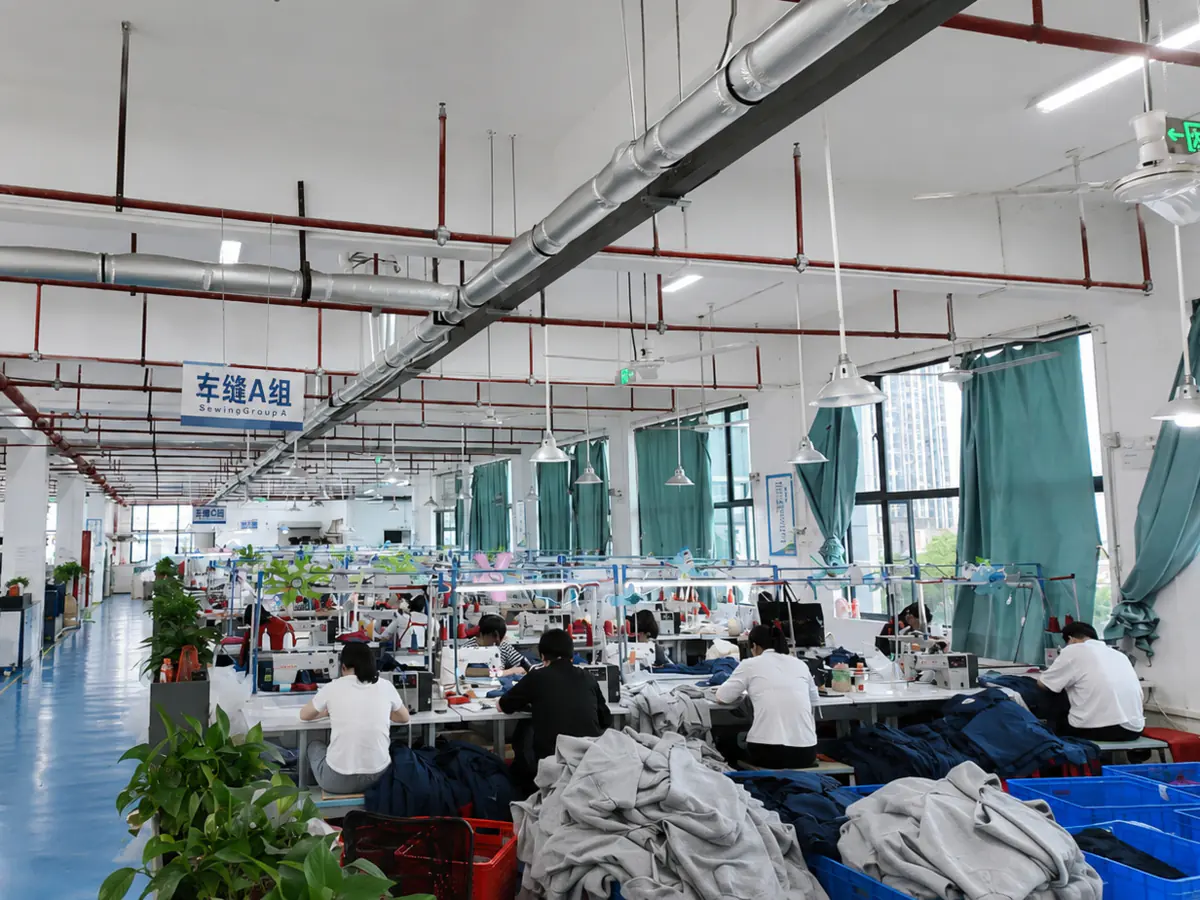
Why is first-piece inspection a critical gate?
The sewing line first assembles one garment for QC review. KAOUYOU checks structure, finished measurements, sewing method, thread color, stitch density, symmetry, pockets, zipper and label position, decoration placement and consistency with the production sample. The line continues only after the first piece is acceptable. A major discrepancy stops the relevant work for adjustment.
During bulk sewing, QC watches for repeated open seams or skipped stitches, measurement drift, asymmetry, misplaced pockets, labels or decoration, recurring workstation errors and construction that differs from the approved reference. A system problem is traced across the affected bundle, operator and batch; it is not treated as one isolated defective garment.
When Do Garment Dyeing, Washing and Finishing Happen?
Garment dyeing, vintage washing, enzyme washing and denim washing normally follow substantial completion of garment sewing. Before the full wash lot, KAOUYOU arranges a small-lot trial to review final color, fading or vintage intensity, hand feel, shrinkage, skew, sewing-thread and trim changes, and whether printing, embroidery or hardware can tolerate the process.
Only after the trial effect is approved does bulk washing follow the confirmed direction. A recipe alone is not enough evidence because fabric, thread, decoration and hardware can react together in the finished garment.
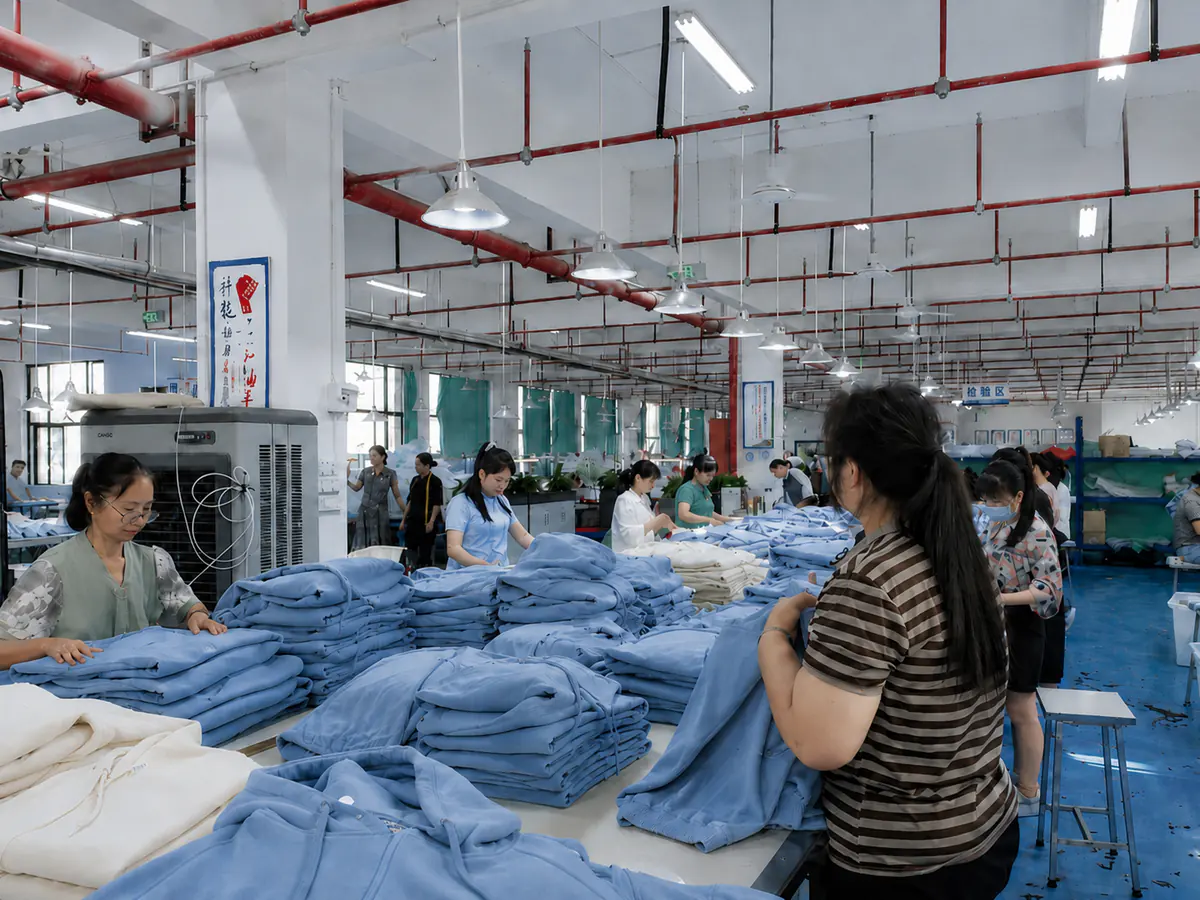
Normal post-sewing or post-wash finishing can include thread trimming, stain treatment, pressing, appearance organization, zipper, button and snap checks, decoration and wash review, individual garment inspection and measurement sampling. Needle or metal detection depends on product category, client standard and destination-market requirement; it is not described as an identical rule for every ordinary adult garment.
How Are Finished Garments Checked, Packed and Released?
KAOUYOU checks every finished garment for appearance and workmanship, then performs measurement sampling and final AQL sampling against the applicable order standard and any client inspection requirements. These controls are related but not interchangeable: individual inspection finds and removes item-level issues, while AQL sampling evaluates whether the lot meets the agreed acceptance plan. The separate AQL garment inspection guide explains that distinction in detail.
After quality release, the team verifies labels, care information, barcode data and the approved packing instruction, then folds, bags and cartons the order. Depending on the project, the client may receive bulk photos, packing information or a shipment sample before release. The apparel packaging checklist covers the packout and carton controls without turning one client's instruction into a universal rule.
The normal commercial sequence then moves to the balance payment and shipment release under the confirmed PI and shipping arrangement. Factory photos and internal records can support the buyer's review but do not replace third-party inspection or laboratory testing when the client specifically requires independent evidence.
Factory Case: First-Piece Inspection Stopped a Bulk Measurement Problem
In one anonymized KAOUYOU order, QC found a significant measurement deviation in the first garment assembled after bulk cutting. The same problem had not appeared during sampling: the sample used one individually cut piece, while the bulk lay exposed the fabric's elasticity and tension behavior. After the cut panels recovered, their dimensions changed more than expected.
QC stopped the affected sewing operation rather than allowing the line to continue. The pattern room, cutting room and production team checked the pattern, cut components, spreading tension and already-cut batches. After identifying the cause, they adjusted the handling method and corrected the affected bulk work before production resumed.
Because the problem was caught at the first-piece stage, it had not yet become a large quantity of completed garments. The case shows why an approved production sample does not remove all bulk risk. Fabric can behave differently during layered spreading and cutting, so the pre-production meeting, first-piece inspection and inline checks remain necessary.
What Should a Brand Monitor During Bulk Production?
- Confirm which deposit event starts purchasing and which approvals release cutting.
- Keep one final production sample and one controlled set of production files.
- Ask whether bulk fabric and trims passed comparison with the approved references.
- Confirm the applicable cutting, decoration, sewing, wash and packing route.
- Request first-piece confirmation and meaningful milestone updates rather than assuming continuous daily reporting.
- Supply the quality manual, tolerances, testing and third-party inspection requirements before production.
- Agree which internal records, photos, packing documents or shipment sample will be available before release.
If your product is not yet ready for this workflow, review the difference between a prototype and a production-ready PP Sample. If the product and order are already defined, use the pre-order manufacturer questions to confirm the commercial and production release conditions.
Frequently Asked Questions
What is clothing bulk production?
Clothing bulk production is the controlled reproduction of an approved garment across the ordered colors and sizes. It starts only after the factory has a final production standard and moves through material control, cutting, decoration, sewing, applicable washing, finishing, inspection, packing and shipment release.
When does bulk clothing production start at KAOUYOU?
The 50% deposit activates purchasing and production scheduling. Physical bulk production begins at cutting only after the production sample is confirmed, bulk fabric matches that sample and passes inspection, final files are released and the pre-production meeting is complete.
Does KAOUYOU make a trial cutting before the bulk order?
Not as a normal separate stage. KAOUYOU controls cutting risk through bulk-fabric inspection, pattern and grading review, marker planning, relaxation where required and the sewing-line first-piece inspection. A special material or higher-risk project can receive additional testing when the actual order requires it.
Why can bulk garments differ from a sample?
A sample is cut and sewn individually, while bulk fabric is spread in layers and garments are assembled through repeated line operations. Fabric tension, batch behavior, unclear instructions or an uncorrected first-piece issue can multiply across the order, which is why production release, first-piece approval and inline QC matter.
Is every printing or embroidery process completed before sewing?
No. Large front or back decorations are often applied to cut panels because positioning and handling are easier. Cross-seam work, small placements or techniques that require a completed garment may be processed later. The correct sequence is set for the design and finishing route before production.
Does every garment require needle or metal detection?
No universal process applies to every adult garment. Needle or metal detection depends on product category, client standard and destination-market requirements. It should be confirmed for the specific order before production.
How is a bulk clothing order checked before shipment?
KAOUYOU performs individual finished-garment appearance checks, measurement sampling and final AQL sampling against the applicable order or client standard. Labels, barcodes, packing and carton information are also checked before shipment release.