Answer in 30 Seconds
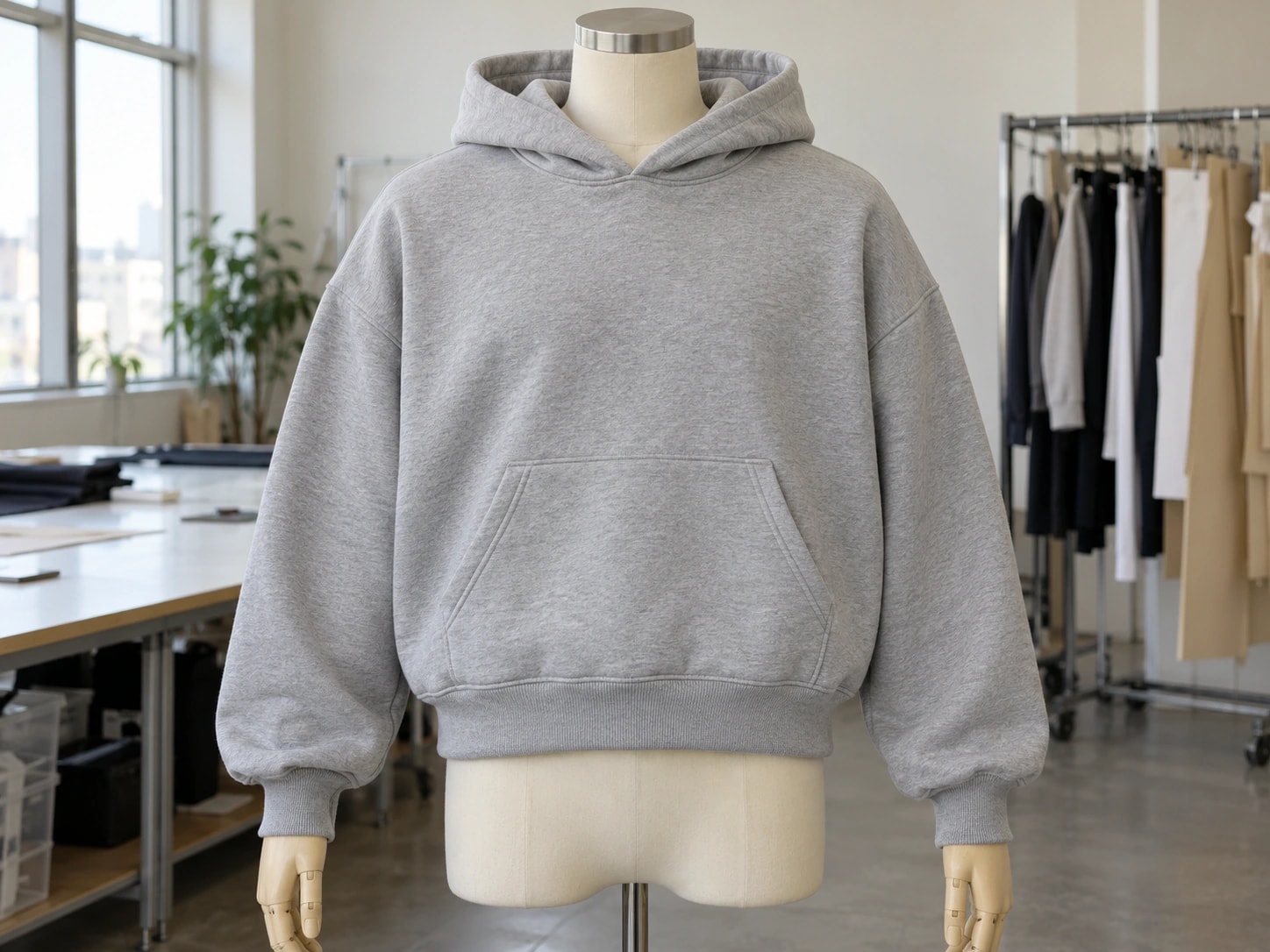
A boxy hoodie emphasizes width relative to body length; an oversized hoodie emphasizes extra room; a cropped hoodie has an intentionally shortened body. These descriptions can overlap. A hoodie can be boxy and oversized with a moderately cropped hem, so a brand should approve the actual proportions rather than relying on a fit label alone.
To develop a cropped streetwear hoodie, coordinate body length and chest width with the dropped shoulder, sleeve volume, hem opening, hood and pocket. At KAOUYOU, the starting point is usually the customer's reference image. The final fit is established through the sample, measurement chart and customer feedback, including the effect of any planned washing.
What is the difference between boxy, oversized and cropped hoodie fits?
The terms describe different decisions. Boxy concerns the relationship between width and length, oversized concerns ease and volume, and cropped concerns where the body ends. None specifies a complete pattern.
| Fit description | What it communicates | What the brand still needs to define |
|---|---|---|
| Boxy | A wide, relatively short or square-looking body | Chest-to-length balance, shoulder position and hem shape |
| Oversized | Extra room through the body, shoulders or sleeves | Where the volume sits and whether the body is short, regular or long |
| Cropped | A deliberately shortened body | Hem position on the intended wearer, trouser rise and remaining body width |
A wide hoodie with a long body may read as oversized without producing the compact shape the customer means by boxy. A narrow hoodie can be cropped without becoming boxy. Clear reference views and measurements prevent the factory and brand from using the same word for different results.
The black oversized pullover hoodie provides a starting point for discussing volume and pullover construction. Its existing fit should be reviewed separately from the shorter body required for a new cropped brief.
How short and wide should a cropped streetwear hoodie be?
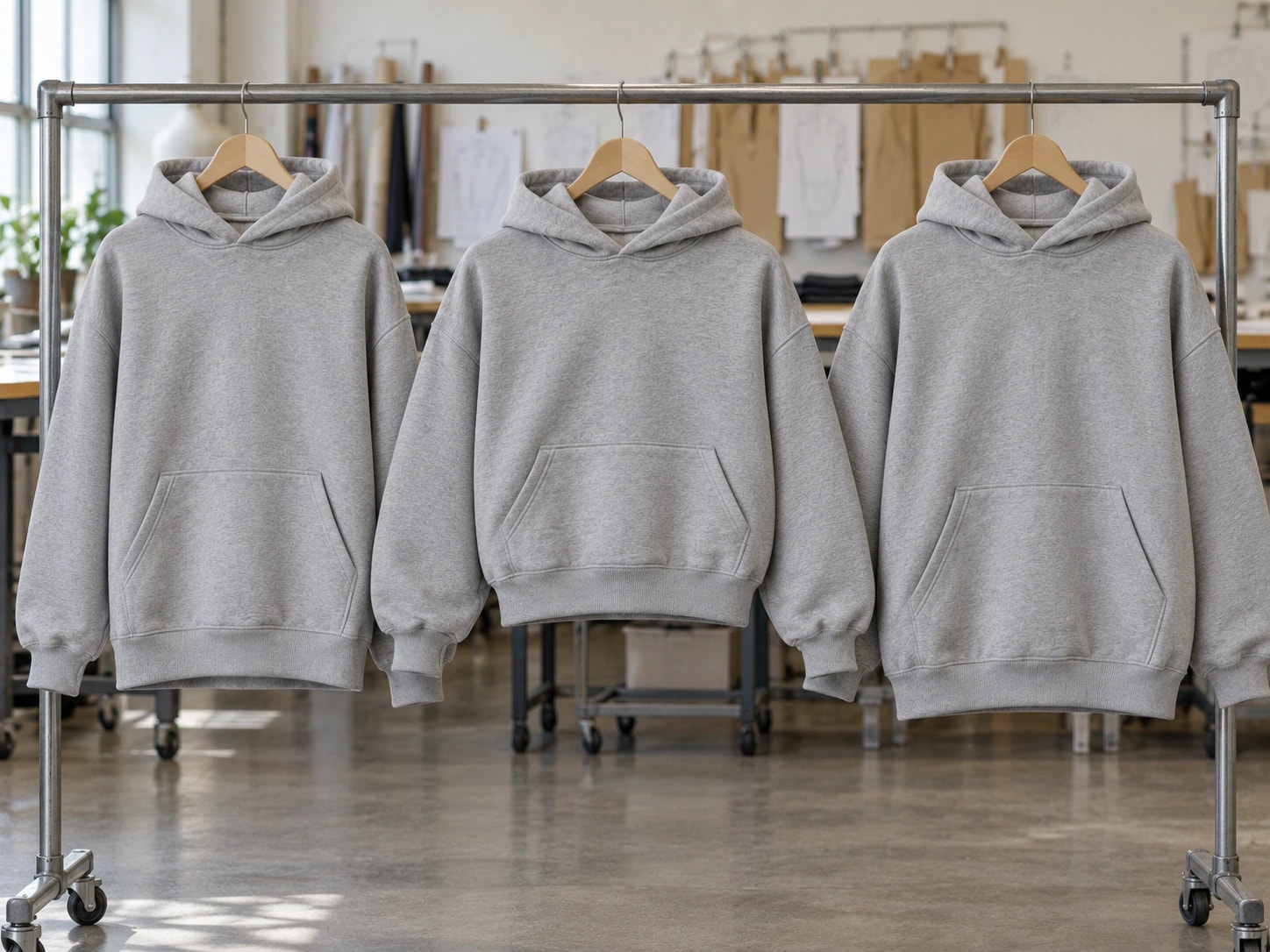
KAOUYOU generally recommends a moderately short, moderately wide starting point for an everyday streetwear direction. The hem can sit around the waist or trouser waistband, with additional chest and sleeve room and a dropped shoulder. The intended effect is a compact, relaxed silhouette rather than an automatically exposed midriff.
The target wearer, market, trouser rise and season can change that decision. A higher trouser waist can work with a shorter body, while a unisex or winter brief may call for more coverage. A reference photo needs this context before it can become a useful measurement chart.
There is no single body-length-to-chest-width ratio that KAOUYOU applies to every style. The pattern maker considers the reference, physical sample when available, target size and desired wearing result. Shoulder width, upper-sleeve width, hem opening and hood size must work with those two main body measurements.
Simply shortening an existing hoodie often leaves the pocket too close to the hem and the graphic crowded against the neckline or pocket. Recheck front and back balance, pocket position, rib attachment, sleeve proportions and hood scale as part of the same revision. The heavyweight hoodie Tech Pack guide covers how to record the resulting specifications.
How should dropped shoulders and wide sleeves work together?
A lower shoulder seam changes where the sleeve begins. When KAOUYOU increases the shoulder drop, the sleeve section usually needs to become shorter to avoid excessive hand coverage. The apparent sleeve length must therefore be checked on the complete garment, with its measurement method clearly defined.
Increasing chest width can also require more room through the upper sleeve to prevent underarm pulling. However, upper-sleeve width should not increase without limit: excess fabric can collect around the underarm and sleeve cap, especially in a substantial knit.
The pattern maker adjusts shoulder position, armhole, sleeve cap, sleeve length, upper-sleeve width and cuff together. Check the result with the arms hanging naturally, then review movement and the amount of fabric gathering at the wrist.
| Sampling symptom | Relationships to review | Development direction |
|---|---|---|
| Sleeves cover the hands more than intended | Shoulder drop, sleeve length and cuff position | Rebalance the shoulder and sleeve measurements together |
| The chest is roomy but the underarm pulls | Body width, armhole and upper-sleeve room | Adjust the connection between body and sleeve |
| Heavy folds collect under the arm | Sleeve volume, sleeve cap and fabric stiffness | Review both pattern volume and material support |
| The body looks short without a boxy shape | Chest, shoulders, sleeves, hem and pocket placement | Reassess the complete silhouette rather than shortening again |
Should a boxy hoodie have a tight hem and cuffs?
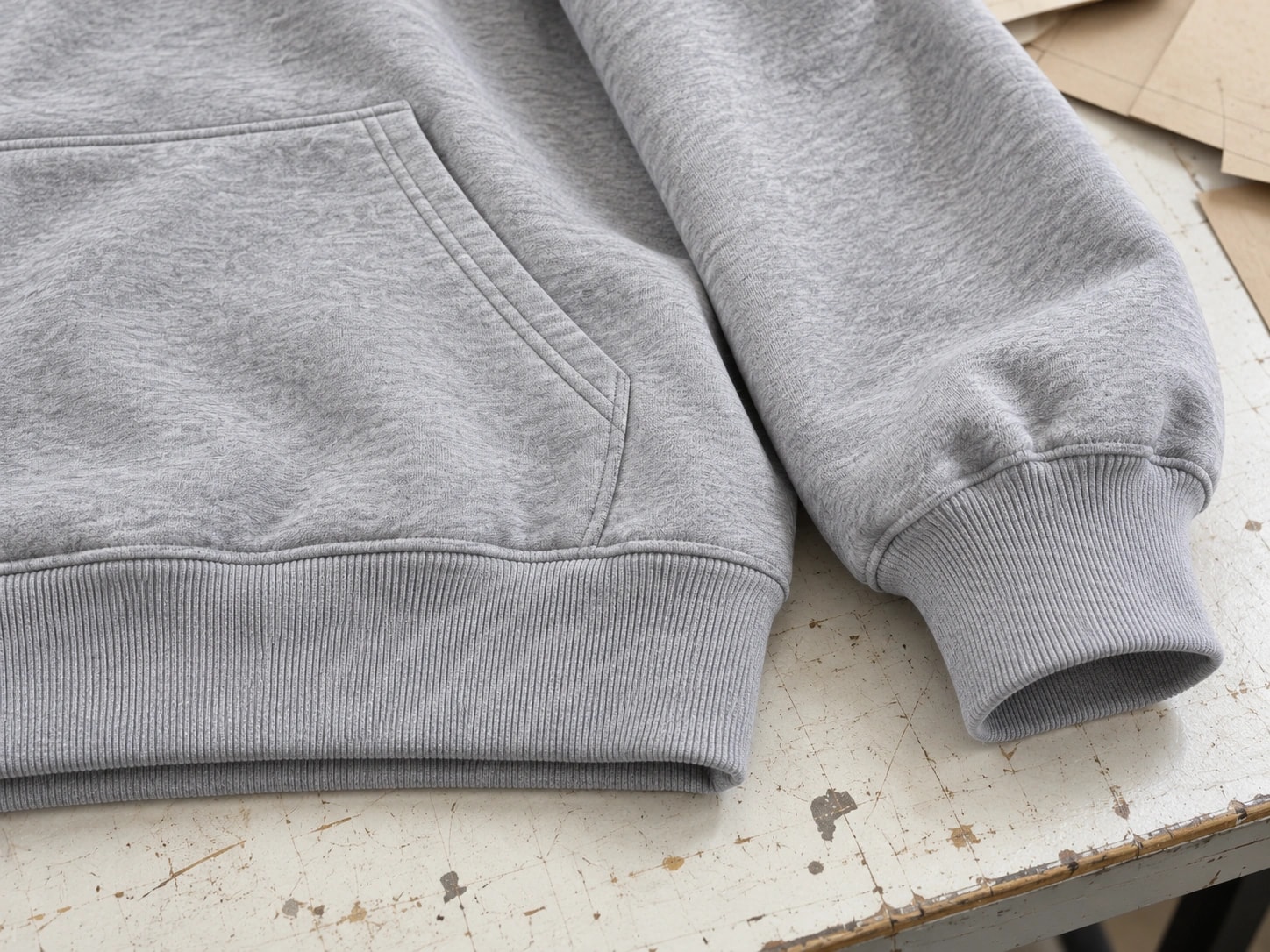
The hem determines how the body settles. A strongly contracted hem draws the bottom inward and creates a fuller, rounded body. A lightly contracted hem retains some shape with less gathering. A nearly straight hem produces a more square outline but depends on the fabric and construction staying flat.
For a short, wide direction, KAOUYOU often considers light contraction or a straighter finish. An overly tight hem can catch at the waist, ride upward, twist the side seams or create more ballooning than the reference shows.
Cuffs control the sleeve differently. A wide sleeve ending in a close cuff creates gathered volume at the wrist. A wider cuff opening allows a straighter, looser fall but holds the sleeve in place less firmly. Choose according to fabric thickness, sleeve length and the amount of stacking the customer wants.
If the hem or cuff is wrong, review rib recovery, rib length, opening measurement and the relationship at the attachment seam. A rib band that is too wide or insufficiently tensioned may hang loose or turn outward. Ironing alone does not resolve an unsuitable rib-to-body relationship that returns after washing. The hoodie ribbing guide explains the trim decisions in more detail.
How do the hood and kangaroo pocket affect a short body?
A large hood can overwhelm a short body visually. If it is also heavy, it may pull the neckline backward and disturb the front-to-back balance. A very small hood can look disconnected from the wide body and may be unsuitable for wearing.
Confirm hood height, depth, opening, neckline connection and whether it has one or two layers. A substantial double-layer hood deserves particular attention on a cropped body. Depending on the intended result, KAOUYOU may adjust the hood shape or reduce its weight.
The kangaroo pocket needs its own revision. Shortening the body reduces the space available between the chest, pocket and hem rib. Scaling the entire pocket down can leave a shallow pocket or an opening that is awkward to use.
Review pocket width, height, opening angle and vertical position. Check hand access, left-to-right balance and enough space for sewing without the pocket bottom crowding the rib seam. A useful sample review considers the pocket as a working component as well as a visual shape.
Which fabric helps a boxy hoodie hold its shape after washing?
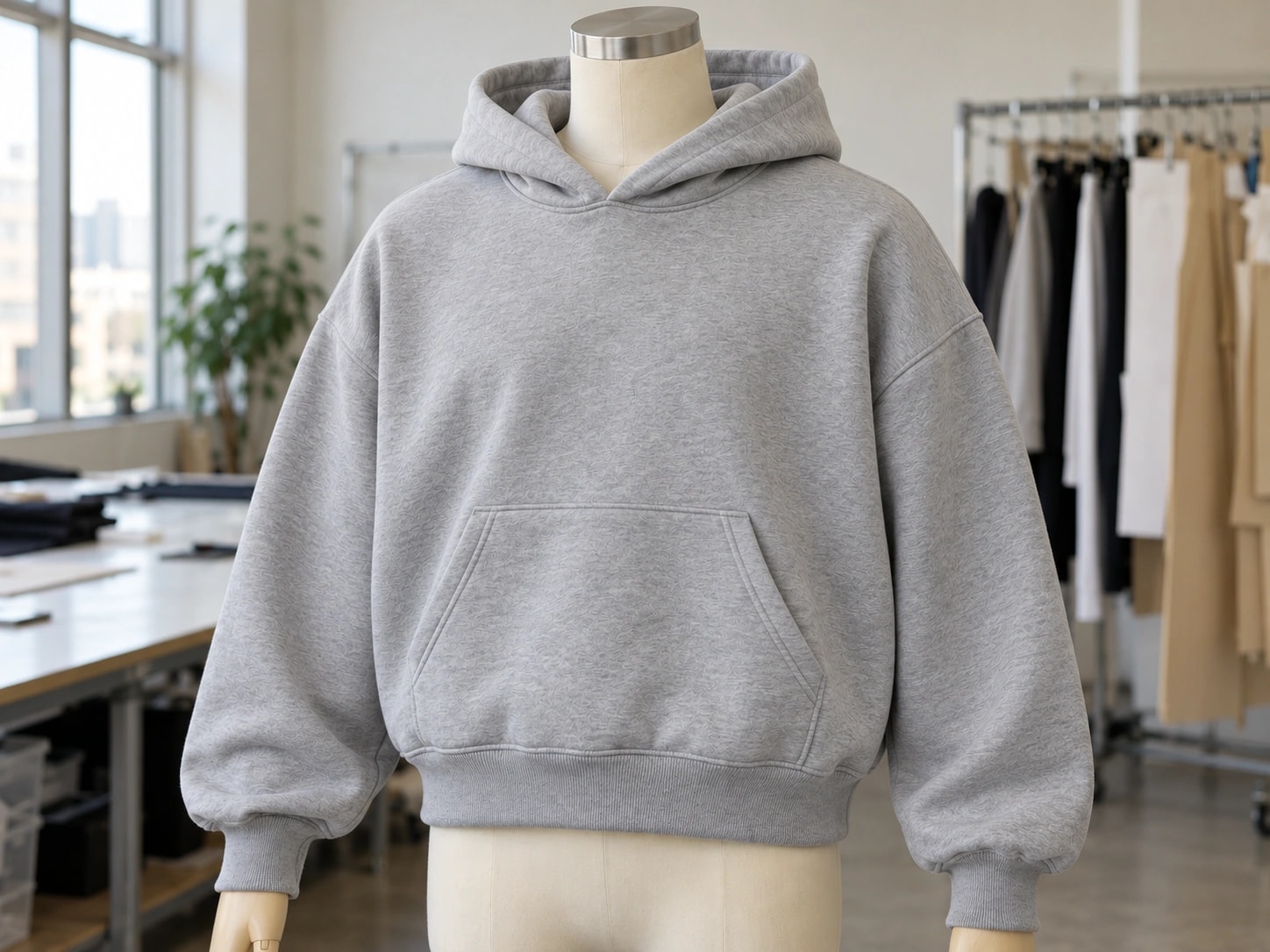
KAOUYOU looks for enough support to hold the intended volume without making the garment excessively rigid. A very soft, thin or fluid fabric may collapse; a very thick, stiff fabric may create bulky folds at the underarm, hood and hem.
Dense, stable French terry or brushed sweatshirt fabric can be considered for a firmer direction. A softer cotton fabric, a cotton-rich cotton/polyester blend such as CVC, or a softened finish can suit a more relaxed fall. If the material drapes strongly, excessive pattern width can make the result look loose rather than deliberately shaped.
No fixed GSM guarantees a boxy silhouette. Yarn, density, fiber composition and finishing influence the result alongside weight. Compare the physical fabric and garment sample; the French terry vs fleece guide can help narrow the fabric direction.
Washing can change more than the overall size. Length and width may shrink differently, side seams may twist, rib can contract or relax, and the body may lose some of its original stiffness. Hood shape, front-to-back balance and surface shading may change too.
For a washed style, KAOUYOU checks measurements before and after the intended washing process, then adjusts length, width and rib allowances separately. Reassess the silhouette in its intended finished state. The washed tonal embroidered pullover hoodie offers a reference for discussing a washed body with restrained chest decoration; the new project's fit and finishing still require approval.
What changes for zip-up hoodies and large graphics?
A pullover sample needs enough room for putting it on, along with a workable neckline, hood connection, kangaroo pocket and hem. A full-zip version introduces a center-front structure that can change how a short body hangs.
For a cropped zip-up, check zipper length and weight, left-to-right alignment, divided pockets and the junction between the zipper bottom and hem rib. Review the hoodie both open and closed. A zipper that pulls down the front, a wavy hem or mismatched pocket halves can interrupt the intended compact outline.
The gray full-zip hoodie is a reference for front-opening construction, rather than a pattern to shorten without further development. The pullover vs zip-up guide covers the wider construction choice.
Large graphics also need a new layout. A short body offers less vertical space, so artwork sized for a regular-length hoodie may crowd the neck, pocket or hem. Specify actual artwork dimensions and distances from clear garment landmarks.
Artwork crossing a kangaroo pocket must account for seam thickness and alignment. Text, faces and regular geometric forms make mismatches especially visible. KAOUYOU recommends a complete decoration sample for that arrangement. Chest embroidery also needs enough space above the pocket to avoid a compressed layout.
What should a brand approve before grading and bulk production?
Approve the wearing result alongside the reference and measurement chart. A flat photo can show placement, but it does not fully reveal a heavy hood pulling backward, a hem catching at the waist or excess sleeve fabric collecting under the arm.
When a sample misses the intended look, KAOUYOU separates the possible causes: pattern proportions, fabric support, rib contraction, hood balance and finishing. This makes the revision more specific than asking for the next sample to be “more boxy.”
| Approval area | Confirm on the sample and records |
|---|---|
| Body and shoulder | Intended hem position, chest width, shoulder drop and front-to-back balance |
| Sleeve and trims | Sleeve length and volume, cuff opening, wrist gathering and hem contraction |
| Hood and pocket | Hood dimensions and weight, pocket scale, position and hand access |
| Finished material | Approved physical fabric, hand, structure and washed measurements where applicable |
| Decoration and opening | Artwork scale and placement; zipper alignment and behavior when included |
| Size range | Length, width, shoulders, sleeves, hood and pocket relationships across the requested sizes |
Grading should preserve the design direction. Check that larger sizes do not become disproportionately long or excessively dropped at the shoulder, and that the hem still works around the waist and abdomen. Pocket or graphic placement may need size-dependent adjustment. This does not mean every order needs physical samples in every size; agree the verification scope for the project. See the clothing size grading guide for the approval process.
A shorter body is not inherently more expensive. Additional development, custom rib, unusual sleeves, revised pockets, special zipper lengths, substantial double-layer hoods, decoration and washing can add work or cost. Judge the full specification.
A recurring issue in KAOUYOU's sample development is that the first version looks merely shortened. Further adjustments to chest width, shoulder drop, sleeve volume, hem and pocket placement can bring it closer to the reference. The required revisions depend on the project; there is no guaranteed number of sample rounds. The product development service connects these decisions into a sample brief.
Frequently Asked Questions
Does a cropped men's hoodie have to show the waist?
No. It can finish around the trouser waistband while retaining a short, wide silhouette. Confirm the intended wearer, trouser rise and desired coverage, since the same garment length can sit differently on different people.
Is ordering a smaller oversized hoodie a reliable way to get a boxy fit?
It may also reduce chest room, sleeve volume and hood size, so it does not reliably preserve the intended short, wide proportions. For a brand's own style, develop the length, width, shoulders and sleeves together.
Can a reference image be enough to begin development?
Yes. KAOUYOU commonly starts with images, then confirms the target size, measurements and intended wearing effect. A physical reference can help when available. Final production approval should use the sample and confirmed specifications rather than the image alone.
Should every size use the same pocket and graphic dimensions?
Not necessarily. A shared size may work across part of the range, while a wider range may need adjustments to preserve proportion and placement. Review the graded garment and record which dimensions remain shared and which change.
Send a hoodie reference and the fit you want to develop
Send front and back references, the target wearer and sample size, the desired hem position, available measurements, fabric hand and any wash or decoration requirements. Include whether the style is a pullover or full-zip and which parts of the reference matter most.
Explore the hoodies and sweatshirts collection, then send your hoodie development brief. KAOUYOU can use these inputs to recommend a fabric direction and develop the proportions for sample approval.