For most brands, 240 GSM is the practical starting point for a heavyweight T-shirt. Choose 260–280 GSM when you want a clear heavyweight streetwear hand with a better balance of comfort and production stability. Use 300 GSM when an ultra-heavy, structured product is the deliberate concept—not simply because a larger number appears more premium.
GSM is only one part of the specification. A 260 GSM compact combed jersey and a 260 GSM open-end jersey can feel, drape, print and wash differently. The best GSM is the one that works with the target climate, fit, collar, decoration, finishing, test standard and landed product cost.
Key takeaways
- 220 GSM is a medium-heavy premium basic; KAOUYOU normally starts a clearly heavyweight direction at 240 GSM.
- 260–280 GSM is usually the most balanced range for structured streetwear T-shirts.
- 300 GSM is viable but requires coordinated pattern, rib, sewing and finishing development.
- Approve the washed production-intent garment, not only a small fabric swatch or the nominal GSM.
What Is the Best GSM for a Heavyweight T-Shirt?
There is no single best number for every market. As a practical factory answer, 240 GSM begins the heavyweight category, 260 GSM is a mainstream heavyweight streetwear choice, and 280 GSM provides a stronger autumn-winter direction. A 300 GSM jersey is a specialist ultra-heavy option.
If the brief says only “premium heavyweight,” KAOUYOU would normally begin the material review around 260–280 GSM, then compare yarn, knitting density and finishing. That range is heavy enough to support a boxy silhouette while remaining more balanced than 300 GSM for comfort, sewing efficiency and cost.
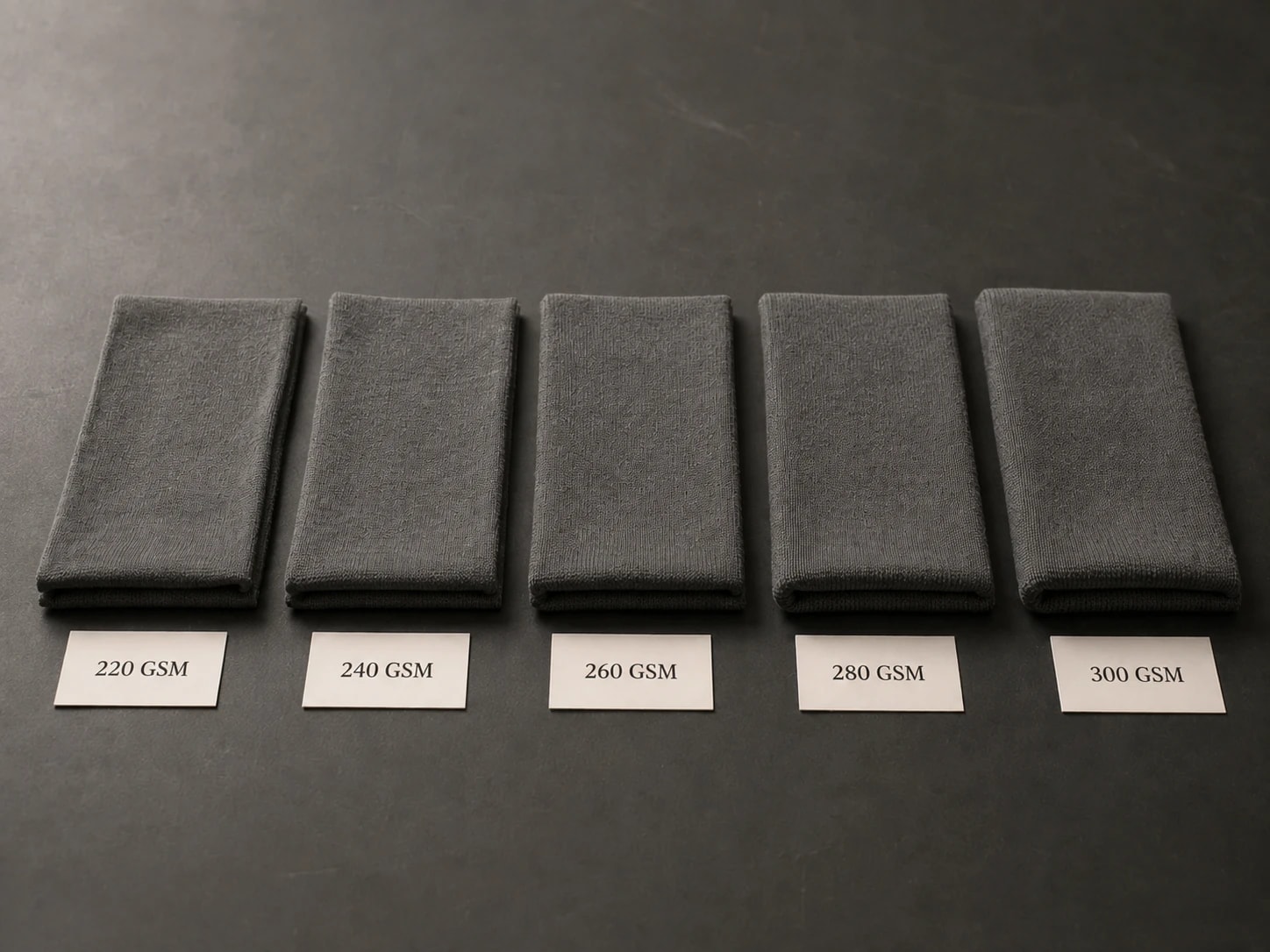
How Do 220, 240, 260, 280 and 300 GSM T-Shirts Compare?
| Fabric weight | Typical positioning | Factory interpretation |
|---|---|---|
| 220 GSM | Medium-heavy premium basic | Good structure without a distinctly ultra-heavy hand |
| 240 GSM | Entry heavyweight / premium basic | A practical starting point for brands seeking noticeable weight |
| 260 GSM | Mainstream heavyweight streetwear | Strong structure with broader comfort and production flexibility |
| 280 GSM | Premium autumn-winter heavyweight | More density and warmth; pattern and collar matching become more important |
| 300 GSM | Ultra-heavy structured statement style | Best used when extreme weight is an intentional product feature |
These are development positions rather than universal industry grades. Finished hand can change significantly with fiber, yarn, loop length, machine gauge, density, dyeing and compacting. For the underlying principles, see our T-shirt GSM field guide.
Is 300 GSM Too Heavy for a T-Shirt?
A 300 GSM single jersey can be produced reliably, but it is not the most conventional T-shirt fabric. It can feel overly firm, warm or heavy when the yarn, knit density, finishing and pattern are not balanced. Thick intersections at the collar, shoulder, underarm and hem also require different machine settings from a lightweight jersey.
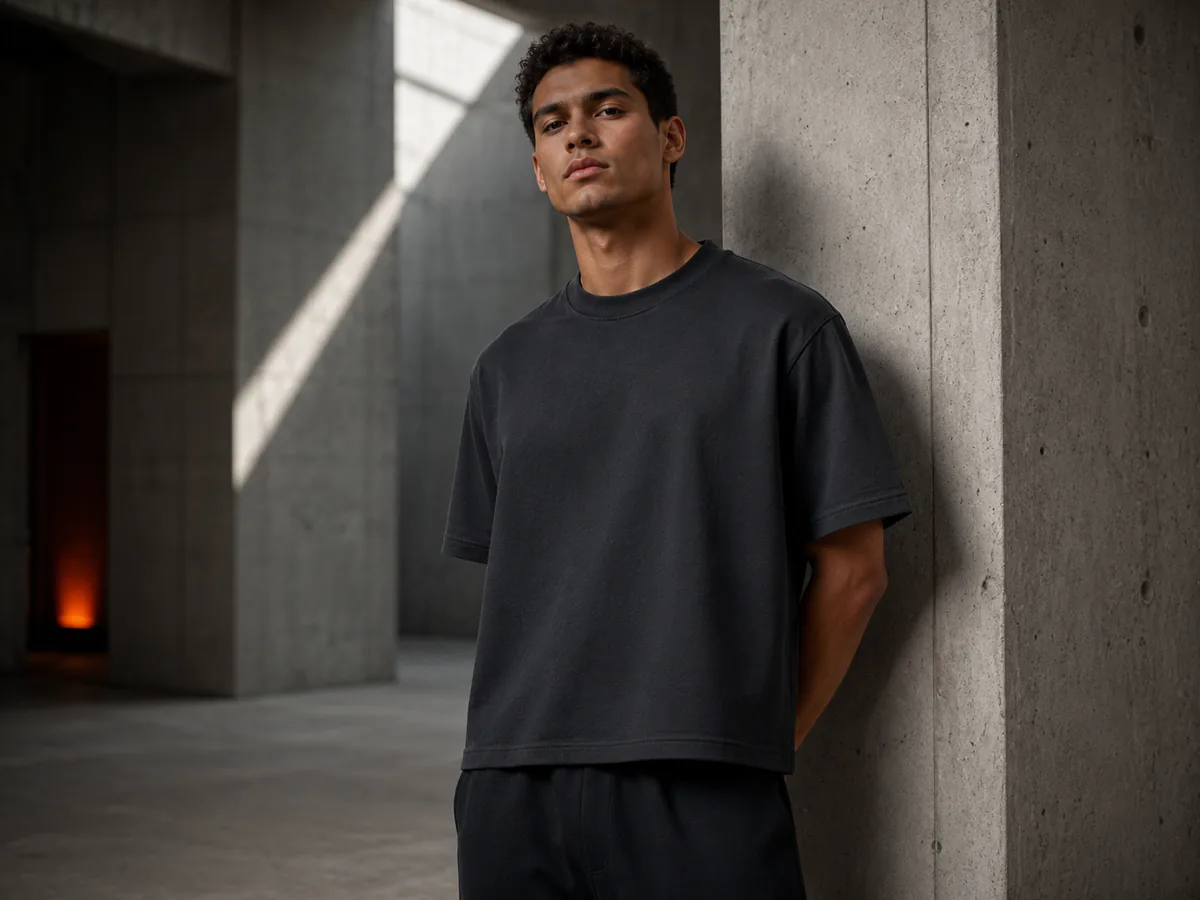
Choose 300 GSM when the garment is intentionally positioned as an ultra-heavy structured statement piece. If the brand wants a clearly heavyweight look with broader comfort and repeatable production, 260–280 GSM is normally the safer starting range.
Does Fabric Composition Matter as Much as GSM?
Yes. GSM states mass per square metre; it does not define fiber quality, yarn system, surface hair, stretch, recovery or shrinkage. Two fabrics carrying the same number can produce very different garments.
| Fabric direction | Typical hand and appearance | Common use |
|---|---|---|
| Combed ring-spun cotton | Smooth, fine and soft with a cleaner surface | Premium basics, retail-ready finishes, detailed print and DTG |
| Carded / open-end cotton | Drier, coarser and more visibly textured | Streetwear, vintage T-shirts, garment dye and mineral-wash directions |
| 100% cotton | Natural, soft and absorbent | Basics, leisurewear and products emphasizing natural fiber content |
| CVC cotton-poly | More stable, durable and slightly more synthetic in hand | Commercial basics, uniforms and frequently washed products |
| Cotton-spandex | Softer stretch and stronger recovery | Fitted T-shirts, womenswear, undershirts and styles requiring movement |
“100% cotton” describes fiber content only. It may be combed, carded or open-end cotton, with different yarn counts and knitting structures. A quotation and sample request should name both the desired composition and the intended surface or hand.
Does a Heavier GSM Require a Different T-Shirt Pattern?
Often, yes. A 260–300 GSM fabric should not be assumed to replace a 220 GSM fabric without reviewing the pattern. Greater thickness changes drape and seam bulk; a dense fabric may also feel more restrictive against the body.
| Pattern area | 220–240 GSM | Common 260–300 GSM adjustment direction |
|---|---|---|
| Body length | Standard or relaxed proportions | Often shortened for a heavier or boxier silhouette |
| Chest | Standard to moderately relaxed ease | May add ease, but should not be enlarged automatically |
| Shoulder | Regular or mild drop shoulder | A clearer drop shoulder can support the fabric's structured drape |
| Sleeve width | Regular or relaxed sleeve | Usually increased to avoid a thick sleeve gripping the arm |
| Sleeve length | Driven mainly by the fit block | Rebalanced when shoulder drop increases so the sleeve does not hang too low |
| Collar | Conventional rib can work when tested | Thicker, more stable rib; the opening may need adjustment to avoid tightness |
| Bottom hem | Standard double-fold hem | Fold depth and width should control bulk, flare and seam waviness |
Heavyweight jersey is not restricted to oversized styles. Regular, relaxed and boxy fits are all possible when the pattern reflects the fabric's stiffness, elasticity, finishing and intended wearing ease. Oversized and boxy fits are common because added ease reduces restriction and lets the material show a more architectural silhouette.
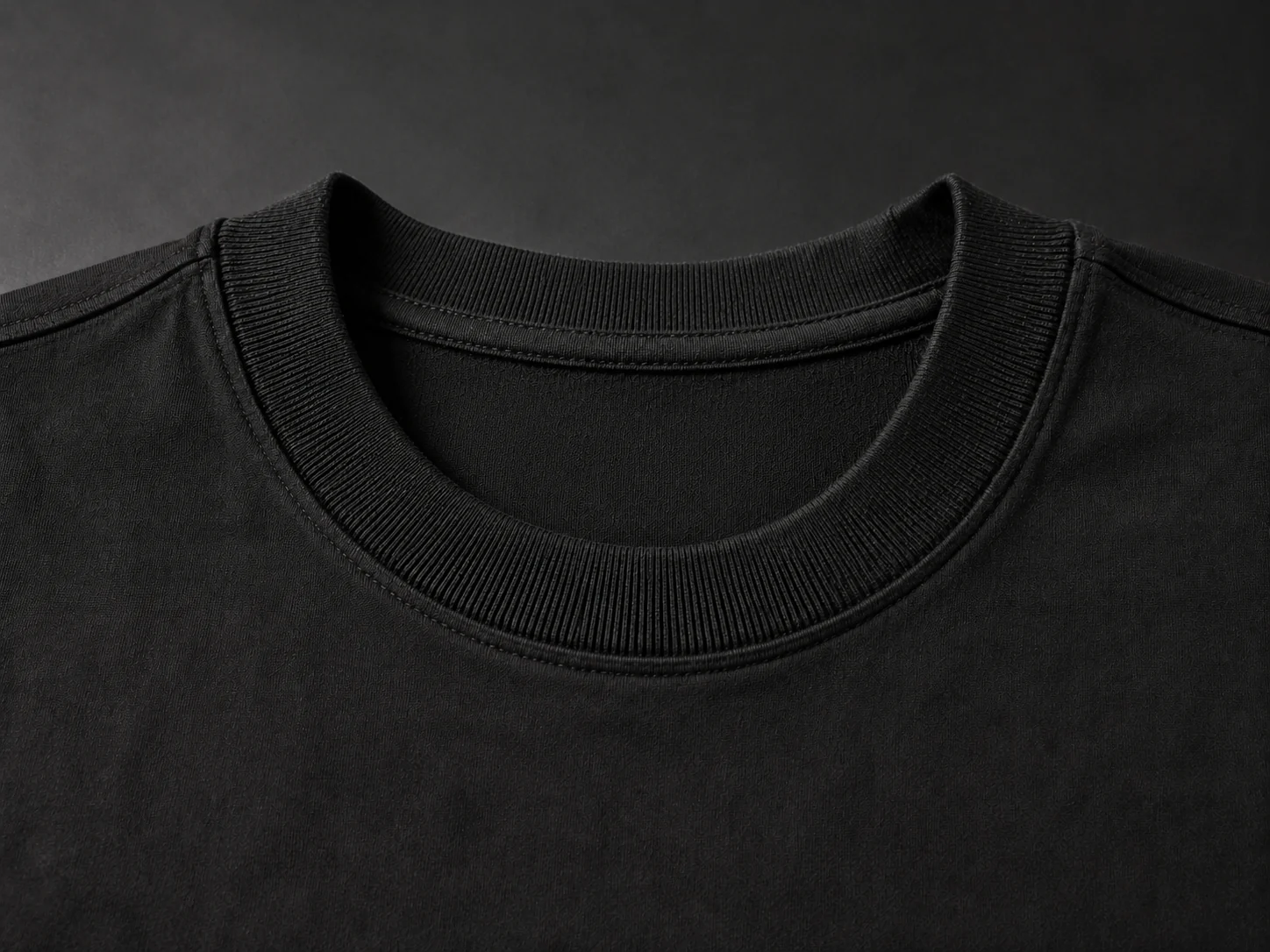
What Collar Rib Should Match a Heavyweight T-Shirt?
There is no fixed one-to-one formula. Rib selection should consider body-fabric thickness, neck opening, rib structure, composition, elastic recovery and the intended visual width. The following 1×1 cotton-spandex rib ranges are development starting points, not automatic production specifications.
| Body fabric | Reference rib weight | Composition | Finished width | Reference cutting ratio |
|---|---|---|---|---|
| 220–240 GSM body | 240–300 GSM | 95% cotton / 5% spandex | 18–25 mm | 78–85% |
| 260–280 GSM body | 280–340 GSM | 95% cotton / 5% spandex | 20–28 mm | 80–88% |
| Around 300 GSM body | 300–380 GSM | 95% cotton / 5% spandex or high-recovery blend | 22–30 mm | 82–90% |
The cutting ratio is rib length divided by the garment neckline seam length. It must be tested on the actual material. A rib that is too light can wave or relax after washing; one that is too short or rigid can make the opening tight and visibly distort the shoulder area.
Which Decoration Works Best at 220, 260 and 300 GSM?
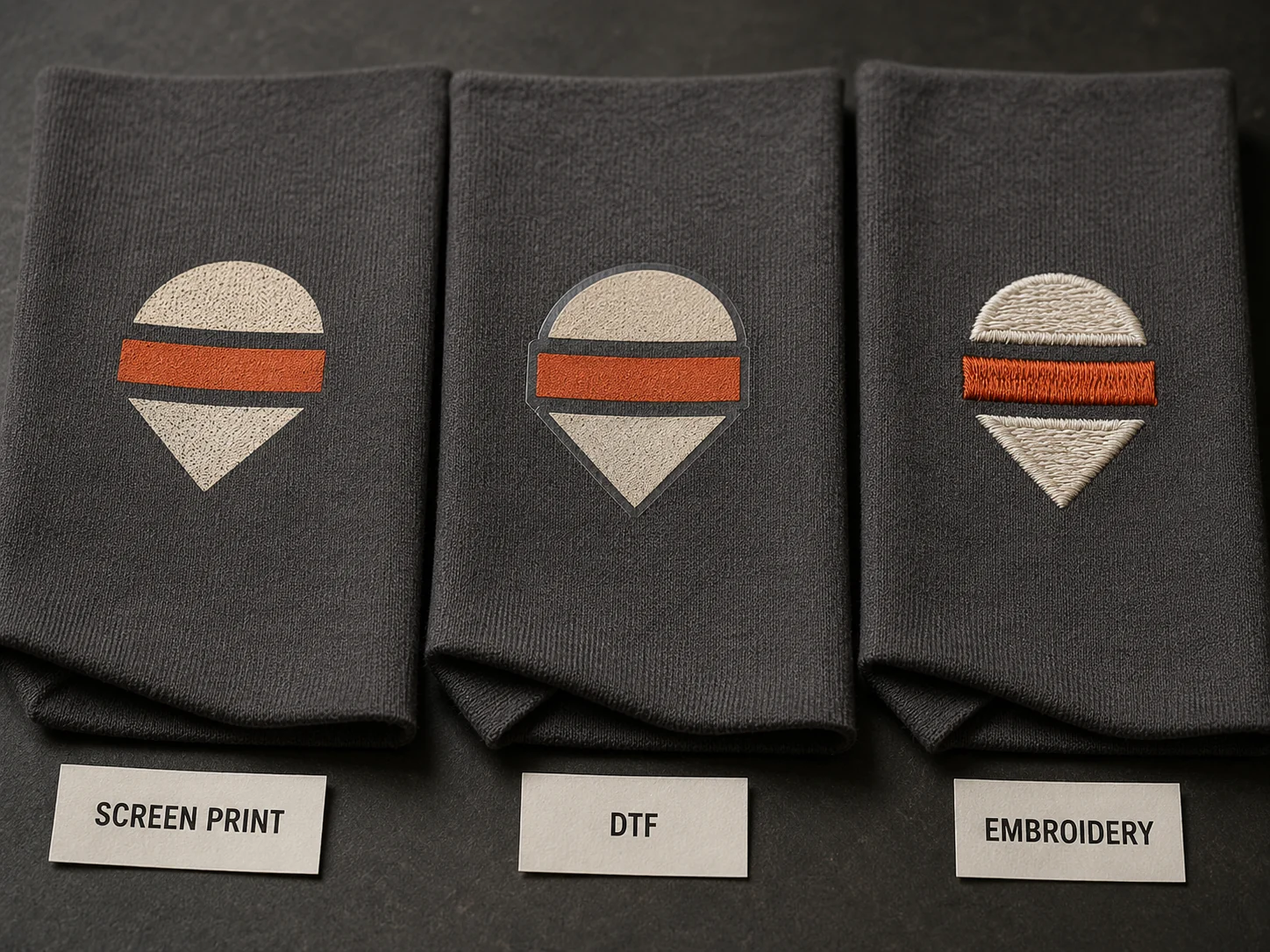
Fabric weight affects support, hand and production stability, but the result also depends on composition, surface hair, knit density, elasticity and finishing. A heavier base can support more decoration, yet an overly dense print or embroidery can make an already heavy garment uncomfortable.
| Decoration | 220 GSM | 260 GSM | 300 GSM |
|---|---|---|---|
| Screen printing | Balanced hand and stability | Supports thicker and multicolor prints well | Suitable, but a stiff surface can make a large print feel heavier |
| DTG | Often easier to keep soft | Suitable with controlled pretreatment and ink coverage | Possible, but ink, pretreatment and fixation require tighter control |
| DTF | Suitable for small to medium graphics | Suitable for streetwear graphics and full-color work | Stable base, but a large film area can make the garment less breathable |
| Puff print | Possible with controlled layer height | Well suited to a raised three-dimensional effect | Suitable for strong relief, but excessive thickness increases cracking risk |
| Standard embroidery | Best for small to medium motifs and usually needs backing | Stable support for medium stitch counts | Strong support, but needle, tension and backing must match |
| Large dense embroidery | Higher risk of puckering and sagging | Possible with controlled stitch count and backing | Relatively suitable, but may become rigid, heavy and uncomfortable |
What Changes When a Factory Sews 300 GSM Jersey?
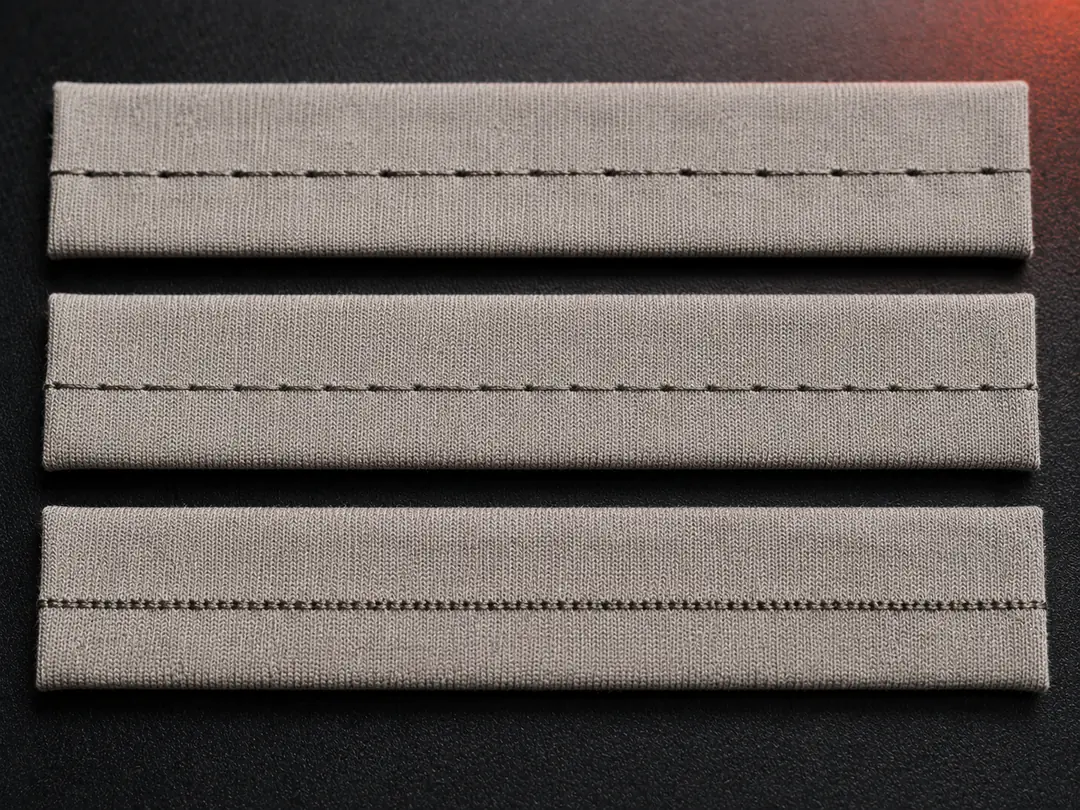
Heavy fabric requires coordinated cutting, sewing and pressing adjustments. The risk is highest where several layers intersect. Using lightweight-T-shirt machine settings without trials can cause skipped stitches, broken thread, needle damage, seam puckering, uneven hems, collar bulk and wash-related holes.
Before bulk, test flat seams, overlock and coverstitch; then test real high-layer positions at the collar, shoulder, underarm and hem. Review stitch extension, seam strength, garment appearance and post-wash needle holes. This is why 260–280 GSM often provides a more efficient balance than 300 GSM.
How Do Washing and Dyeing Change Heavyweight T-Shirt GSM?
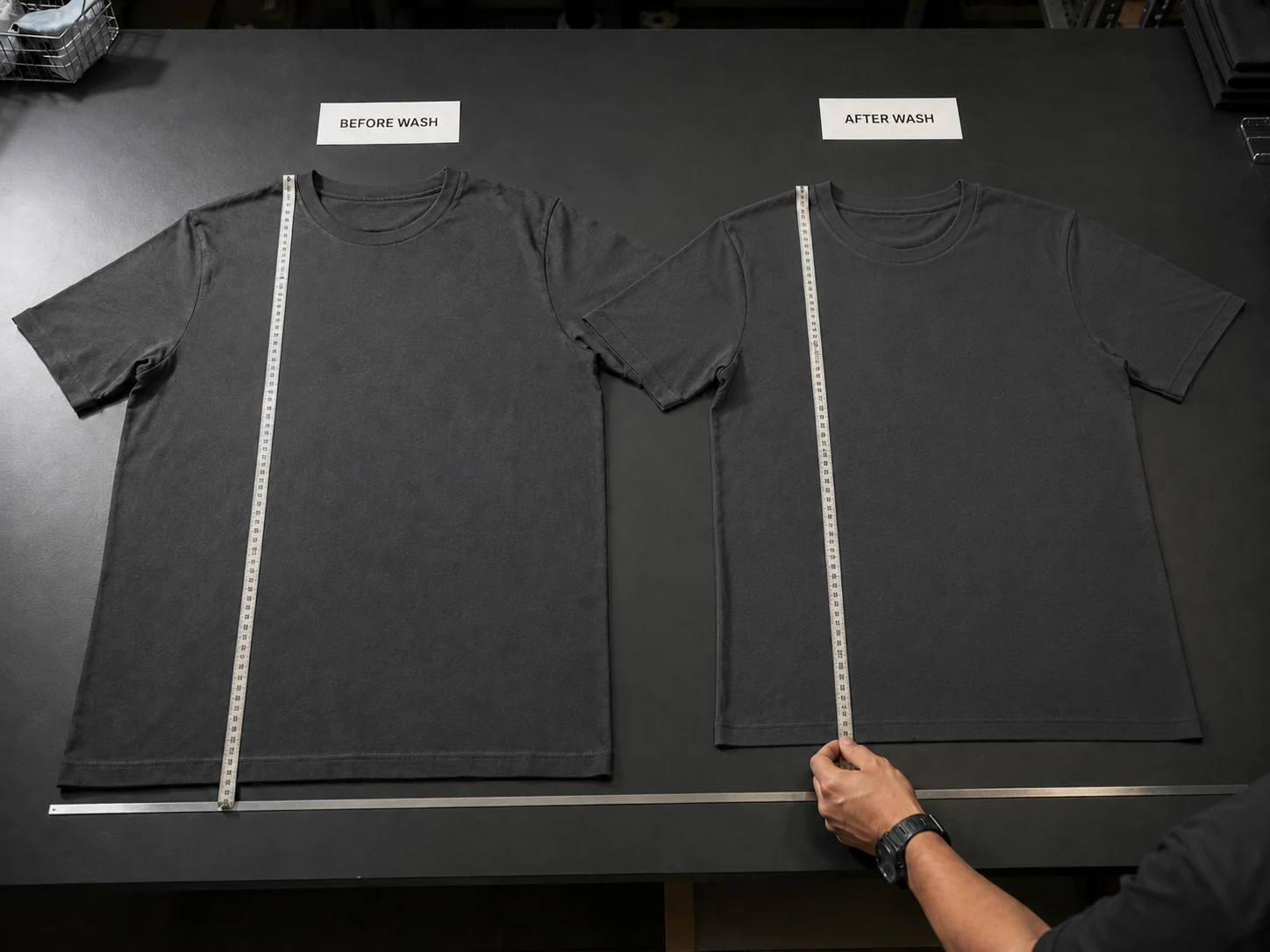
Enzyme wash, softening, garment dye, pigment dye and vintage washing can change hand, shrinkage and the measured GSM after processing. The direction is not always intuitive: finishing may remove loose fiber, dye or surface hair and reduce mass, while fabric shrinkage reduces area and can make the measured grams per square metre stay level or increase.
Enzyme washing often cleans the surface and softens the garment. Softening reduces boardy hand. Garment dye creates a fuller, natural effect but requires color and shrinkage control. Pigment dye gives a dry, aged surface with visible variation. A vintage wash may combine several processes, so the final standard should be based on the approved washed garment rather than an untreated fabric number.
What Tests Should a Heavyweight T-Shirt Pass?
The test method must match the target market. ISO, AATCC, ASTM, GB or a client-defined standard may be used. A report should identify the method and standard number, water temperature, wash and drying procedure, cycle count, whether the sample was garment-dyed or washed, and whether testing occurred at PP-sample or bulk stage.
| KAOUYOU internal working target | Reference acceptance level |
|---|---|
| Dimensional shrinkage | ≤3% |
| Spirality / skew | ≤3% |
| GSM tolerance | ±5% |
| Colorfastness to washing | Grade 4 or above |
| Dry / wet rubbing | Dry ≥4; wet ≥3 |
| Pilling | Grade 3–4 or above |
| Collar recovery | ≥90%; washed neck opening change ≤3% |
| Washed appearance | No obvious loose neck, burst holes, seam waviness or print failure |
Pigment dye, mineral wash and strong vintage effects may require a separate appearance and color-variation standard because change is part of the design. Dimensional stability, seam security and wearer function should not be reduced simply because the visual finish is intentionally irregular.
How Much More Does a Higher-GSM T-Shirt Cost?
Cost rises with GSM, but finished-garment cost does not increase in direct proportion to fabric mass. Fabric and rib may represent roughly 40–60% of a basic T-shirt cost, while cutting, sewing, labels, packaging, wastage, quality control and management do not all increase at the same rate.
| Weight | Typical fabric-cost change vs 220 GSM | Typical basic-garment cost change vs 220 GSM |
|---|---|---|
| 220 GSM | Baseline | Baseline |
| 240 GSM | About +7% to +12% | About +3% to +7% |
| 260 GSM | About +14% to +22% | About +7% to +13% |
| 280 GSM | About +22% to +32% | About +11% to +19% |
| 300 GSM | About +30% to +42% | About +15% to +25% |
These are relative development references, not fixed quotations. Yarn, knitting density, width, marker efficiency, shrinkage, collar requirements, sewing difficulty, washing, decoration and order quantity can move the result outside these ranges.
GSM alone normally does not change the garment MOQ when a suitable stock fabric is available. Custom knitting or dyeing becomes relevant when the required GSM, color, composition, yarn and finish cannot be sourced from stock; the material supplier's minimum then controls the fabric decision.
How Should a Brand Approve Heavyweight T-Shirt Fabric?
- Review fabric hand and approve the color standard
- Make and review the fit sample in the intended fabric direction
- Test print, embroidery or other decoration on that fabric
- Produce the formal pre-production sample
- Run the specified wash and performance checks
- Re-measure and review the garment after washing
- Approve in writing, seal the reference and release bulk production
It can compare hand and color, but it cannot prove silhouette, collar balance, seam bulk, decoration behavior, shrinkage, spirality or washed appearance. Final approval belongs to the production-intent garment.
Which GSM Should a Clothing Brand Choose?
| Product direction | Suggested GSM | Suggested fabric direction | Why |
|---|---|---|---|
| All-season basic | 200–240 GSM | Combed ring-spun cotton | Broad climate and market suitability with a substantial but breathable hand |
| Premium brand basic | 220–260 GSM | High-density combed ring-spun cotton | Clean surface, opacity, durability and stable fit |
| Oversized streetwear | 260–300 GSM | Compact open-end or combed ring-spun cotton | Supports drop shoulder, boxy proportion and a visibly heavy silhouette |
| Summer heavyweight | 200–240 GSM | Compact, breathable combed cotton | Maintains opacity and substance while limiting stiffness and garment weight |
| Autumn-winter heavyweight | 260–300 GSM | High-density cotton; optional light enzyme or softening treatment | Warmth and pronounced structure for seasonal product positioning |
| Large-area printed T-shirt | 220–260 GSM | Smooth, low-hair combed ring-spun cotton | Balances print clarity, adhesion, comfort and fabric support |
What Are the Most Common Heavyweight GSM Mistakes?
- Choosing the highest GSM without defining the product position
- Ignoring the climate and sales region
- Ignoring the final use and wearing comfort
- Keeping the same pattern while changing to a much heavier fabric
- Using a collar rib that is too light or has poor recovery
- Judging only the number and ignoring hand, yarn and knitting density
- Approving the fabric before checking the washed garment
- Selecting GSM without considering the decoration method
- Ignoring sewing difficulty, production stability and wastage
- Forgetting the effect on unit cost and shipping weight
- Approving from one small fabric cutting instead of a complete garment
- Failing to define the test method and acceptance standard
The recurring issue is treating GSM as a quality score rather than one design variable. A useful brief connects the number to the target customer, season, fit, fabric hand, decoration and test standard.
What Should a Brand Ask in a Heavyweight T-Shirt RFQ?
- Is the quoted GSM measured before finishing, after finishing or on the washed garment?
- Which yarn system, composition, knit density and finishing create the proposed hand?
- Would 260, 280 or 300 GSM best suit the target climate and fit?
- What pattern and collar-rib changes are required for this fabric?
- Has the selected print or embroidery been tested on the production fabric?
- Which shrinkage, spirality, colorfastness and pilling standards will apply?
- Is a suitable stock fabric available, or does this direction require custom knitting or dyeing?
- How does the GSM choice change fabric cost, sewing cost and shipping weight?
These questions turn “I want a 300 GSM T-shirt” into a production brief a factory can evaluate. KAOUYOU can then compare swatches, construction and cost before the brand commits to sampling.
Frequently Asked Questions
What GSM is considered heavyweight for a T-shirt?
KAOUYOU generally treats 240 GSM as the practical starting point for a heavyweight T-shirt. A 220 GSM T-shirt is better described as a medium-heavy premium basic, while 260–300 GSM creates a more obvious heavyweight streetwear or structured product direction.
What is the best GSM for an oversized heavyweight T-shirt?
A 260–280 GSM fabric is usually the most balanced starting range for an oversized or boxy streetwear T-shirt because it gives visible structure without automatically creating the stiffness, sewing bulk and high garment weight associated with 300 GSM. The final choice still depends on yarn, density and finishing.
Is 300 GSM too heavy for a T-shirt?
Not necessarily. A 300 GSM single jersey can be manufactured reliably, but it is not the most conventional T-shirt fabric. It works best when an ultra-heavy, structured product is intentional and the pattern, collar, sewing parameters and finishing are developed around that weight.
Is a higher GSM T-shirt always better quality?
No. GSM measures fabric mass per square metre, not overall quality. Yarn quality, knitting density, composition, finishing, shrinkage, spirality, collar recovery, sewing and the match between fabric and pattern determine whether the finished garment performs well.
What GSM is best for a summer heavyweight T-shirt?
A 200–240 GSM compact combed-cotton jersey is often more practical for a summer heavyweight direction. It can provide opacity and a substantial hand while avoiding the heat, stiffness and shipping weight of a 280–300 GSM garment.
Does heavyweight T-shirt GSM affect MOQ?
GSM alone normally does not change KAOUYOU's garment MOQ when a suitable stock fabric is available. Custom knitting or dyeing is more likely when the brand requires a precise GSM, composition, color, yarn or finish that cannot be sourced from stock, and the fabric supplier's minimum then becomes relevant.
Should a brand approve a fabric swatch or a finished heavyweight T-shirt?
A swatch is useful for narrowing the fabric direction, but final approval should be based on a complete production-intent garment after washing. The collar, fit, seams, decoration, shrinkage and spirality cannot be judged reliably from a small cutting alone.