Answer in 30 Seconds
Choose cotton twill or canvas for cargo pants by the intended silhouette, finished hand, movement, pocket construction and wash effect. Cotton twill is often a useful starting point for a softer everyday style; canvas can suit a more structured utility direction. Neither name guarantees a particular stiffness, durability or price. Compare the complete fabric specification and approve the finished garment after its intended wash.
At KAOUYOU, both fabrics are used. When a buyer provides only a reference image, the team proposes fabric options or asks how the trousers should feel when worn. The choice follows the style and customer requirements rather than a fixed preference for either material.
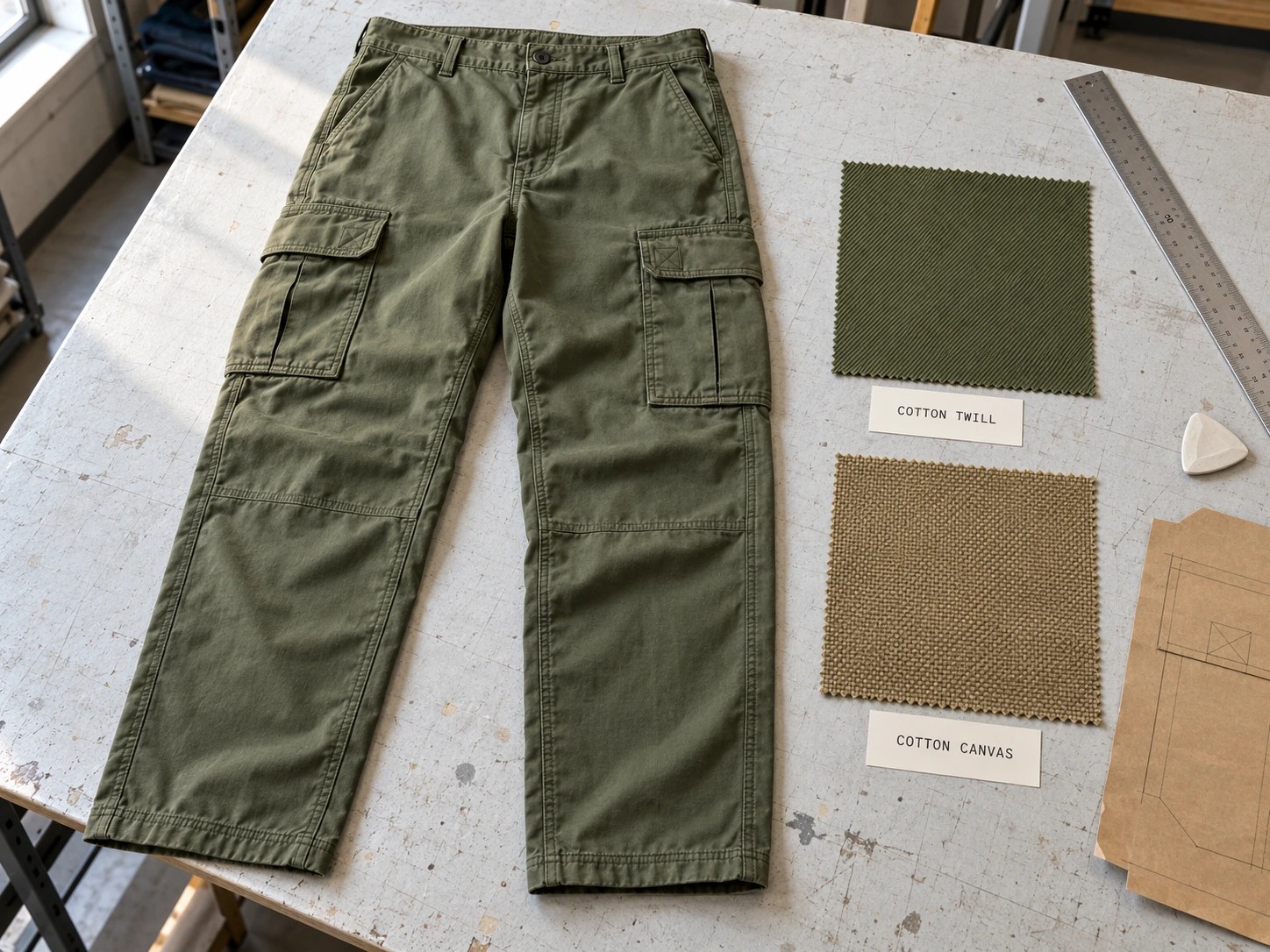
What is the difference between cotton twill and canvas?
Twill has a visible diagonal weave. Canvas is commonly associated with plain-weave construction. CottonWorks describes the basic weave structures in its weaving reference. These terms help identify construction, but buyers still need the actual composition, weight, yarn and finish.
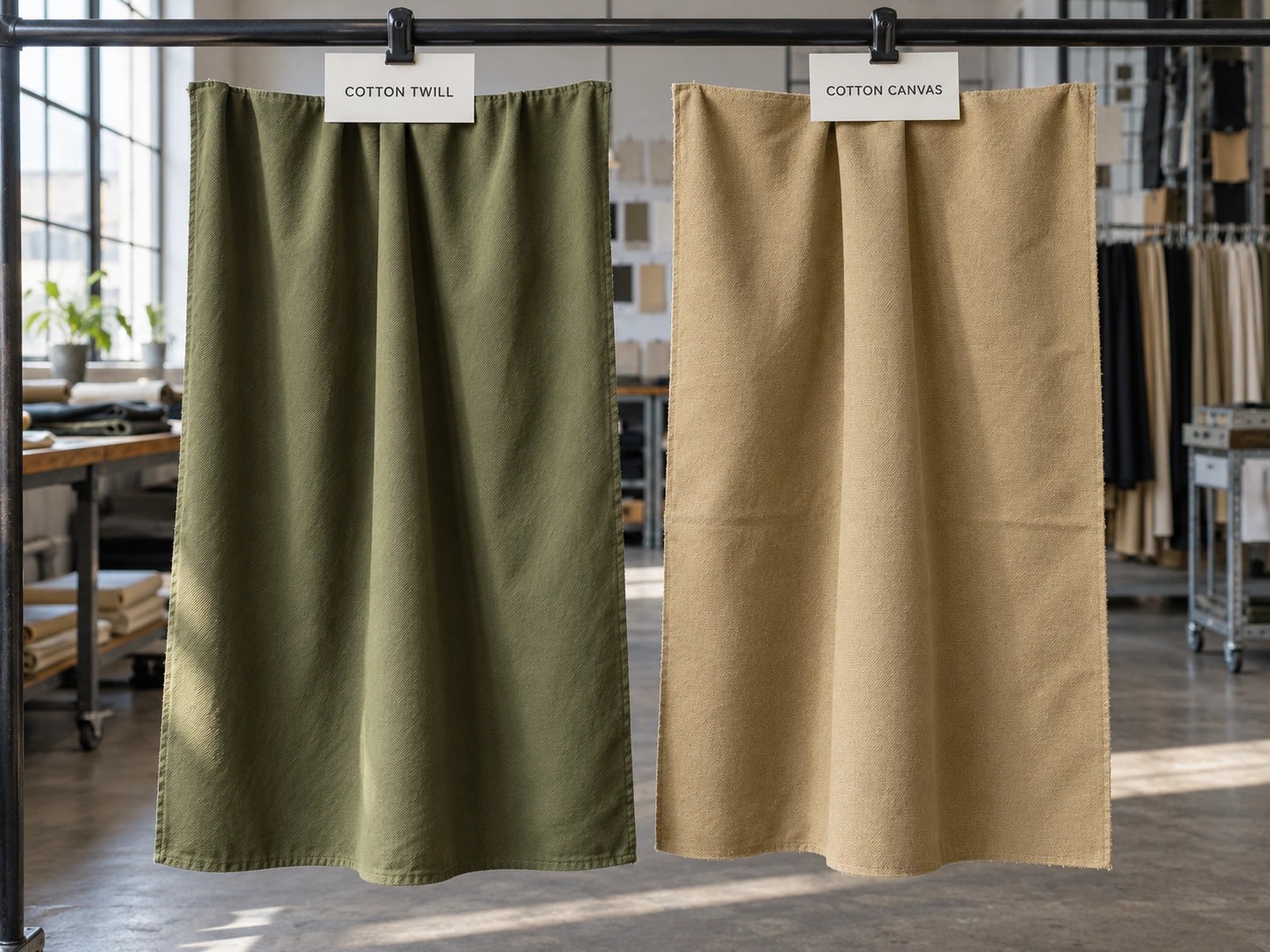
In KAOUYOU's development experience, cotton twill often feels softer and drapes more naturally, while canvas can feel firmer and hold a more pronounced utility shape. A heavy, stiff-finished twill can nevertheless feel firmer than a lightweight canvas. Washing can also soften canvas substantially.
| Decision | Cotton twill: common starting point | Canvas: common starting point | What to confirm |
|---|---|---|---|
| Everyday hand | Softer, more fluid direction | More substantial, structured direction | Actual finished swatch |
| Silhouette | Natural drape | Defined volume | Complete garment sample |
| Large pockets | Softer opening and handling | More support and visible structure | Loaded shape and layered thickness |
| Vintage washing | Softer, potentially more even worn effect | More pronounced seam and edge highlights | Approved wash sample |
| Price and performance | Depend on the specification | Depend on the specification | Quote and relevant test evidence |
These are selection prompts, not performance rankings.
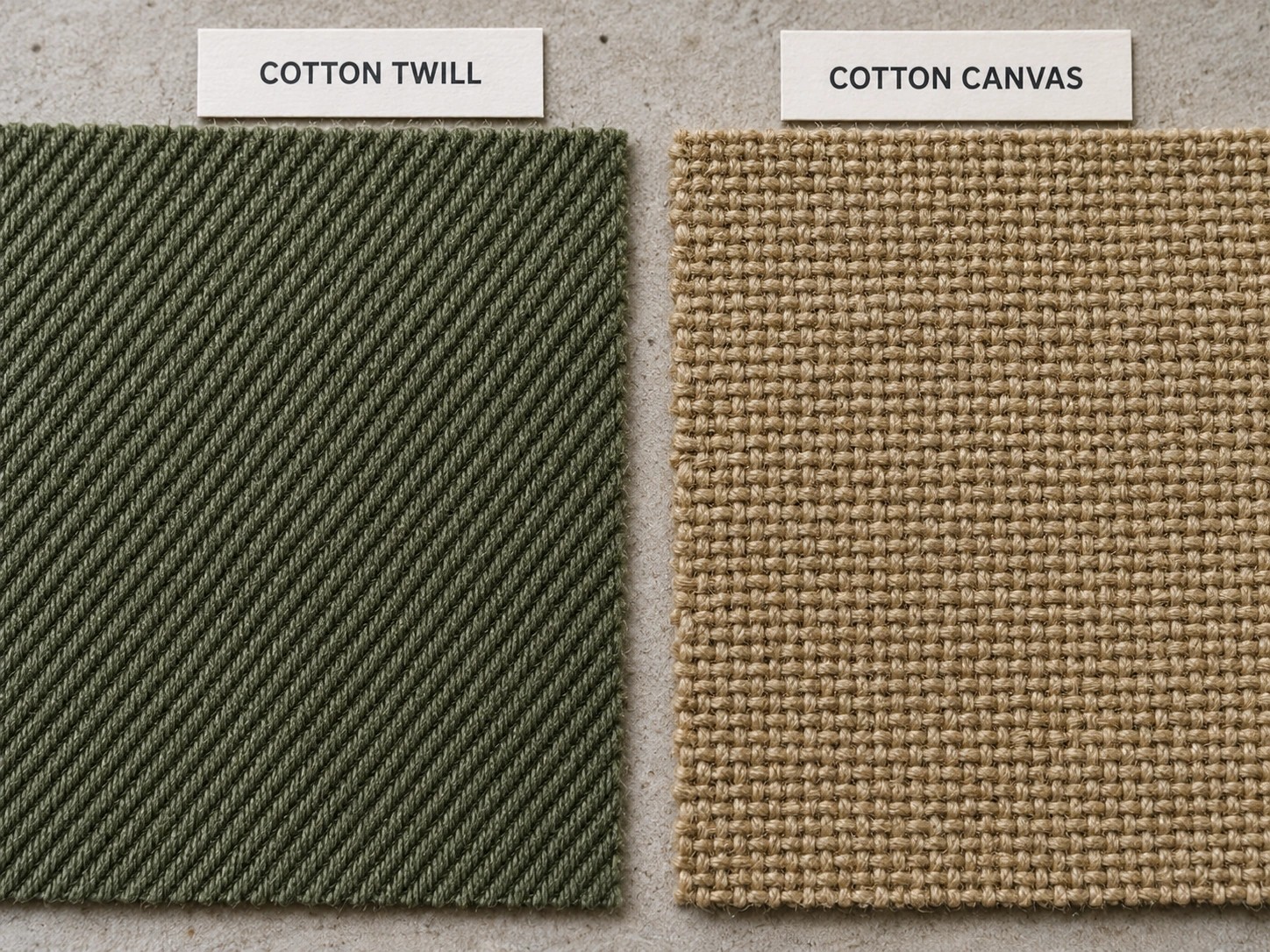
How should composition and fabric weight be selected?
KAOUYOU uses pure cotton, cotton-polyester blends and stretch constructions according to product positioning. Pure cotton is a common direction for a natural hand and vintage wash appearance. A blend may be considered when dimensional stability or easy care is a priority. Stretch twill may help a slimmer or tapered design accommodate movement. None of these choices establishes a tested performance result on its own.
Specify fabric weight in grams per square metre (GSM), but assess it alongside density, yarn, composition and finishing. Reducing weight alone can leave large pockets unsupported; increasing it alone can make the trousers unnecessarily heavy or rigid.
For summer development, KAOUYOU considers lighter fabrics, ventilation, movement and sufficient ease. Autumn and winter styles can use more substantial twill or canvas, but the sales region matters: a moderate weight may be enough for a warm-market winter collection. There is no single GSM recommendation for every cargo-pants order.
Which fabric suits wide-leg, straight and tapered cargo pants?
Wide-leg styles can use either fabric. Canvas can create stronger volume; twill can create a more fluid line. Excessive stiffness may make a wide leg appear more inflated than intended. Straight-leg designs also work with either material, depending on whether the brand wants everyday softness or a firmer workwear appearance.
For slim or tapered development, KAOUYOU generally considers softer or stretch twill before a rigid canvas. The knee, seat and crotch need enough movement for the intended fit. A reference silhouette should therefore be reviewed together with the actual fabric rather than treated as a pattern-only decision.
The washed multi-pocket cargo pants and graphic wide-leg cargo pants provide examples of design directions to discuss. Their appearance is not proof that a particular fabric will reproduce the same result. See the pants and shorts collection for further development references.
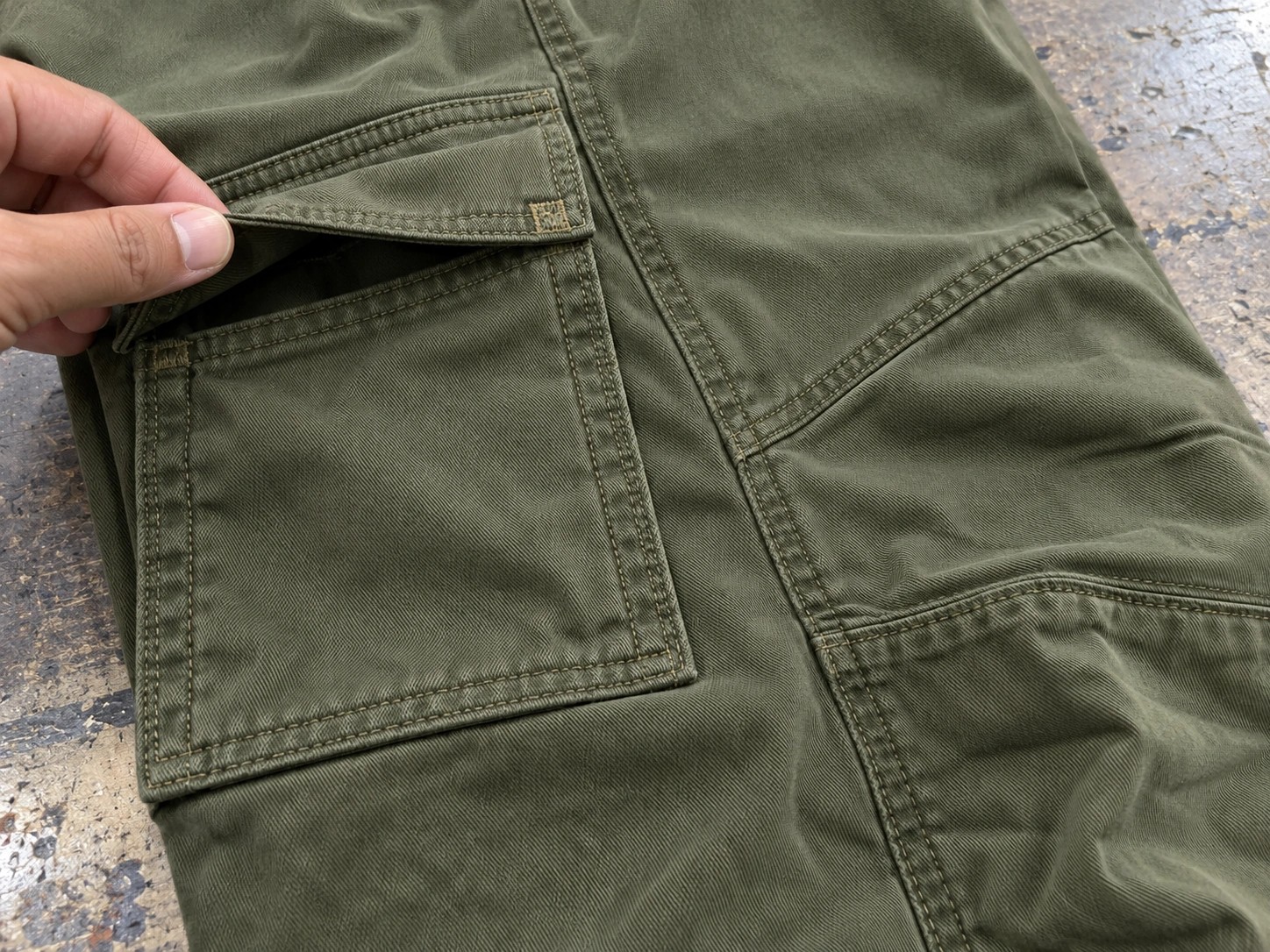
How do large cargo pockets affect fabric choice and sewing?
Consider pocket support, accumulated thickness and total garment weight together. A firmer canvas can support a pronounced pocket shape, but layers at flap corners, seams and reinforcement points may become difficult to sew. A lighter twill can be easier to handle yet allow an oversized loaded pocket to pull down on the leg.
KAOUYOU uses the sample stage to check whether pockets collapse, bulge, restrict movement or distort the trouser body. Depending on the design, the response may involve interfacing, opening reinforcement, bartacks or a construction change. The cargo pocket construction guide explains pocket shapes and specification fields in more detail.
With thick layered canvas, sewing risks include skipped stitches, needle breakage, uneven topstitching, bulky corners and rigid seams. KAOUYOU may trim or stagger allowances, remove unnecessary layers and adjust the needle, thread, presser-foot pressure and stitch length. Reinforcement should secure a stress point without repeatedly building up an already thick area.
How can washing change hand, color and fit?
KAOUYOU finds that twill can be receptive to softening and vintage effects, while substantial canvas can develop stronger highlights around pocket edges, seams and folds. The outcome depends on the fabric and dye or finish route. A white crease may be an approved design effect on one project and unacceptable unevenness on another.
For garment dyeing, confirm the behavior of the body fabric, sewing thread, zipper tape and trims together. Components can absorb color differently. KAOUYOU first uses fabric trials or garment wash samples to establish a direction before setting bulk wash parameters.
Before pattern development, the team tests material using the intended washing and drying route, records lengthwise and widthwise shrinkage and incorporates allowances into the pattern. A change of fabric, color, supply batch or wash method requires renewed confirmation. Review skew, shade, hand, surface changes and shrinkage compatibility with pocketing and waistband materials as well.
If a trouser leg twists, the investigation may involve fabric skew, cutting direction or sewing tension. Uneven wear marks may involve mechanical friction, wash intensity or exposed hardware. KAOUYOU's corrective actions depend on the cause; pressing should not temporarily conceal an unresolved defect for shipment.
Is canvas always stronger or more expensive?
No. GSM and a fabric name cannot establish abrasion resistance, tear strength or seam strength. Yarn quality, density, construction, composition and finishing all matter. Where the buyer has a defined performance requirement, KAOUYOU directs testing to a third-party laboratory against the agreed buyer or market requirement. A visual illustration or hand-feel assessment cannot replace a formal test report.
Price also follows the full specification. A basic canvas can cost less than a high-density, specialist or stretch twill. Yarn quality, dyeing, finishing, color count and order quantity can change the quote. Include sewing and washing requirements when comparing garment costs, rather than comparing fabric names alone.
How do stock fabric and custom fabric affect an order?
Stock fabric can suit smaller developments and quicker sourcing, but limits the available composition, weight, colors and finish. Repeat-batch shade must still be checked. Custom weaving or dyeing offers more specification control but is subject to mill minimums and additional production time.
KAOUYOU's regular garment MOQ is 100 pieces per style per color. This does not guarantee that a custom fabric order will fit that garment quantity. If the mill minimum exceeds the required consumption, the buyer may need to increase quantity, choose an available stock quality or accept the cost of remaining fabric. Confirm the fabric minimum for each custom color.
What should the buyer specify and approve?
The fabric brief should include:
- Fabric name and construction; fiber composition; target GSM and agreed tolerance.
- Color reference, approved physical swatch and quality identification.
- Stretch requirement and direction; usable width where relevant.
- Intended dye, wash and drying route; finished hand and surface appearance.
- Shrinkage requirements and test conditions; any additional finish or performance requirement.
The bulk standard should combine the Tech Pack, approved swatch and final garment sample. Review how the selected material behaves in the actual silhouette, pocket system and intended finish. If the fabric changes, earlier approvals may no longer describe the garment that will be produced. Use the clothing size grading guide when extending an approved base size across the selling range.
At incoming inspection, KAOUYOU checks quantity, shade, width, GSM, hand and defects against approved references, with additional testing when required. Finished-trouser checks cover dimensions, leg balance, wash appearance, seams, pocket shape, bulky construction areas and functioning hardware. Standards are retained through approved swatches, production and wash samples, specifications, measurement charts and written customer approval. The quality-control service describes the wider production context.
Frequently asked questions
Can changing the fabric improve an unsatisfactory fit?
It can change drape and apparent volume, but it will not automatically correct an unsuitable pattern. KAOUYOU commonly revises fabric or washing at the sample stage when the customer dislikes the initial result. Reassess the revised garment before deciding whether the pattern also needs adjustment.
Can a photograph show whether a fabric is suitable?
A photograph can communicate silhouette and surface direction. It cannot reliably establish hand, weight, stretch, shrinkage or tested durability. Use it to begin the brief, then approve physical material and garment references.
Can soft cargo pants still hold their shape?
Yes, with an appropriate balance of construction, density, weight, finishing and reinforcement. KAOUYOU may consider a suitably dense twill with a softening wash or a pre-softened lighter canvas. The final choice depends on the sample result.
Prepare your cargo-pants fabric brief
Send a style reference, intended fit and season, target hand, composition preferences, wash direction, pocket requirements, planned quantities and any performance criteria. KAOUYOU can review the material direction through its development workflow. Discuss your cargo-pants project.