A clothing tech pack should make the brand, pattern maker, purchasing team, sewing team, decoration team and quality inspector understand the same product. Its value is not the number of pages; it is removing decisions that would otherwise be guessed during sampling.
This factory-side checklist explains the information KAOUYOU needs to quote and sample accurately, what can be completed with our product-development team, and which physical approvals are still required before bulk production.
Key takeaways
- The essentials are clear style drawings, measurements, BOM, fabric direction, color standards, construction notes and production-ready decoration artwork.
- A strong base-size specification is more useful than a large size chart with unclear POMs or measurement methods.
- KAOUYOU can help organize missing development information before sampling; special material sourcing naturally takes longer.
- A tech pack does not replace physical fabric, color, technique and approved-sample confirmation before bulk.
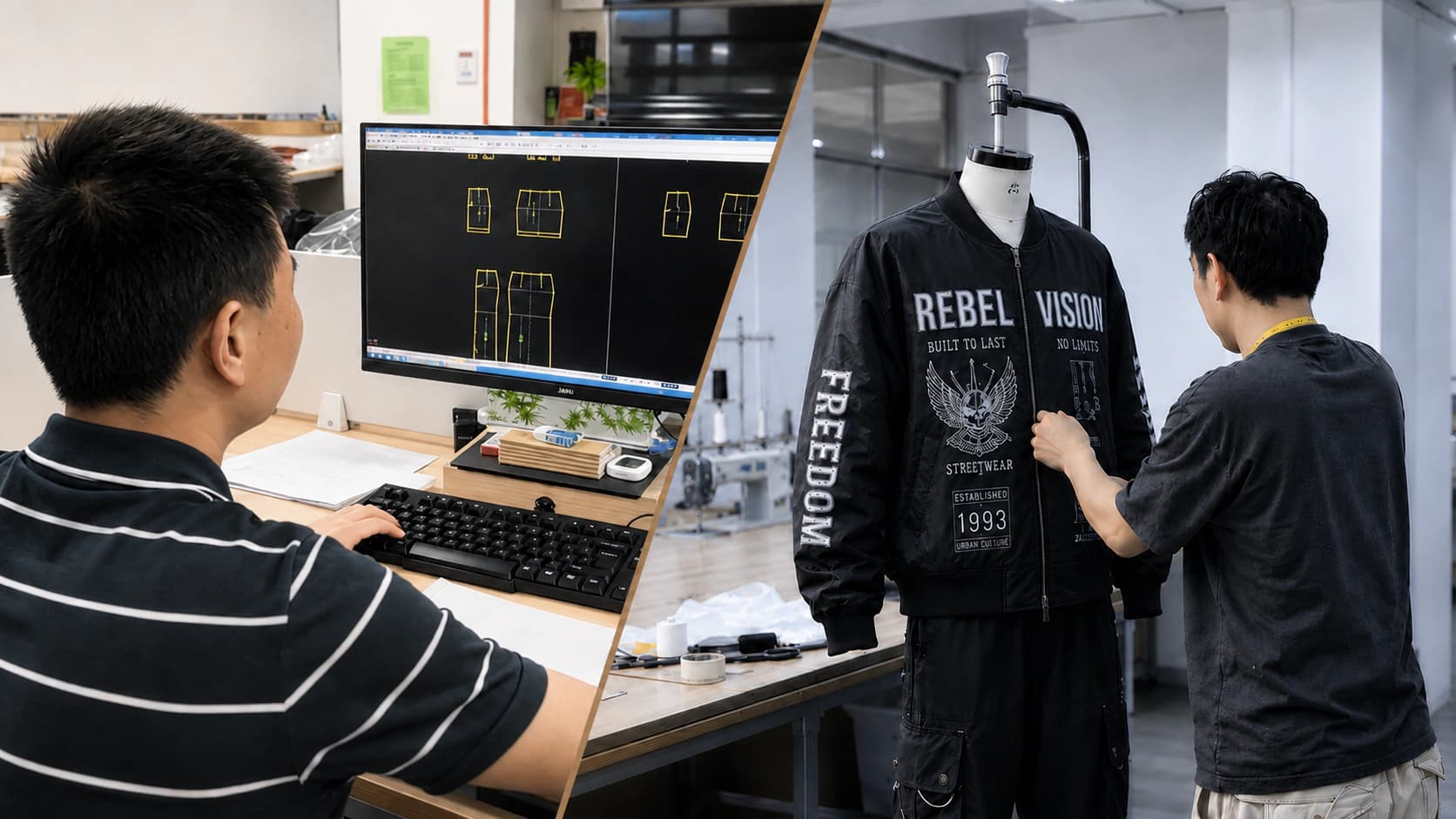
What Does a Factory Need Before Sampling?
The practical starting package is a clear style drawing, a base-size measurement chart, fabric direction, color, technique instructions and high-resolution decoration artwork. A BOM brings the material and trim decisions into one controlled list.
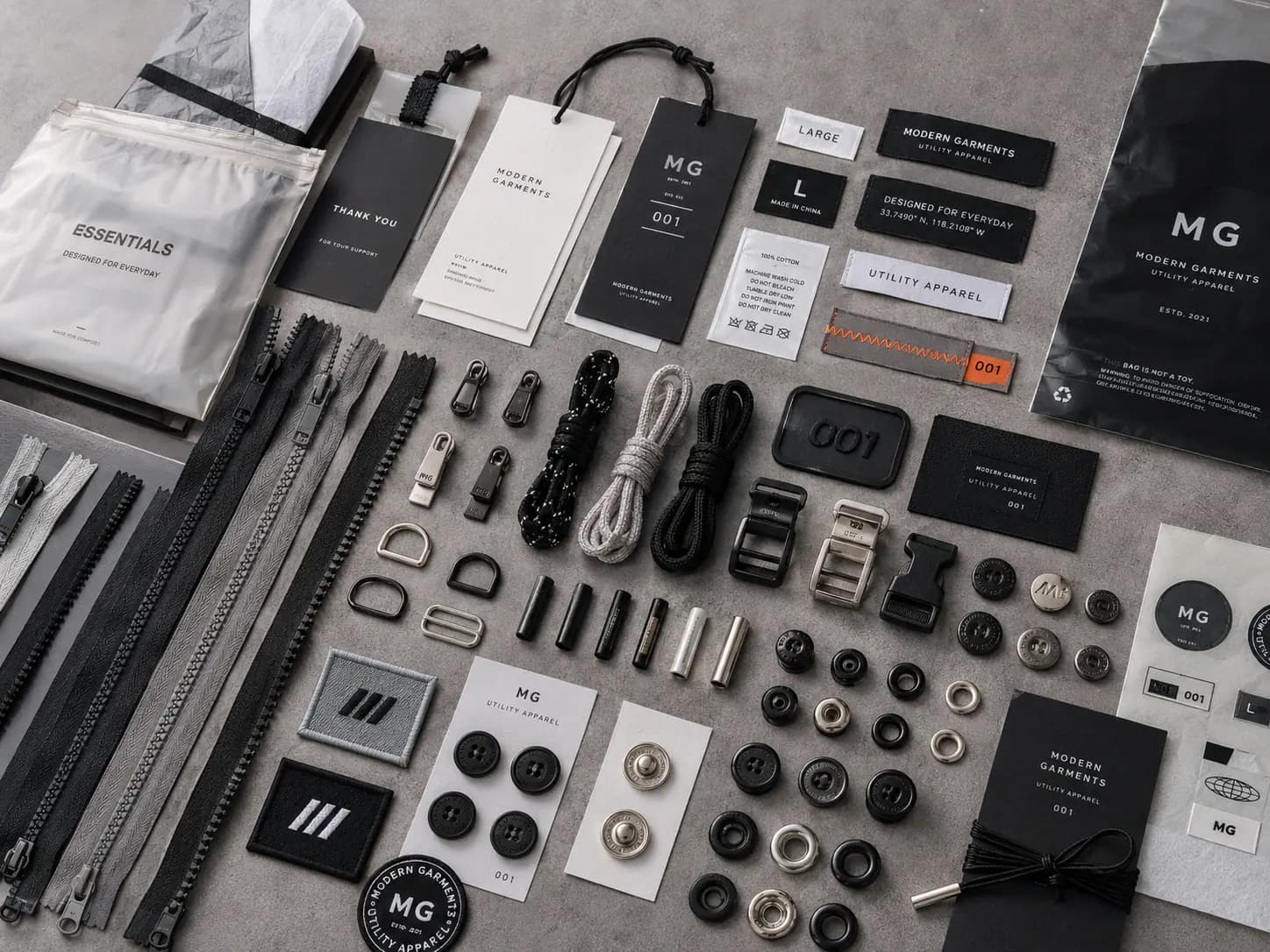
Labels and packaging are commercially important, but they do not normally need to be physically produced for a single garment sample. Their final content and supplier quantities are usually confirmed after the bulk order because custom labels, hangtags and packaging often carry much higher minimums than one sample.
| Tech pack section | Minimum useful information |
|---|---|
| Style drawings | Clear front and back views, plus side or detail views where construction is not obvious. |
| Measurement specification | POM numbers, measurement method, base-size dimensions, tolerance and units. |
| BOM | Fabric, rib, zippers, buttons, drawcords and other product components. |
| Fabric direction | Composition, finished GSM and color as the practical starting point. |
| Technique instructions | Construction intent and any sewing requirements that must differ from factory standards. |
| Decoration artwork | Production-quality artwork with size, placement, colors and technique. |
Brands do not need to arrive with a perfect document. We normally clarify the product through focused questions and help organize the working information without a separate tech-pack review fee. A straightforward brief can often be aligned within a few hours; sourcing an unusual fabric or custom hardware requires additional time. Sampling is charged only when a sample is confirmed.
1. Make the Style Drawings Unambiguous
Provide front and back views as the minimum. Add a side view, inside view or enlarged detail wherever the construction cannot be understood from the main flats. Show pocket openings, panel seams, hood construction, cuffs, hems, closures and any asymmetric details.
A reference image communicates mood, but it does not define hidden construction. If you have a physical reference garment, send it and identify exactly what should be followed: silhouette, a particular detail, measurement method, fabric hand or overall workmanship.
2. Build a Measurement Specification That Can Be Repeated
Each measurement needs a defined point and method. “Chest 60 cm” is incomplete if one team measures 2.5 cm below the armhole while another measures at the deepest point. State whether the garment is measured flat or around the body, and define the starting and ending points.
- POM number
- Point of measurement
- Measurement method
- Base-size measurement
- Measurements for each required size
- Grade rule between sizes
- Plus/minus tolerance
- Unit and notes
For first sampling, a reliable base-size chart is essential. KAOUYOU commonly develops the grade rule before bulk production and sends the graded specification for approval. If the brand already has a proven grade or reference garment, it should be supplied at the beginning.
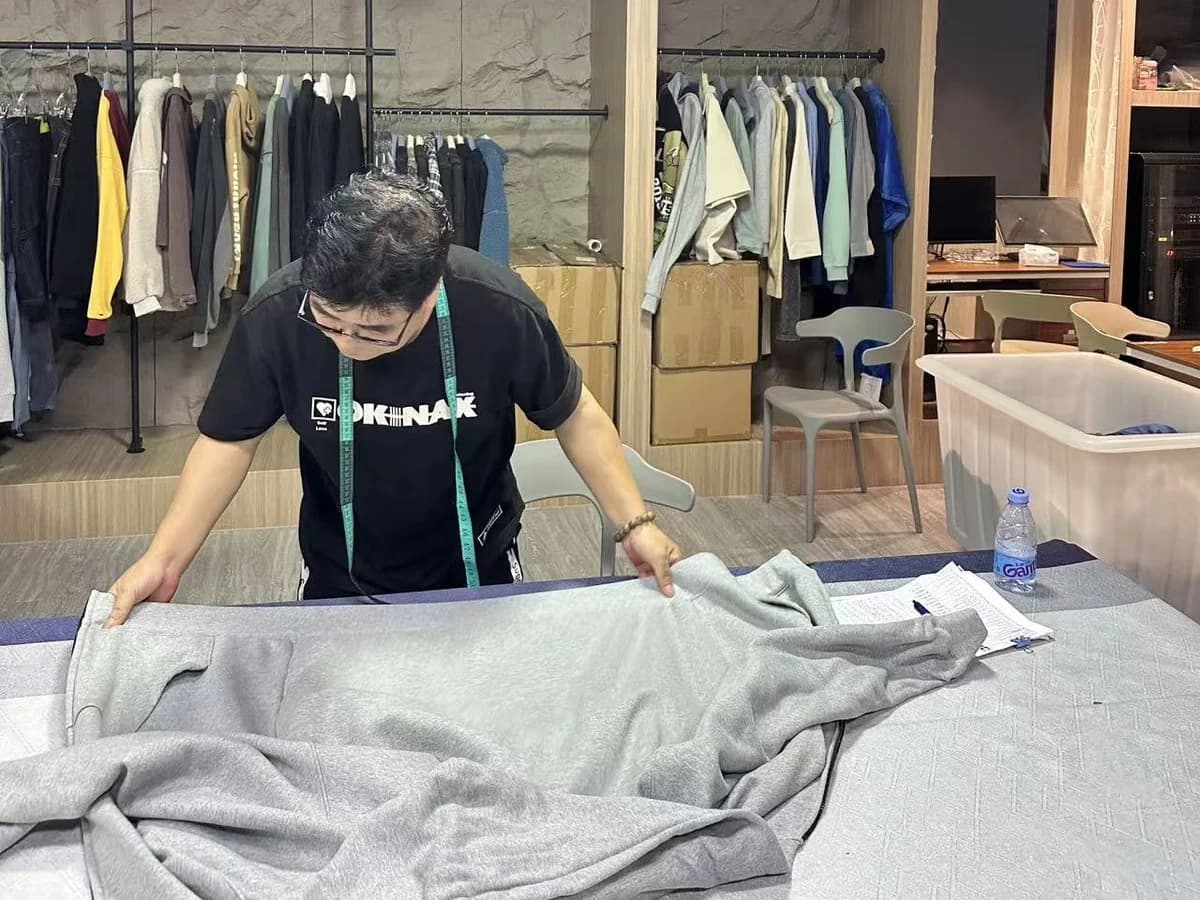
3. Use the BOM to Control Fabric and Components
A bill of materials records every component that forms the product: body fabric, rib, lining, zipper, button, drawcord, elastic, thread, labels and packaging where relevant. During early sampling, the body fabric direction usually starts with three essentials: composition, finished GSM and color.
More specialist specifications—yarn quality, knit structure, certification, stretch, recovery, finishing or performance standards—can be added when they are important to the product. More specificity improves control, but it can also extend sourcing time. KAOUYOU can present available fabric options when the client has not nominated a source, or work with a client-specified material.
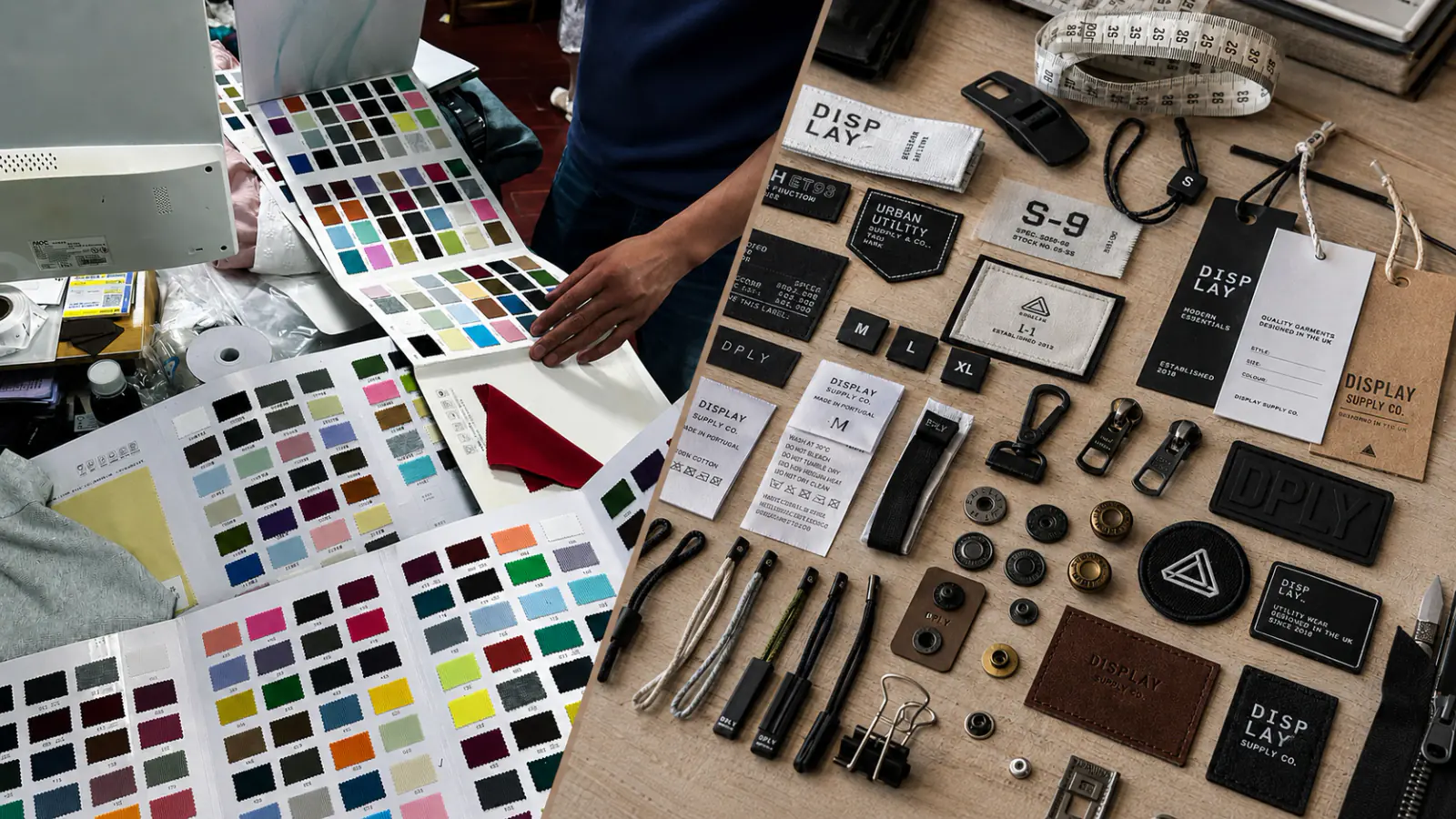
4. Define Decoration and Color as Production Information
For printing, embroidery or wash development, provide editable or high-resolution artwork, finished dimensions, exact placement, colors or Pantone references, the intended technique and an effect reference. A small left-chest mark and a large back graphic cannot be quoted or sampled accurately from the same artwork file without scale and placement.
Pantone references are useful, but the approved physical standard controls the production decision. Screen color, a digital rendering, a lab dip and dyed fabric can differ. Record whether the approved reference is a fabric swatch, lab dip, strike-off, embroidery sample or washed garment.
5. Separate Factory Standards From Special Construction
Many brands do not specify every seam. In that case, KAOUYOU applies an appropriate construction method and the client approves the overall sample. Professional clients may define seam type, stitch density, topstitch width, reinforcement, binding or internal finishing, and we can follow those requirements when they suit the fabric and equipment.
Avoid notes such as “normal method” or “same as photo” for details that materially affect appearance, durability or cost. If a requested construction is unsuitable for the selected fabric, available machinery or target price, it should be flagged before sampling and replaced with an approved alternative.
How KAOUYOU Moves a Tech Pack Into a Sample
- Sales or merchandising completes the initial information review.
- The pattern maker checks the style, measurements and construction logic.
- Fabric and necessary trims are identified or confirmed.
- Printing, embroidery, wash and other techniques are reviewed for feasibility.
- The project is quoted against the clarified specification.
- The pattern is developed for the approved sample direction.
- The sample is cut and sewn.
- The finished sample receives an internal review.
- The sample and its current documents are sent for client approval.
The sequence is deliberately front-loaded. Clarifying specifications before pattern making costs less time than discovering a contradiction after fabric has been cut or decoration has been applied.
Ten Tech Pack Mistakes That Delay Sampling
| Common error | Why it causes delay or disagreement |
|---|---|
| Incomplete style views | A front view alone leaves the back, side and important local structures open to factory interpretation. |
| Missing or contradictory measurements | Key POMs are absent, grade rules look abnormal, or the size chart conflicts with the drawing. |
| No measurement method | The starting point and whether a dimension is measured flat or as a circumference are unclear. |
| No tolerance | Inspection has no agreed acceptance range, creating avoidable alteration and bulk disputes. |
| Vague fabric language | Terms such as cotton, French terry or rib are used without composition, GSM, color and required quality. |
| Incomplete decoration information | Artwork, dimensions, placement, color codes, technique or desired effect are missing. |
| Vague construction notes | Phrases such as normal method or same as image do not define a special seam, topstitch or reinforcement. |
| Unclear color standard | A rendering, Pantone reference and fabric swatch conflict, with no approved standard identified. |
| Labels and packaging left unresolved | Bulk requirements for main labels, care labels, hangtags and packing arrive after production decisions have been made. |
| Poor version control | Several files circulate without a revision number, date or single approved current version. |
The root problem is rarely that the document is short. Delay comes from ambiguous information, contradictions and multiple uncontrolled versions. Every revision should show a version number and date, with one clearly identified current file.
A Complete Tech Pack Is Not Automatic Bulk Approval
Written specifications describe the target; they cannot fully predict physical color, hand feel, shrinkage, fit or decoration effect. Before bulk cutting, reconfirm every unresolved point that can change appearance, fit, function, cost, delivery or the agreed quality standard.
- Physical fabric and trim qualities, including color, hand, finished GSM, stretch and shrinkage
- Approved color standard, such as a confirmed swatch, lab dip or physical sample
- Strike-off, embroidery sample or wash sample for the intended decoration effect
- Garment proportions where two measurements create a fit or construction conflict
- Alternative construction where the requested technique is incompatible with fabric, equipment or target cost
- Approved fit sample, pre-production sample or agreed counter sample
- One consolidated final revision with clear, non-conflicting comments
- Passed testing required for the product and market, such as shrinkage, colorfastness or pilling
- Final quantity, size and color ratio, delivery, packing and shipping information
The final production reference should be the approved pre-production or sealed sample, the final controlled tech pack revision and confirmed order documents—not an early sample file or a chain of conflicting messages.
The Pre-Sampling Tech Pack Checklist
- Front, back and necessary detail views are clear.
- The base-size measurements include POMs, methods, units and tolerances.
- The BOM identifies the body fabric and every essential component.
- Fabric composition, finished GSM and color direction are stated.
- Artwork includes size, placement, colors and technique.
- Special sewing or construction requirements are explicitly marked.
- Reference garments or images state which characteristics must be followed.
- The file has a revision number, date and one clear current version.
- Open questions are listed before quotation and pattern making begin.
Frequently Asked Questions
Can KAOUYOU help a new brand complete a tech pack?
Yes. We normally ask focused product questions and help organize the information required for factory development. This review is not charged separately; sampling begins only after the sample scope and fee are confirmed.
How long does a basic tech pack review take?
When communication is clear and the materials are straightforward, the working information can often be organized within a few hours. Sourcing a special fabric or custom hardware takes longer and should not be treated as document-editing time.
Does every tech pack need a full graded size chart before the first sample?
Not always. A clear base-size specification is needed for sampling. KAOUYOU normally develops the full grade for client approval when the project moves toward bulk production, unless the client supplies an approved grade earlier.
Do labels and packaging have to be finalized before sampling?
Usually not for a single development sample. Their position and direction can be recorded, while final label content, quantities and packaging are commonly confirmed after the bulk order because suppliers often have high minimums.
Is a complete tech pack enough to start bulk production?
No. Production should also be based on approved physical materials and effects, an approved sample, a final tech pack revision and confirmed order information.