Clothing manufacturing minimum order quantity (MOQ) depends on how the factory counts finished garments and what its suppliers require for fabric, trims and processing. KAOUYOU normally starts at 100 finished pieces per style per color for T-shirts, hoodies and jackets, with sizes mixed within each color. Special fabrics, complex techniques or higher supplier minimums require a project-specific quote. Ask for finished garment quantities and material purchase quantities on separate lines.
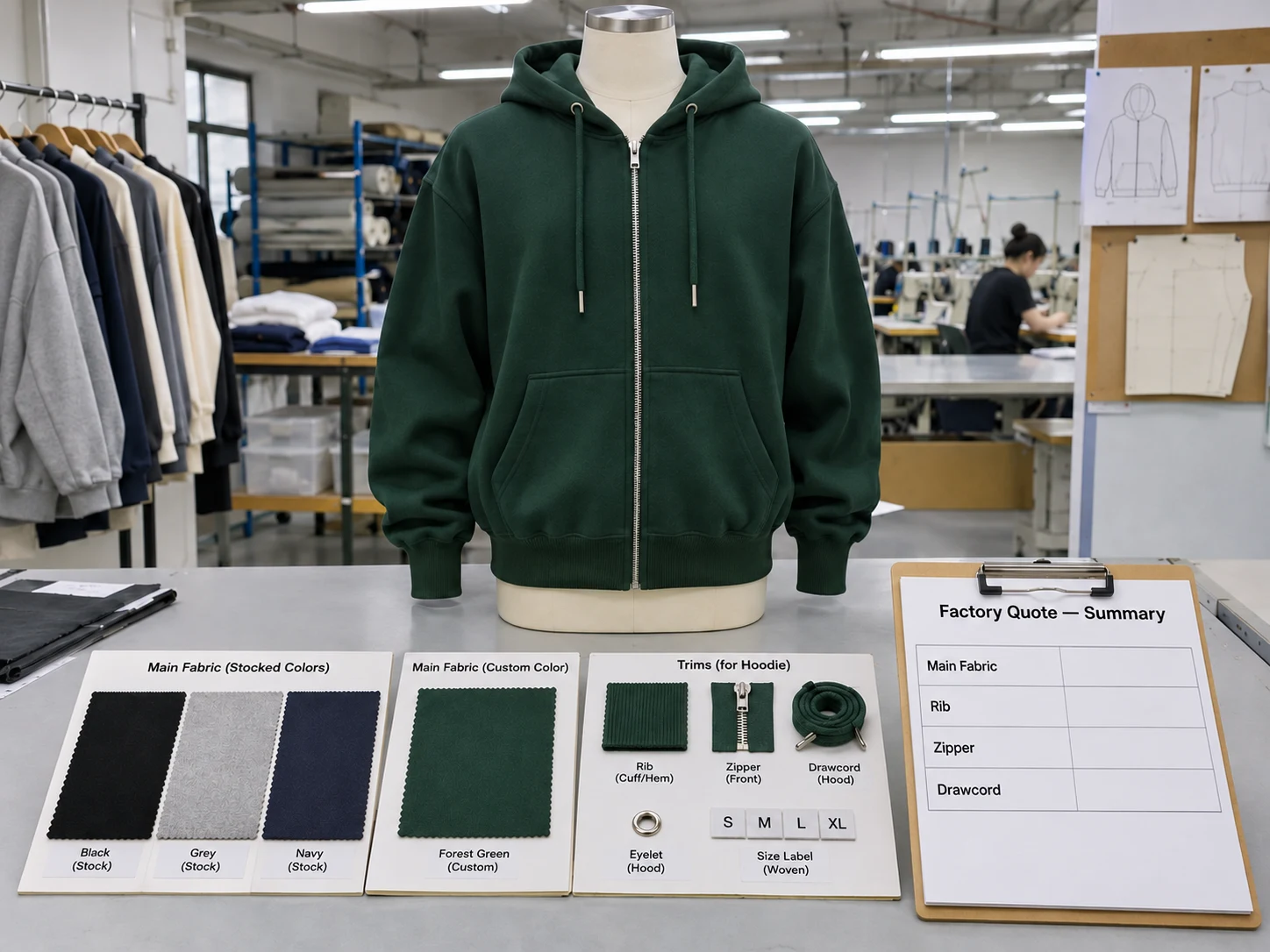
Why did 100 jackets require 200 zippers?
A KAOUYOU customer planned an order of 100 jackets. The selected metal zipper had a supplier minimum of 200 units. The factory quoted two ways to keep the specified zipper.
| Option | Finished jackets | Zippers purchased | Remaining zippers |
|---|---|---|---|
| Increase production | 200 | 200 | None planned |
| Keep the original run | 100 | 200 | 100 recorded and held for reorder |
The customer chose to produce 100 jackets and pay for the 200 zippers. KAOUYOU recorded and retained the other 100 for a future order. The zipper minimum applied to that specific component and supplier.
To compare those options, ask how the zippers used in production appear on the quote. One quote might include the installed zippers in the garment price and list the surplus separately. Another might show the full zipper purchase on its own line. Ask which treatment the quote uses before adding up the charges. Then check who owns the unused zippers and how the factory will record them for a reorder.
Which minimum is driving the quote?
| Quote line | How it is counted | What to confirm |
|---|---|---|
| Finished garments | Pieces per style and color | Size split, pattern differences and any exceptions to the regular minimum |
| Main fabric and rib | Usually metres at KAOUYOU, subject to the supplier’s unit | Stock, usable width, consumption and minimum for each material and shade |
| Labels, hardware and packaging | Supplier unit by compatible specification | Which styles share the same approved component and which need separate purchases |
| Printing, embroidery and washing | Process minimum, setup fee or small-run unit price | Which condition applies and how it affects the total |
Two styles can share one fabric purchase if they use the same fabric and color. For example, a black hoodie and matching sweatpants can draw from the same fabric order while each still has its own 100-piece garment minimum. Within one style, S to XXL can generally share a color run. Special sizes that change consumption, patterns or construction need separate evaluation. A different style has its own minimum.
Put the hoodie and sweatpants on separate garment lines, each with its own color and size breakdown. Then ask for the combined black fabric requirement in the supplier’s sales unit. The factory needs the consumption for both patterns to calculate that purchase. If the same collection adds a second shade, ask for a separate material line so the quote shows which quantities can be pooled.
Colorways may share a base pattern or development work. Main fabric, rib, thread and color-matched trims still need to be checked by color. The same graphic may also require separate ink matching, samples or runs on different garment colors. For planning a small first collection, see the low-MOQ clothing manufacturing guide.
How do stock, custom dyeing and custom fabric affect the order?
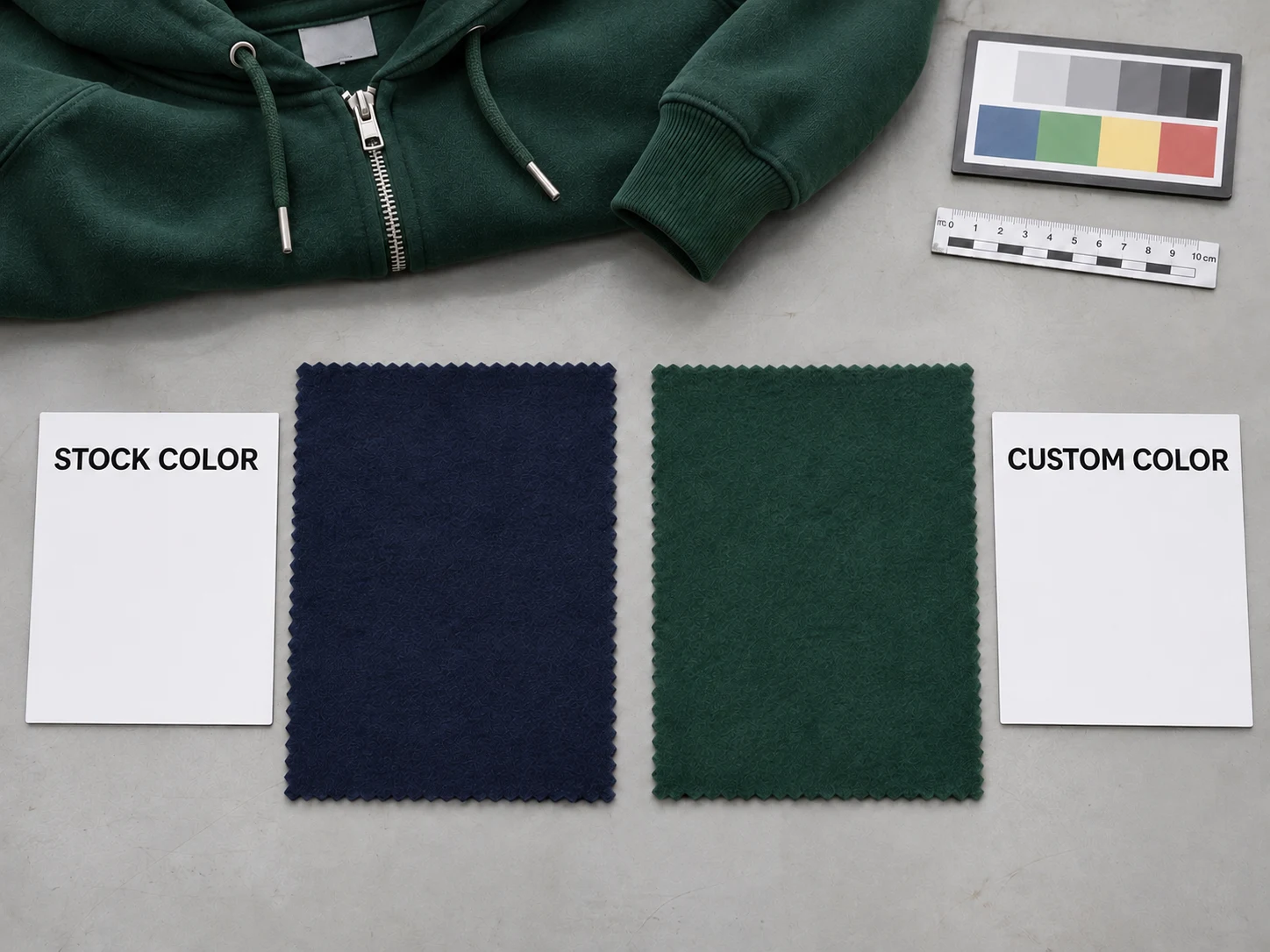
For stocked fabric, confirm available quantity, color, usable width, weight and the actual fabric surface. For custom dyeing, confirm the available greige fabric, dye minimum and shade sample. A custom knit or weave also requires confirmation of the yarn, construction, weight and lead time. Similar shades are checked separately. Matching main fabric and rib also require separate minimums and a review of shade and shrinkage.
KAOUYOU estimates the purchase from marker consumption, fabric width, shrinkage, cutting loss and the order’s size mix. Usable width and marker efficiency can materially change the estimate. A higher share of large sizes or stripe and plaid matching can also increase consumption. When switching to stock, recheck color, weight, hand feel, stretch, shrinkage and washed appearance.
For a custom color, ask whether the supplier minimum or the cutting requirement sets the purchase quantity. Ask for both figures in the same unit, along with the width and size mix used in the estimate. If a stock fabric has a different usable width, request a fresh consumption estimate before comparing the quotes. The price per metre alone cannot tell you the material cost for the run.
When can trims and processes be shared?
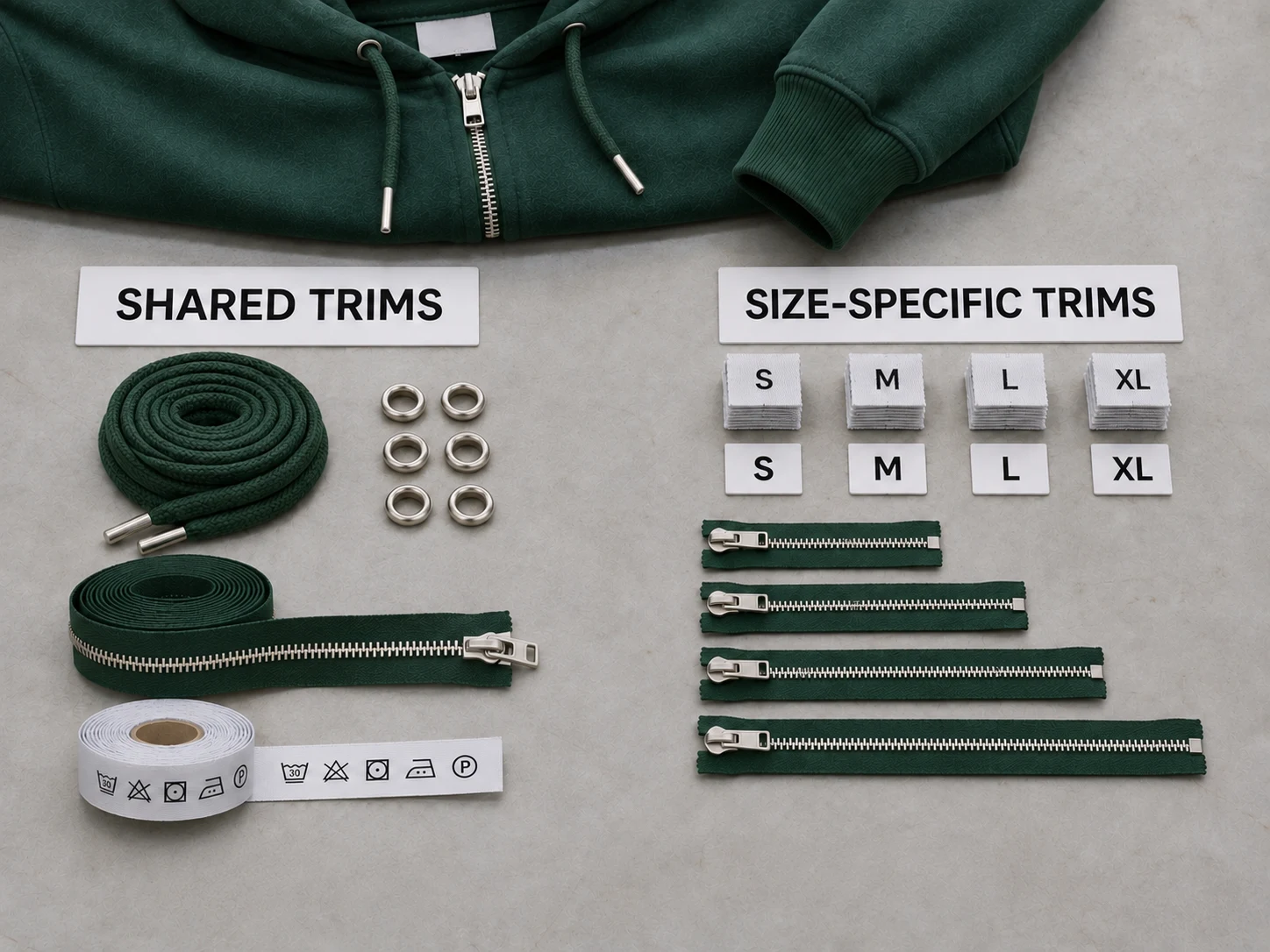
A brand label or care label can be shared across styles when the approved artwork and all required content match. Size labels are counted by size. Confirm zipper lengths and colors, snap specifications and packaging artwork separately whenever they differ.
Screen printing may carry screen, ink matching and setup charges, especially with more colors. Embroidery pricing can reflect digitizing, stitch count and machine time. Garment washing can have a minimum load. Ask the factory to identify a minimum process quantity, one-time setup fee and small-run unit price separately where applicable. The custom hoodie manufacturing cost guide explains how specification changes affect the broader garment quote.
How should buyers compare the options?
When a supplier minimum exceeds the material needed for the garment run, KAOUYOU can evaluate three routes. Increase the garment order to use more of the material, keep the garment quantity and pay for the excess material, or switch to a stocked or lower-minimum specification. Compare total spending and delivery timing against the reorder plan. Keep the fit, fabric performance and key construction requirements in view when deciding what to change.
Request the finished quantity by style and color, material purchase quantity and unit, garment unit price, one-time charges, excess material cost and leftover terms. The garment price typically includes ordinary materials, cutting, sewing, finishing and basic packaging. Setup, testing or small-run charges may be listed separately. Check which charges are already included before comparing totals.
| Quote field | What to ask for | What to verify |
|---|---|---|
| Finished garments | Order quantity, color and size split for each style | Both quotes cover the intended assortment |
| Materials | Required usage, supplier minimum and actual purchase quantity in the supplier’s unit | The buyer can see which material forces a larger purchase |
| Garment unit price | List of included materials, operations and packing | The comparison uses the same scope |
| Separate charges | Setup, testing, small-run fees and excess material cost, where applicable | Each charge appears once in the total |
| Surplus | Material specification, remaining quantity, owner and hold period | The buyer can identify stock available for a reorder |
Compare the total payable for each option at its quoted garment quantity. Multiply the unit price by the finished quantity and add only the charges listed separately. If one option requires more finished units, consider whether the extra inventory fits the sales plan. If the other leaves materials on hand, check whether the next run can use the exact color, length or label specification within the agreed hold period.
When you request a revision, state what must stay fixed. A buyer who needs the original shade can ask for the same garment count with excess material listed separately. A buyer who prioritizes a smaller upfront spend can ask for a stocked alternative and review the new sample before accepting it. Have the factory show the revised quantities, charges and delivery assumptions on the same quote.
Changes that materially affect color, hand feel, appearance or decoration usually call for a new swatch or process sample. Changes affecting overall fit or post-wash dimensions call for a new complete garment sample.
Frequently asked questions
Who owns excess material paid for by the buyer?
At KAOUYOU, buyer-funded surplus belongs to the buyer. The factory records the material, color, specification and remaining quantity and normally holds it for three months. Before reuse, the team checks stock condition, shade and deterioration.
Can I use the previous quote for a reorder?
Existing patterns, artwork, screen information and stocked trims can often be reused. Confirm fabric availability, dye lots, trim specifications, supplier minimums and pricing for the new run.
Which MOQ figures can the factory confirm before sourcing?
KAOUYOU can use its regular finished garment minimum for early planning. Exact minimums for custom fabric, zippers, woven labels or special processes depend on supplier confirmation for the approved specification.