A custom hoodie does not have one reliable factory price. A useful estimate starts with a defined garment: fabric construction and weight, fit, hood and pocket structure, decoration, wash, trims, packaging, quantity and commercial terms.
To make the discussion concrete, this guide begins with one controlled KAOUYOU reference specification and then shows how each decision changes the cost. The figures are planning references based on the stated scope—not a price list for every hoodie project.
Key takeaways
- A basic 100-piece pullover reference begins at approximately US$14.50 per piece on the stated indicative FOB basis.
- The same reference falls to approximately US$10.20 per piece at 1,000 pieces because setup and production work are distributed across a longer run.
- Fabric, consumption and sewing labor remain the core cost; extra construction, decoration, washing, hardware and packaging are specification choices.
- A quotation is only comparable when style, color, quantity, material, techniques, packing and trade scope are aligned.
A Practical FOB Reference for a Basic Custom Hoodie
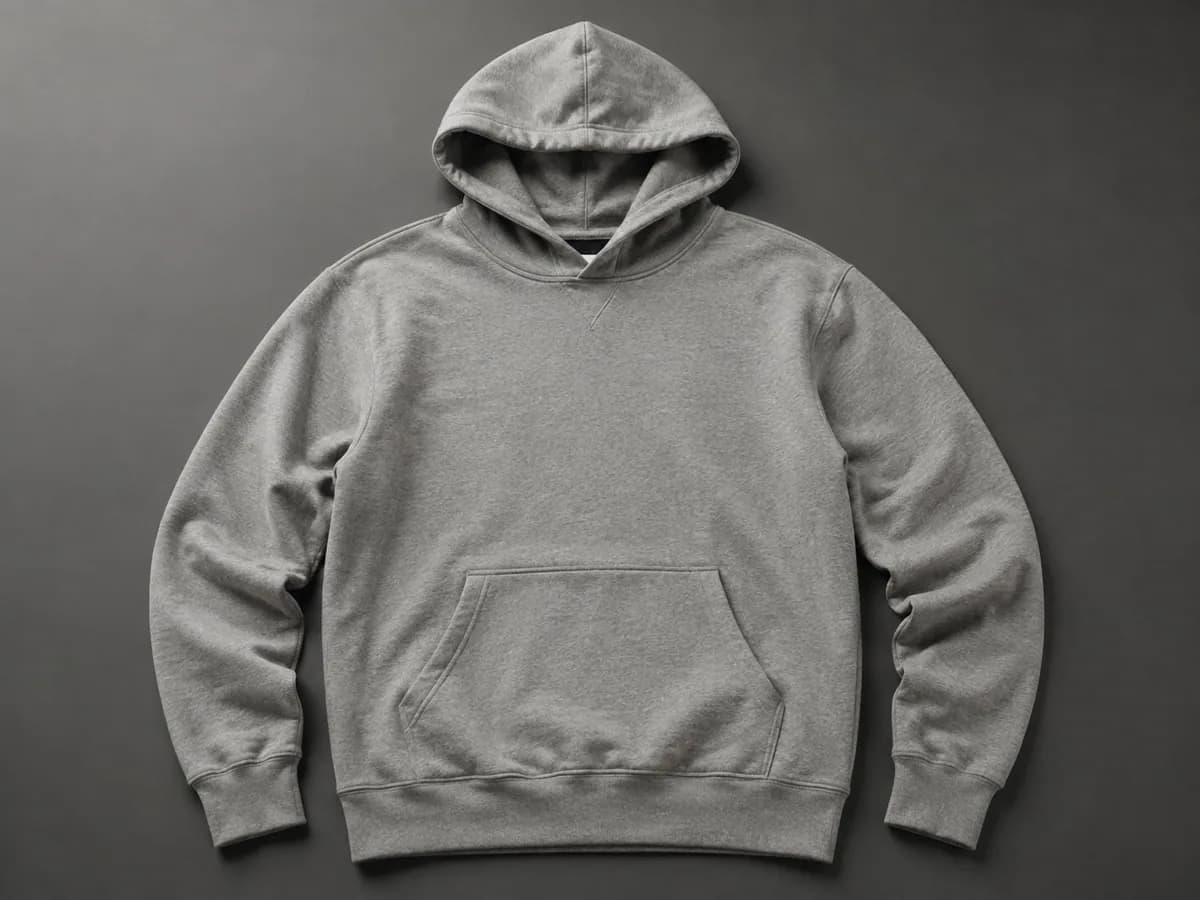
The following August 2026 reference uses one men’s or unisex pullover hoodie, one style and one standard color. It is intended to help buyers understand how quantity affects the unit price before optional design work is added.
| Quantity | Indicative FOB unit reference |
|---|---|
| 100 pieces | US$14.50 per piece |
| 300 pieces | US$12.20 per piece |
| 500 pieces | US$11.20 per piece |
| 1,000 pieces | US$10.20 per piece |
The reference assumes:
- One men’s or unisex pullover hoodie style in one standard color
- 320–350 GSM French terry or brushed fleece
- Approximately 80% cotton / 20% polyester, or a comparable CVC quality
- Regular relaxed fit in a standard S–XXL size range
- Basic main label, size label and care label
- One standard individual polybag per garment
- No printing, embroidery, specialist wash or complex hardware
A formal FOB quotation must identify the named loading port and the exact included scope. Fabric availability, exchange rates, testing, inspection and order terms can change the final price. International freight, duties, taxes and destination services are not represented by this planning table.
Why does quantity change the unit price?
Pattern preparation, marker planning, cutting setup, line instruction, production changeover, quality records and order coordination still happen at 100 pieces. At 1,000 pieces, that work is spread over more garments. Fabric purchasing and stable sewing runs may also become more efficient. Our separate low-MOQ manufacturing guide explains this production structure in more detail.
Fabric Cost Is More Than a GSM Number
Hoodie fabric price is shaped by finished weight, fiber composition, yarn and knitting structure, usable width, dyeing and finishing. GSM alone cannot determine the cost.
French terry has a looped interior and is often selected for a more breathable, structured hand. Brushed fleece is brushed on the back to raise a soft insulating layer and is common for autumn and winter hoodies. Brushed fleece commonly falls around 280–450 GSM, although the practical range depends on composition and sourcing.
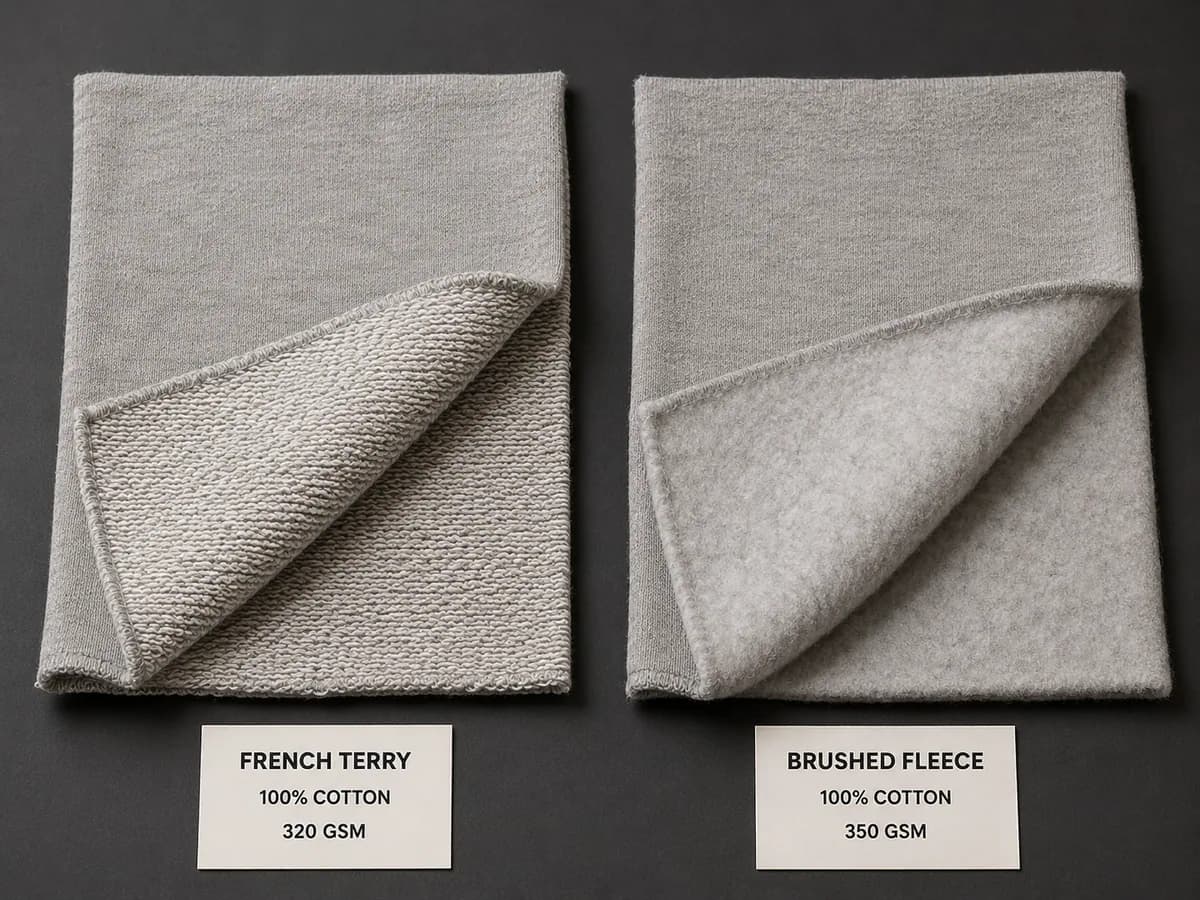
With comparable yarn, knitting and weight, brushed fleece is often slightly more expensive because brushing, raising and sometimes shearing add finishing operations. That is not an absolute rule: a dense long-staple-cotton French terry or specialty yarn can cost more than an ordinary fleece.
Certified recycled yarns, performance polyester and specialist anti-pilling finishes can reverse that simple hierarchy. Review an actual swatch and production-intent sample through KAOUYOU’s custom hoodie manufacturing capability before locking a price target.
How Fit and Construction Increase Hoodie Cost
A larger silhouette consumes more fabric. Additional panels, pockets, closures and layers also increase pattern work, cutting, sewing and inspection. The following ranges are directional additions to a comparable basic garment.
| Construction choice | Why cost increases | Typical reference |
|---|---|---|
| Extra-wide or long silhouette | More body and sleeve consumption | +5–15% |
| Drop shoulder or extended sleeve | Larger sleeve and lower marker efficiency | +2–6% |
| Double-layer hood | A second hood layer plus joining and topstitching | +US$0.50–1.50 |
| Two-way zipper | Higher zipper cost and stricter installation control | +US$1.00–2.50 |
| Special pockets | Welt, concealed-zip or multi-piece construction | +US$0.50–2.00 |
| Heavier or custom rib | More material or a dedicated color/specification | +US$0.20–0.80 |
| Binding or complex seams | Additional operations and sewing time | +US$0.30–1.50 |
| Multi-panel construction | More pattern pieces, cutting and joining | +5–15% |
| Contrast panel construction | Separate material buying, cutting and handling | +5–12% |
| Double-layer body | Nearly double material use and substantially heavier assembly | +30–70% |
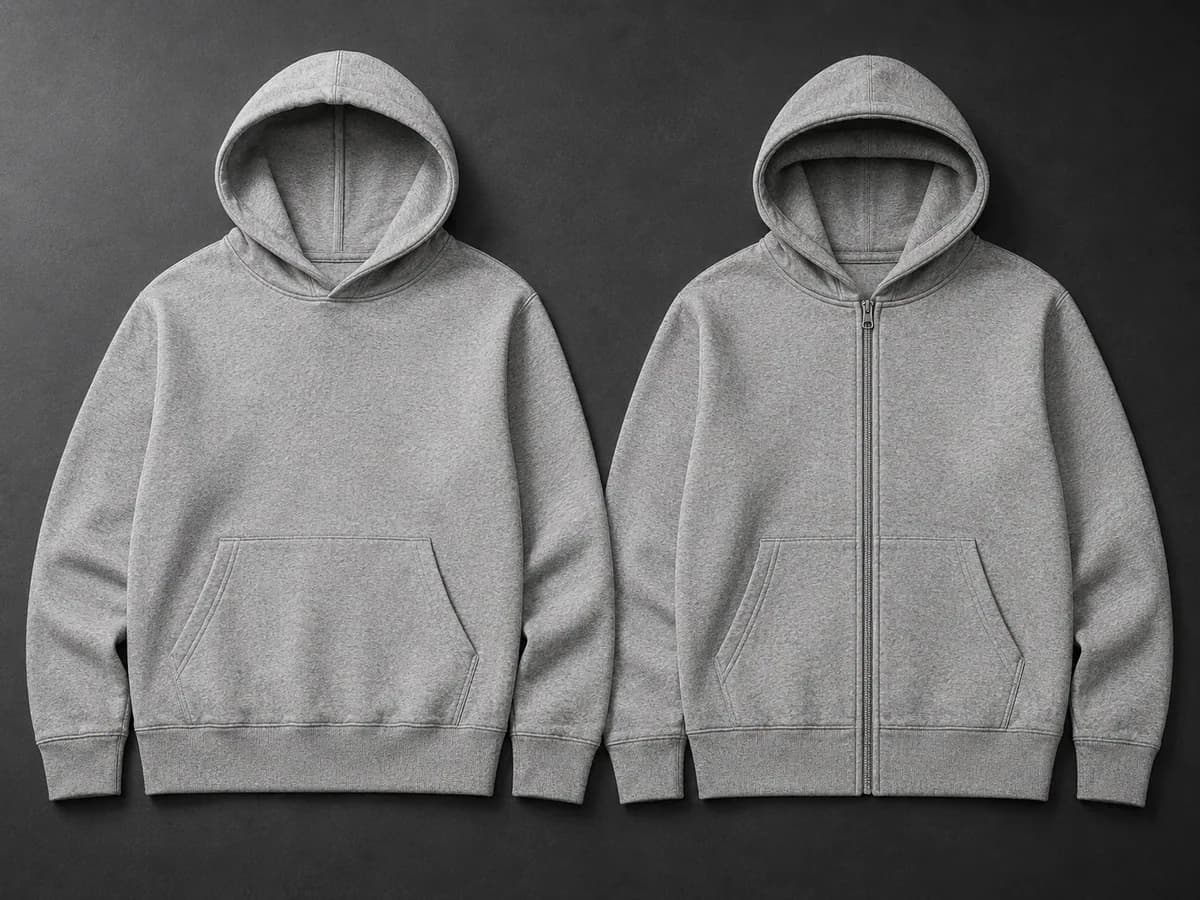
Why a zip-up costs more than a pullover
| Cost area | Additional work | Typical reference |
|---|---|---|
| Front zipper | Standard or branded zipper specification | +US$0.50–1.50 |
| Front-edge preparation | Stabilizing, folding and topstitching both fronts | +US$0.30–0.80 |
| Additional pattern pieces | More marker, cutting and bundle control | +US$0.20–0.60 |
| Sewing time | Zipper installation, alignment and finishing | +US$0.50–1.20 |
| Pocket conversion | Split kangaroo pockets or alternative pocket construction | +US$0.20–1.20 |
| Inspection and packing | Zipper function, symmetry and front-body buckling checks | +US$0.10–0.30 |
These lines explain the cost structure; they should not be added as an automatic calculator. Operations can overlap, and zipper brand, length, teeth, tape, puller and order quantity alter the result. A double-layer hood commonly adds approximately US$0.50–1.50 per piece, with a larger effect on 400 GSM-plus fabrics.
Printing and Embroidery: What Is Actually Being Priced?
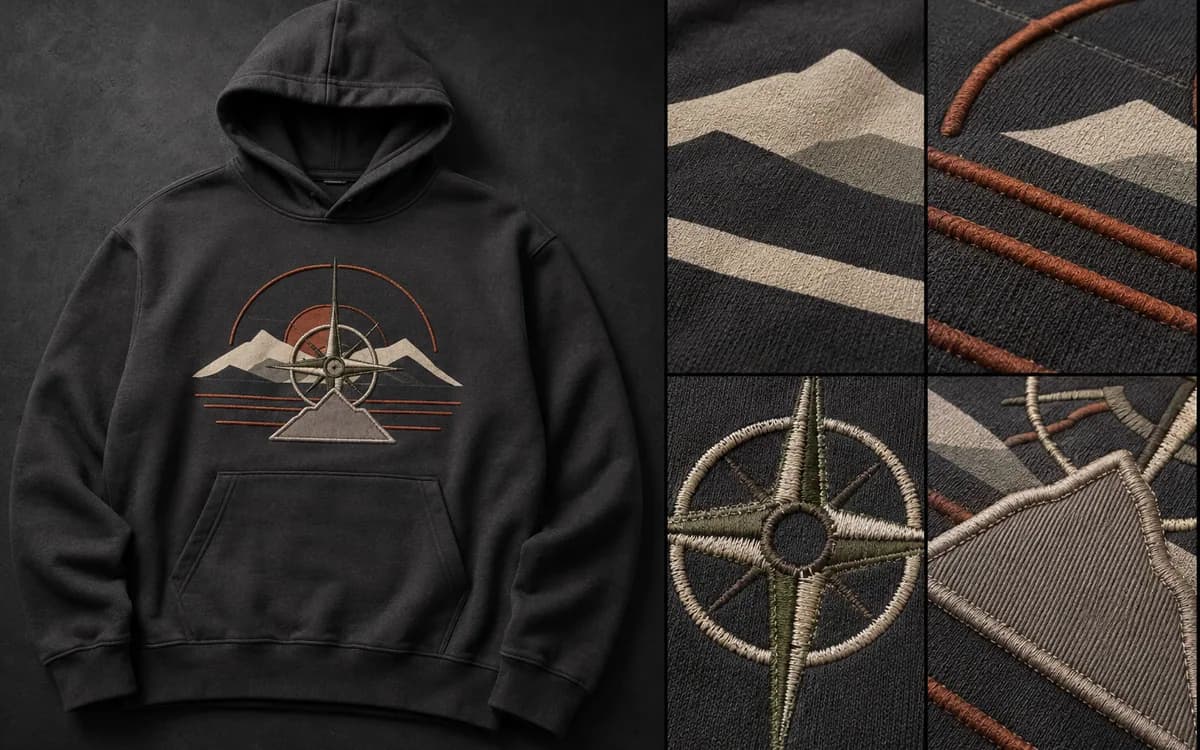
Decoration is priced from production inputs, not from whether an artwork looks visually “simple.” Screen printing depends heavily on colors, screens, size, placement and print passes. Embroidery is driven primarily by stitch count, density, backing, placement and color changes.
| Technique | Main pricing basis | Common reference per piece |
|---|---|---|
| Screen printing | Color count, size, location and number of print passes | US$0.50–2.50 |
| Puff printing | Color count, area, puff height and print layers | US$0.80–3.00 |
| DTG printing | Artwork area, ink coverage and garment color | US$1.50–5.00 |
| Flat embroidery | Total stitch count, placement, density and color changes | US$0.80–4.00 |
| 3D embroidery | Stitch count, coverage, foam and raised height | US$1.50–5.00 |
| Appliqué embroidery | Patch material, layers, cutting and embroidery stitches | US$1.50–6.00 |
A more useful way to estimate embroidery
| Approximate stitch count | Typical application | Reference |
|---|---|---|
| 3,000–5,000 stitches | Small logo or text | US$0.60–1.20 |
| 6,000–10,000 stitches | Small-to-medium chest design | US$1.00–2.00 |
| 12,000–20,000 stitches | Medium design | US$1.80–3.50 |
| 25,000+ stitches | Large or dense design | US$3.50+ |
Digitizing, backing, thread type, 3D foam, appliqué material, machine changes and sampling can create additional costs. Send vector artwork with its final physical dimensions and placement rather than requesting a price from a screenshot.
How Dyeing and Washing Affect Cost and Time
A specialist wash changes more than appearance. It can affect dimensions, color, rib, zipper tape, hardware, artwork and care instructions. Each direction therefore adds processing, testing and approval work.
| Process | Additional cost reference | Typical added bulk time |
|---|---|---|
| Standard garment / no specialist wash | Included in base direction | None |
| Softener wash | +US$0.40–1.00 | +2–4 days |
| Enzyme wash | +US$0.80–1.80 | +3–5 days |
| Garment dye | +US$1.50–3.50 | +4–7 days |
| Pigment dye | +US$2.00–4.50 | +5–8 days |
| Vintage wash | +US$2.50–5.50 | +5–10 days |
| Acid or mineral wash | +US$3.50–7.00 | +7–12 days |
These are incremental planning references, not guaranteed lead times. Fabric composition, base color, wash load, effect depth, sample approval and production capacity change both cost and schedule. The general sequence is standard garment, softener wash, enzyme wash, garment dye, pigment dye, vintage wash, then acid or mineral wash—but individual specifications can change the order.
Labels, Hardware and Packaging Can Carry Their Own Minimums
A 100-piece garment order does not automatically mean every custom component can be purchased in 100 pieces. Label, zipper, drawcord, metal and packaging suppliers each operate with separate minimums, tooling requirements and color limitations.
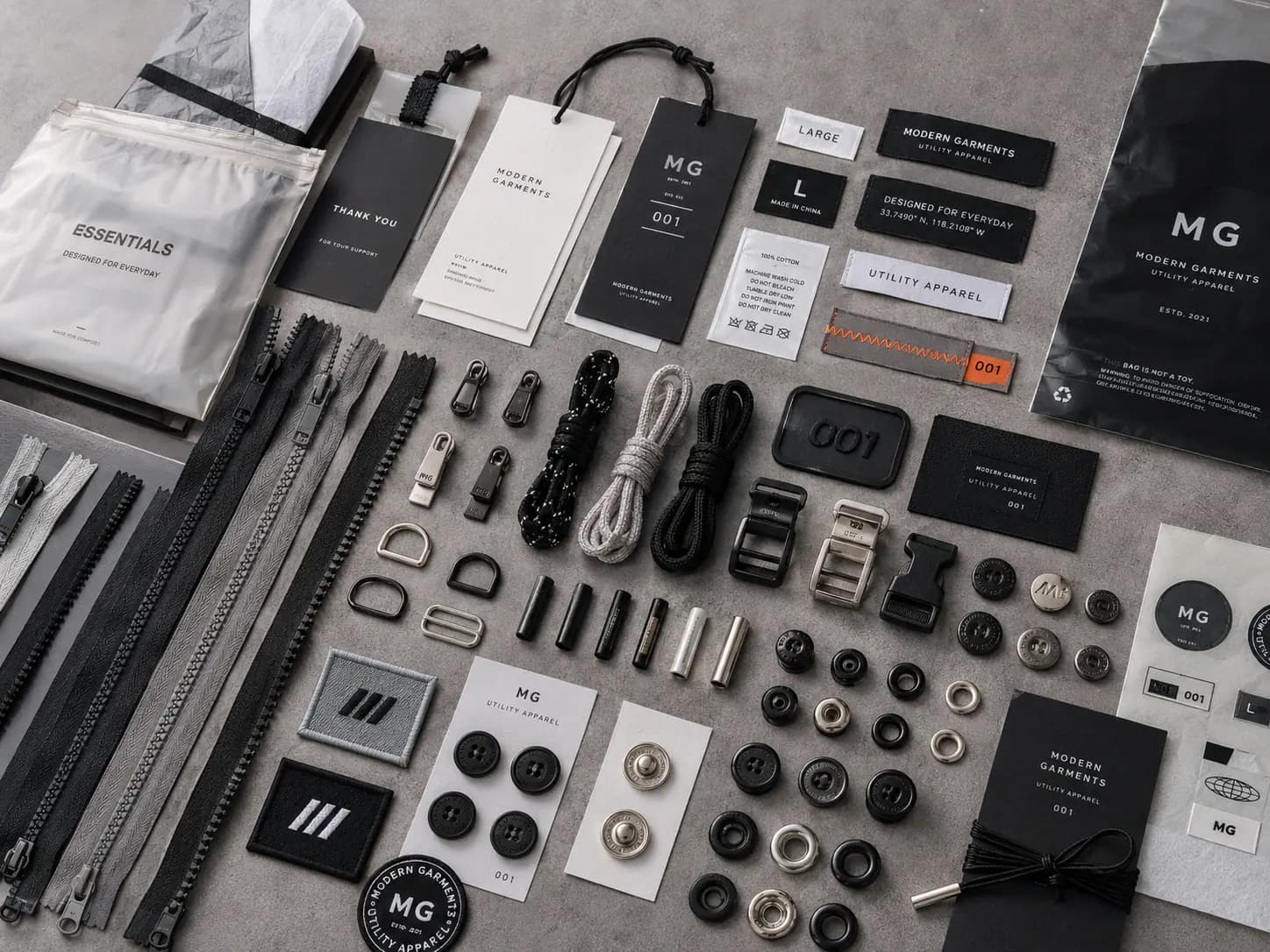
| Item | Common unit reference | Common supplier minimum | Tooling risk |
|---|---|---|---|
| Woven main label | US$0.08–0.30 | 500–1,000 | Usually |
| Printed main label | US$0.05–0.18 | 300–500 | Possible |
| Care label | US$0.03–0.15 | 300–1,000 | Possible |
| Size label | US$0.02–0.08 | 500–1,000 | Possible |
| Hangtag | US$0.08–0.40 | 500–1,000 sets | Usually |
| Standard drawcord | US$0.10–0.30 | Bought with bulk | Usually no |
| Custom drawcord | US$0.25–0.80 | 500–1,000+ | Possible |
| Standard metal cord ends | US$0.10–0.40 / pair | 500–1,000 pairs | Usually no |
| Custom-logo metal ends | US$0.30–1.20 / pair | 500–2,000 pairs | Usually |
| Standard eyelets | US$0.05–0.25 / pair | 500–1,000 pairs | Usually no |
| Custom-logo eyelets | US$0.20–0.80 / pair | 1,000–3,000 pairs | Usually |
| Standard zipper | US$0.50–1.50 | Flexible | Usually no |
| YKK or custom zipper | US$1.20–4.00 | 300–1,000 | Design-dependent |
| Standard clear polybag | US$0.05–0.15 | Flexible | No |
| Custom printed polybag | US$0.15–0.50 | 1,000–3,000 | Usually |
| Custom paper or mailer box | US$0.50–2.50 | 500–1,000 | Usually |
Exact artwork, dimensions, materials, colors and quantities must be submitted to the relevant supplier. KAOUYOU can coordinate these items through its fabrics, trims and packaging service, but availability and minimums are confirmed per project.
What Does a Custom Hoodie Sample Cost?
A developed hoodie sample commonly costs approximately US$100–200, depending on pattern work, material preparation, construction, hardware, decoration and washing. A very simple blank-style sample may be approximately US$50–80.
A sample fee is not the bulk garment price multiplied by one. It covers one-off pattern, material, cutting, sewing, setup and coordination work. Complex hardware, custom fabric, specialist wash or multi-technique artwork can increase the fee. Scope, revisions, timing and any fee treatment are confirmed before the product development and sampling process begins.
How to reduce cost without reducing garment quality
Fabric and sewing labor cannot be removed from a well-made hoodie. The practical opportunity is to reduce unnecessary specifications and repeated operations:
- Use an approved available fabric instead of developing a custom textile.
- Begin with one color and a controlled S–XXL size breakdown.
- Use a standard zipper, drawcord and hardware where branding does not require customization.
- Choose one decoration method and limit colors, placements and oversized coverage.
- Use a standard hood, pocket and seam system unless a detail is central to the design.
- Use ordinary individual packing rather than low-volume custom boxes or mailers.
- Coordinate fabrics and trims across a coherent collection where technically suitable.
Simplify the specification, not the workmanship. Removing an unnecessary custom metal tip is a commercial decision; reducing seam quality, material approval or inspection is a product risk.
What to Send for a Useful Hoodie Cost Estimate
The closer the input is to a production specification, the narrower and more useful the cost estimate can become. Prepare:
- Pullover, full-zip, two-way zip or another hoodie structure
- Quantity for each style and color, with the proposed size breakdown
- Target fabric construction, composition, finished GSM, color and hand feel
- Fit measurements or a reference garment, sketch or tech pack
- Hood layers, pocket type, rib specification, drawcord and zipper details
- Artwork files with dimensions, colors, placements and technique direction
- Dyeing or wash requirements and the acceptable variation range
- Main label, size label, care label, hangtag and hardware requirements
- Individual packing and carton requirements
- Requested trade term, named loading port, destination and delivery window
The three most common hoodie quotation mistakes
- Sending only a reference image. The factory can see the visual direction but cannot verify measurements, construction or hidden details, so the estimate must remain broad.
- Asking only for a GSM. Composition, yarn, knit structure, finishing, width and hand feel can create very different prices at the same nominal weight.
- Treating total order quantity as the MOQ for every color. The qualifying production quantity is calculated per style and color, while sizes can normally be mixed within that run.
Frequently Asked Questions
How much does it cost to manufacture 100 custom hoodies?
For the baseline specification in this guide, KAOUYOU’s August 2026 planning reference is approximately US$14.50 per piece for 100 pieces on an indicative FOB basis. The figure applies to one pullover style and one standard color using 320–350 GSM CVC French terry or brushed fleece, basic labels and standard individual packing, without decoration, specialist washing or complex trims. It is not a universal quotation.
Why does the hoodie unit price fall at 300, 500 or 1,000 pieces?
Pattern, marker, cutting setup, production instruction, line changeover, quality records and coordination work are distributed across more garments. Material purchasing and sewing efficiency may also improve. The price does not fall at a fixed percentage because fabric, techniques, colors and supplier minimums change the result.
Is a higher-GSM hoodie always more expensive?
Not always. Higher weight normally increases material consumption, but composition, yarn, knitting quality, usable width, finishing, color, certification and supplier availability also matter. A premium French terry can cost more than an ordinary brushed fleece at a similar or even higher GSM.
How much more does a zip-up hoodie cost?
A zip-up requires a zipper, divided front body, front-edge preparation, additional cutting and sewing, pocket changes and zipper-specific inspection. The individual references in this guide illustrate where the difference comes from, but they should not be added mechanically because some operations overlap. The confirmed specification determines the actual difference.
How much does a custom hoodie sample cost?
A developed hoodie sample commonly costs approximately US$100–200, depending on the style. A very simple blank-style sample may be approximately US$50–80. Custom fabric, hardware, specialist wash, complex construction or multiple decoration techniques can increase the fee. The sample scope and fee are confirmed before development.
Can sizes be mixed within a 100-piece hoodie order?
Yes. Sizes can normally be mixed within one style-and-color production run. The final breakdown should be confirmed before fabric consumption, cutting and production planning. One hundred pieces cannot be divided across several unrelated styles or colors and still be treated as one qualifying run.
Does the FOB reference include delivery to my country?
No destination-delivery promise is implied by the reference table. A formal FOB quotation must identify the named loading port and included scope. International freight, insurance, duties, taxes and destination services are confirmed separately according to the agreed trade and logistics arrangement.