Release an apparel shipment after the inspection report identifies the exact lot, the results meet the approved garment and packing requirements, and any exceptions have a documented resolution. Hold the affected goods if a discrepancy remains open. Before releasing reworked goods, verify the reinspection results, the final packing list and any required buyer approval.
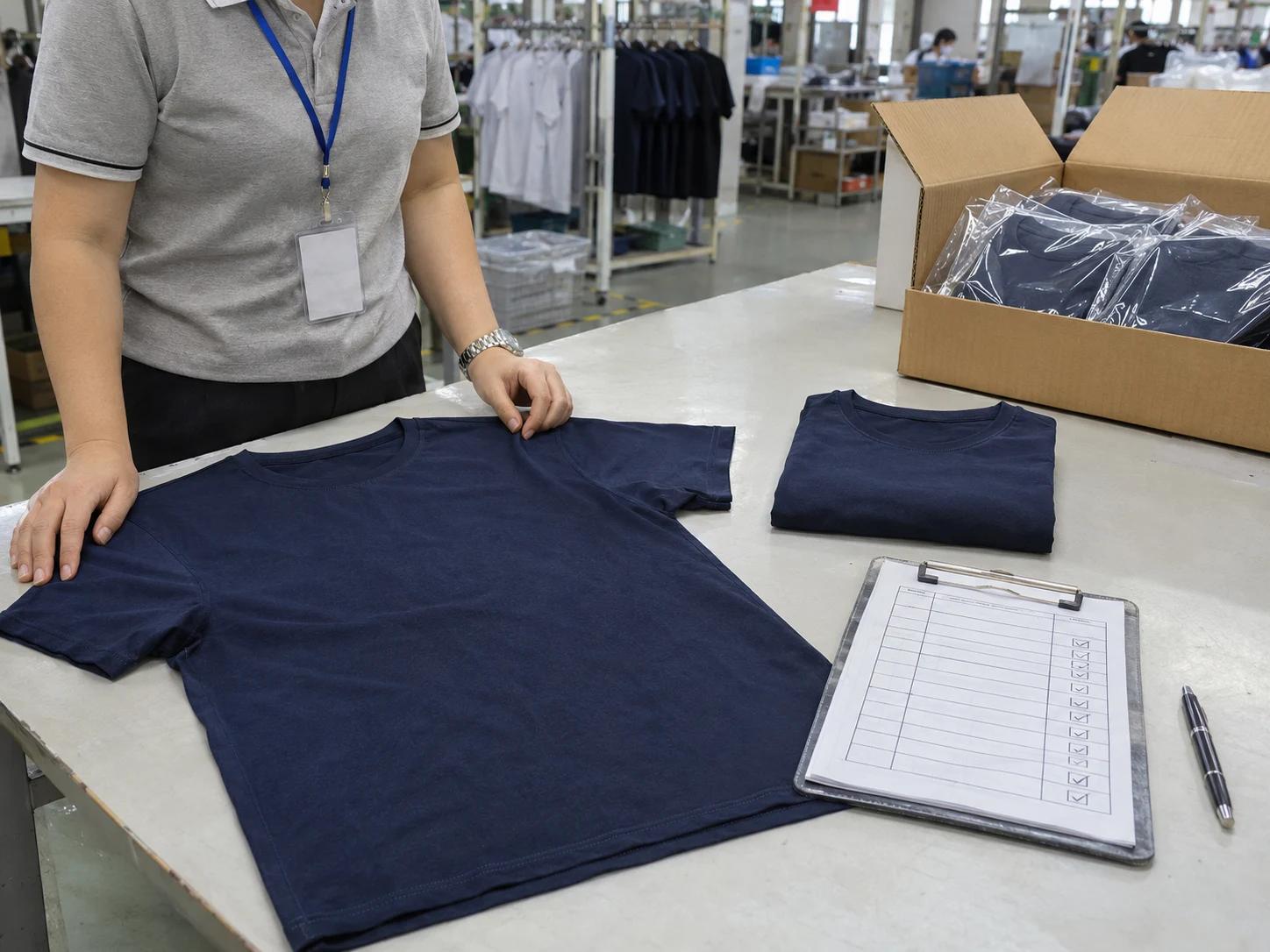
What should an apparel pre-shipment inspection cover?
Use this checklist for a finished clothing lot, such as an order of T-shirts or hoodies. Confirm the buyer's approved requirements and who can sign off before the inspection begins.
| Check | Acceptance reference | Evidence to keep | Action if different |
|---|---|---|---|
| Lot and documents | Current written approval and packing list | Lot quantity, cartons, sizes and document revisions | Pause affected checks and resolve the version or scope |
| Appearance and function | Approved sample, workmanship criteria and trim specifications | Defect locations, photos and function results | Separate affected goods and trace the issue |
| Finished dimensions | Approved measurement method, size chart and tolerances | Actual readings by size and carton | Remeasure, then expand checks if the pattern repeats |
| Labels and packout | Approved label files, SKU mapping and carton plan | Item-to-label matches, pack ratios and carton counts | Trace related cartons and verify the corrected packout |
| Shipment release | Agreed acceptance criteria and any required buyer approval | Inspection and reinspection results, final packing list and release decision | Hold the affected lot until the required evidence and approvals are in place |
When is the lot ready for final inspection?
KAOUYOU normally schedules its final self-inspection after finishing, pressing, tagging and packing have brought the lot to shipment readiness. For a buyer-appointed third-party inspection, production should be substantially complete, the main packing work finished, and styles, colors and sizes identifiable against the packing list so the inspector can select samples.
Bring the order, approved final sample, measurement chart, color and material references, workmanship instructions, packing instructions and packing list together. If the versions conflict, KAOUYOU pauses the affected check while the account team verifies the latest written buyer approval. The team seeks written clarification when the approved version is still unclear.
Define the lot by style, color, size, production batch and carton range. For a split shipment, record the quantity inspected and the goods outside the inspection scope. Use the agreed acceptance quality limit (AQL) sampling requirements when specified. Otherwise KAOUYOU selects cartons and garments randomly according to order quantity and its internal AQL procedure. See the garment AQL inspection guide for sampling terminology.
QC records carton numbers and samples from different positions in the stack. Where the initial selection misses a high-risk color, a special size, late units or a separate production batch, QC can add targeted checks. Keep those additional checks traceable and retain every finding from the original sample.
How are workmanship and measurements checked?
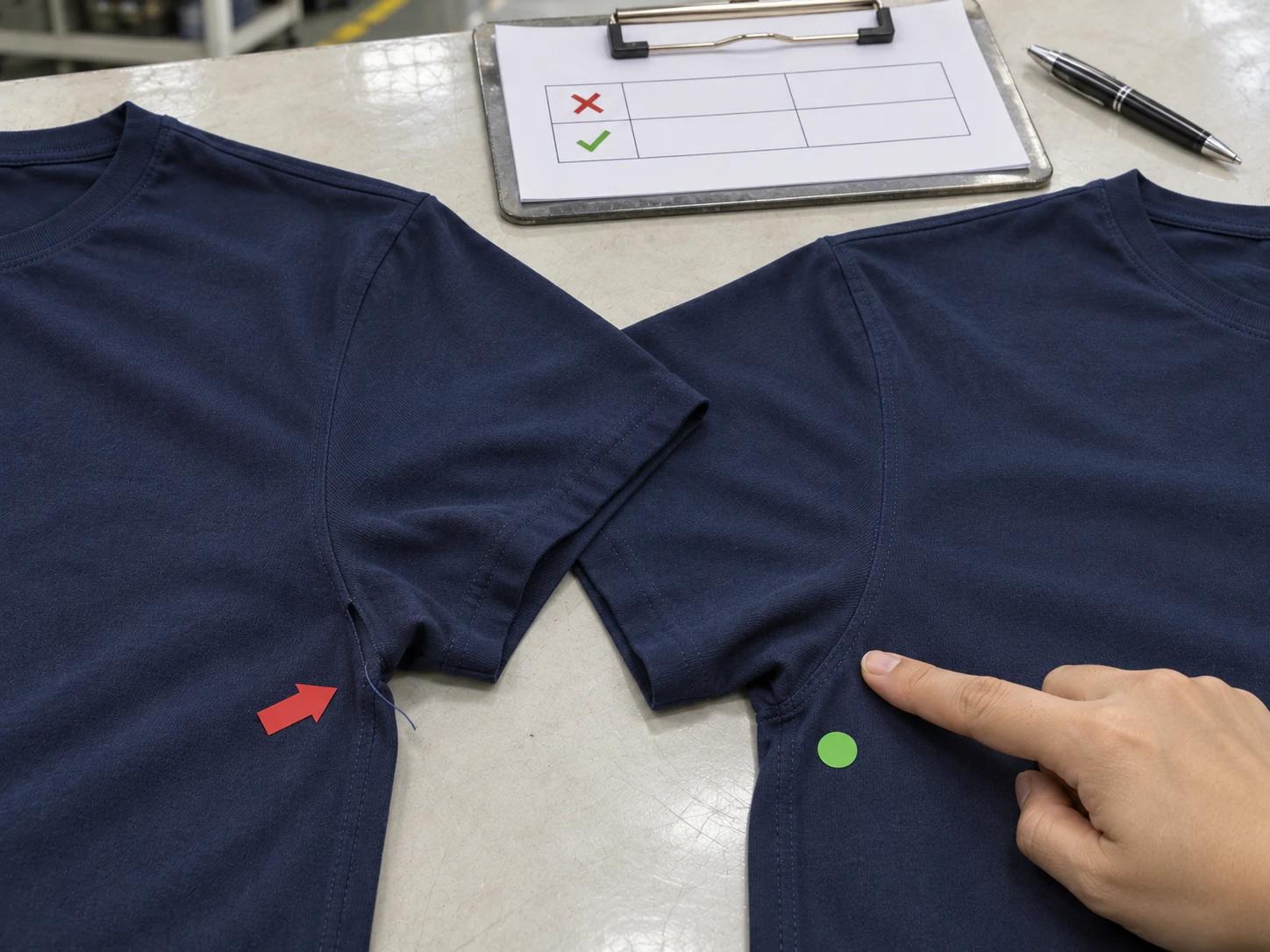
Inspect the overall garment, then work through the collar, shoulder seams, armholes, cuffs, sides and hem. On hoodies, check the hood, drawcord exits, ribbing and pocket corners. Turn the garment over or inside out where needed. Underarm skipped stitches, broken thread and weak reinforcement can be difficult to see from the front.
Compare the placement, size and finish of prints or embroidery with the approved sample. Check zipper, snap and drawcord operation as applicable. Review wash variation, deliberate raw edges or cracked graphics against the approved physical reference and written limits. Escalate a shade outside the agreed range, an unreadable graphic or an edge that continues to unravel.
Measure using the approved chart and the same garment setup each time. Confirm the start and end points, whether the garment is stretched, and how closures are set. For washed styles, KAOUYOU typically measures the finished garment after washing, drying, pressing and resting, according to the approved requirements.
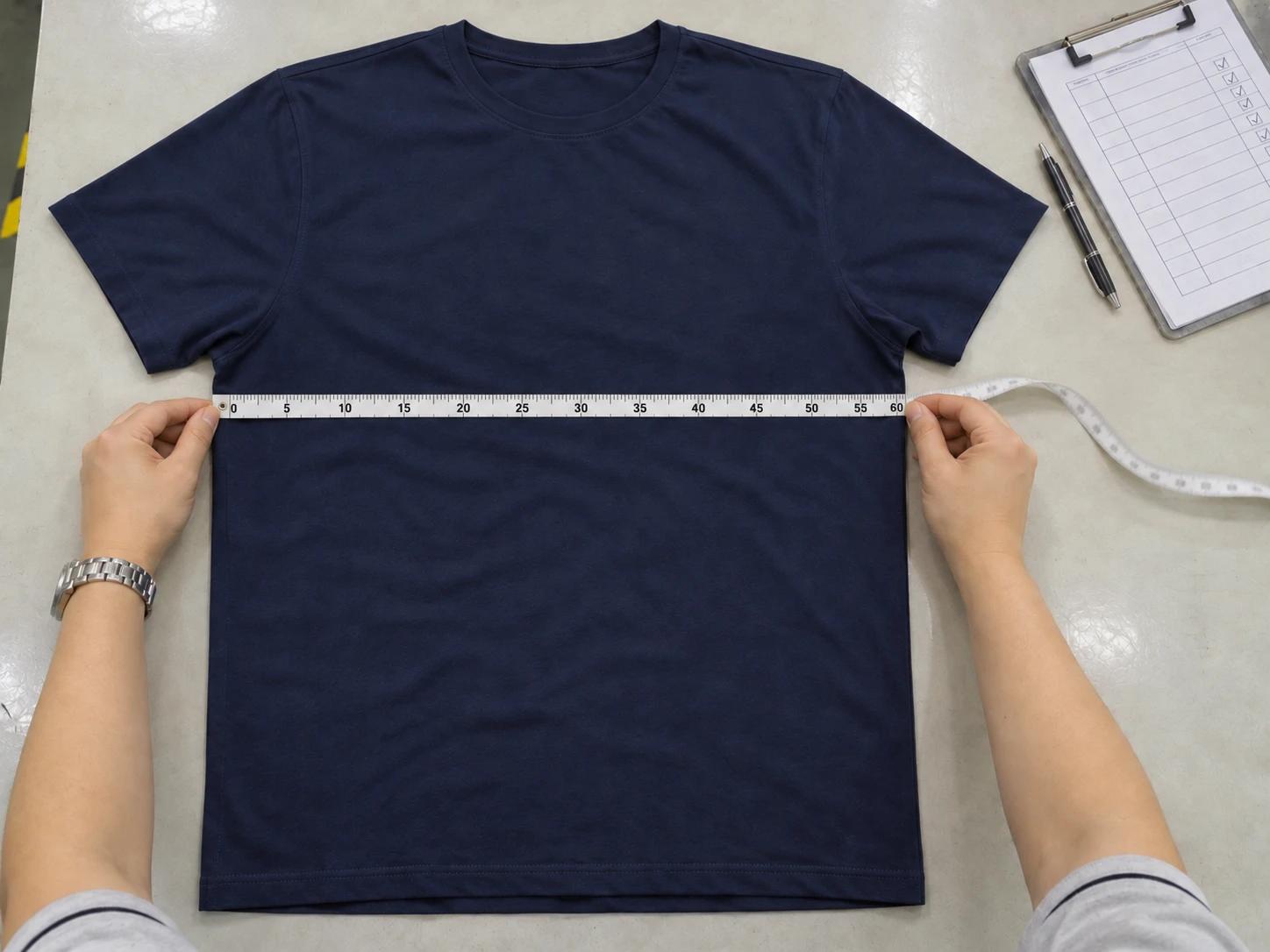
If a reading is out of tolerance, check the method and garment condition and measure again. Isolate confirmed exceptions. When one size repeatedly runs large or small, expand the check to related bundles, workstations, cartons or batches to see whether the issue is isolated or tied to pattern, cutting, sewing or washing. The clothing quality control checklist covers checks earlier in production.
How do you verify labels, cartons and quantities?
Match sewn-in labels to the approved artwork and order information. Compare hangtags, bag stickers and barcodes with the buyer's packing instructions and barcode file. Check that the barcode number maps to the style, color and size inside the bag, and check scan readability when needed.
For single-size cartons, verify style, color, size and unit count. For mixed-size cartons, count each size and check the total. Compare the carton marks, numbers, dimensions, weight and sealing with the relevant packing instructions and packing list. If the pack ratio is wrong, check adjacent cartons and goods packed at the same station or during the same run. KAOUYOU has a second person check corrections when the contents, carton marks and packing list disagree.
After opening a carton, record its number, the reason for opening and the units removed and returned. Recheck the contents and packaging before resealing. Update the final packing list if the packout changed. See the apparel packaging checklist for the detailed packout brief.
What should the report show before shipment release?
- Order, style, inspection date and location, quantity completed, lot covered, sample size and sampling basis.
- Colors and sizes checked, appearance and dimensions, function checks, packaging results and relevant photos.
- Defect type and location, classification under the agreed criteria, affected quantity and traceable style, size and carton information.
- Corrections, reinspection scope and results, final conclusion and any written approval for a specific deviation.
At KAOUYOU, QC identifies and isolates affected pieces or cartons. The factory manager or production lead determines the hold and rework scope. QC checks the original issue after rework and widens the check if the defect may recur elsewhere in the lot. KAOUYOU arranges another AQL inspection when extensive rework, a major functional issue or a failed initial AQL inspection warrants it. A buyer-appointed third-party reinspection follows the buyer's requirements.
QC confirms the reinspection result. The factory manager or production lead confirms shipment readiness. For buyer-appointed inspections, review the third-party report and the buyer's release decision. If the buyer accepts a deviation, keep that written approval with the record for the specific goods.
KAOUYOU case: measuring again before releasing a held lot
A random carton check found garments outside the approved measurement tolerance. The readings clustered in several cartons. QC marked and isolated those cartons, then checked neighboring cartons and garments of the same size to establish the scope.
Goods that could be corrected by pressing were pressed again and remeasured. Pieces still outside tolerance went to rework. Where label issues were found, the affected pieces were unpacked, relabeled and repacked. QC broadened the measurement check and repeated AQL checks covering appearance, dimensions and packaging. The release decision relied on the reinspection record, before-and-after photos, updated carton information and the repeat AQL result.
Frequently asked questions
Does a passed inspection cover the next shipment under the same order?
KAOUYOU records the quantity and lot covered by the report. A later delivery has its own scope, even when it shares the purchase order.
Can a zipper function check replace a formal test report?
A final inspection can record whether the zipper operates on the sampled garment. If the buyer requires formal pull-strength or performance results, arrange the separate test and review its report before release.
Can a buyer accept a small deviation in writing?
For a deviation the buyer is willing to accept, KAOUYOU records the written decision against the affected style, color, size, lot, quantity and specific deviation. The approval applies to the goods it identifies.