01
Base and contrast materials
Compare tan and olive swatches for hand, thickness and compatible care behavior.
Custom Menswear Manufacturing / OEM & ODM / Worldwide Delivery
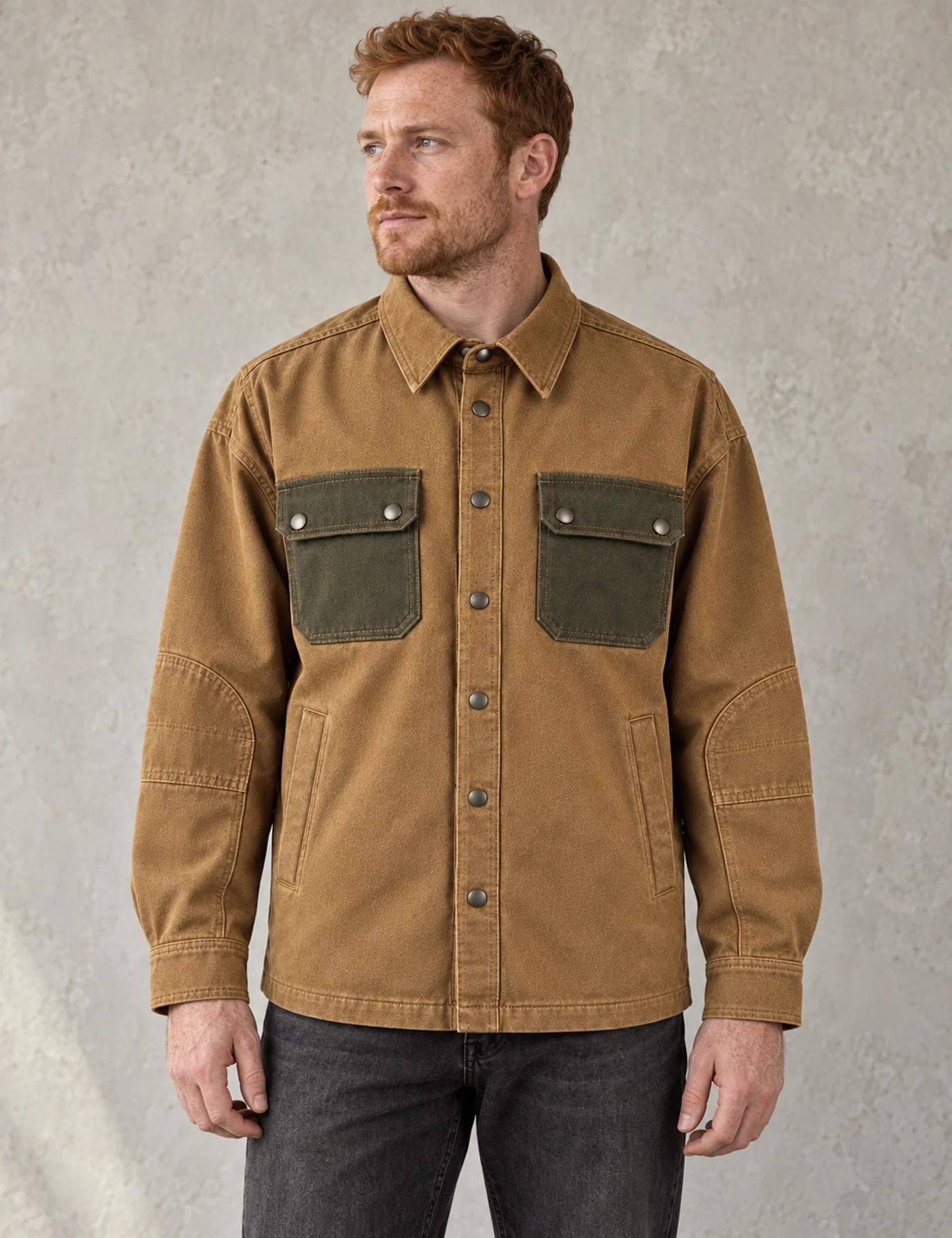
PK-112 / Actual sample reference
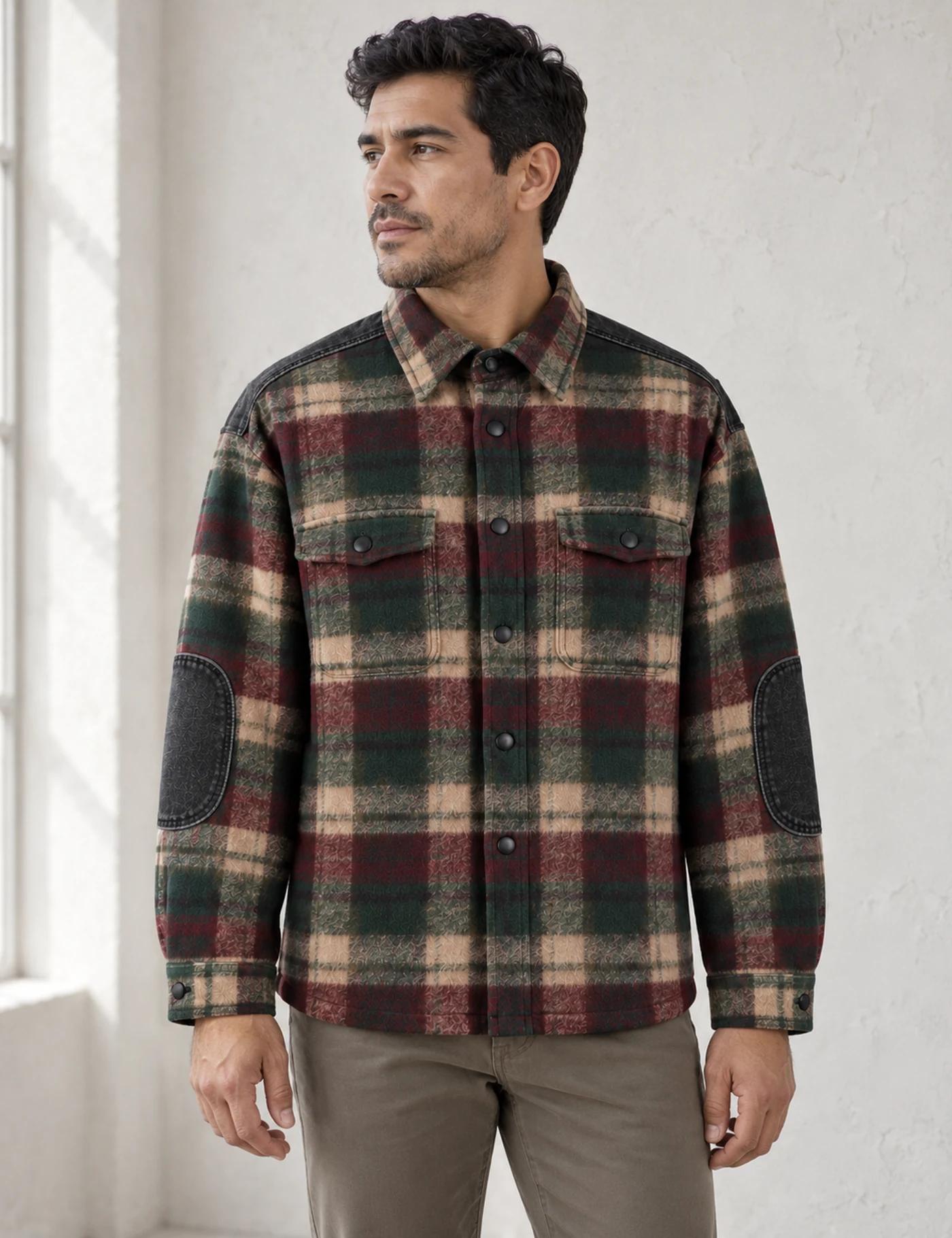
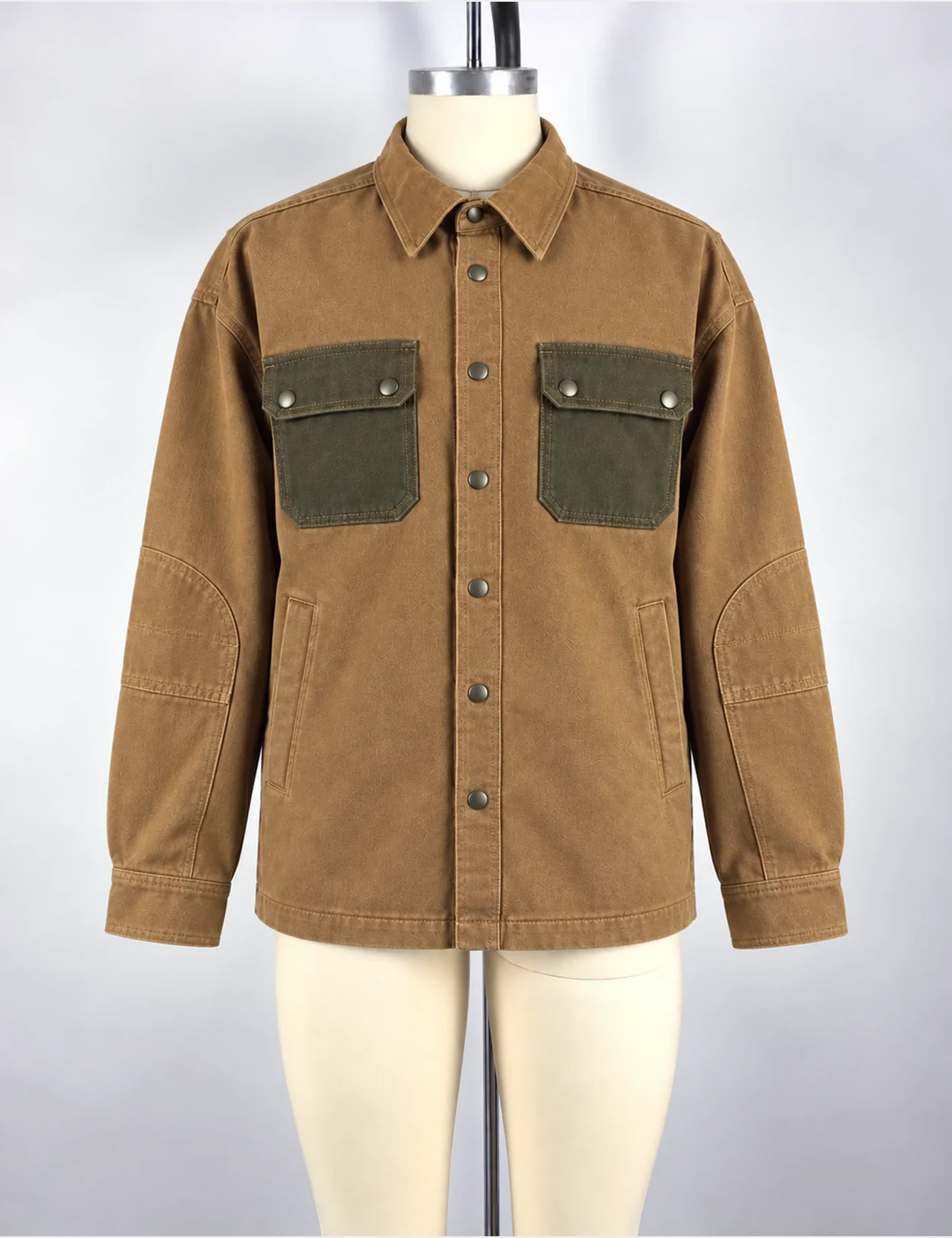
Olive chest pockets contrast with the tan body of this snap-front overshirt. Curved elbow panels, lower welt pockets and a rear yoke add workwear structure without changing the straight, relaxed outline. Material selection should support the pocket weight and layering fit; composition and finished weight remain to be confirmed.
01
Actual sample shown
02
Custom development
03
Sample approval before bulk
04
Project-specific quotation
Actual sample evidence
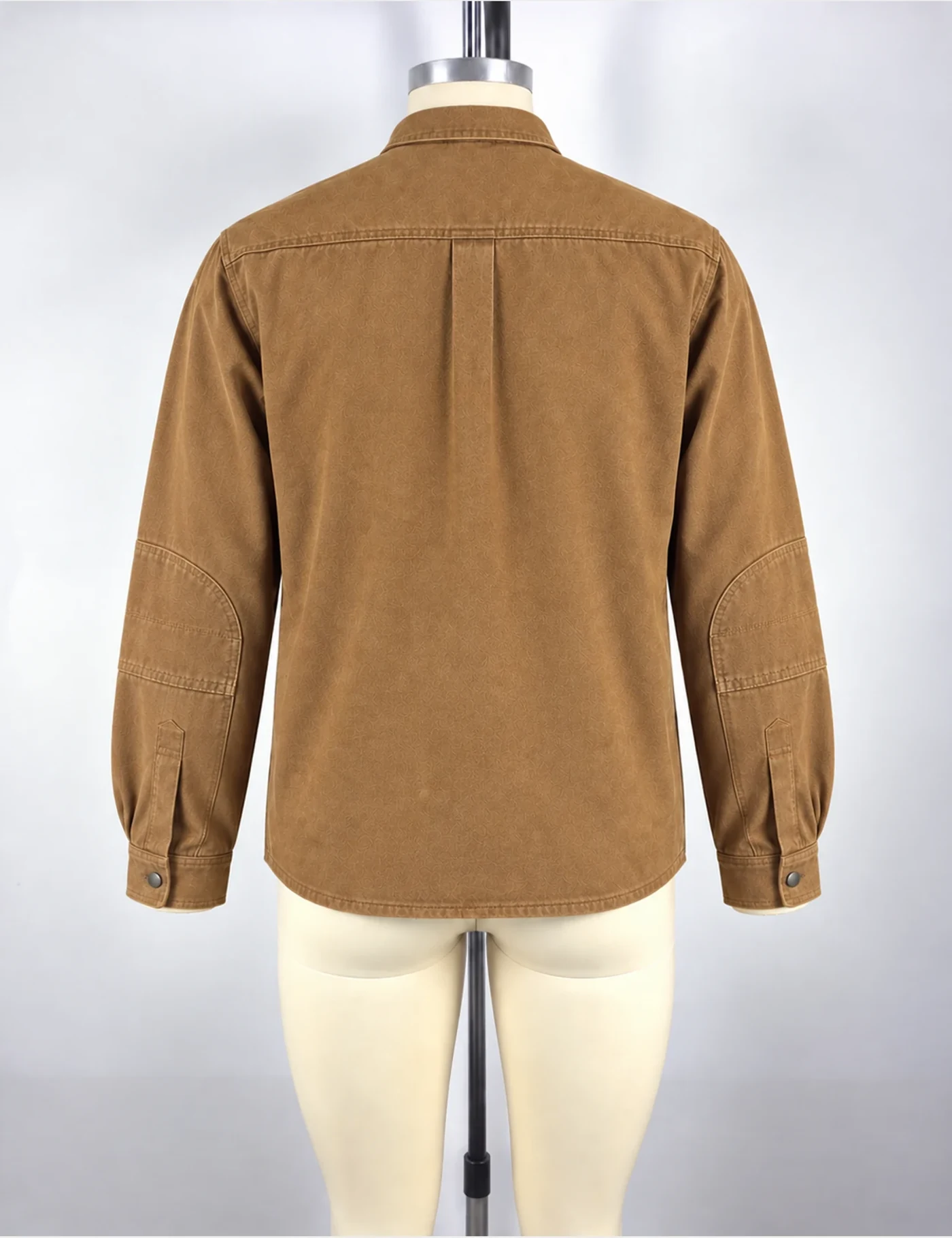
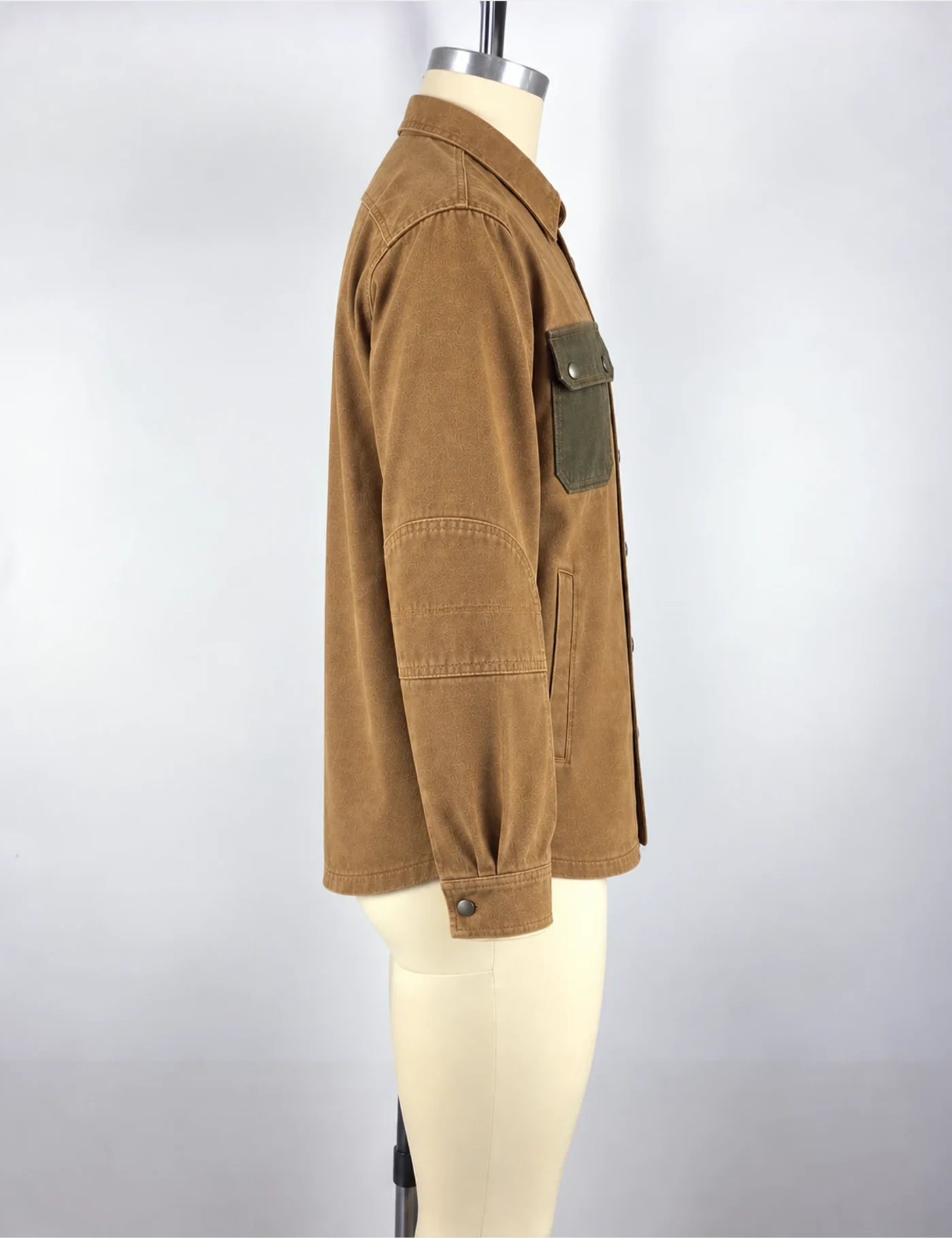
These views document the tan-and-olive layout and snap hardware. Material content and surface-production method still need physical confirmation.
Visible on the sample
Confirmed for your project
Customization map
The contrast pockets and elbow panels add layers, so fabric pairing and snap support should be solved together.
01
Compare tan and olive swatches for hand, thickness and compatible care behavior.
02
Set pocket dimensions and the two-snap flap spacing using the intended contents and appearance brief.
03
Position curved reinforcement pieces against the bent-arm fit, with seam bulk reviewed.
04
Approve cap finish, attachment support and opening force on the actual fabric layers.
05
Develop welt length, pocket-bag depth and reinforcement without distorting the front.
06
Adjust chest and upper-arm ease around the buyer's intended base layer.
Specification status
The visual reference does not establish a protective-workwear rating or a fixed fabric weight.
Related product references
Development path
Early attachment trials reduce revisions caused by thick pocket flaps or unsupported snap positions.
Mark chest flaps, lower welts and elbow panels on a technical drawing.
Test the tan body and olive pocket cloth together for shrinkage, shade and thickness.
Check hardware installation through the intended layer stack before making the full sample.
Fit over a base layer and bend the arms to assess elbow placement and shoulder mobility.
Approve pocket symmetry, panel positions, snap security and finished measurements.
Quality checkpoints
Check the geometry flat and worn, including the elbow positions and rear pleat.
Measure olive pockets and flap snaps from center front and the shoulder reference.
Test holding and opening behavior on the approved layer stack.
Compare panel location on both sleeves and through bent-arm movement.
Inspect opening ends, bag attachment and front-panel puckering.
Check shrinkage differences and color transfer between tan and olive areas.
Inspect yoke seams, center pleat and hem level on the worn garment.
Buyer questions
No. The pictures show a structured tan woven direction, but they do not establish cotton content or fabric weight. Those claims require the selected swatch specification.
They are visible workwear-style construction details. Any protective or occupational requirement needs a separate specification and relevant testing.
Yes. A tonal version can be sampled while retaining the two-snap flaps and pocket layout. Check the replacement material for shrinkage and hardware support.
Fit the sample over the layer the buyer expects customers to wear underneath, then approve chest, shoulder and upper-arm allowance with the size chart.
Continue the evaluation
Custom development / PK-112
Send body and pocket colors, material references, hardware preferences and layering measurements to begin sampling.