01
Plaid repeat
Choose check size and specify the center-front reference line before cutting.
Custom Menswear Manufacturing / OEM & ODM / Worldwide Delivery
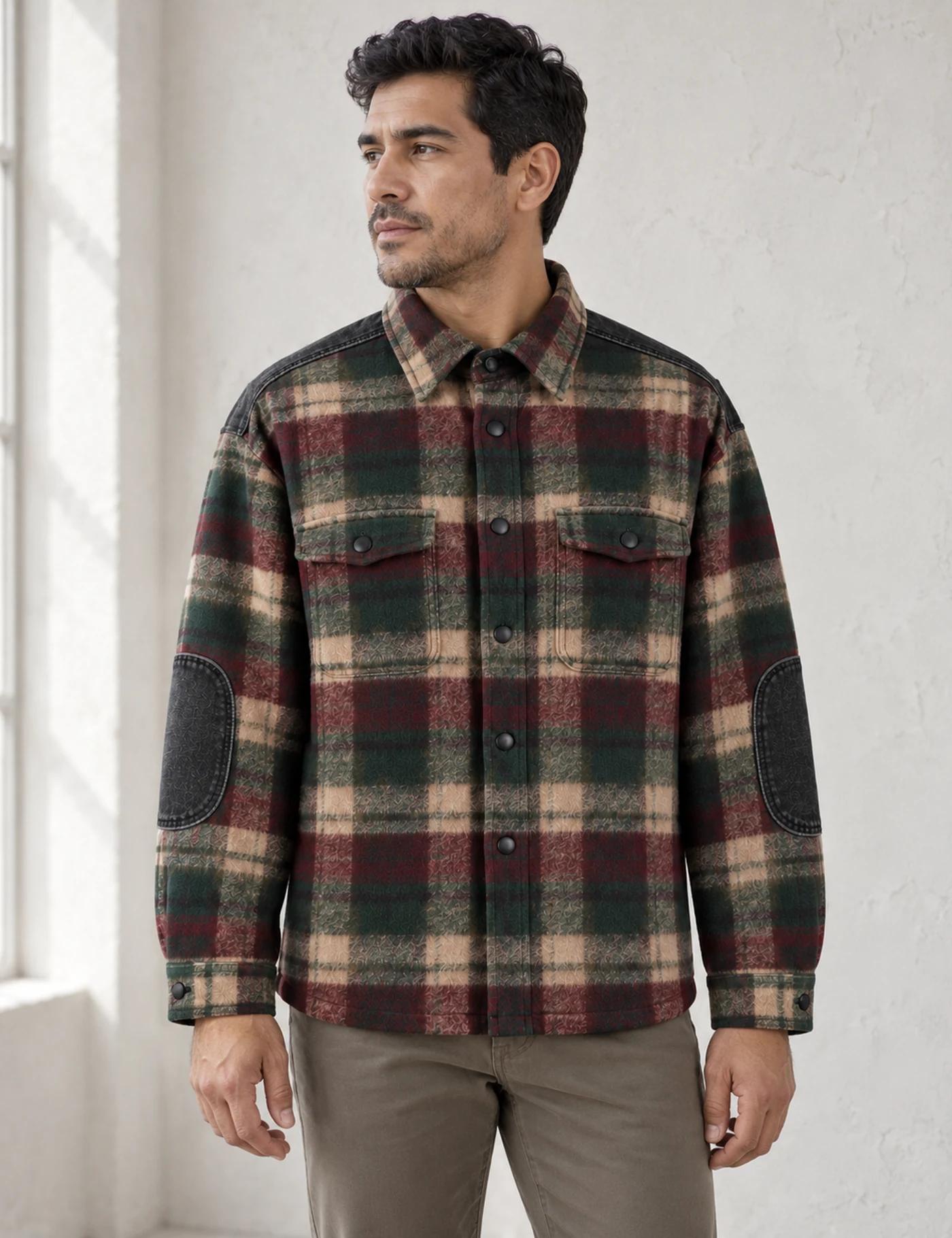
PK-113 / Actual sample reference
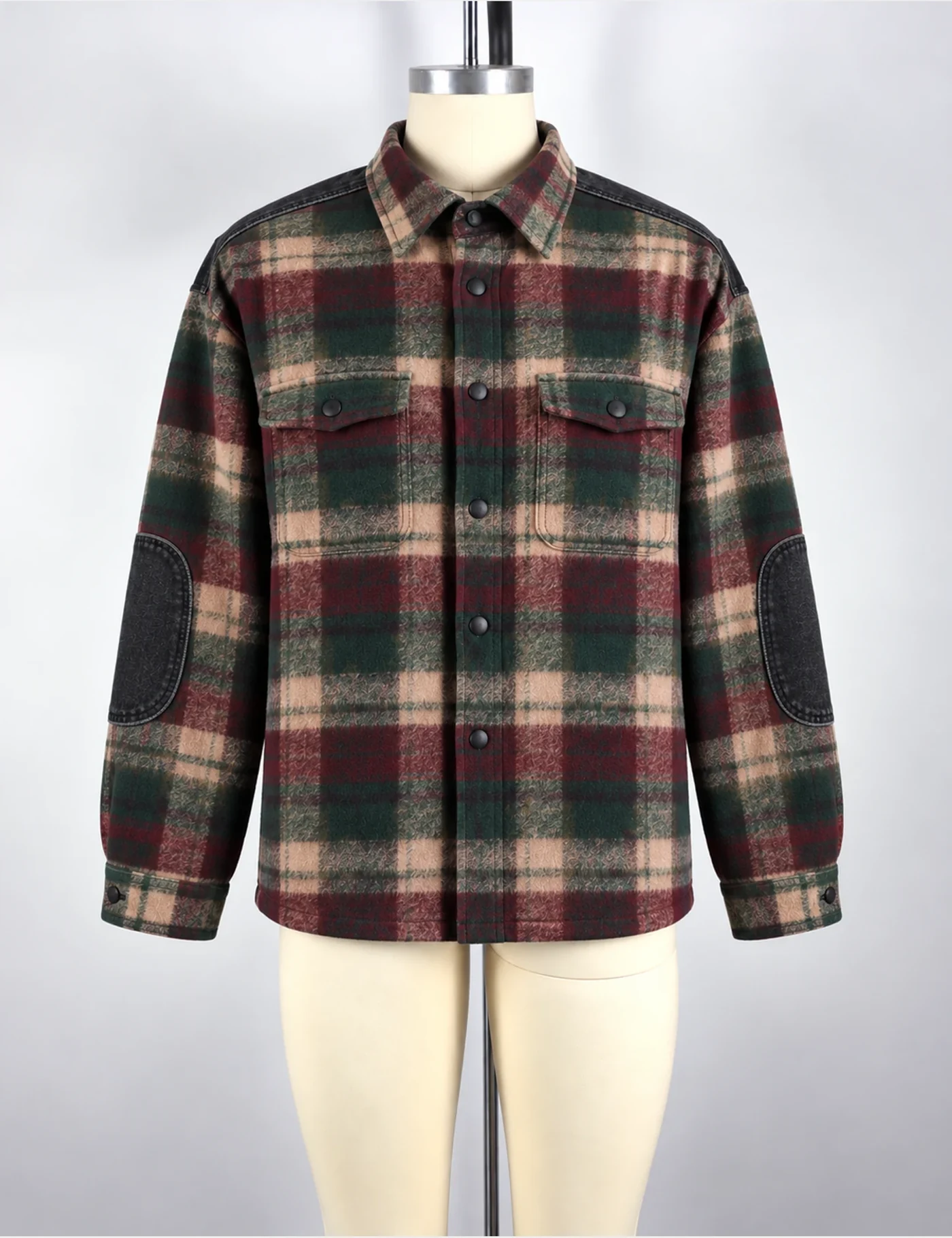
Green, burgundy and cream checks cover this collared overshirt, interrupted by a black shoulder yoke and oval elbow patches. Two snap-flap chest pockets and snap cuffs complete the shirt-style construction. Check alignment and the compatibility of the plaid and black materials should guide sampling before thickness or fiber claims are made.
01
Actual sample shown
02
Custom development
03
Sample approval before bulk
04
Project-specific quotation
Actual sample evidence
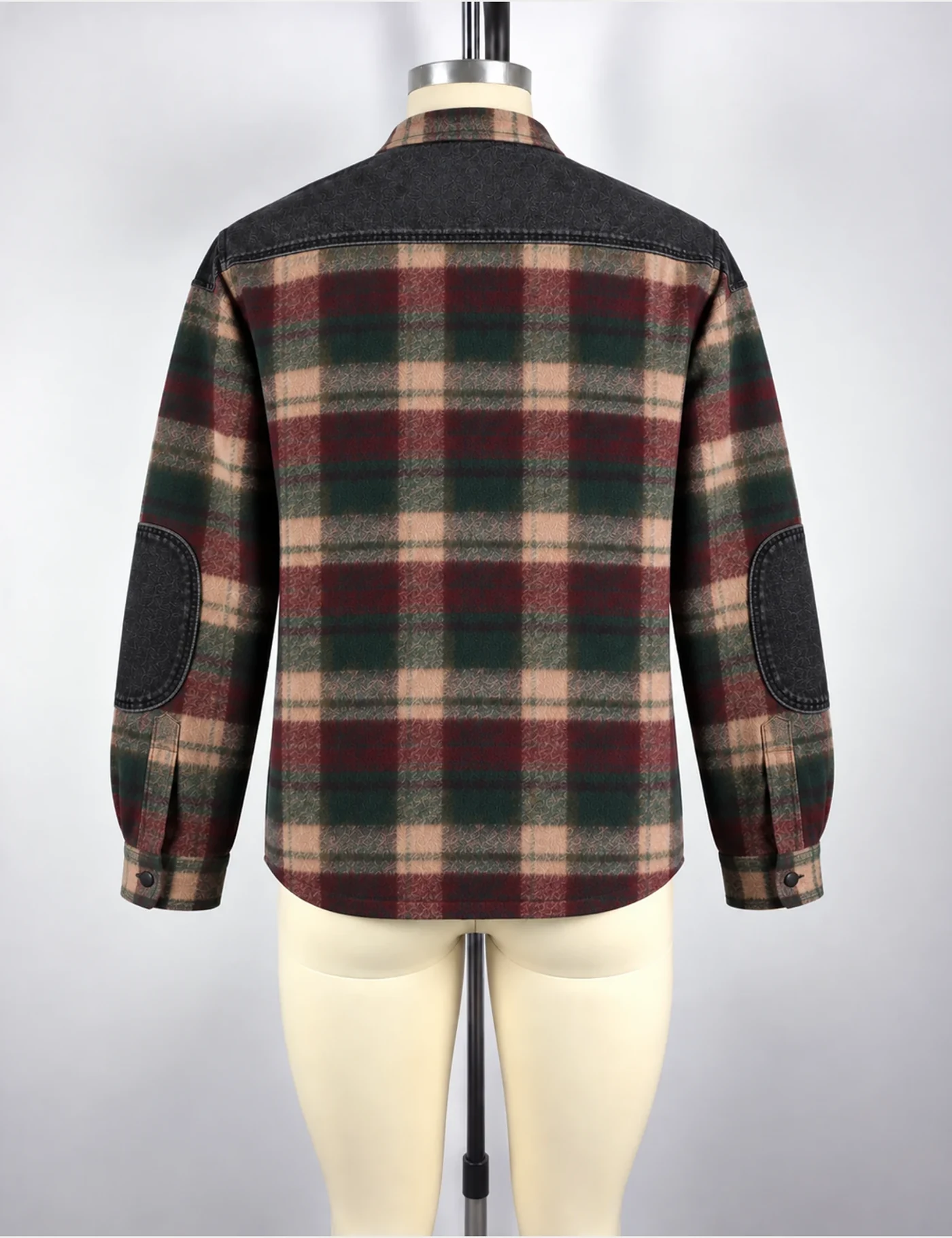
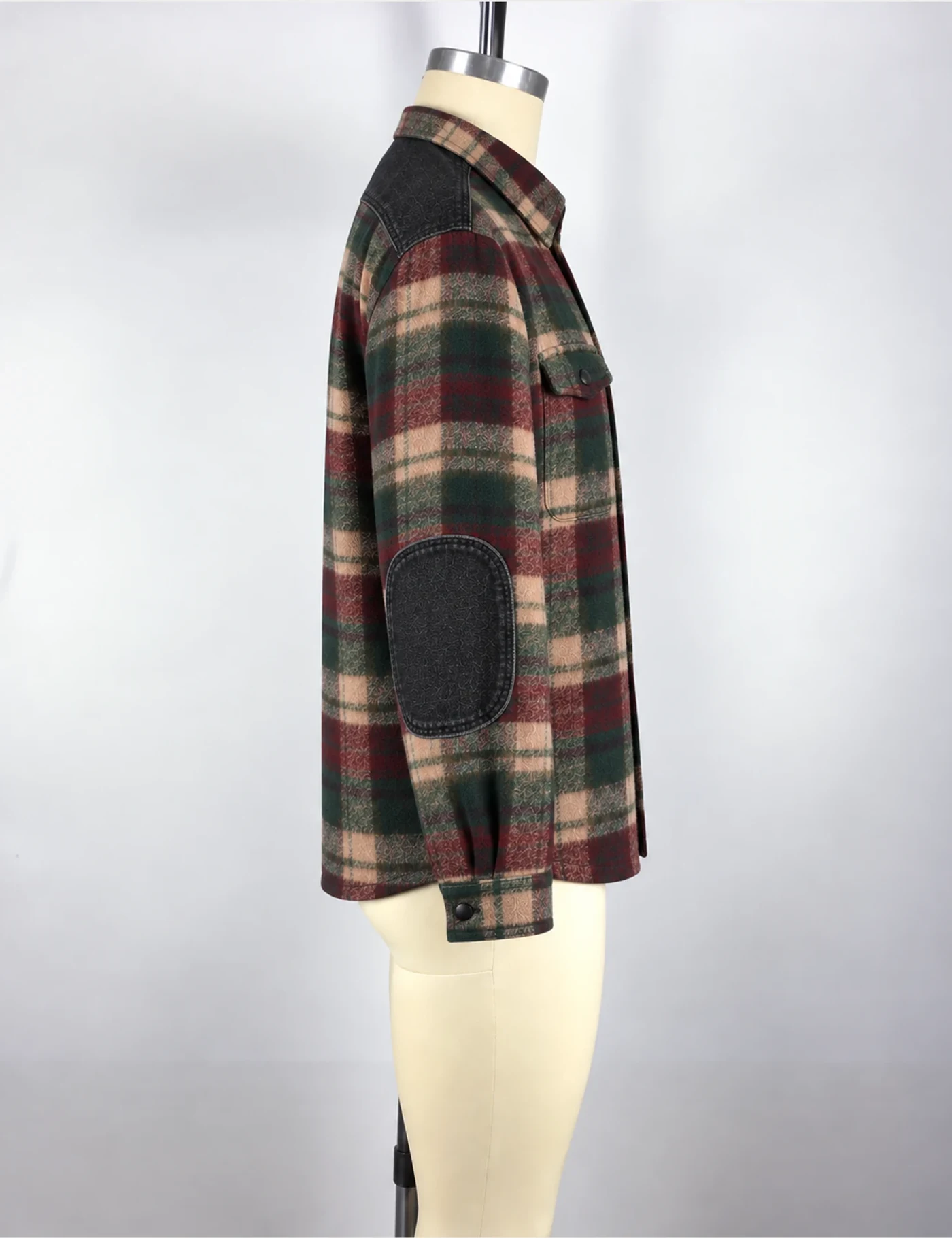
The side view reveals oval elbow patches; the rear view shows the full black yoke. Together they establish more than a front-only plaid shirt reference.
Visible on the sample
Confirmed for your project
Customization map
A cutting map helps coordinate pockets, front opening and sleeves before adding the contrast patches.
01
Choose check size and specify the center-front reference line before cutting.
02
Review contrast material hand and thickness at the shoulder seam.
03
Set oval dimensions and position from the bent-arm elbow point.
04
Agree which check lines should continue across pocket flaps and patch pockets.
05
Coordinate dark snap caps with the plaid palette and contrast panels.
06
Select thickness and any lining requirement from a physical material brief rather than the exterior image.
Specification status
Avoid inferring wool content, thickness or hidden lining from the exterior photographs.
Related product references
Development path
Approve repeat orientation and material compatibility first, then position the elbow patches on a worn sleeve.
Mark repeat orientation and matching priorities on the front, pockets and sleeves.
Review plaid and black materials after the intended care process for shrinkage and color transfer.
Fit an initial sleeve with oval elbow patches before approving their graded position.
Check the yoke, pockets and snap front on a worn sample over the intended underlayer.
Record check-matching tolerances, patch attachment and finished garment measurements.
Quality checkpoints
These are the main appearance risks when plaid and solid contrast materials are joined.
Compare horizontal lines across the snapped front at the agreed reference bands.
Inspect matching at flaps and pocket edges using the approved priority map.
Look for shrinkage distortion or color migration around the black yoke and patches.
Compare oval shape, stitch security and left-right placement.
Check attachment, opening behavior and cuff alignment.
Review plaid texture, seam pressing and post-care body balance.
Buyer questions
No fiber composition is established from the photographs. A brushed or textured plaid material can be developed, with its composition and weight approved from physical swatches.
Yes. Replacement colors or materials need compatibility testing with the plaid cloth, particularly for shrinkage, color migration and seam bulk.
Define priorities before cutting. Center front and chest pockets are usually important visual points, while shaped joins may need agreed placement tolerances.
No. Exterior views do not establish the inside construction. A lined version requires a separate lining and seam specification.
Continue the evaluation
Custom development / PK-113
Share check colors and scale, contrast materials and your fit brief to establish the sample specification.