Answer in 30 Seconds
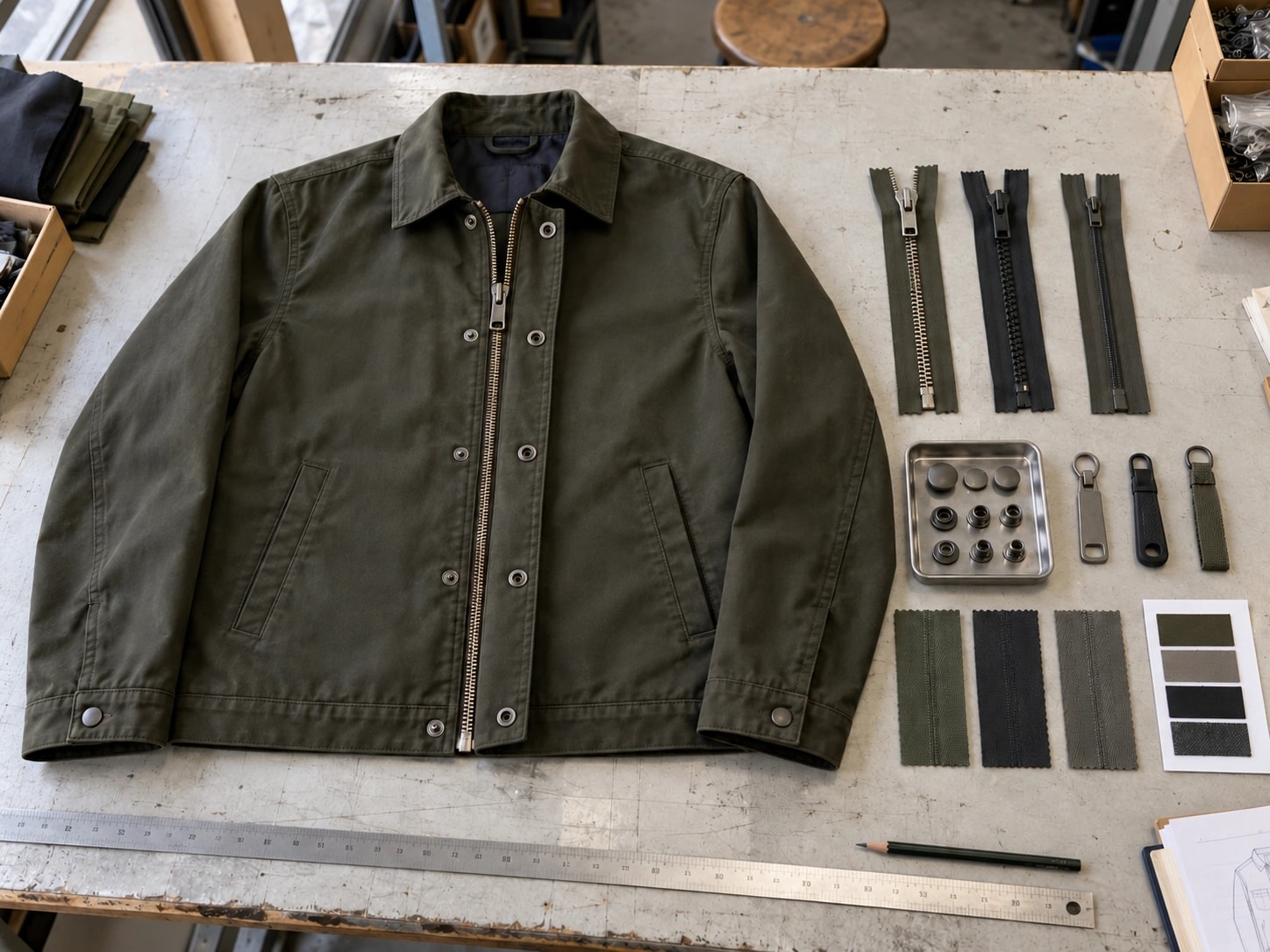
Before sampling a jacket, specify the zipper construction, size, opening type, installation length, tape color, slider and puller. For snaps and other hardware, confirm the complete component set, finish, placement and suitability for the actual fabric layers. Approve how the closures work on the finished jacket, including any garment wash, rather than approving their appearance alone.
At KAOUYOU, a reference image can start the discussion. The team recommends options according to shell thickness, jacket weight, style, closure position, washing and budget. SBS is commonly sourced, while some customers request YKK. A requested brand still needs an exact product specification and an approved installation.
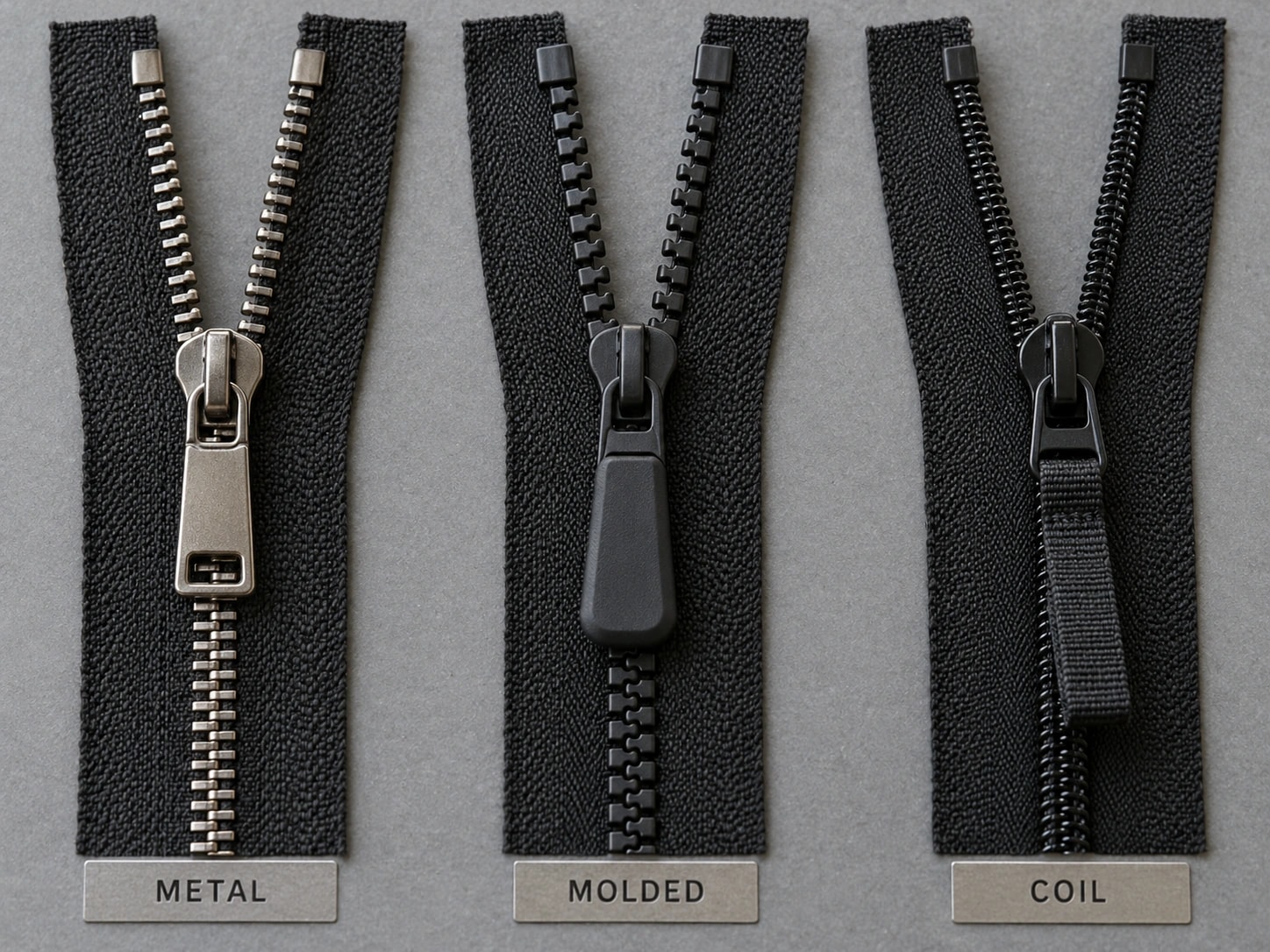
Which zipper type suits the jacket?
A jacket's main front closure and pocket closures do different jobs. The main zipper needs to suit the garment's weight, opening and front construction. Pocket zippers may be smaller and closed-end, with less space for a large slider or puller.
| Zipper construction | Where KAOUYOU commonly considers it | What the buyer should check |
|---|---|---|
| Metal teeth | Denim, bomber, workwear and vintage jacket directions | Weight, visual finish, oxidation, scratching and compatibility with the intended wash |
| Molded plastic teeth | Sport-oriented jackets, padded outerwear and styles with a pronounced tooth appearance | Tooth scale, garment weight, slider operation and suitability for processing |
| Coil, often called nylon zipper | Lightweight jackets, pockets and discreet closure directions | Flexibility, appearance, installation and any separately specified protective finish |
The type is a starting point, not a complete purchase instruction. A heavier-looking zipper can pull on a lightweight front, while a small closure may be unsuitable for the load and proportions of a substantial jacket. Match the actual component to the material and use position.
For an existing zip-front design direction, the beige washed zip coach jacket shows how the front closure contributes to the overall appearance. The project still needs its own zipper, shell and finished-garment approval. Other outerwear directions are available in the jackets and outerwear collection.
How should zipper size and length be specified?
In KAOUYOU's jacket development, No.5 is a common main-front starting point. No.3 may be considered for a lighter jacket or pocket, while No.8 or a larger specification may be considered for heavier outerwear or a deliberately substantial appearance. These are examples of common selection directions, not mandatory sizes for those garment categories.
The choice also considers front length, garment weight and frequency of use. Record the supplier's exact zipper series and size designation; the number alone does not establish every component dimension or a performance result.
Length follows the pattern's installation line and the top and bottom placement. It should not be calculated from overall garment length alone. Collar construction, hem treatment, stops and seam allowances all affect where the zipper begins and ends.
When jacket length changes across sizes, the main zipper may need corresponding lengths. Adjacent sizes can share a length only if the pattern allows it and the final positions remain acceptable. At KAOUYOU, the pattern maker checks this after grading. Sharing components should not leave the collar, hem or pocket relationships misaligned. The clothing size grading guide explains the wider approval step.
Should the jacket use a one-way or two-way separating zipper?
A one-way separating zipper is KAOUYOU's common choice for an ordinary full-opening jacket. A two-way separating zipper can release the lower front while leaving the upper part closed, which may suit a longer, closer-fitting or seated-use design.
That benefit needs to work with the garment. Check insertion, separation, the cooperation of both sliders and the ease of operation. If the pin is not fully seated, forcing the zipper is not a useful way to judge its operation. The sample review should establish whether the chosen system is appropriate for the buyer's intended use.
The washed two-tone raglan bomber jacket is a two-way front-zip design reference. Its hardware, rib, shell and lining still need to be reviewed as one jacket system; the bomber lining guide covers the inside-construction decisions separately.
What should be confirmed for snaps and other fasteners?
Not every jacket button is a snap. KAOUYOU works with snap fasteners, jeans-style buttons, magnetic closures, toggles, resin buttons and conventional sew-on buttons according to the style. Specify the intended closure function first, then the visible design.
For a snap, confirm cap diameter, material, finish, logo, opening force and the matching backing components. Similar-looking fronts can require different components and installation dies. A photograph of the cap is not enough to purchase an interchangeable complete set.
A snap-front varsity jacket also needs the closure to suit the front's complete material stack. Test attachment on the actual shell, facing and reinforcement layers rather than a single unrelated fabric piece.
At KAOUYOU, thin, easily damaged or frequently operated locations may need interfacing, backing fabric or local reinforcement. Too small a reinforced area can concentrate force at the snap edge; too much bulk can prevent a sound attachment. The appropriate backing and post depend on the actual fastener and foundation.
This is also a supplier-specific technical decision. YKK's snap and button attachment guide identifies uneven foundation thickness as a possible cause of attachment, fabric and opening/closing problems. Use the instructions for the selected component rather than applying one setting to every snap.
How should colors, finishes and custom pullers be approved?
Treat the tape, teeth, slider, puller and stops as separate specification fields when necessary. A fabric color match does not define a metal finish, and the same finish name can look different across suppliers, substrates and batches.
KAOUYOU offers color cards, supplier samples or physical zipper references for confirmation. For metal hardware, approve the intended sheen as well as the color direction: bright silver, matte silver, gunmetal and antique brass are not interchangeable descriptions. Pantone and screen images can communicate a direction, but a physical sample is more useful for reviewing a reflective surface.
Review the main zipper, pocket zippers, snaps, eyelets and adjusters together. Matching finish names alone does not ensure a coordinated set. Where appearance is particularly sensitive, KAOUYOU recommends coordinated sourcing and a physical hardware set or complete sample for approval. Retain the supplier references and approved samples so the bulk requirement remains identifiable.
For a custom logo puller, provide:
- Vector artwork, such as AI or a suitable vector PDF, with front and reverse views where needed.
- Finished dimensions, shape and intended connection to the slider.
- Material, metal color and surface finish.
- Whether the logo is raised, recessed, cut out or printed.
- Required quantity and use positions.
Custom tooling, sampling, finish development and supplier minimums can affect cost and procurement time. No fixed mold charge, minimum or additional lead time applies to every design. Confirm those items early, before a custom puller becomes a late dependency for the jacket sample. The fabric, trims and packaging service provides the related sourcing context.
Should hardware be installed before or after garment washing?
The sequence depends on the material, finish and intended effect. If the hardware should develop a worn appearance with the shell, installation before washing may be considered, provided the component and tape are suitable for that process. If the customer wants a clean finish, or the process risks oxidation, staining or surface damage, installation after washing may be considered instead.
Post-wash installation is not automatically easier. It can add sewing difficulty and affect front flatness. KAOUYOU confirms the sequence during sampling rather than changing it for the first time in bulk production.
For a washed style, check the complete jacket after the intended treatment. Risks include finish loss, corrosion, scratches, staining, tooth deformation and difficult slider operation. KAOUYOU may protect hardware, control processing and friction, and manage drying or moisture exposure as appropriate to the component. If it fails the required trial, replace or revise it before bulk production.
Any process settings must also respect the selected supplier's instructions. YKK's zipper usage manual gives product-specific care and processing precautions. A wash or drying route suitable for one zipper should not be carried over to a different protected or coated product without confirmation.
How does installation affect the finished jacket?
An acceptable loose zipper can still give an unsatisfactory garment. KAOUYOU encounters front waviness, unequal sides, misplaced stops, caught lining, uneven hems and mismatched seams or graphics after closing.
The team checks zipper length and matching points before sewing, controls fabric stretch during attachment and uses alignment references at the collar, chest, pockets and hem. The completed jacket is reviewed flat and hanging. Closing the zipper successfully is only one part of that review.
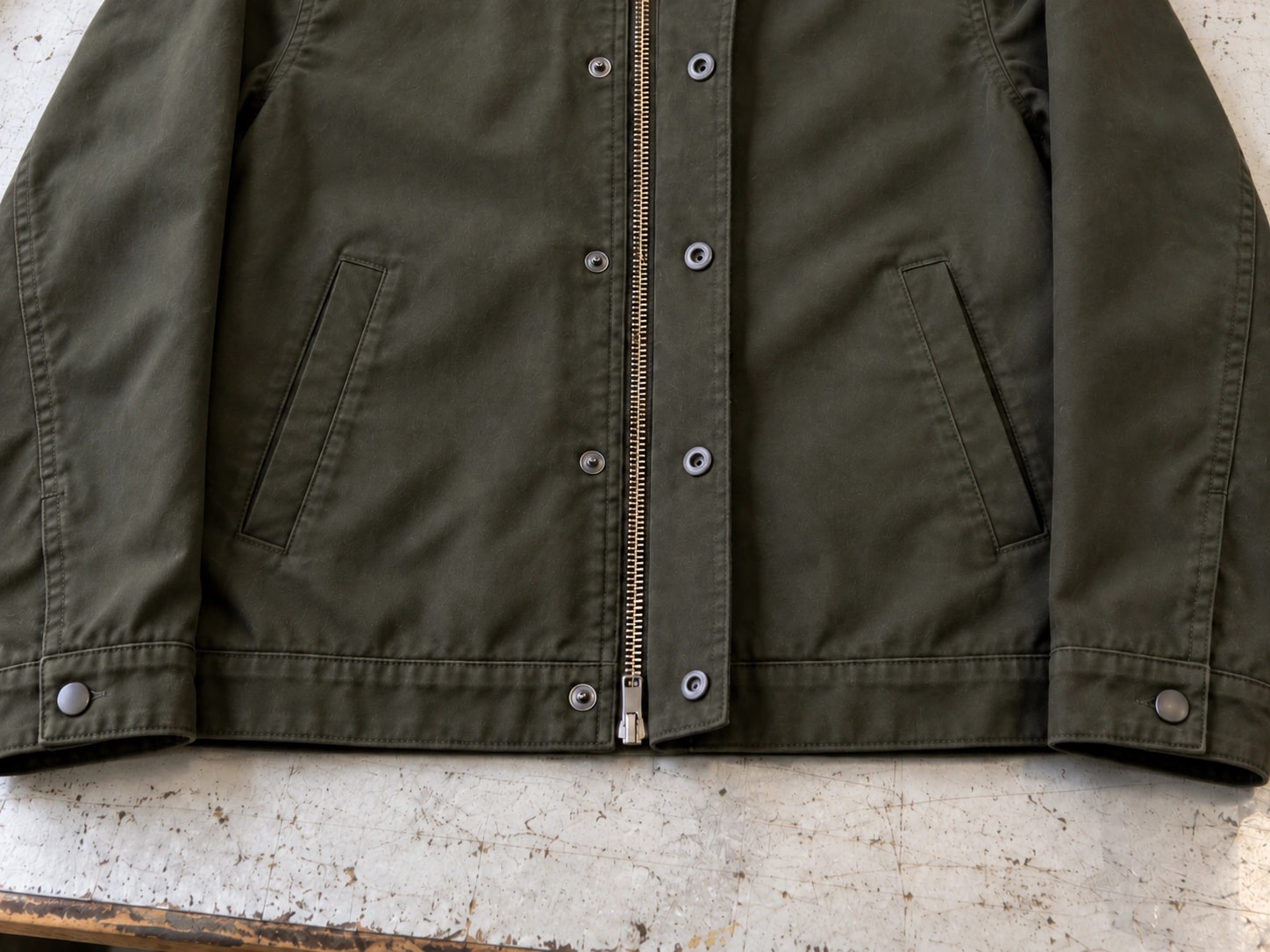
The sample checks also include rough edges, loose or rotating hardware, damage to the shell and the correct position and direction of any logo. A snap that opens should still be checked for suitability: excessive opening force can stress a light front, while insufficient retention may not meet the intended use.
What should the Tech Pack and approval record contain?
Use a separate item or reference for hardware that differs by use position, size, color or finish. A practical specification checklist is:
| Component | Information to record | Approval to connect to the record |
|---|---|---|
| Main zipper | Brand if required, supplier item, type, size, opening structure, length by garment size and placement | Physical zipper reference and completed front |
| Pocket zipper | Type, size, length, closed/open end as required, slider and puller | Pocket operation and finished position |
| Snap or button | Complete set, diameter, material, backing, attachment method and location | Actual garment-layer attachment |
| Visible hardware finish | Supplier finish/color reference, sheen and matching requirements | Approved physical hardware set and wash effect if applicable |
| Custom puller or logo part | Artwork version, dimensions, reverse, connection and finish | Approved component and garment installation |
| Processing and performance | Assembly/wash sequence and any agreed testing requirements | Processed sample and required reports |
KAOUYOU retains a final reference sample and uses the sample together with its internal specification records to control production. That reference should correspond to the approved component version and finished appearance rather than an earlier provisional development option.
Before sending a sample, the team checks repeated opening and closing, separating-zipper insertion, both sliders where applicable, front alignment, snap action, surface finish and loose or sharp parts. These are practical functional checks. If the customer or product requirement calls for formal force data, agree the test and arrange the appropriate testing or third-party report. Do not describe an informal hand check as a measured pull test.
The quality-control service explains the wider inspection context. For the difference between development and production approval, see the prototype and pre-production sample guide.
Frequently Asked Questions
Does choosing YKK remove the need for sample checks?
No. A specified brand does not define the exact series, size, finish, length, attachment or processing suitability. Approve the selected item on the complete jacket. KAOUYOU also commonly sources SBS when the customer's specification allows it.
Is a reversed coil zipper waterproof?
Not by appearance or construction name alone. A reversed installation is not a waterproof performance specification. Even YKK describes its AquaGuard product as water-repellent rather than waterproof in its usage manual. Agree any protective requirement separately for the zipper and finished jacket.
Can a similar-looking snap be substituted in bulk?
Do not treat appearance as proof of equivalence. The backing components, tooling, foundation thickness, opening behavior and finish can differ. Review and approve any proposed replacement against the actual garment requirements before using it.
What if the sample uses a provisional puller or hardware color?
Identify the provisional item in the approval comments and confirm the outstanding final component and its installation. An unresolved color, custom logo or puller connection should not silently become the bulk standard.
Prepare your jacket hardware brief
Send the jacket drawing or reference, shell and lining direction, closure locations, preferred zipper brand if any, opening structure, finish references, custom artwork, wash direction, size range and quantities. KAOUYOU can use those inputs to recommend a component direction and identify what needs physical confirmation.
Review the product development service, or send your jacket project for review.