01
Graphic layout
Map checker blocks and wave lines separately for each front, back and sleeve panel.
Custom Menswear Manufacturing / OEM & ODM / Worldwide Delivery
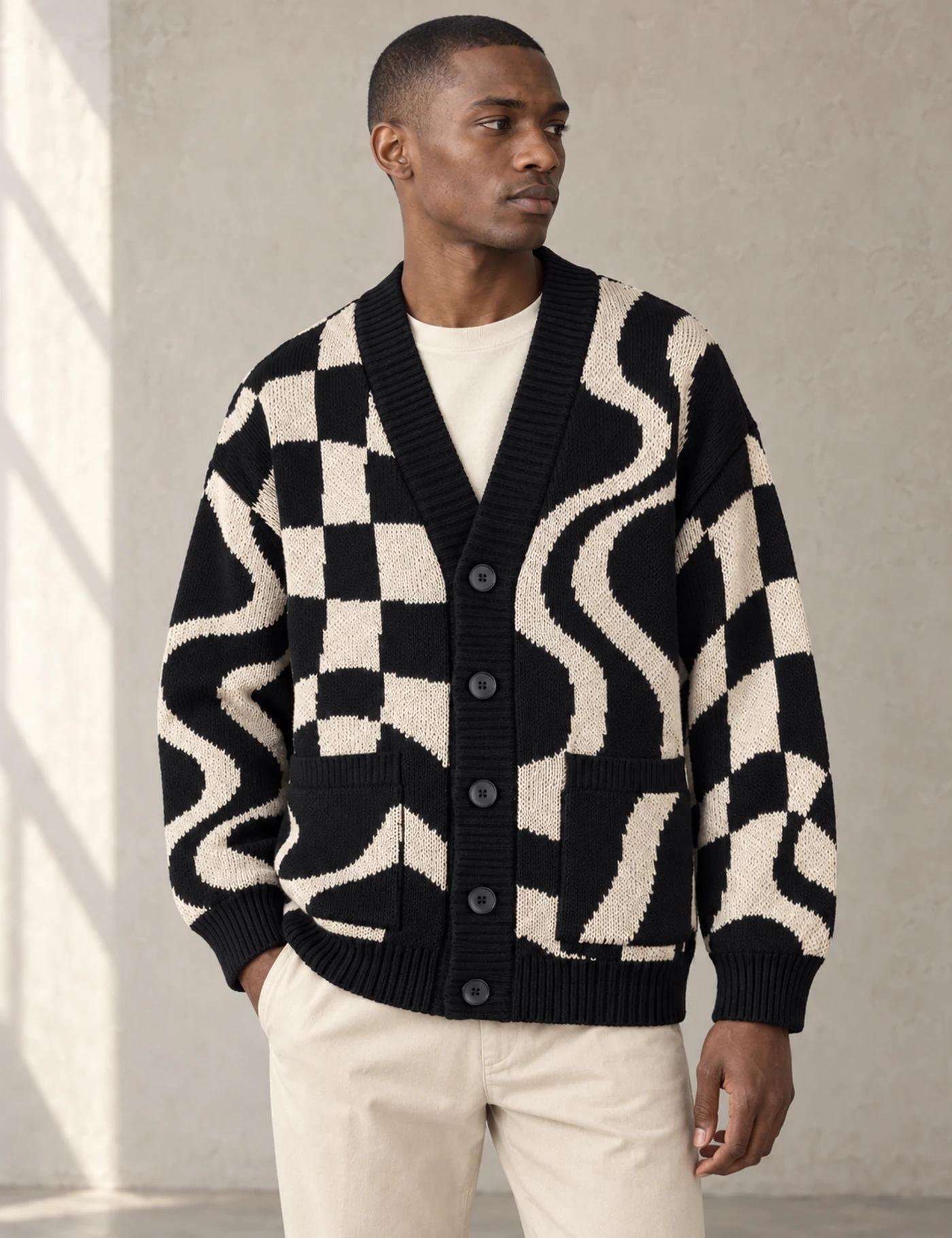
PK-111 / Actual sample reference
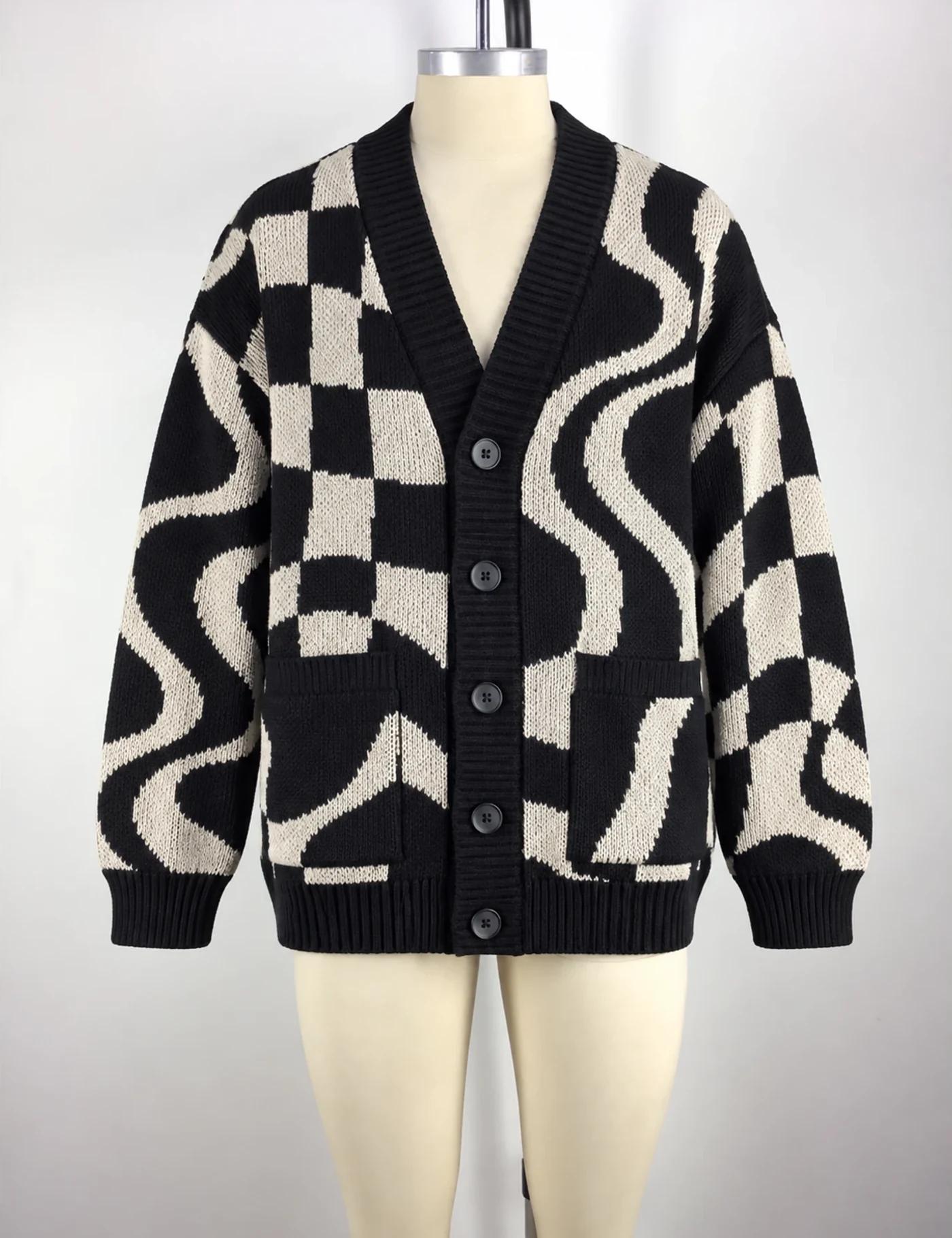
Checkerboard blocks and sweeping cream waves divide this black cardigan into asymmetric knitted panels. Five buttons close the V-neck front, and two patch pockets sit above the rib hem. The development challenge is to place the graphics around the opening and pockets while maintaining a balanced, relaxed shape.
01
Actual sample shown
02
Custom development
03
Sample approval before bulk
04
Project-specific quotation
Actual sample evidence
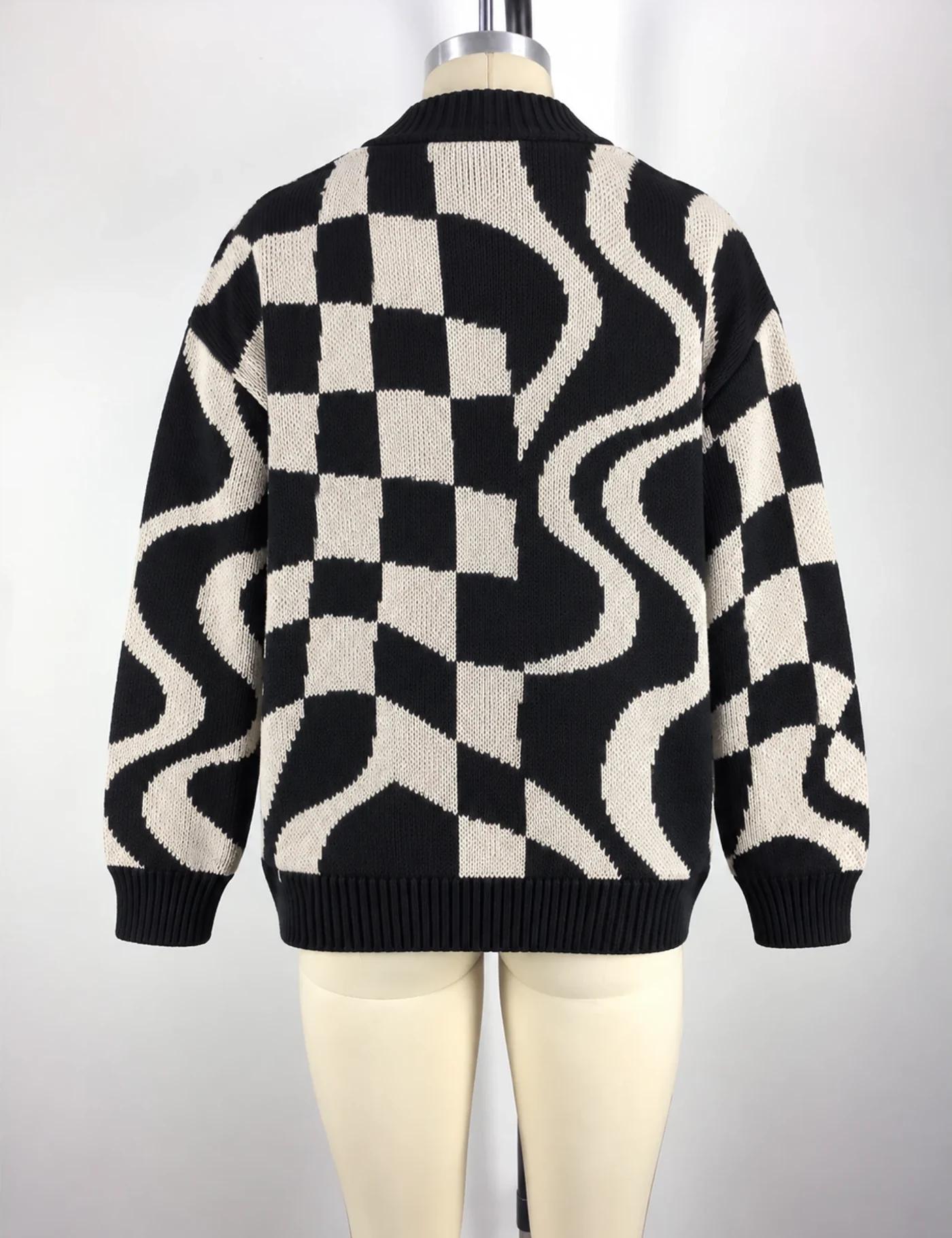
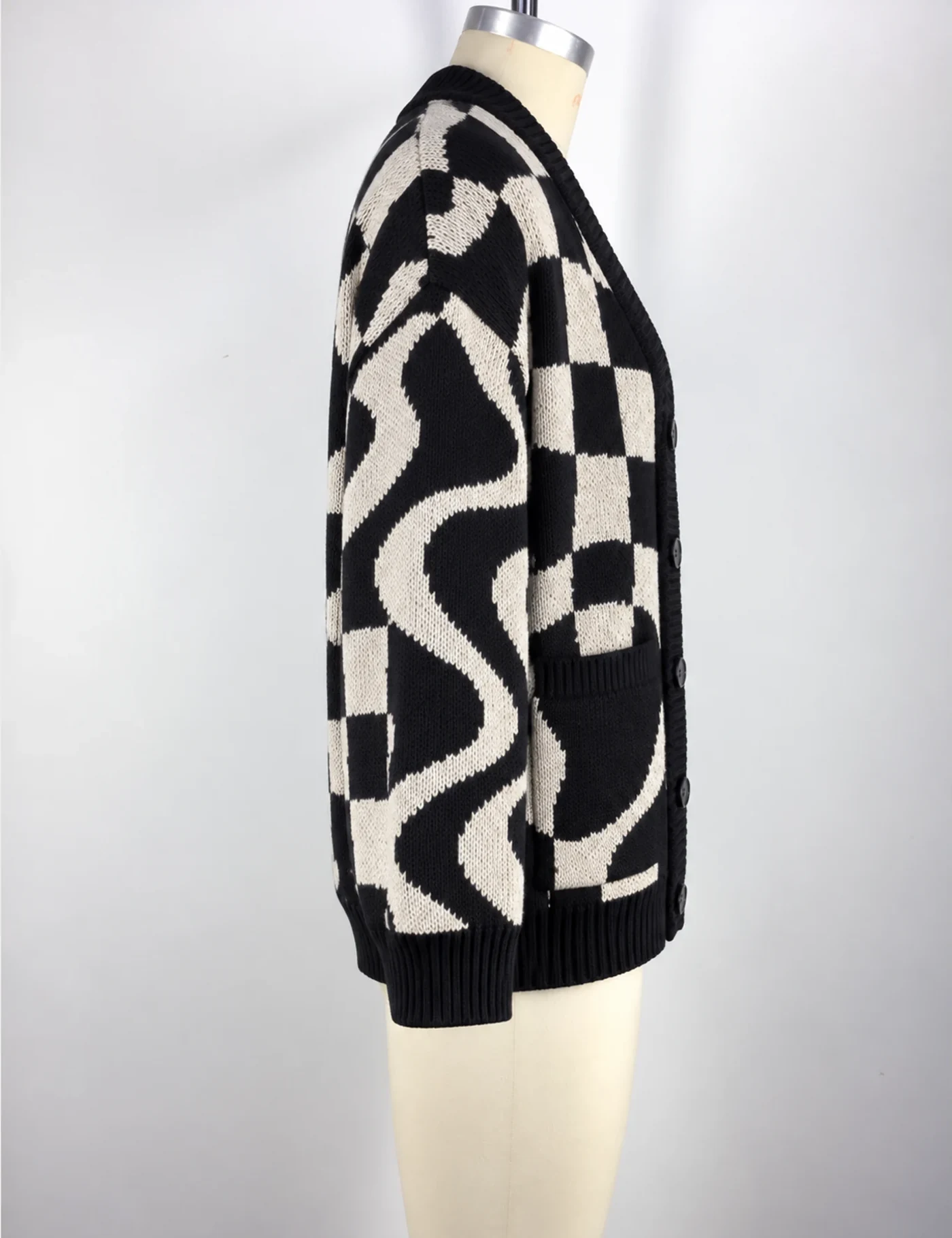
Front, rear and side views show how waves and checker blocks occupy different areas. The opening and patch pockets are part of the placement plan.
Visible on the sample
Confirmed for your project
Customization map
Graphic clarity depends on panel layout, pocket integration and a stable button band.
01
Map checker blocks and wave lines separately for each front, back and sleeve panel.
02
Decide whether pockets continue the surrounding graphic or deliberately interrupt it.
03
Adjust the opening without cutting through an important motif unexpectedly.
04
Sample rib width, button size and buttonhole support for the chosen yarn.
05
Review float control and thickness before selecting the final knit construction.
06
Fit over the intended base layer and approve body width, sleeve volume and hem tension.
Specification status
The black-and-cream design is visible; yarn, backing and size-specific placement are sampling decisions.
Related product references
Development path
Panel artwork prevents important shapes from disappearing into the front band or pocket seams.
Build panel artwork showing the V-neck cutout, button band and both pocket outlines.
Check cream contrast, edge definition and reverse construction on a swatch.
Sample buttonholes and pocket attachment before completing the body.
Fasten the front and assess hem level, pocket sag and graphic balance.
Record motif relationships, band dimensions and acceptable grading changes for production.
Quality checkpoints
Assess asymmetric placement against the correct artwork, alongside pocket support and button-band tension.
Compare panel-specific motifs with the approved layout rather than assuming symmetry.
Inspect waviness, button spacing and buttonhole growth.
Check attachment corners and sag with the garment hanging.
Look for loose floats or snagging behind large cream areas.
Review front-to-back level with all five buttons fastened.
Check shrinkage, black-to-cream color migration and surface pilling.
Buyer questions
The pictured layout is deliberately asymmetric. Production should follow approved panel artwork, with any desired symmetry designed before programming the knit.
That can be sampled, but placement needs pocket-specific artwork and attachment tolerances. The approved sample should show exactly how the motifs meet.
Yes. Supply artwork you are authorized to use; line width and curves are adapted to the chosen gauge and approved as knitted colorwork.
Check it buttoned over the intended base layer. The V-neck and band should lie flat, pockets should remain supported and the hem should hang evenly.
Continue the evaluation
Custom development / PK-111
Send panel artwork, a yarn handle reference and your layering-fit requirements for a development review.