01
Rib definition
Select yarn and gauge for the desired rib depth, weight and stretch.
Custom Menswear Manufacturing / OEM & ODM / Worldwide Delivery
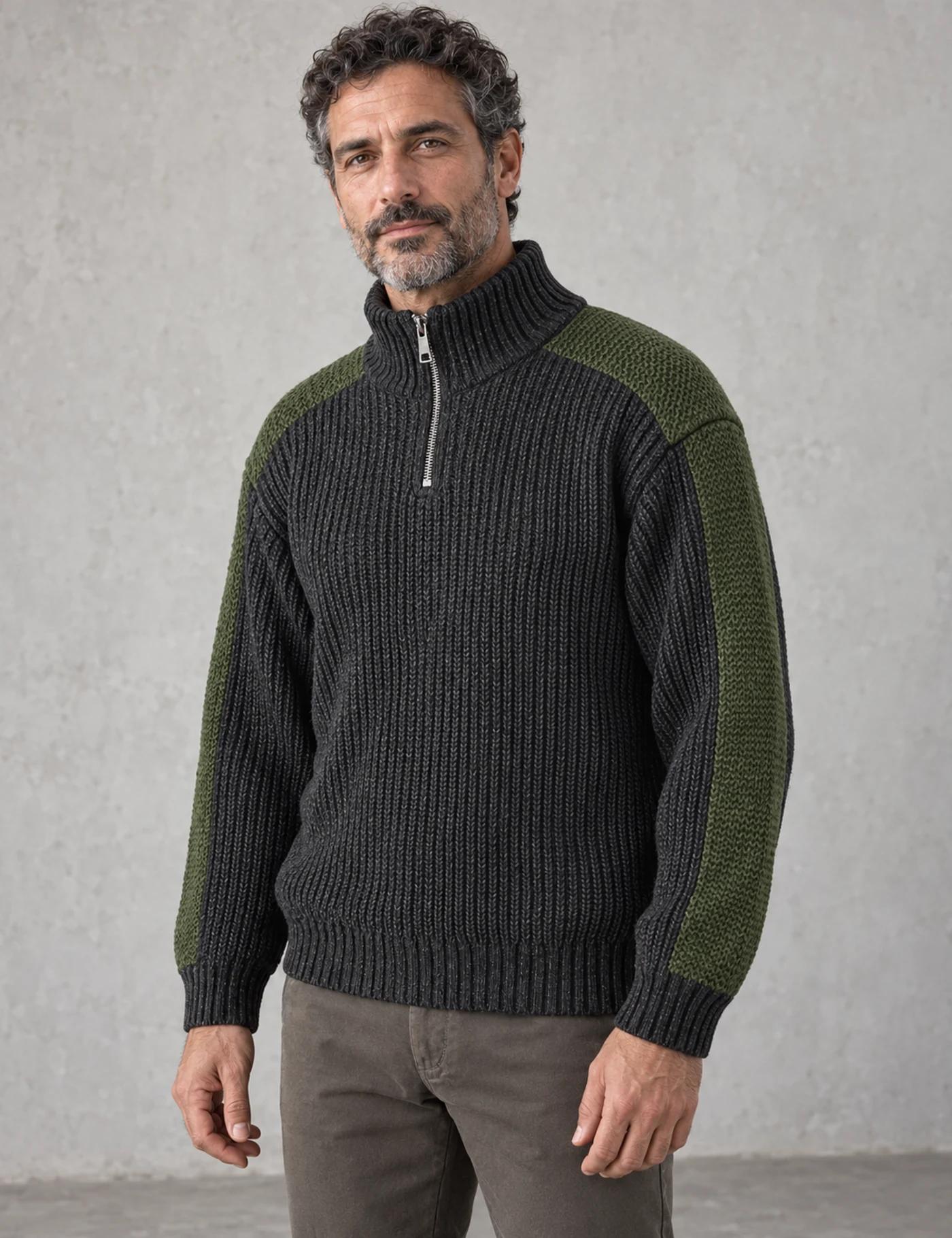
PK-110 / Actual sample reference
A short silver-tone zipper opens the tall rib collar of this charcoal sweater. Olive knit panels travel over the shoulders and down the outer sleeves, contrasting with the pronounced vertical ribs. Sampling should resolve zipper support, panel joins and the collar's open and closed positions before the fit is finalized.
01
Actual sample shown
02
Custom development
03
Sample approval before bulk
04
Project-specific quotation
Actual sample evidence
The side view shows the olive strip continuing down the outer arm, while the back confirms the shoulder-panel route.
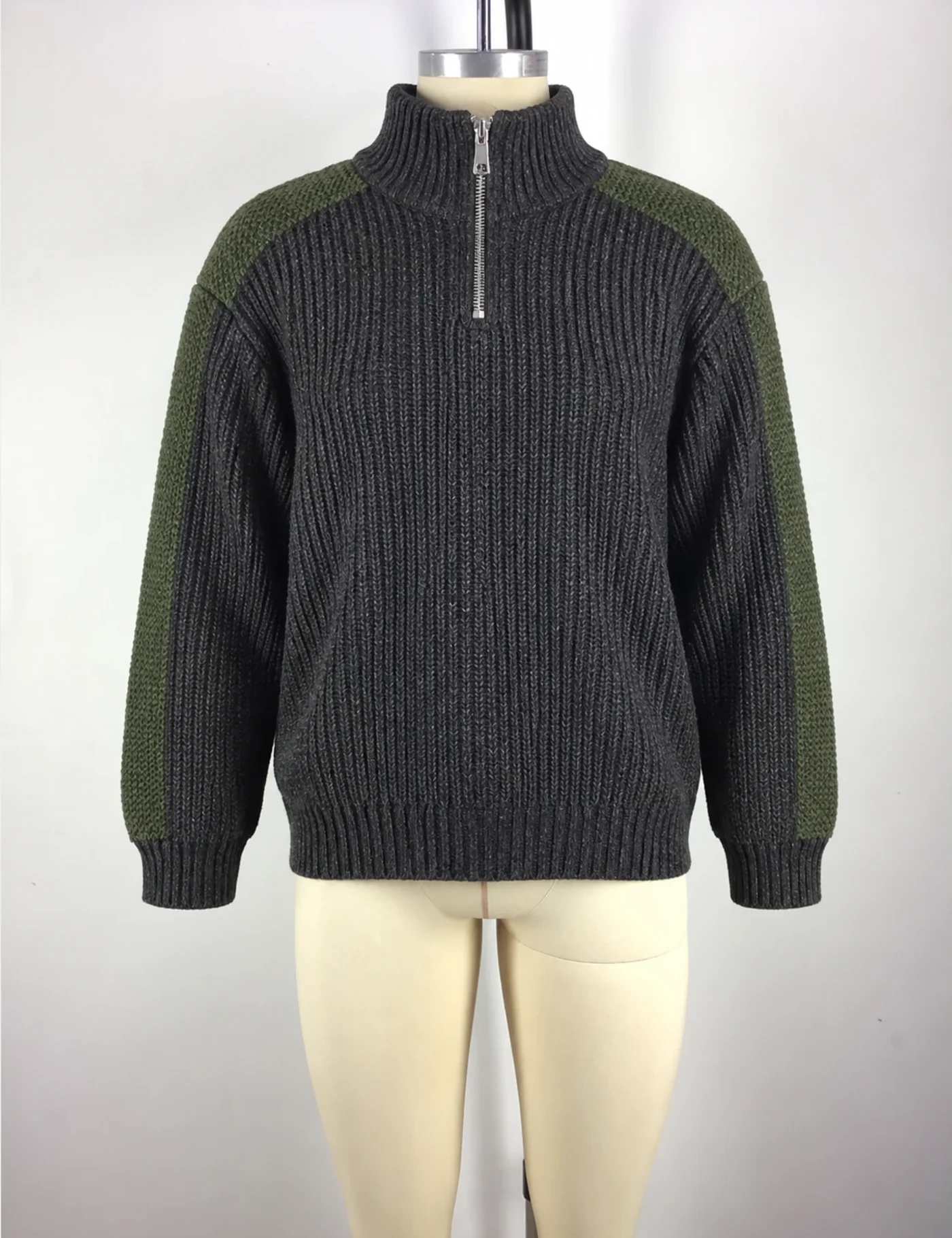
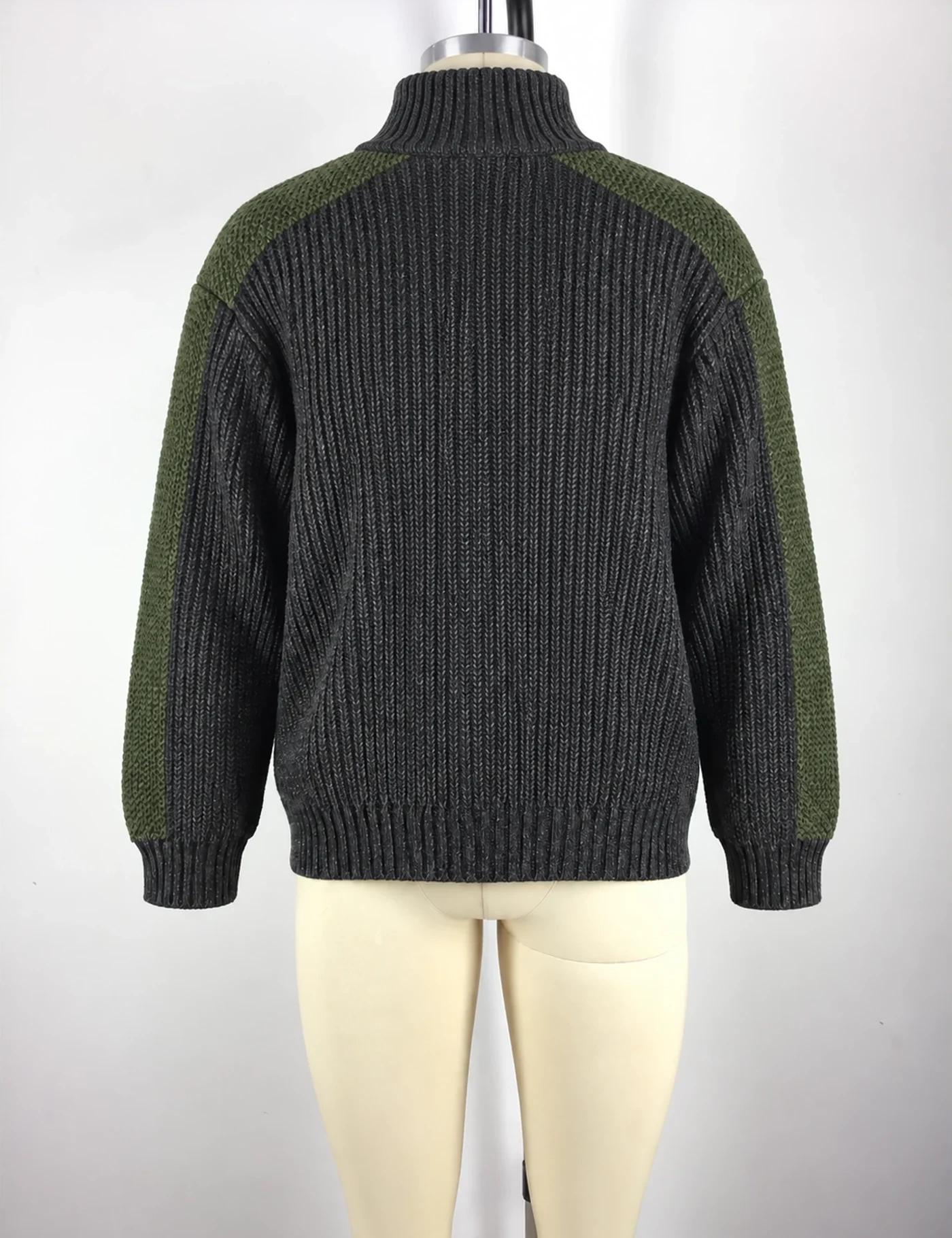
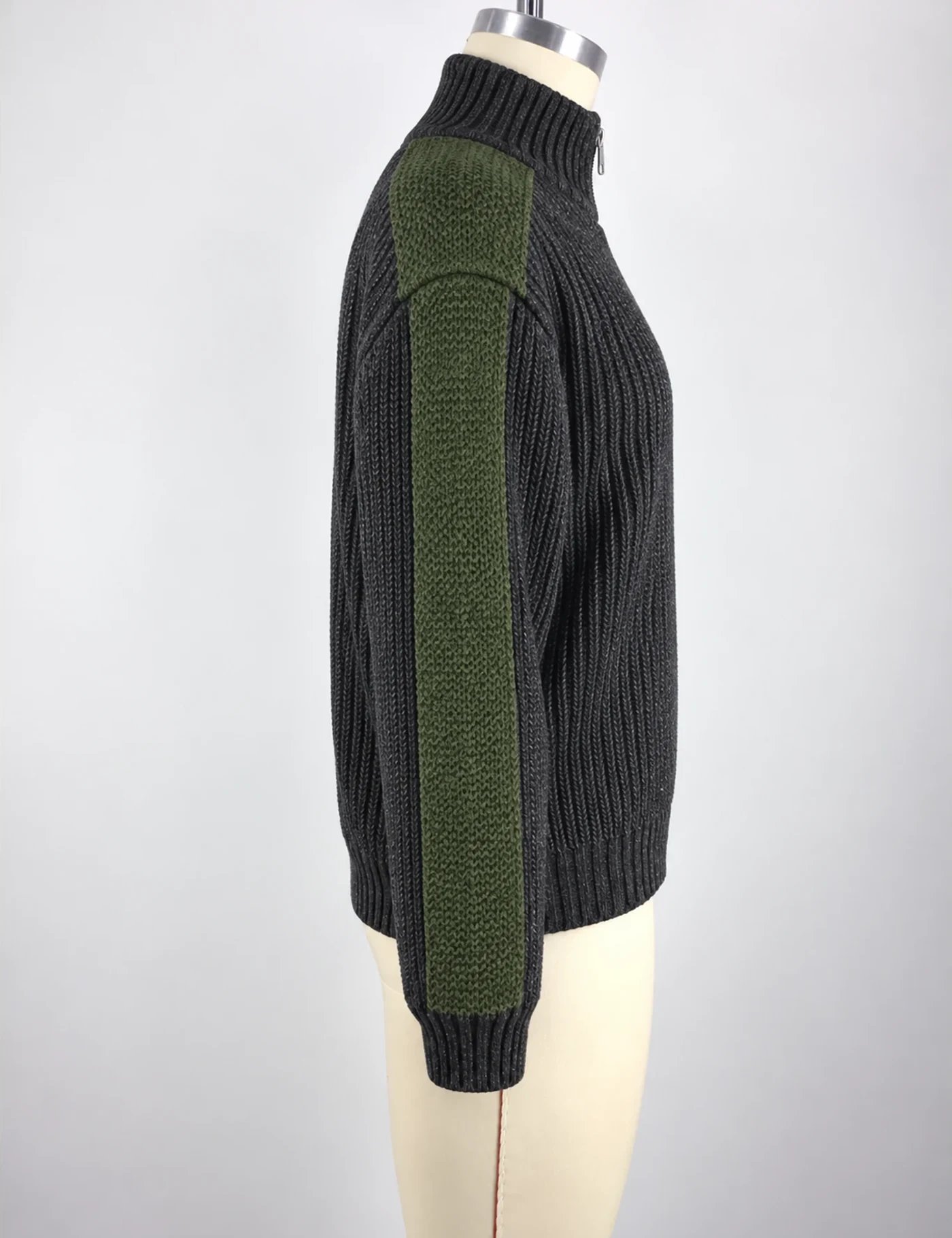
Visible on the sample
Confirmed for your project
Customization map
A stable opening depends on the rib, tape and reinforcement working together, not simply choosing a different puller.
01
Select yarn and gauge for the desired rib depth, weight and stretch.
02
Set panel width from shoulder to cuff and confirm the joining method.
03
Choose zipper length and weight that the knit can support without waving.
04
Test height and tension with the zip fully closed and partly open.
05
Allow for different stretch behavior between the rib body and contrast panels.
06
Define yarn-end management, labels and care requirements for the approved yarn combination.
Specification status
The reference establishes the silhouette and contrast arrangement; both knitted structures and the zip need physical approval.
Related product references
Development path
Test the opening and panel joins early, then approve the worn silhouette and post-care measurements.
Compare the charcoal rib with the olive panel knit for stretch and shrinkage.
Attach the proposed zipper to a collar trial to review support and edge stability.
Check panel width and seam bulk before completing the first sweater.
Review neck comfort, shoulder drop and sleeve twist with the zip in both positions.
Approve dimensional change, collar recovery and zipper appearance after testing.
Quality checkpoints
Inspection concentrates on neck distortion, differential stretch and panel rotation.
Inspect the opening flat and on the body for stretched edges or unsupported tape.
Compare both collar sides when zipped and folded open.
Check seam bulk and the olive panel width along each sleeve.
Review panel rotation after wear and the agreed care treatment.
Measure opening growth at cuffs and hem.
Check differential shrinkage, shade and surface change between both knit structures.
Buyer questions
This reference has a pronounced sweater-knit rib structure. Its yarn, stitch density and zipper support are developed differently from a cut-and-sew sweatshirt fabric.
Yes. Removing panels changes the stitch and seam plan; recoloring needs yarn matching. Both options should be reviewed on the intended structure.
The weight of the zipper can stretch the rib opening. A collar trial reveals support and tension problems before they are repeated in a full garment.
A longer opening can be developed with a revised front and reinforcement plan. The collar roll and garment balance need another fit review.
Continue the evaluation
Custom development / PK-110
Send your yarn handle, contrast palette, neck opening and fit requirements for a collar and swatch review.