01
Landscape artwork
Redraw motifs to a knit grid with agreed scale instead of treating the reference as a print file.
Custom Menswear Manufacturing / OEM & ODM / Worldwide Delivery
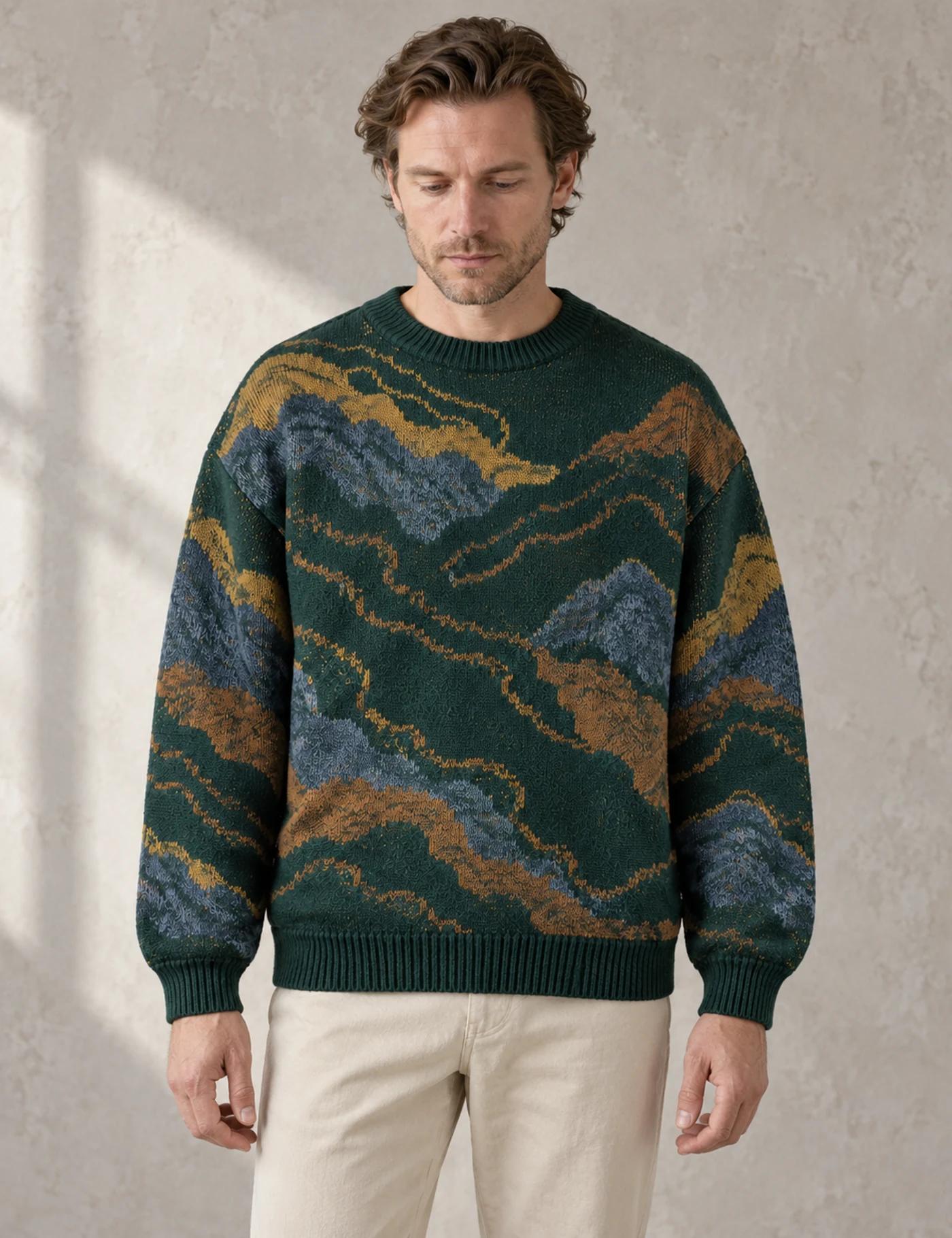
PK-109 / Actual sample reference
Ochre and slate-blue contours run across a forest-green knit body and sleeves, creating a landscape effect with visible knitted colorwork. Solid green rib trims frame the relaxed crewneck silhouette. Artwork translation, yarn contrast and repeat placement are the central sampling decisions for this sweater.
01
Actual sample shown
02
Custom development
03
Sample approval before bulk
04
Project-specific quotation
Actual sample evidence
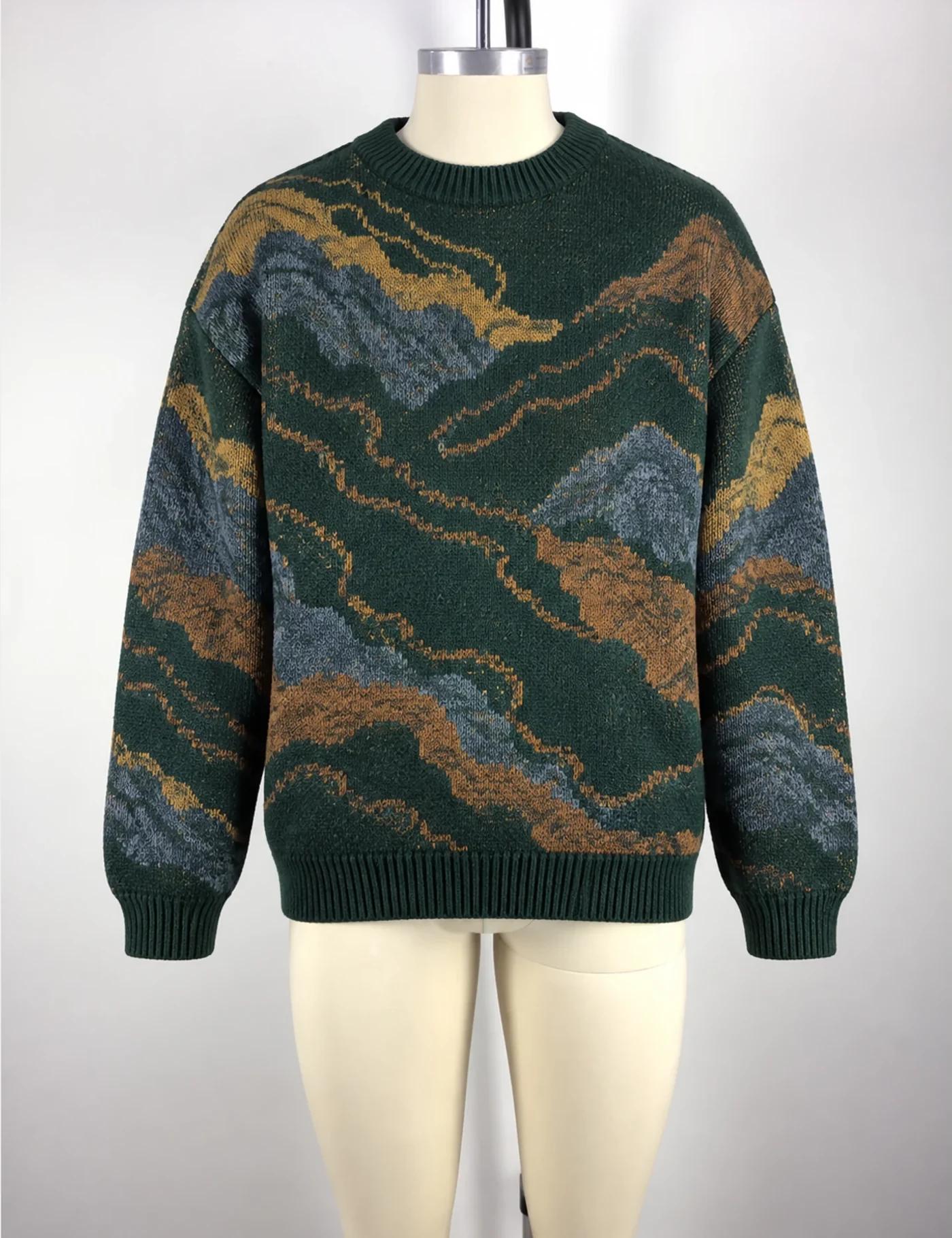
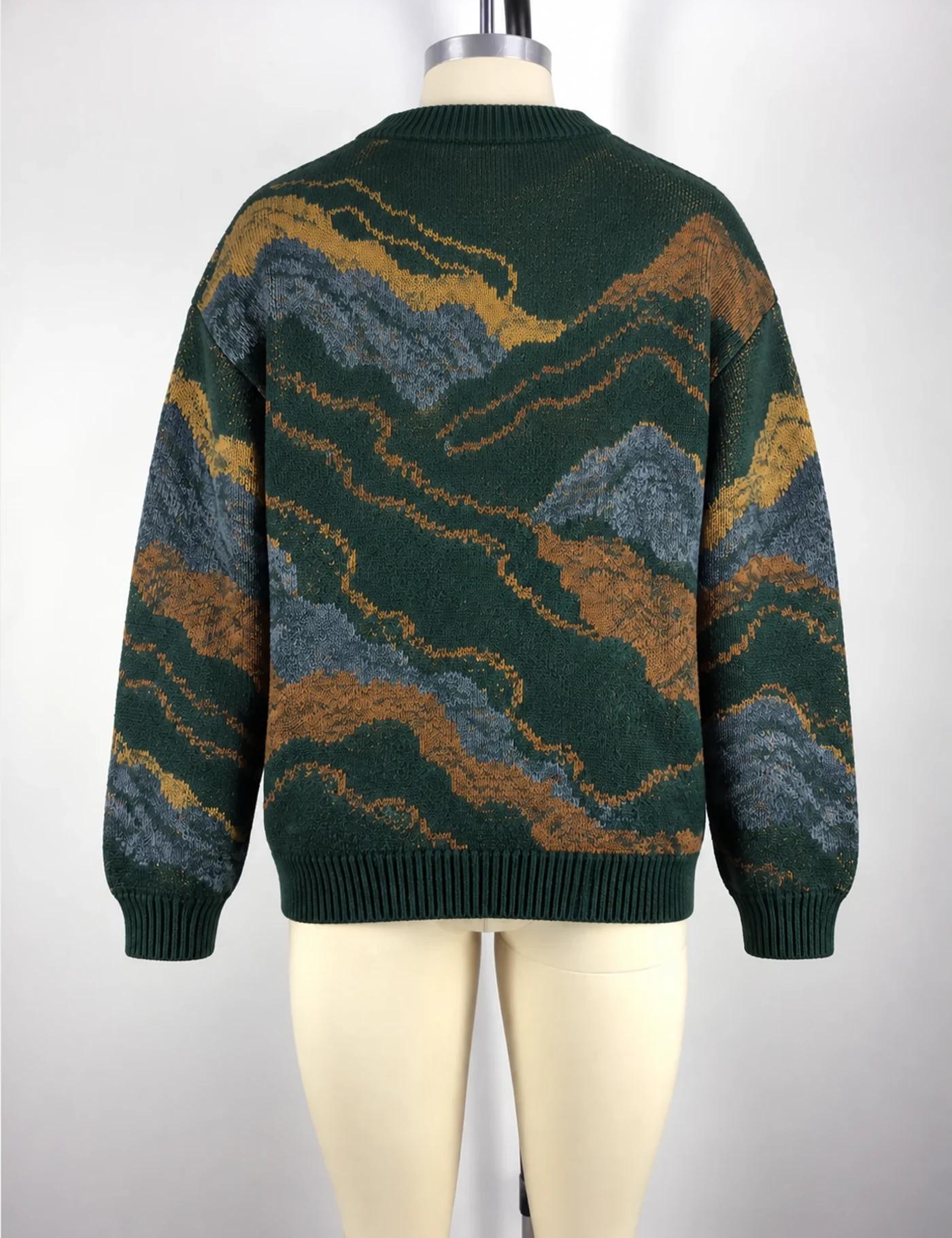
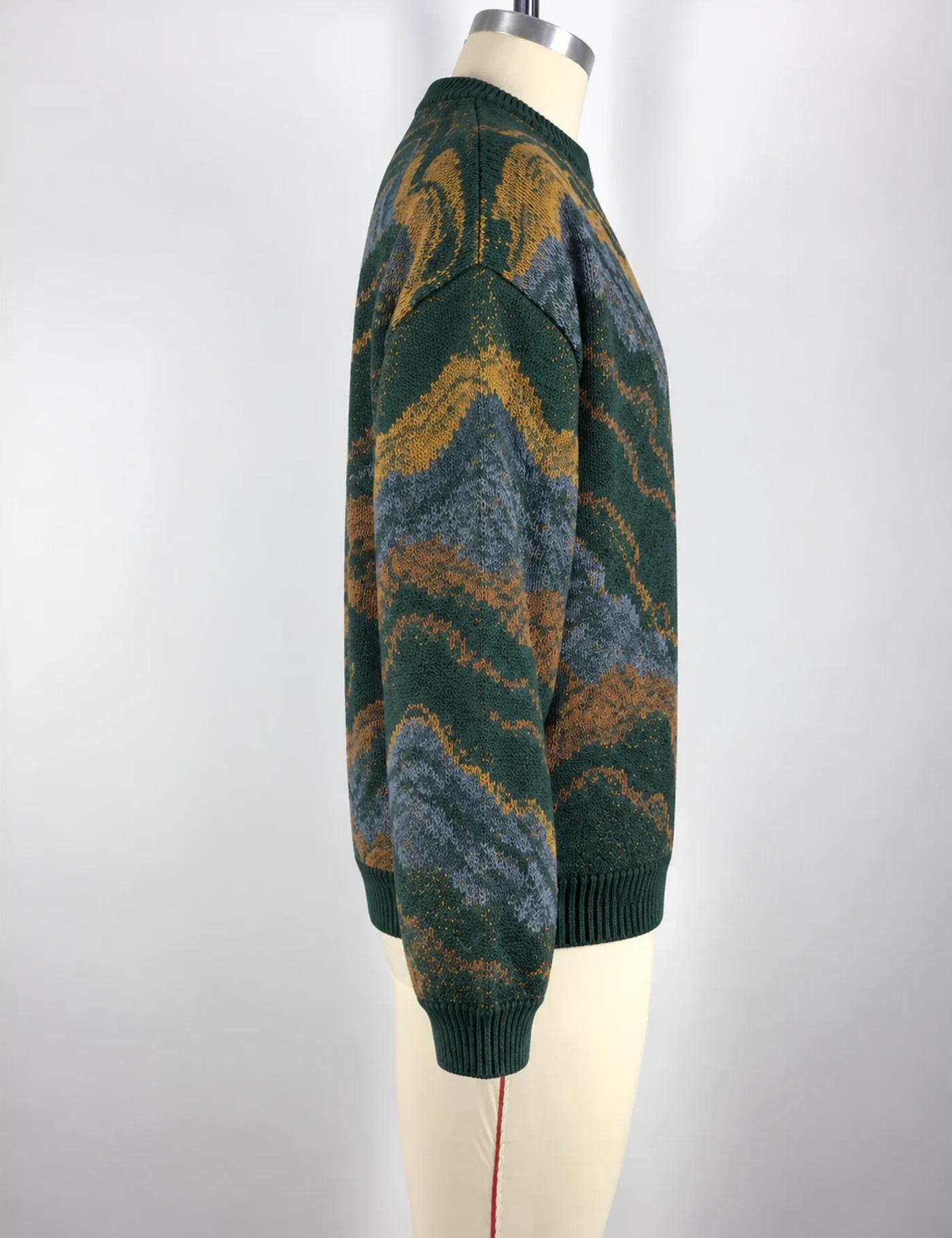
The landscape forms extend beyond the front panel. Compare sleeves and back when deciding repeat scale and panel placement.
Visible on the sample
Confirmed for your project
Customization map
Yarn colors, stitch resolution and reverse construction shape the result; a print-ready file alone is not a knit approval.
01
Redraw motifs to a knit grid with agreed scale instead of treating the reference as a print file.
02
Compare green, ochre and blue yarns under consistent lighting for the intended contrast.
03
Review floats, thickness and surface clarity on the reverse of the proposed knit.
04
Decide where large shapes sit at chest, shoulders and sleeve joins in each size.
05
Adjust solid neckline, cuff and hem widths to balance the patterned panels.
06
Sample yarn and stitch combinations before locking garment ease and sleeve fullness.
Specification status
The photographs establish the motif and silhouette. Composition, gauge and backing require swatch evidence.
Related product references
Development path
Resolve color boundaries and float control before making size and panel-placement commitments.
Convert approved contours into a stitch plan with a repeat width suited to the garment panels.
Compare face detail and reverse construction, including float management and handle.
Place motifs across front, back and sleeves while allowing for neckline shaping.
Inspect the worn silhouette, motif scale and care-test dimensions as one complete sample.
Record yarn codes, stitch settings, placement rules and acceptable pattern variation by size.
Quality checkpoints
A clear face pattern must be balanced with secure reverse construction and stable finished dimensions.
Compare contour shapes and color boundaries with the approved knitted swatch.
Inspect long floats and loose yarn ends for snag-prone areas.
Check the approved motif map without demanding unplanned seamless matching at every join.
Review neckline flatness and cuff and hem recovery.
Assess pilling and snagging with the agreed yarn and care method.
Measure body, sleeve and shoulder after the specified relaxation and care procedure.
Buyer questions
The reference shows knitted colorwork with visible loops. This page is planned around jacquard development; the final stitch program is confirmed on a physical swatch.
Yes, subject to artwork review. Shapes and fine lines need translation to the selected stitch grid, so the knitted result is approved before full garment sampling.
Placement rules should be defined by panel and size. A repeating knit may shift as panel width changes; a mapped design may need size-specific programming.
A reduced palette can be sampled, but it changes contrast and the way contours read. Review a revised colorwork swatch rather than approving from a digital recolor alone.
Continue the evaluation
Custom development / PK-109
Send motif files, yarn color references, target handle and a measurement brief for a jacquard feasibility review.