01
Stripe route
Draw the two stripe lines through the raglan transition so their spacing remains deliberate at the collar.
Custom Menswear Manufacturing / OEM & ODM / Worldwide Delivery
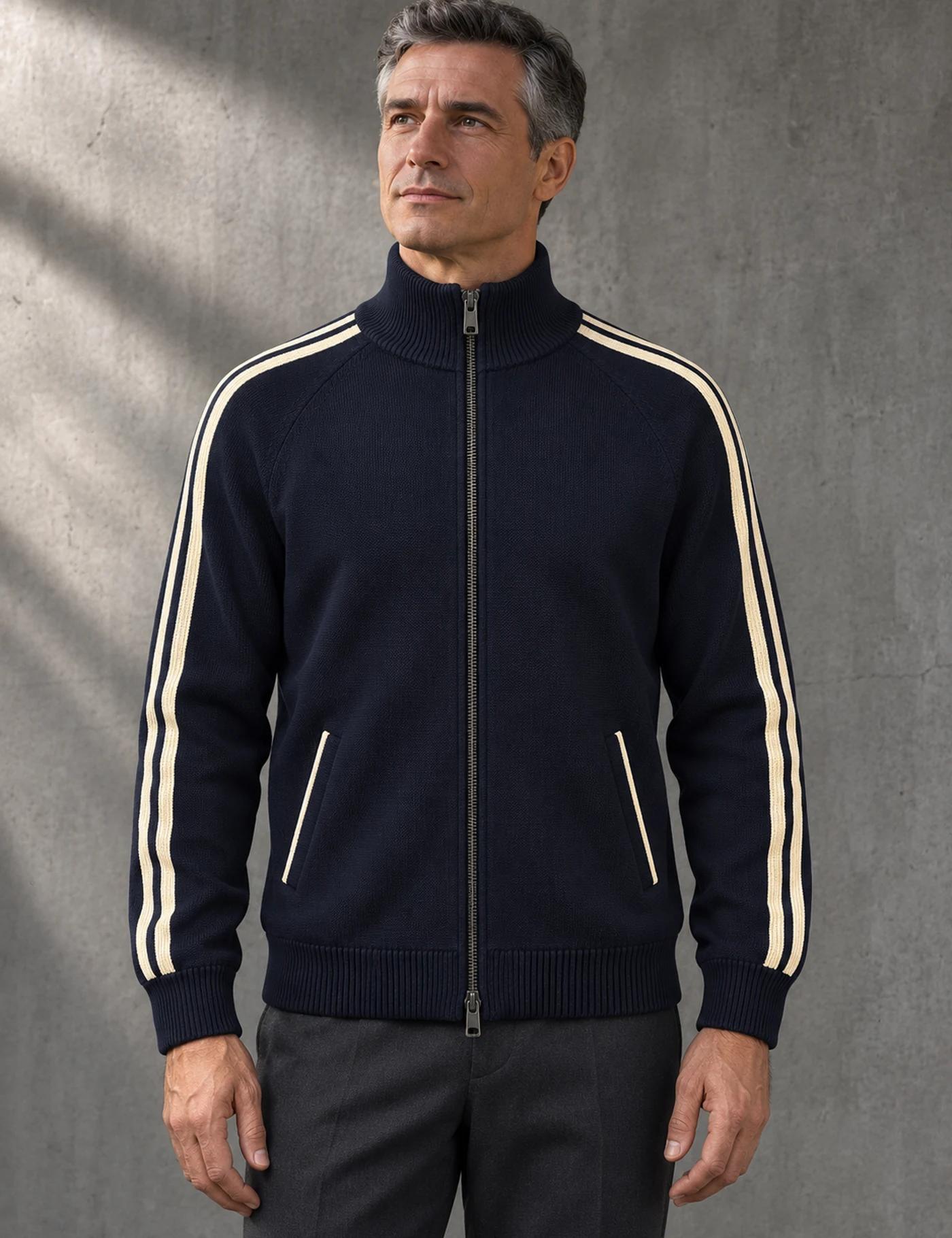
PK-122 / Actual sample reference
Twin cream stripes travel from the rib stand collar down the outer sleeves of this navy knitted track jacket. Cream-edged welt pockets echo the sleeve contrast, while a two-way zip divides the front. The sweater-knit surface makes zipper support and stripe tension central concerns; it is a different development route from a woven track shell or a printed sports jersey.
01
Actual sample shown
02
Custom development
03
Sample approval before bulk
04
Project-specific quotation
Actual sample evidence
The side view clarifies stripe spacing; the back shows the raglan route without front-opening interference.
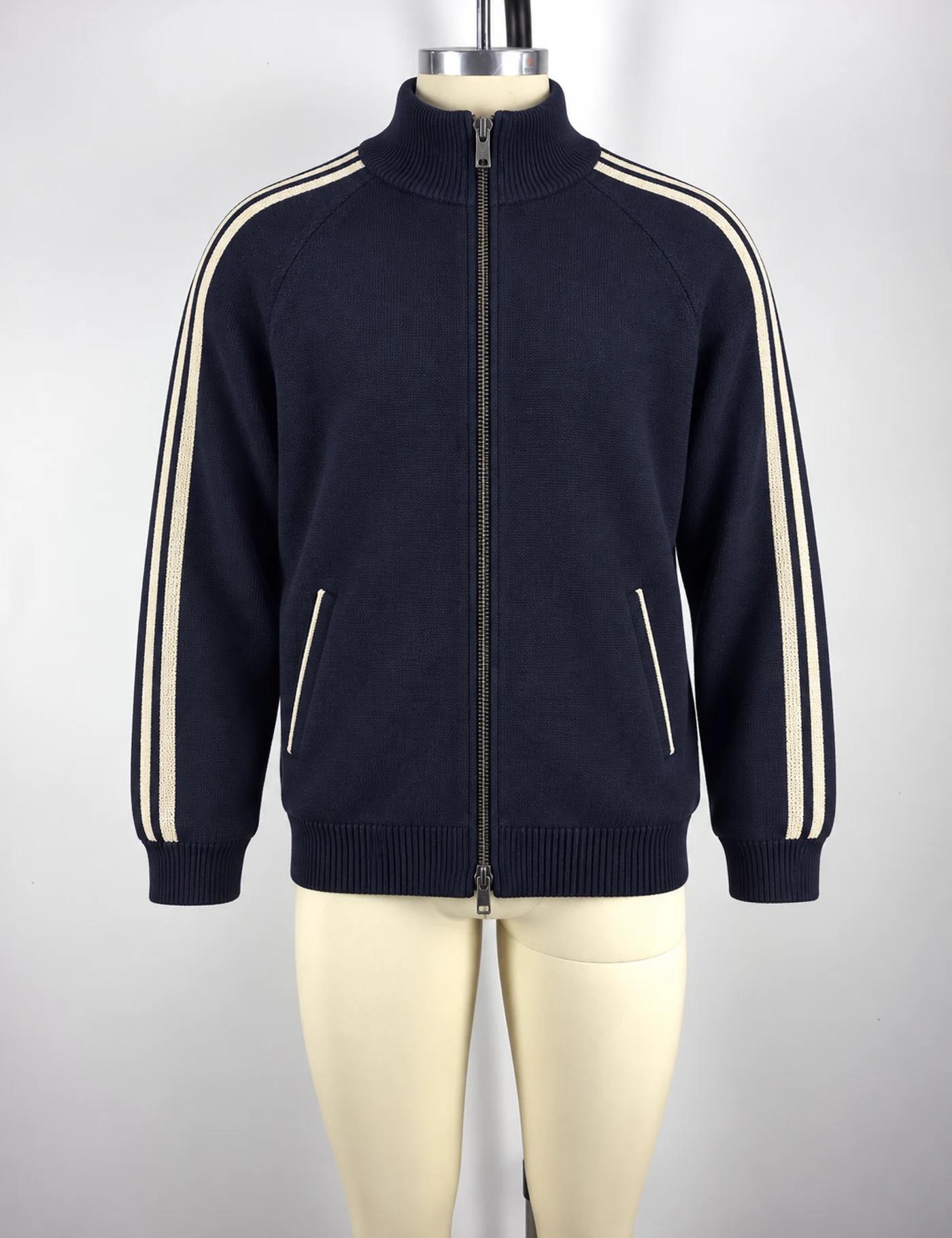
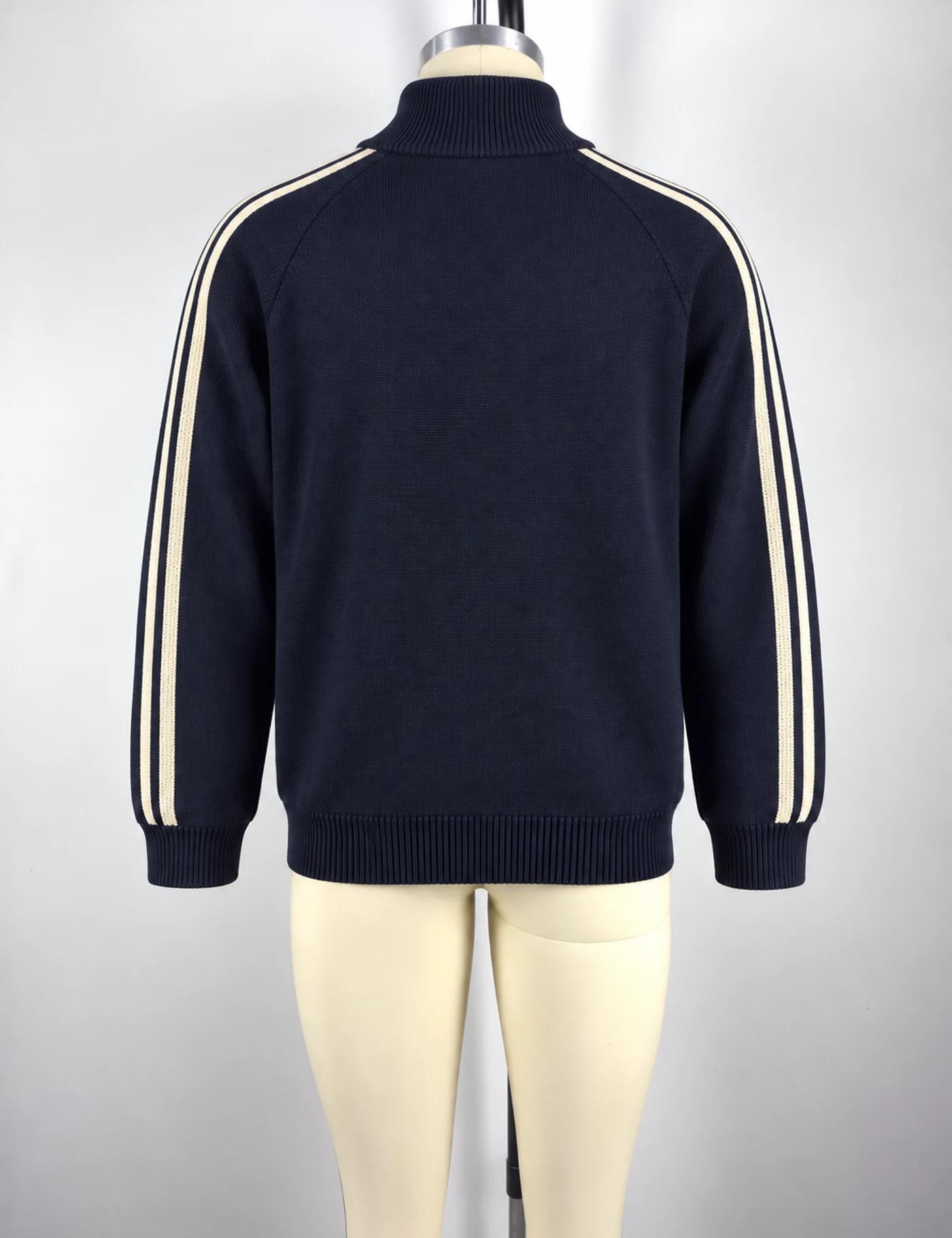
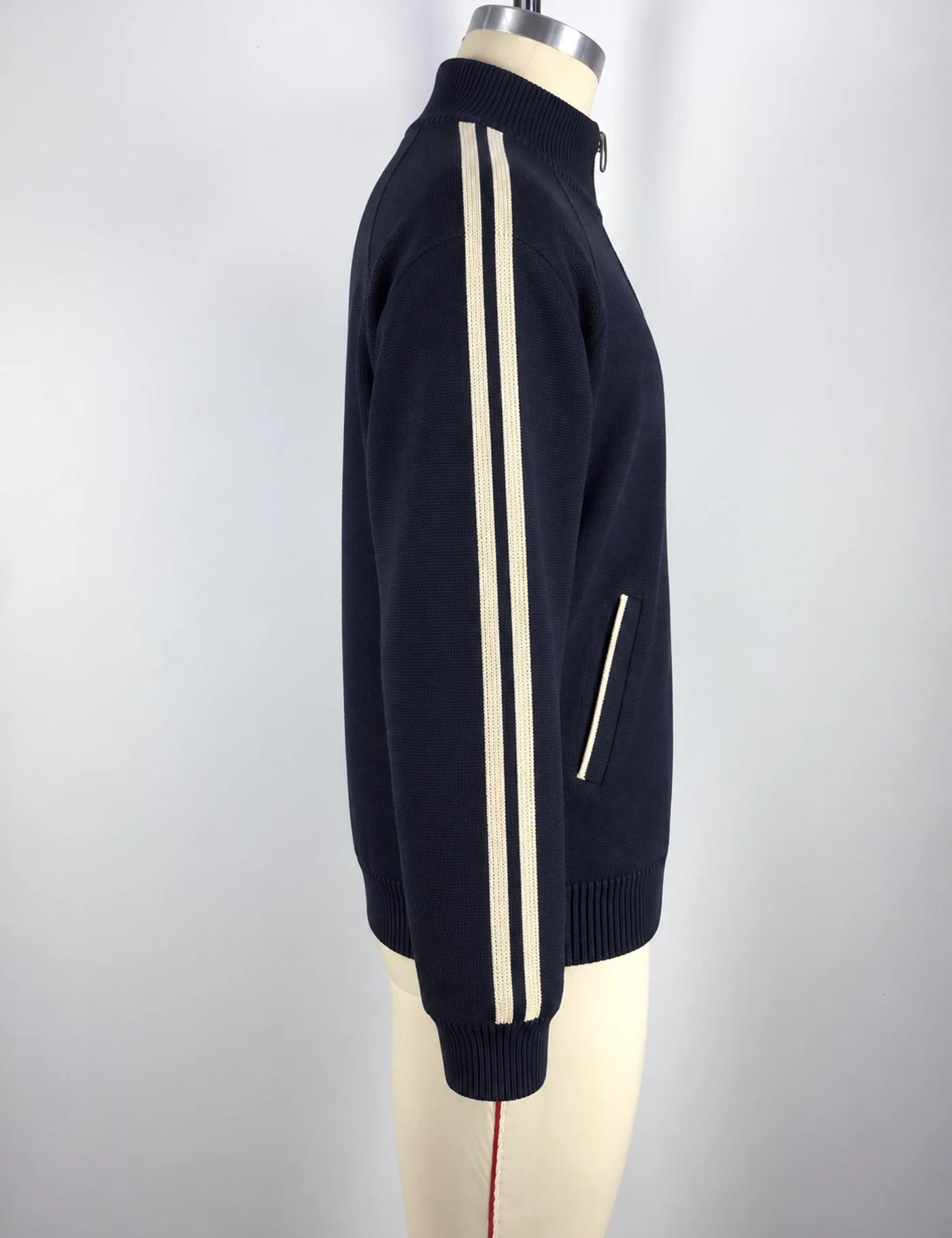
Visible on the sample
Confirmed for your project
Customization map
Sweater-knit stretch, contrast pocket facings and a two-way zip distinguish this from a standard woven track jacket.
01
Draw the two stripe lines through the raglan transition so their spacing remains deliberate at the collar.
02
Select tape and reinforcement for the stretch of the body knit, then test front waviness.
03
Develop the cream pocket edge with enough support to resist stretching during use.
04
Approve the collar zipped fully and partly open, checking comfort and recovery.
05
Set sleeve pitch and upper-arm ease while keeping the twin stripes aligned through the shoulder transition.
06
Compare band depth and attachment ratio with the desired track silhouette, then check whether the closed zipper remains level.
Specification status
Twin stripes, contrast pocket facings and a two-way opening define this knitted track layer. Yarn and trim specifications are selected together.
Related product references
Development path
Bring knit relaxation, stripe placement and zipper attachment into one sampling sequence before approving the complete jacket.
Compare cream line width, edge definition and body tension.
Test the two-way zipper on the actual knit with its intended reinforcement.
Review shoulder movement, collar height and sleeve stripe position.
Confirm pocket growth, zipper flatness and stripe distortion after care.
Quality checkpoints
Review the closed and partly released front, with attention to knit recovery and the stability of contrasting edges.
Compare the twin lines on both sleeves through the shoulder transition.
Check the closed zipper laid flat and on the body.
Inspect cream edges after repeated hand insertion.
Operate both zipper sliders without snagging the knitted edge.
Review collar, cuff and bottom rib after wear and care.
Buyer questions
The reference shows a sweater-knit construction. Yarn, gauge and the zipper-to-knit attachment should be developed as knitwear rather than copied from a woven shell specification.
Yes. Check the new yarn palette for shade contrast and care behavior, then confirm the stripes do not pull the surrounding sleeve knit out of shape.
The tape can be heavier and less extensible than the knit. Testing the opening early reveals ripple or sag before the full garment and grading are approved.
Continue the evaluation
Explore the knitwear range for other silhouettes and construction references.
Open reference →Review how project briefs, sample revisions and approvals are coordinated.
Open reference →Read about inspection planning and checks against approved samples.
Open reference →Custom development / PK-122
Send your reference, size chart and quantities, together with your requirements for navy sweater-knit direction. Our standard bulk MOQ starts at 50 pieces per style and color. Custom fabrics or specialist techniques may require a higher minimum. Sampling typically takes 7–15 days. Bulk production typically takes 20–30 days after the deposit is paid. Both depend on the style.


