A custom T-shirt does not have one dependable factory price until the product is defined. Quantity, fabric, GSM, fit, construction, artwork, washing, labels, packaging and trade terms all change the result.
This guide starts with one controlled KAOUYOU specification for a custom T-shirt programand then shows how design decisions move the cost. The figures are August 2026 planning references for the stated scope—not a universal price list or a substitute for a project quotation.
Key takeaways
- A basic 100-piece reference is approximately US$6.20–7.20 per piece on the stated indicative FOB basis.
- At 1,000 pieces, the same controlled reference is approximately US$4.40–5.20 per piece.
- “100% cotton” is not a complete fabric specification; yarn quality, construction, finished GSM and finishing still matter.
- Quotes are comparable only when quantity per color, fabric, artwork, labels, packing and trade scope match.

A Practical FOB Reference for a Basic Custom T-Shirt
The baseline is one basic men’s or unisex crew-neck T-shirt, one style and one standard color. Sizes from S–XXL may be mixed within that style-and-color run. The reference specification is:
- One basic crew-neck men’s or unisex T-shirt style in one standard color
- Regular or slightly relaxed fit—not an oversized or boxy block
- 200 GSM 100% combed cotton single jersey
- 1×1 cotton rib neckline with back-neck tape
- Four-thread overlock at shoulder and side seams, with twin-needle sleeve and bottom hems
- Standard S–XXL size range, with sizes mixed within the same style and color
- Custom main label, size label and care label
- One ordinary clear or frosted polybag per garment
- No print, embroidery, garment dye, specialist wash, branded hangtag, custom packaging or international freight
| Order quantity | Indicative FOB unit reference |
|---|---|
| 100 pieces | US$6.20–7.20 per piece |
| 300 pieces | US$5.30–6.20 per piece |
| 500 pieces | US$4.90–5.70 per piece |
| 1,000 pieces | US$4.40–5.20 per piece |
FOB must identify a named loading port in the final quotation. International freight, insurance, import duties, taxes and destination services are outside this table. A different fit, fabric, color count, technique or packaging specification requires a new calculation.
Fabric Cost Is More Than a GSM Number
T-shirt fabric cost is shaped by fiber composition, yarn quality, knitting structure, finished GSM, usable width, finishing and cutting yield. Two fabrics can both be marked “100% cotton” while using different cotton and yarn systems.
| Fabric direction | Typical specification | Cost level | Main characteristic |
|---|---|---|---|
| Carded cotton | 100% cotton, carded yarn | Lower | Natural cotton hand; hairiness, pilling and shrinkage are usually more visible |
| Combed ring-spun cotton | 100% combed cotton, ring-spun | Medium–high | Smoother surface and softer hand for a brand-ready base garment |
| 100% cotton | Fiber content only | Specification-dependent | May be carded, combed, ring-spun or long-staple cotton |
| CVC cotton-poly | 60/40 or 65/35 cotton-poly | Low–medium | Stable and durable, with lower shrinkage than comparable cotton qualities |
| Polyester performance | 100% polyester | Low–high | Light and quick-drying; performance finishes can raise cost |
| Cotton-spandex | 95/5 or 92/8 | Medium–high | Stretch and close fit, with more complex knitting and shrinkage control |
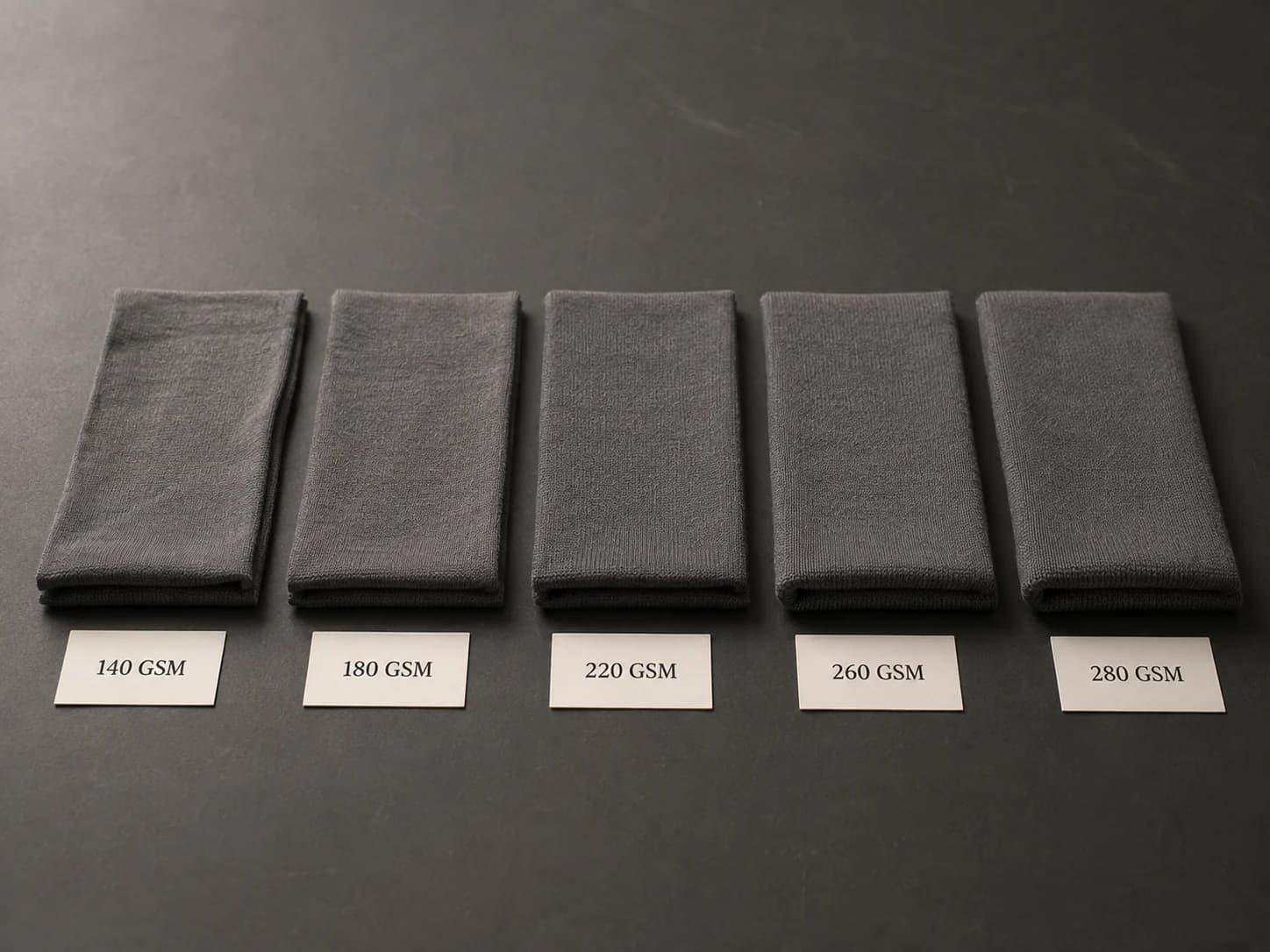
For one regular or slightly relaxed combed-cotton T-shirt style, one color and 500 pieces, the following illustrates the effect of weight while other assumptions remain comparable:
| Finished fabric weight | Product direction | Indicative FOB unit reference |
|---|---|---|
| 180 GSM | Lightweight base garment | US$4.50–5.20 per piece |
| 220 GSM | Medium-weight brand basic | US$5.10–5.90 per piece |
| 260 GSM | Heavyweight streetwear direction | US$5.80–6.90 per piece |
Moving from 180 to 220 GSM is approximately US$0.40–0.80 per piece; 220 to 260 GSM is approximately US$0.50–1.00; and 180 directly to 260 GSM is approximately US$0.90–1.70. The increase is not strictly proportional because heavier garments can also require different needles, seam settings, neck rib and handling. For deeper fabric selection guidance, see the T-shirt GSM guide.
Fit and Construction Change Both Consumption and Labor
Oversized is not simply a marketing name. A wider body, longer or wider sleeve, drop shoulder and altered silhouette can increase fabric consumption and marker loss. Construction details add pattern, cutting, bundle control and sewing time.
| Design or construction | Main added work | Typical reference impact |
|---|---|---|
| Oversized block | More body and sleeve consumption | +5–15% |
| Drop shoulder | Pattern area and marker loss may increase | +1–5% |
| Longer or wider sleeves | Higher sleeve-fabric consumption | +3–10% |
| Double-layer body | Additional fabric, cutting and assembly | +25–45% |
| Heavier neck rib | More rib use, weight and potential custom development | +US$0.15–0.60 |
| Shoulder tape | Tape material and an additional sewing operation | +US$0.08–0.30 |
| Side-seam construction | Two additional longitudinal seams versus tubular | +US$0.10–0.35 |
| Curved hem | More cutting, alignment and hemming difficulty | +US$0.15–0.50 |
| Panel construction | More pattern pieces, matching, bundling and sewing | +5–20% |
| Twin- or triple-needle seams | More thread, equipment time and sewing control | +US$0.10–0.60 |
| Internal binding | Binding material, handling and sewing time | +US$0.30–1.20 |
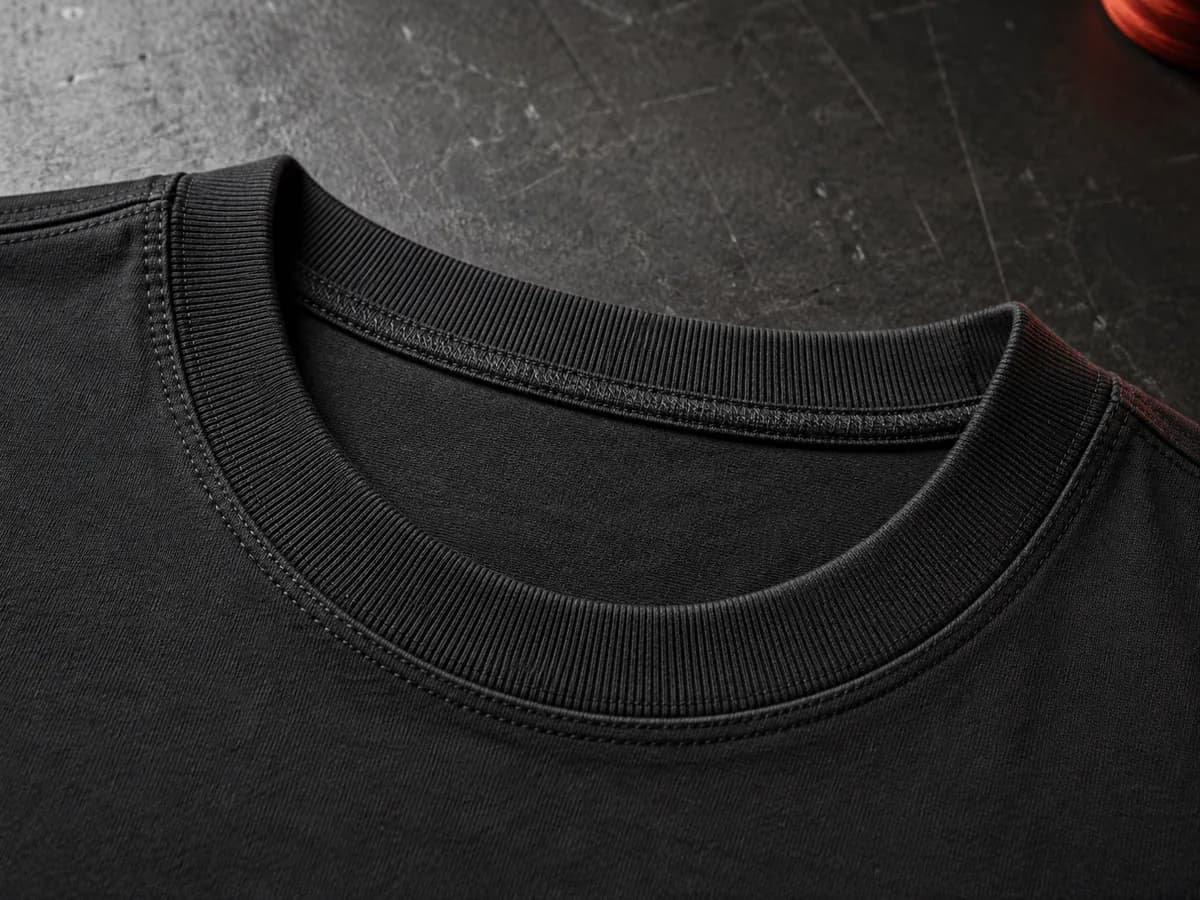
A slightly relaxed fit, 220–240 GSM combed cotton, heavier neck rib, shoulder tape and twin-needle sleeve and bottom hems can improve silhouette and durability without the cost jump of a double-layer body or complex multi-panel construction.
Printing Cost Starts With the Artwork Specification
The following references apply to decoration added to a base T-shirt for a single-color production run of approximately 300–500 pieces. They do not include the garment itself. The same technique can have a very different price on an 8 cm one-color chest mark and a full-back, multi-color design. Review the wider garment technique directionsbefore approving artwork for sampling.
| Print technique | Typical add-on | Main pricing basis |
|---|---|---|
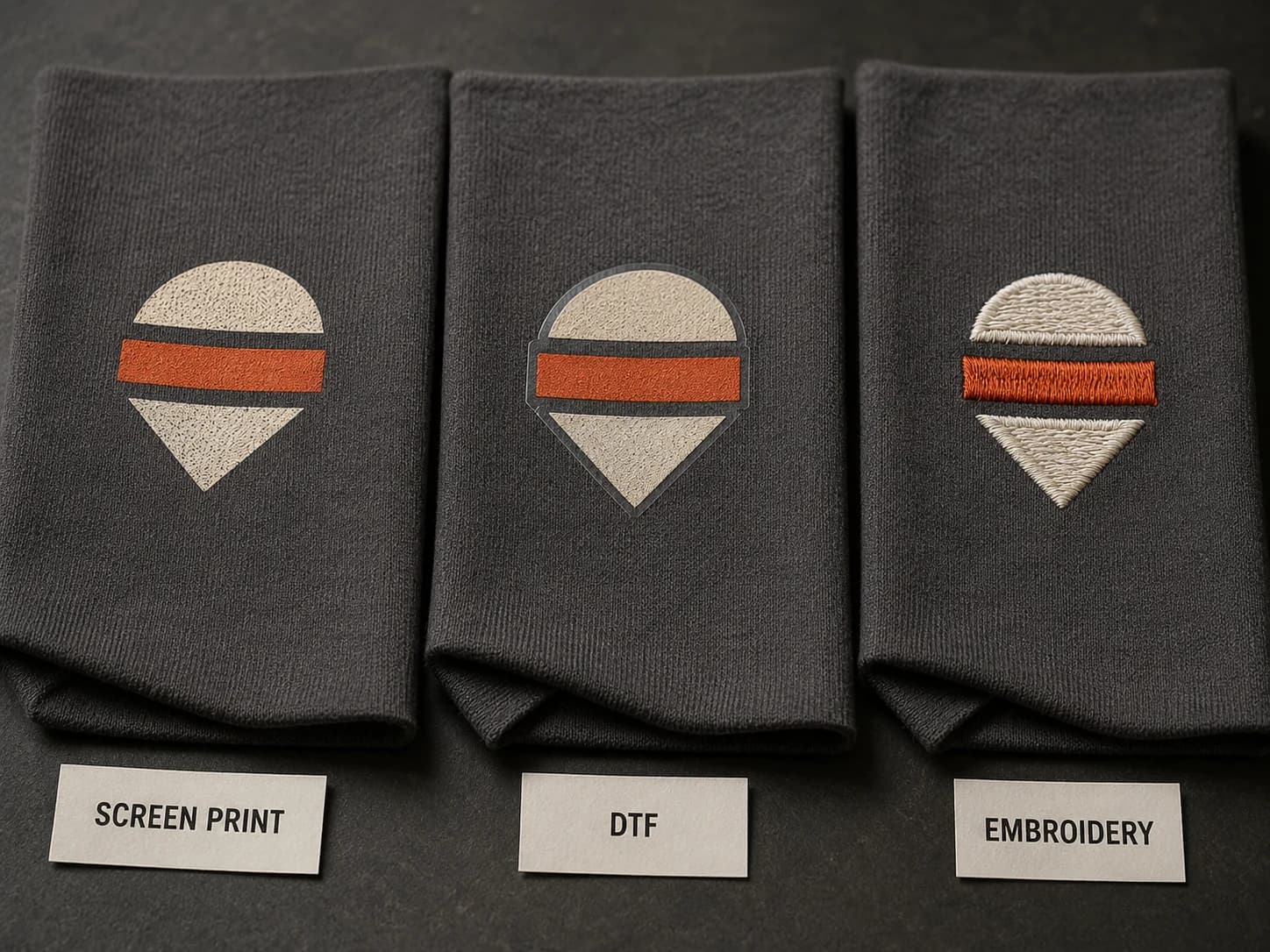
| Screen printing | US$0.40–2.50 per piece | Color count, size, location and print passes |
| DTG | US$1.20–5.00 per piece | Artwork area, ink coverage, garment color and white underbase |
| DTF | US$0.60–3.00 per piece | Transfer area, film and number of placements |
| Puff printing | US$0.70–3.00 per piece | Color count, puff area, thickness and layers |
| High-density print | US$1.00–4.50 per piece | Artwork area, stacked layers and final height |
| Plastisol print | US$0.40–2.50 per piece | Color count, area, underbase and print layers |
| Water-based print | US$0.35–2.00 per piece | Color, area and fabric absorbency |
| Heat transfer | US$0.50–3.50 per piece | Transfer material, size, locations and press cycles |
Embroidery Is Costed by More Than Artwork Size
Stitch count is the most direct ordinary-embroidery cost indicator. Higher counts increase machine time, thread consumption, breakage and repair risk, and the pull placed on the fabric. Area is especially important for appliqué and towel embroidery, while normal flat embroidery must be judged by fill rate and density.
| Embroidery technique | Typical add-on | Main pricing basis |
|---|---|---|
| Flat embroidery | US$0.50–4.00 per piece | Stitch count, density, location and color changes |
| 3D embroidery | US$1.20–5.00 per piece | Stitch count, foam area, height and placement |
| Appliqué embroidery | US$1.20–6.00 per piece | Appliqué material, area, layers, cutting and stitches |
| Towel / chenille embroidery | US$1.50–7.00 per piece | Yarn area, density, colors and artwork complexity |
Easy-to-hoop flat areas such as the left chest, center front and center back are generally more efficient. Sleeves, neckline areas, side seams, pockets, hem edges and already assembled or difficult positions can add approximately US$0.20–1.00 per piece. Every additional placement requires separate hooping and machine setup.
Digitizing is a one-time development cost
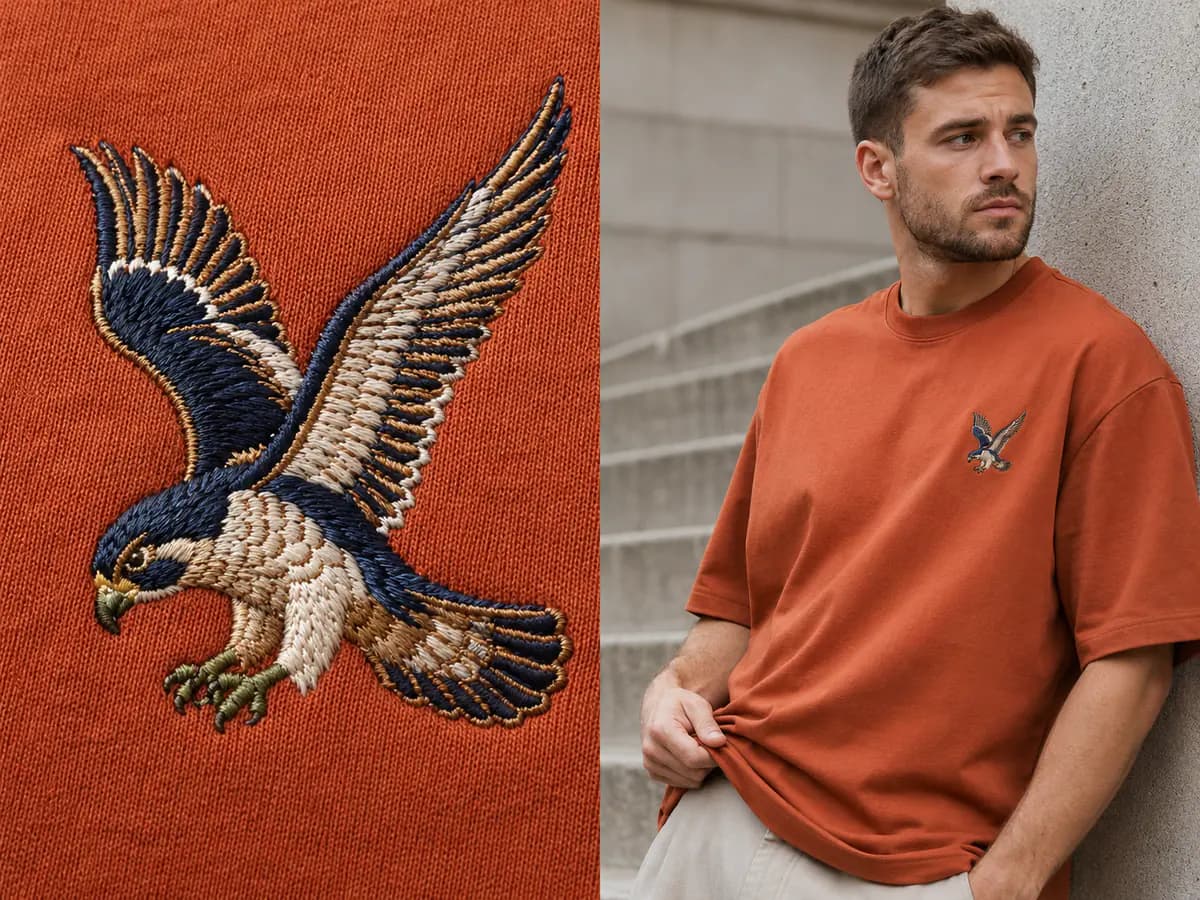
Before production, artwork must be converted into a machine-readable stitch file. This is embroidery digitizing or punch tape. Complex artwork, unusually high stitch counts and repeated revisions can increase the fee; some factories may return or waive the first fee once the bulk order reaches an agreed quantity.
| Technique | Indicative digitizing fee |
|---|---|
| Flat embroidery | US$20–60 per design |
| 3D embroidery | US$30–80 per design |
| Appliqué embroidery | US$30–100 per design |
| Towel embroidery | US$40–120 per design |
Dye and Wash Effects Add Cost, Time and Variation Risk
These references apply to one style and one color, approximately 300–500 pieces, using a 180–240 GSM cotton T-shirt. They are added to the base garment FOB direction.
| Dye or wash direction | Typical add-on | Bulk time added | Cost / risk level |
|---|---|---|---|
| Standard garment / bulk-dyed fabric | Included in base direction | None | Lowest |
| Softener wash | +US$0.25–0.70 | +1–3 days | Lower |
| Enzyme wash | +US$0.40–1.20 | +2–4 days | Low–medium |
| Garment dye | +US$1.00–2.80 | +4–7 days | Medium |
| Pigment dye | +US$1.50–3.50 | +5–8 days | Medium–high |
| Vintage wash | +US$1.80–4.50 | +5–10 days | Higher |
| Acid or mineral wash | +US$2.50–5.50 | +7–12 days | Highest |
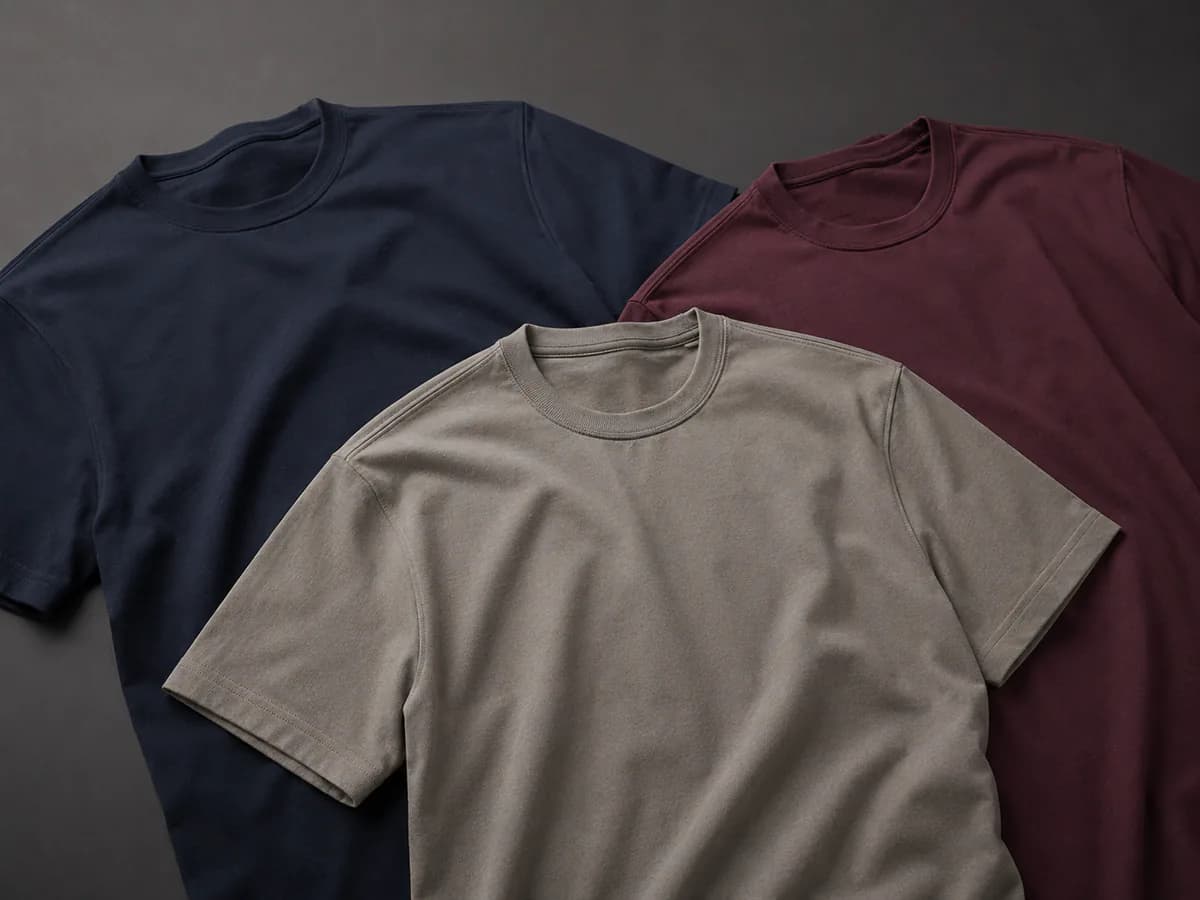
“Vintage wash” is not one fixed recipe. A light enzyme and softener treatment may be modest; a program combining pigment dye, stone, spray and repeated washing can cost more than an ordinary acid wash. Garment dye requires shrinkage and shade control, pigment dye has rubbing-color and natural-fade behavior, and acid or mineral wash has the highest loss and batch-variation risk.
Labels and Packaging Have Separate Supplier Minimums
A 100-piece garment order does not mean every custom label or package can be sourced in 100 pieces. Supplier minimums and tooling can leave surplus components or require a simpler first-order specification.
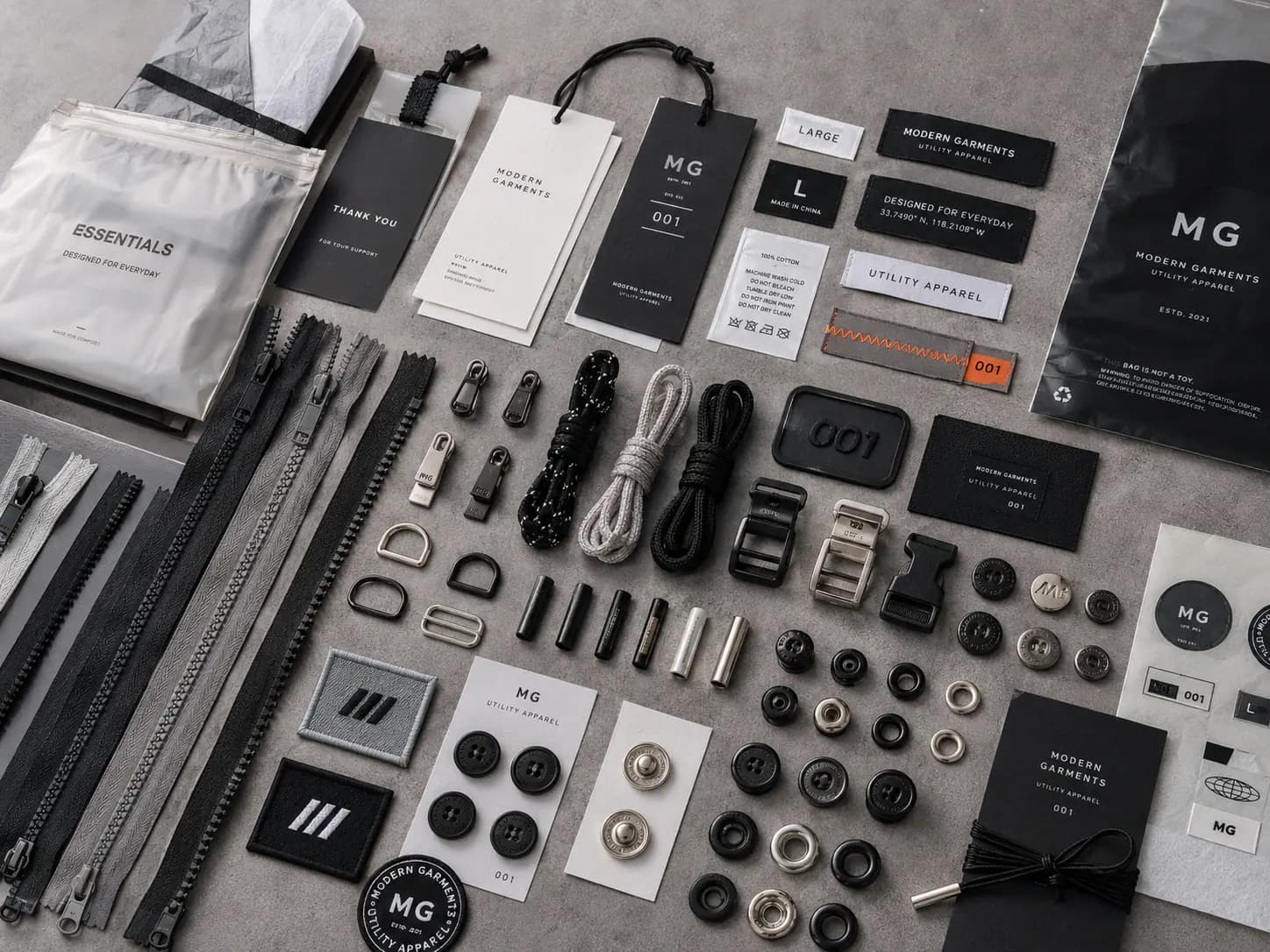
| Item | Common unit reference | Common supplier minimum |
|---|---|---|
| Woven main label | US$0.08–0.30 | 500–1,000 |
| Printed main label | US$0.05–0.18 | 300–500 |
| Care label | US$0.03–0.15 | 300–1,000 |
| Size label | US$0.02–0.08 | 500–1,000 |
| Hangtag | US$0.08–0.40 | 500–1,000 sets |
| Standard clear polybag | US$0.05–0.15 | Flexible |
| Custom printed polybag | US$0.15–0.50 | 1,000–3,000 |
| Custom paper or mailer box | US$0.50–2.50 | 500–1,000 |
Sampling Cost and Practical Cost Control
A custom T-shirt sample commonly costs approximately US$50–150, depending on the artwork and production techniques. The ordinary sampling window is 7–12 days after the required specification, materials and artwork are confirmed. The fee covers one-off pattern, material preparation, cutting, sewing, setup and coordination; it is not the bulk unit price multiplied by one. The revision scope should be agreed within the product development process.
Reduce unnecessary complexity, not product integrity
- Reduce the number of colors in the first order.
- Concentrate quantities instead of fragmenting the order across too many styles.
- Use approved available fabric instead of developing a custom textile at low volume.
- Limit print colors, sizes, placements and overlapping techniques.
- Avoid large high-density embroidery unless it is central to the design.
- Use simple packaging and existing hardware or trims where suitable.
- Provide a complete tech pack to reduce avoidable revisions.
Fabric quality, workmanship, neck-rib performance, necessary seam reinforcement, wash-effect testing, print curing standards, colorfastness testing and critical inspection are not sensible places to save money.
What to Send for a Useful T-Shirt Quotation
- Quantity for each style and color, including the proposed size breakdown
- Fit direction, measurements and a reference garment or technical drawing
- Fabric construction, composition, yarn quality, finished GSM, color and hand feel
- Neck rib, back-neck tape, seam and hem construction
- Artwork files with exact dimensions, colors, placements and technique direction
- Garment dye or wash requirements and the acceptable variation range
- Main label, size label, care label, hangtag and packaging requirements
- Requested trade term, named port, destination and required delivery window
Five quotation mistakes that keep the estimate too broad
- Sending only a reference image without measurements, hidden construction or a complete specification.
- Writing “100% cotton” without finished GSM, yarn quality, knitting and hand-feel direction.
- Omitting exact artwork dimensions, placement and colors.
- Treating the total order as if every color reaches the style-and-color production minimum.
- Leaving labels, packaging, trade terms and the named port outside the quotation scope.
Frequently Asked Questions
How much does it cost to manufacture 100 custom T-shirts?
For the controlled baseline in this guide, KAOUYOU’s August 2026 planning reference is approximately US$6.20–7.20 per piece for 100 pieces on an indicative FOB basis. It covers one basic crew-neck style and one standard color in 200 GSM combed-cotton single jersey with basic labels and ordinary individual packing. Decoration, specialist washing, custom packaging and international freight are excluded.
Why does the T-shirt price fall at 300, 500 or 1,000 pieces?
Pattern, marker, cutting setup, production instructions, line preparation, quality records and coordination work are distributed across more garments. Material purchasing and production efficiency can also improve. The reduction is not a fixed percentage because fabric, colors, decoration and supplier minimums change the result.
Is saying 100% cotton enough for an accurate quotation?
No. One hundred percent cotton describes fiber content, not yarn quality, knitting density, finished GSM, usable width, finishing or shrinkage performance. Carded cotton and combed ring-spun cotton can both be labelled 100% cotton while producing different cost and quality outcomes.
Can sizes be mixed in a 100-piece T-shirt order?
Yes. Sizes can normally be mixed within one style-and-color production run. The size breakdown should be confirmed before consumption, marker planning and cutting. Dividing the total across different styles or colors changes the production calculation.
How much does a custom T-shirt sample cost?
A T-shirt sample commonly costs approximately US$50–150, depending on the artwork and production techniques. The expected sampling time is generally 7–12 days after the required specification, materials and artwork are confirmed. Complex wash, decoration or repeated revisions may change the scope.
Which T-shirt decoration method is cheapest?
There is no universal answer. Price depends on artwork size, colors, coverage, garment color, order quantity, locations, setup and required hand feel. A small one-color screen print and a large four-color back print use the same technique but do not have the same cost.
Does the FOB reference include delivery to my country?
No. A formal FOB quotation identifies the named loading port and included scope. International freight, insurance, duties, taxes and destination services are confirmed separately under the agreed logistics arrangement.