A clothing sample is not one bulk garment purchased early. It is a one-style development project made through a different production system. The sample fee pays for decisions, preparation, trial work and one-piece construction; the bulk unit price is calculated after those decisions are approved and production can be organized at scale.
KAOUYOU can give a preliminary bulk estimate before sampling when the brief is sufficiently complete. The final production calculation is reviewed after fabric consumption, construction, techniques, trims, packaging and quantity are confirmed. This guide explains what changes between those two stages and which costs a brand should compare.
Answer in 30 seconds
- Sampling and bulk production use two different workflows, so their per-piece prices should not be multiplied or compared directly.
- A sample carries pattern, sourcing, setup, one-piece labor, measurement and review that bulk production spreads across an order.
- KAOUYOU refunds the first sample fee when cumulative orders for the same style reach 300 pieces; different styles and courier charges are not combined.
- A useful quotation comparison aligns the same fabric, construction, techniques, revisions, packaging and quantity assumptions.
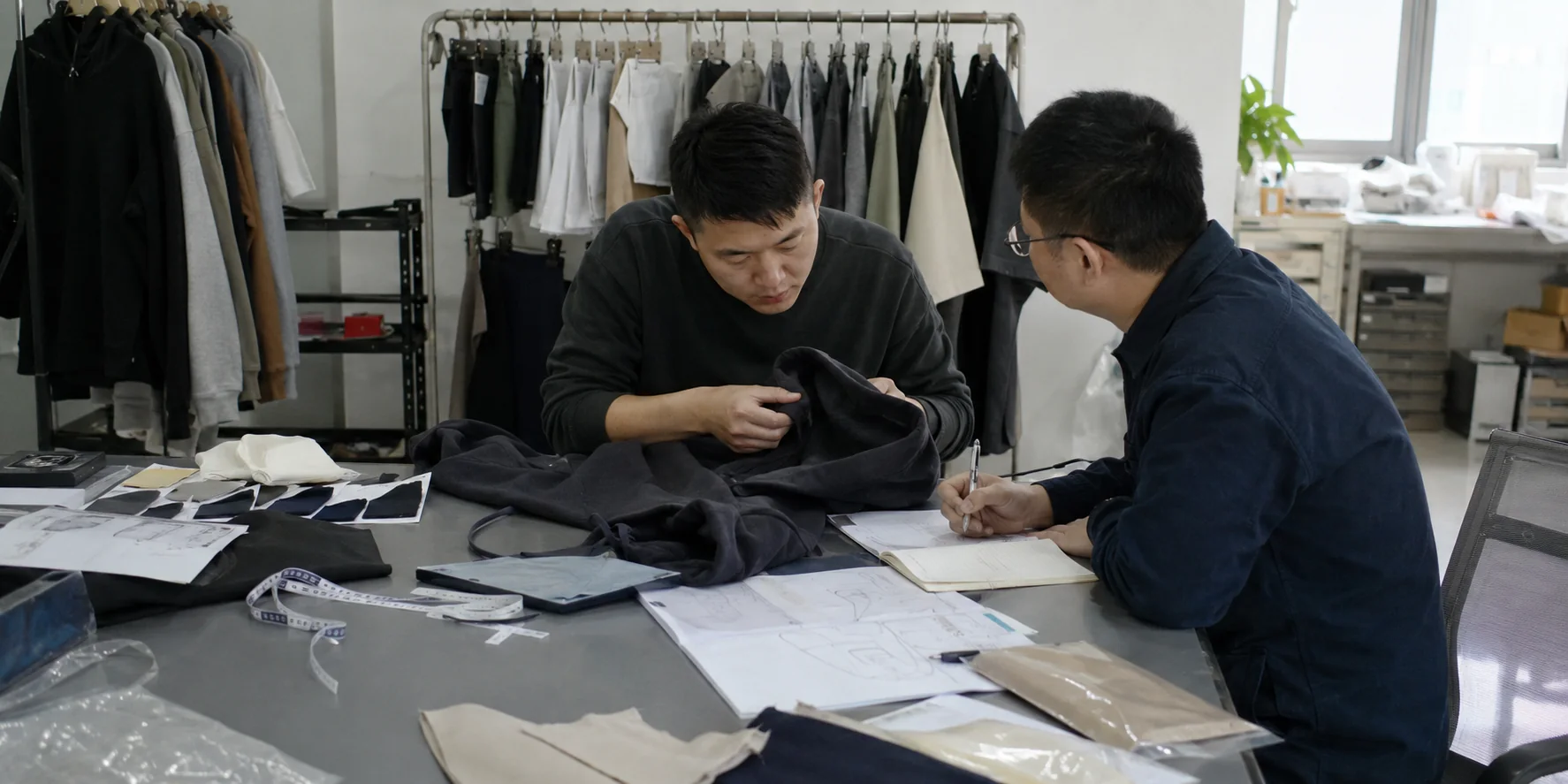
Why Are Sample Cost and Bulk Cost So Different?
Bulk production can buy a planned quantity of materials, place multiple sizes into a marker, cut layers together and divide sewing operations across a line. Pattern preparation, machine setup, process trials and production management are distributed across hundreds of garments.
A one- or two-piece sample still requires the product to be interpreted and engineered. A sample maker normally completes the garment from beginning to end while repeatedly checking measurements and construction. Fabric, rib, zippers, labels and decorations may also carry supplier minimum purchases or minimum setup charges even when the physical sample consumes very little.
Bulk unit price reflects batch purchasing, repeatable operations and cost allocation. Sample price reflects one-style development, small-quantity sourcing and individual production. A higher sample price does not mean every bulk garment will cost the same amount.
| Cost area | Sample stage | Bulk stage |
|---|---|---|
| Materials | Small-quantity or minimum-purchase cost | Bulk purchasing based on consumption, ratio and wastage |
| Pattern | Created or revised for one style | Already approved; grading and production checks remain |
| Cutting | One-off marker and individual cutting | Marker efficiency and batch cutting |
| Sewing | One sample maker completes most or all operations | Operations divided across a production line |
| Decoration / wash | Setup, color matching and trial work carried by very few pieces | Approved process repeated by batch |
| Management and QC | Frequent decisions and close individual review | Standardized instructions and batch controls |
| Main uncertainty | Development, fit and process feasibility | Consumption, efficiency, quantity and production consistency |
What Does a Clothing Sample Fee Cover?
At KAOUYOU, the complete sample quotation covers the work required for the agreed scope. Complex decoration, wash development or specialist testing may be shown as separate or additional line items, but they remain part of the total development cost the buyer should review before work begins.
| Development input | What happens before approval |
|---|---|
| Product interpretation | Reviewing the Tech Pack, reference garment or images and resolving missing specifications |
| Pattern work | Creating, checking or revising a production-ready pattern for the requested fit and construction |
| Material preparation | Finding and buying small quantities of fabric, rib, zippers, labels and other trims |
| One-piece cutting and sewing | Individual marker planning, cutting, machine setup and sample-room construction |
| Technique development | Artwork preparation, screens, embroidery digitizing, color matching, wash recipes or trials where required |
| Review and reporting | Measurement, workmanship checking, shrinkage review where applicable and consolidated feedback |
KAOUYOU normally develops or verifies its own production pattern instead of relying on an unverified client-supplied pattern. A client pattern can be used as reference, but the factory must retain responsibility for checking that the final pattern produces the agreed garment and can be executed in bulk. For this reason, supplying a reference garment, image or client pattern does not automatically remove the pattern-development charge.
Current category-specific working references
A custom T-shirt sample at KAOUYOU commonly falls around US$50–150. A developed hoodie sample commonly falls around US$100–200, while a very simple blank-style hoodie may be around US$50–80. These are not a universal price list. Artwork, fabric, construction, hardware, wash, tests, number of pieces and revision scope can change the quotation.
How Does Material Sourcing Change from Sample to Bulk?
A first sample usually needs only one or two garments. KAOUYOU therefore prioritizes a suitable stock fabric, warehouse material, cut length or another small quantity that can be purchased without waiting for a complete production lot. If an exact fabric is temporarily unavailable, a client-approved substitute with a similar composition, finished GSM, thickness, stretch and hand feel can be used to test fit and construction. Every substitution should be recorded.
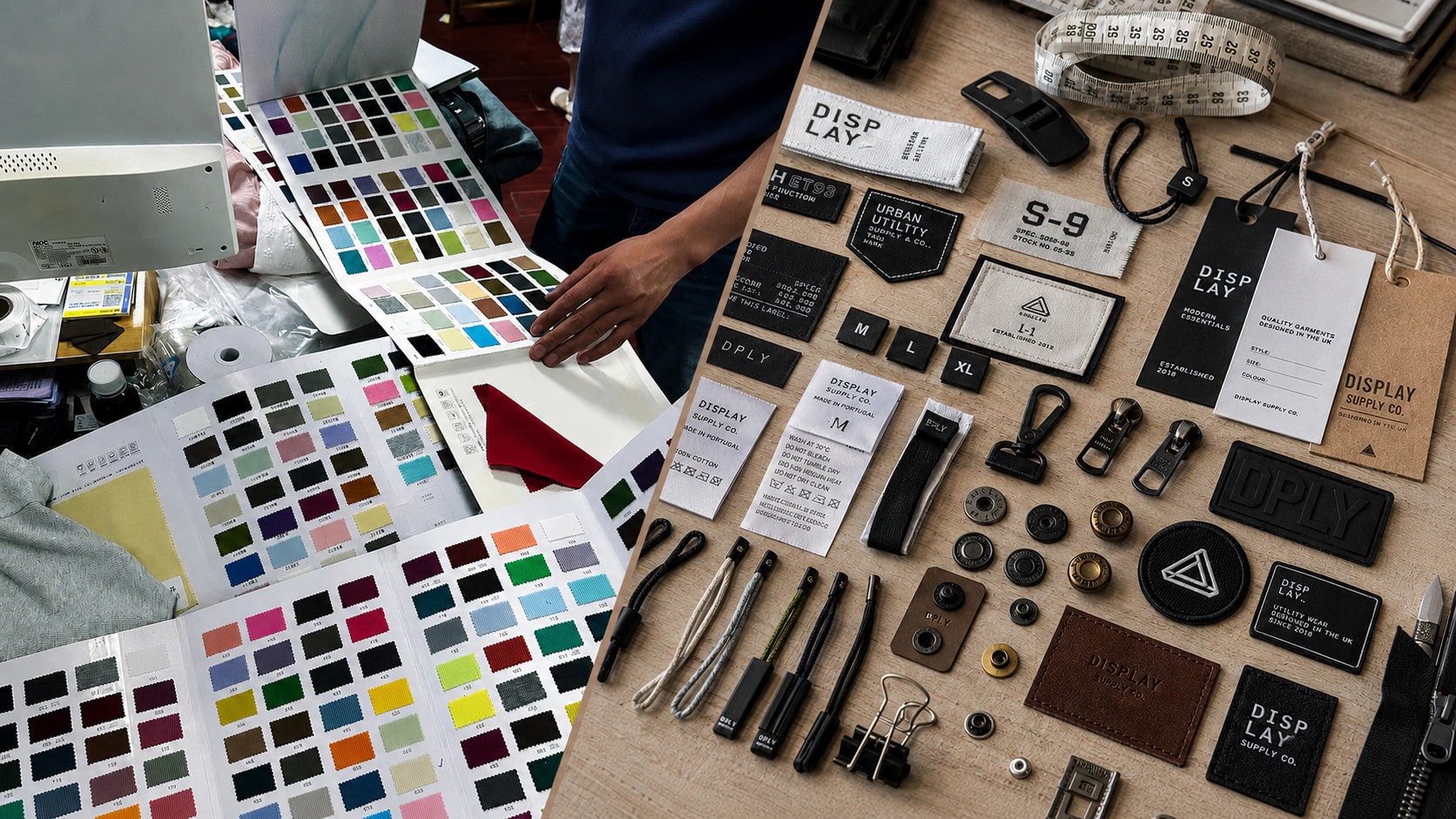
Bulk material is calculated from the approved pattern, size ratio, order quantity and expected wastage. Purchasing one production lot also helps control color, weight and hand-feel consistency. Fabric price and garment consumption normally become major components of the bulk cost.
Custom knitting, dyeing and special colors
A mill rarely produces a complete custom lot only for one or two garments. Depending on the project, the first fit sample may use a close stock fabric; color can be reviewed through a lab dip; a small dye lot or minimum purchase can be quoted; or the PP Sample can wait until production-intent fabric is available. A laboratory color or hand-dyed trial may differ slightly from a bulk dye lot and should not automatically be treated as the final production color standard.
- Use an approved stock or substitute fabric to review fit and construction where appropriate.
- Approve the color direction through a lab dip or other agreed reference.
- Book or produce the formal bulk fabric after quantity and commercial terms are confirmed.
- Make the PP Sample in production-intent materials when the order requires that control stage.
- Release bulk only after the controlling sample and remaining specifications are approved.
Which Technique Costs Appear During Sampling?
A single decorated sample may require nearly the same preparation as a production run. The setup cost is carried by very few pieces during development; after approval, the repeatable processing cost is recalculated for the planned bulk quantity.
Puff print, discharge, silicone, laser work, seam sealing, custom hardware or another specialist process can add material tests and trial rounds. An initial development charge is not proof that the same setup amount will be charged to every bulk garment; the quotation should separate one-off preparation from repeat production inputs wherever practical.
What Can Be Quoted Before the Sample?
A preliminary bulk estimate is possible when the Tech Pack or brief defines enough of the product. It is still based on assumptions. Sampling can reveal a different fabric consumption, additional reinforcement, difficult sewing sequence, unstable wash result, higher embroidery stitch count or another requirement that changes the production calculation.
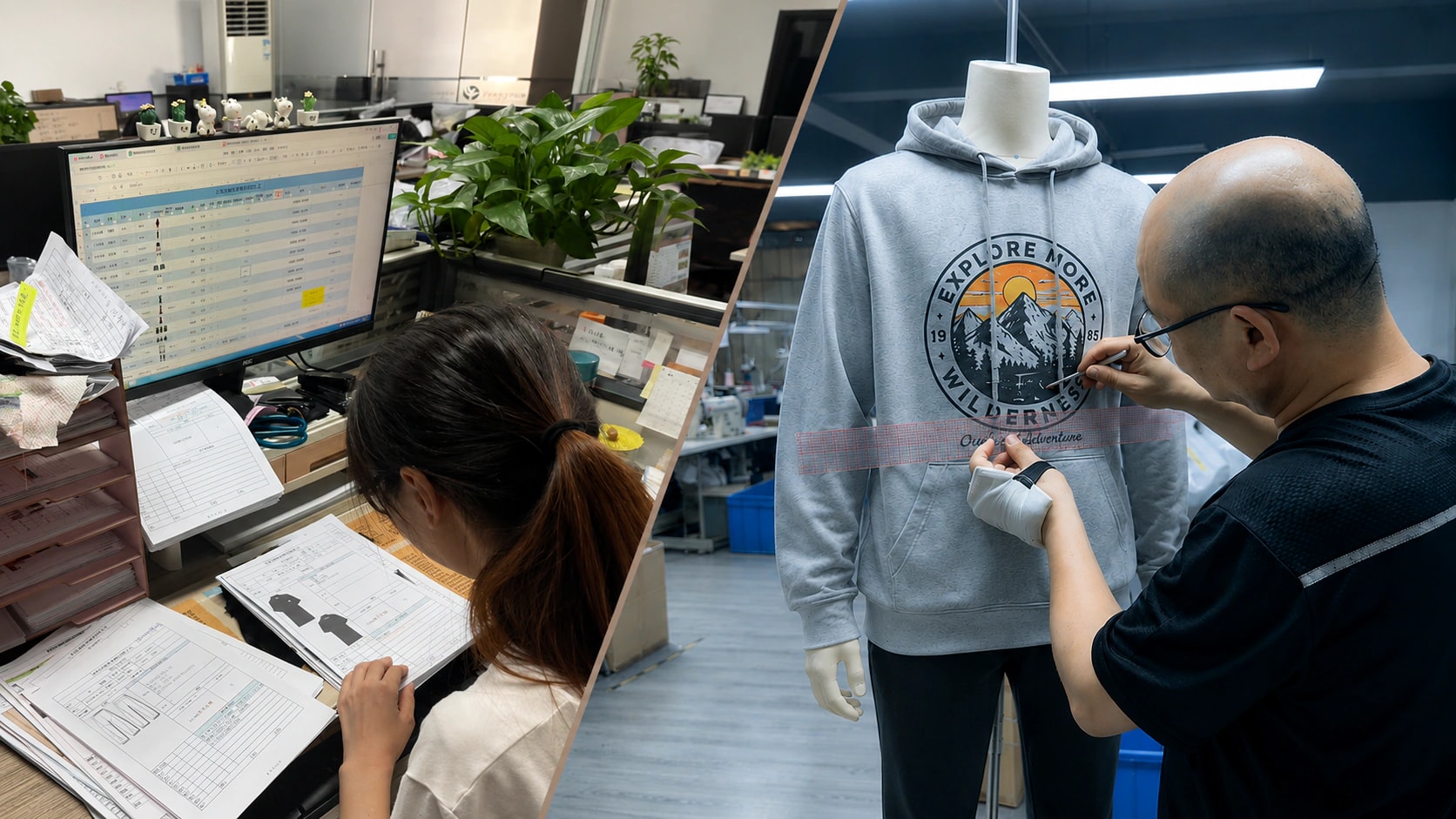
KAOUYOU reviews the production price using the confirmed specification and quantity, including:
- Fabric price, usable width, consumption, marker efficiency and wastage
- Order quantity and how it is divided by style, color and size
- Number of pattern pieces, sewing operations and difficult construction points
- Print colors and placements, embroidery area, stitch count and density
- Dyeing, washing, finishing and testing requirements
- Zippers, labels, hardware, packaging and other purchased components
- Measurement tolerances, inspection scope and quality requirements
A brand comparing suppliers should not compare totals until the scope is aligned. One quotation may include labels, screens, washing, inspection and packaging that another has omitted. The lowest visible number is not necessarily the lowest price for the same finished product.
Who Pays for Sample Revisions?
Responsibility depends on whether the confirmed instruction was followed. If KAOUYOU makes the sample incorrectly against that instruction, the factory bears the remake cost. If the sample follows the instruction and the client then changes the fabric, fit, measurements, artwork size, placement, wash effect or another approved input, a new sample fee applies.
A client-directed revision is normally cheaper when the existing pattern or completed development can be reused, but there is no automatic free revision round for small custom projects. The revised scope should state what is changing, which earlier inputs remain approved and what the new fee covers.
Consolidate all comments into one marked document. Conflicting messages, unversioned measurements and late artwork changes create avoidable sample rounds and make responsibility harder to establish.
When Does KAOUYOU Refund the First Sample Fee?
KAOUYOU refunds the first sample fee when cumulative bulk orders for the same style reach 300 pieces. The quantity can accumulate for that style, but quantities from different styles cannot be combined to reach the threshold.
Customer-requested additional samples are not included in this refund. International courier charges are also separate and non-refundable. Shipping is quoted according to destination, parcel weight and current courier charges; the client normally handles import duties, taxes and other destination fees.
Brands should ask every manufacturer to put any sample-credit or refund condition in the quotation. It is a supplier-specific commercial policy, not an industry entitlement.
Case: Heavyweight Oversized T-Shirt with Print and Vintage Wash
One KAOUYOU client developed a heavyweight oversized cotton T-shirt with a chest screen print, custom neck label and vintage garment wash. The design looked straightforward, but the first sample carried several separate development tasks.
- Create a pattern from the reference and establish the oversized proportions.
- Buy small quantities of heavyweight fabric and matching rib.
- Prepare one print screen and mix the intended print color.
- Run an individual print and vintage-wash trial.
- Cut, sew and press the garment through the sample room.
- Measure the sample and check post-wash shrinkage.
- Revise the pattern and make a second sample after client feedback.
After approval, the bulk unit price fell because fabric and trims were purchased in quantity, the pattern and print screen did not need to be developed again, cutting used a production marker, sewing was divided across a line, and printing and washing ran by batch. Development, setup and management were spread across the order.
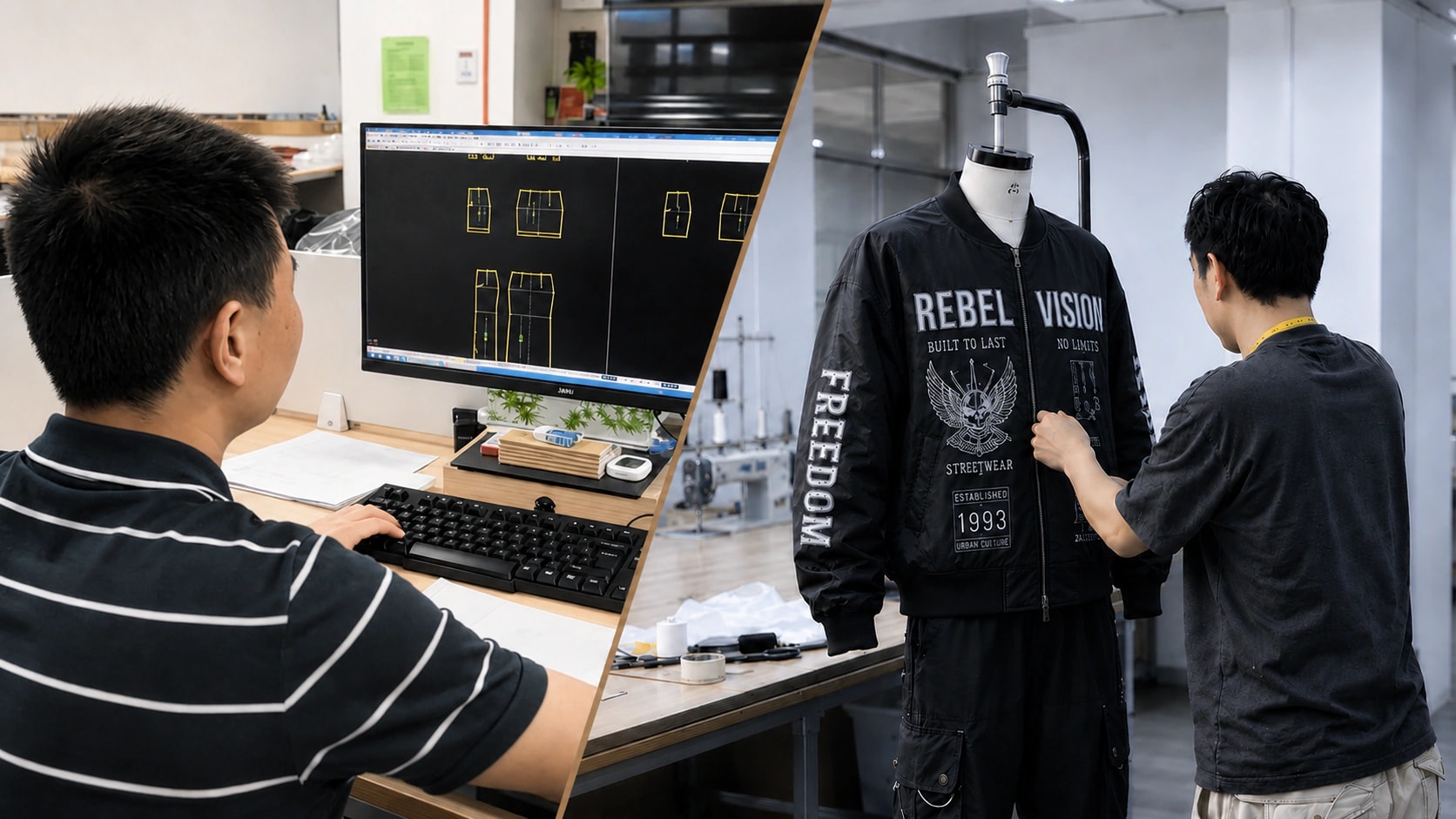
The lesson is not that every sample follows a fixed price multiplier. It is that the buyer purchases development, trial and approval during sampling, then purchases repeatable manufacturing during bulk production.
What Should a Brand Confirm Before Paying a Sample Fee?
- Confirm the sample type and decision it is meant to support: fit, construction, color, technique or final production approval.
- List the fabric, trims, artwork, measurements, labels and packaging included in this round.
- Mark every substitute material and state what must be replaced before PP or bulk approval.
- Separate sample making, specialist development, testing and international courier charges.
- Record how factory errors and client-requested revisions will be handled.
- Put any sample-fee refund or bulk-order credit threshold in writing.
- Compare the preliminary and final bulk quotation using the same specification and quantity breakdown.
Frequently Asked Questions
Why is a clothing sample more expensive than one bulk garment?
A sample carries one-style development, small-quantity sourcing, individual cutting and sewing, process setup, measurement and review. Bulk production uses approved specifications, larger material purchases, batch cutting and a production line, so setup and management costs can be spread across the order.
What does KAOUYOU's sample fee include?
The complete quotation covers the work required for the agreed sample scope, including Tech Pack review, pattern work, material preparation, cutting, sewing, applicable technique development, measurement and quality review. Complex printing, embroidery, washing or special processes may appear as separate or additional line items within that quotation.
How much does a custom clothing sample cost at KAOUYOU?
A custom T-shirt sample commonly falls around US$50–150. A developed hoodie sample commonly falls around US$100–200, while a very simple blank-style hoodie may be around US$50–80. These are category-specific working references, not a universal price list; materials, construction, techniques, tests, quantity and revisions determine the actual quotation.
Can KAOUYOU estimate the bulk price before sampling?
Yes, when the project information is sufficient KAOUYOU can provide a preliminary estimate. The production price is recalculated after the sample clarifies fabric consumption, construction, technique difficulty, trims, packaging and the confirmed order quantity.
Is the first sample fee refundable?
KAOUYOU refunds the first sample fee when cumulative bulk orders for the same style reach 300 pieces. Quantities from different styles are not combined. Additional customer-requested sample rounds and international courier charges are not included in that refund.
Who pays when a sample must be remade?
KAOUYOU bears the remake cost when the sample does not follow the confirmed instruction because of a factory error. When the physical sample follows the instruction but the client then changes the fabric, fit, artwork, measurements or effect, the revised sample is charged again, normally at a lower fee where completed development work can be reused.
Does the sample fee include international delivery and import charges?
No. Sample shipping is quoted separately according to destination, parcel weight and courier charges. Import duties, taxes or destination fees are normally handled by the client.
Source and Evidence Notes
KAOUYOU policy, price references, workflow details and the T-shirt example in this guide were supplied and reviewed by the KAOUYOU team for this article. They describe KAOUYOU's current process and should not be treated as universal supplier rules.
The International Trade Centre's Garment Costing Guide provides an external apparel-costing reference and illustrates how sample-making cost can be allocated over different production quantities. Its worked figures are examples, not KAOUYOU prices.