Screen printing is usually the stronger starting point for bold spot-color graphics, larger repeated quantities and special ink effects. DTF is often more flexible for photographs, gradients, fine detail, many colors or smaller multi-design runs. For a clothing brand, however, the correct decision is not simply screen printing versus DTF by order quantity. Artwork, fabric, print area, placement, wash sequence, hand feel, quality target and cost must be reviewed together.
KAOUYOU provides both processes through long-term specialist printing partners. We coordinate the production files, approve artwork details, color and placement, inspect the completed work and remain responsible for the quality of the garments delivered to the client.
Answer in 30 seconds
- Choose screen printing first for clean color blocks, large logos, repeat volume and effects such as cracked, puff, high-density or discharge printing.
- Choose DTF first for photographic graphics, gradients, fine lines, many colors and smaller orders with multiple artworks.
- Do not use a universal quantity crossover: request a project quote based on the actual artwork, garment and production plan.
- Approve the chosen method on the production-intent fabric, especially for large prints, stretch materials, dark colors or washed garments.
Screen Printing vs DTF: Quick Comparison
The following is a selection guide, not a fixed production rule. A large one-color back print, a detailed photographic front print and a garment-dyed vintage graphic create different technical and commercial decisions even when the order quantities match.
| Decision factor | Screen printing | DTF |
|---|---|---|
| Artwork | Strong for spot colors, bold graphics, text and special ink effects | Strong for photographs, gradients, many colors and fine detail |
| Set-up | Each spot color normally requires its own screen; an underbase or special effect can add passes | No color-by-color screen set-up, but artwork preparation, film, powder and heat pressing still matter |
| Quantity | Often gains a cost advantage on larger repeats with fewer colors | Often more flexible for smaller runs, multiple designs and high-color artwork |
| Large coverage | Hand varies with ink system, underbase, print passes and coverage | A continuous large transfer can feel more film-like and reduce breathability |
| Production stage | Usually printed on cut panels before sewing | Can be applied to cut panels or completed garments, subject to placement |
| Best decision rule | Select after reviewing artwork, fabric, quantity, wash sequence and desired hand | Select after reviewing artwork, fabric, quantity, wash sequence and desired hand |
How Do Screen Printing and DTF Work in Clothing Production?
Screen printing
Screen printing pushes ink through prepared mesh screens onto the fabric. Each spot color normally needs a separate screen, followed by registration, printing and curing. Dark garments often need a white underbase so the visible colors remain accurate and opaque; that underbase adds another color and print pass. Effects such as puff, cracked, high-density, silicone or discharge printing may require separate screens, materials or passes.
KAOUYOU normally arranges screen printing on cut garment panels. Flat panels are easier to position and register repeatedly, and seams do not interrupt the screen. A design that crosses a seam or depends on the completed garment shape requires a specific feasibility review.
Direct-to-film transfer
DTF prints the prepared artwork onto a transfer film, applies an adhesive system and transfers the image to the fabric with controlled heat and pressure. It does not require one physical screen for every artwork color, which makes detailed, high-color images more practical in many projects.
DTF can be transferred to cut panels or completed garments. Larger standardized quantities commonly use panels; small graphics, reorders or positions that need the sewn garment as a reference may be pressed after sewing. The surface still needs to sit flat: zippers, pockets, seams and hardware can interfere with pressure and adhesion.
Which Artwork Is Better for Screen Printing or DTF?
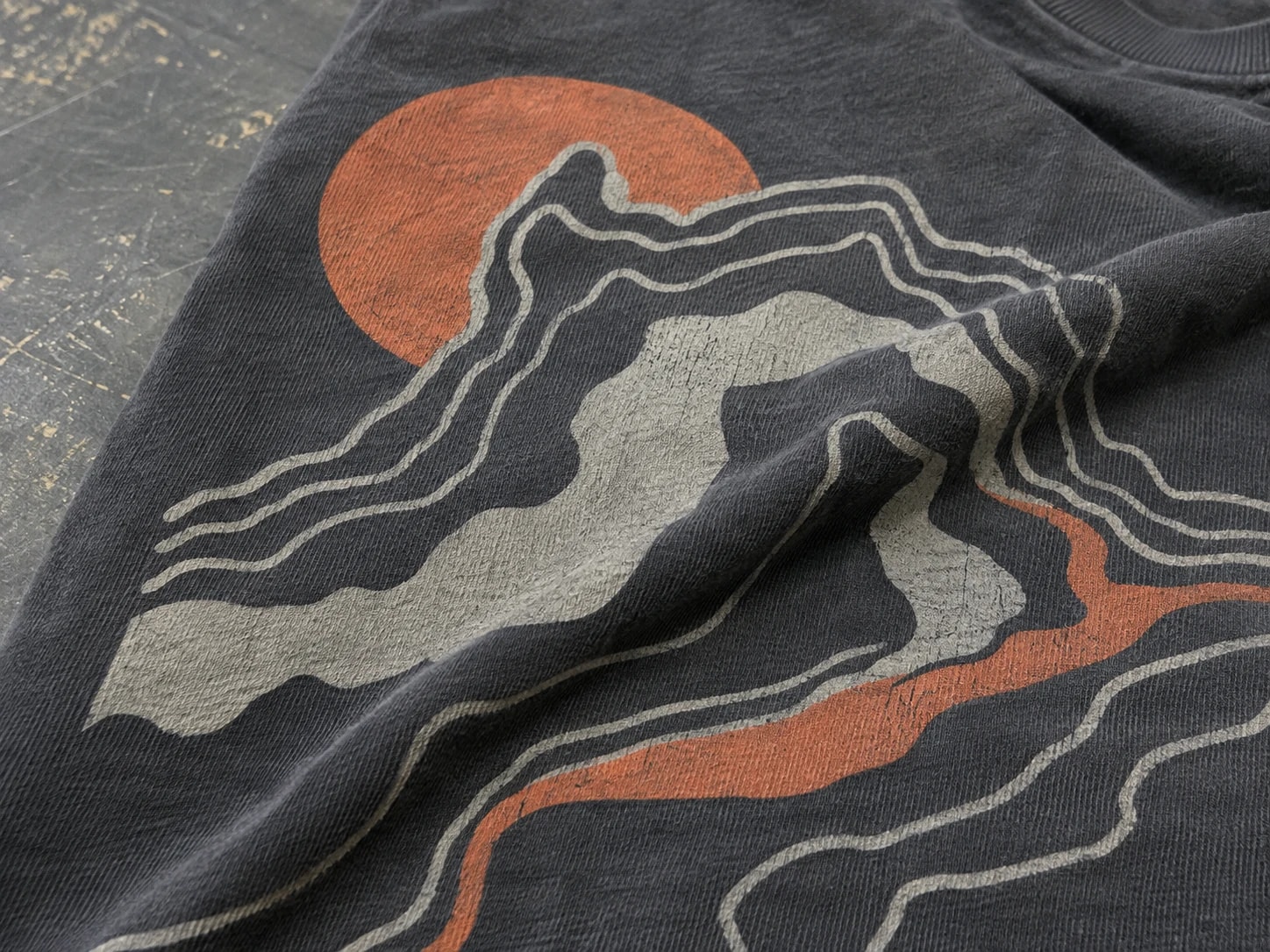
Screen printing is commonly well suited to one-color or lower-color graphics, clean typography, large logos and distinct color blocks. It also gives a brand access to a wider family of ink-driven effects. The worn surfaces shown in our oversized cracked-print T-shirt and vintage cracked graphic T-shirt are useful visual references when discussing a distressed print direction; the final method and effect still need to be specified for the order.
As color count, separations and registration complexity increase, screen-print set-up and execution become more involved. A complex gradient or photograph can sometimes be separated for screen printing, but this does not mean screen printing is automatically the most practical route for the desired detail, quantity and budget.
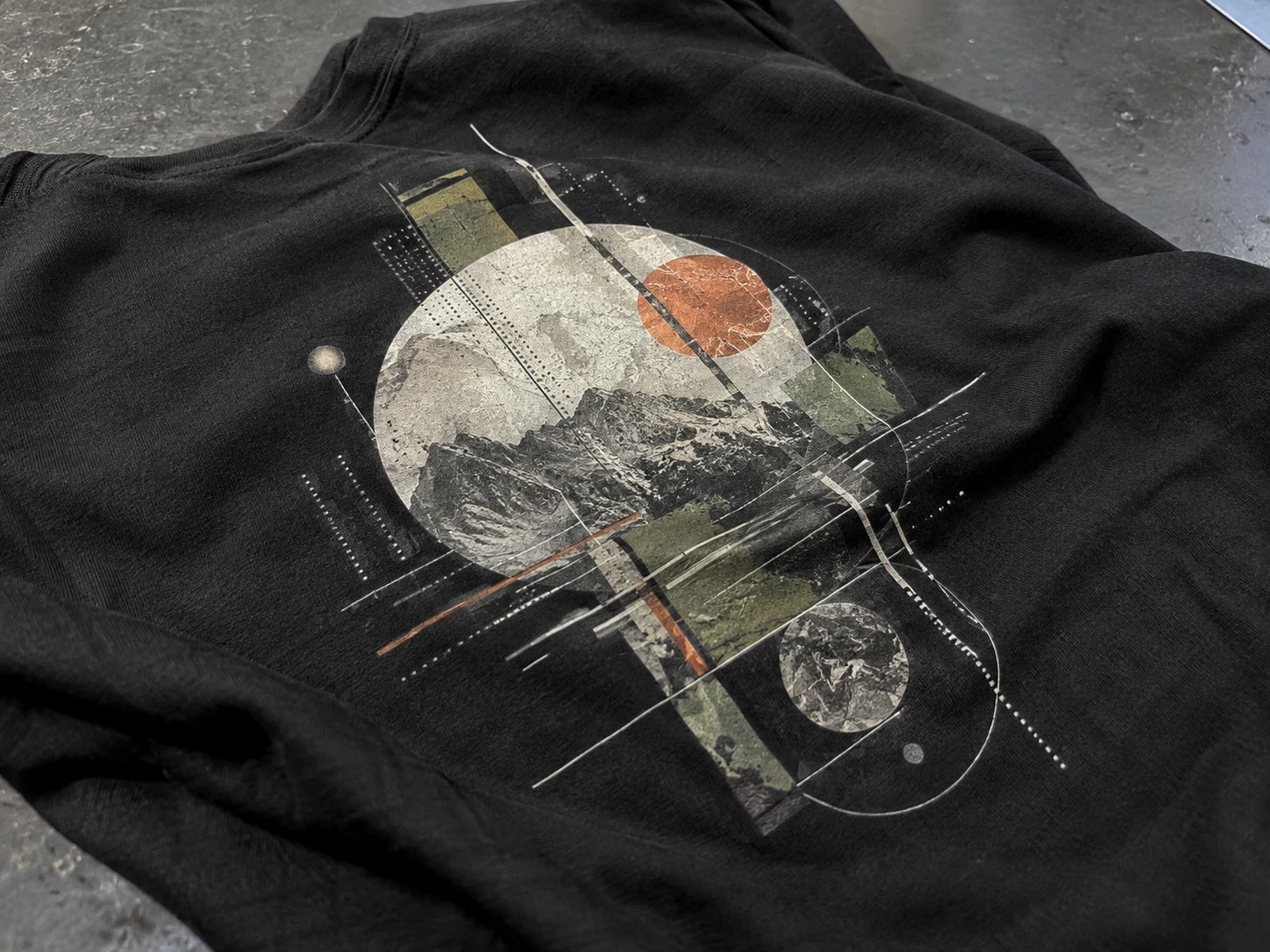
DTF is commonly a stronger starting point for photographic images, complex gradients, many colors, fine linework and designs that cannot be reduced comfortably to a few spot colors. A buyer developing artwork like a photographic graphic T-shirt should compare the required detail and hand feel on a physical print sample rather than selecting from an on-screen mock-up alone.
Do not count colors in a mock-up and stop there. Ask what the final print should feel and look like: a natural ink surface, a heavy opaque layer, a deliberately cracked effect or a highly detailed photographic image.
Which Method Costs Less at Your Order Quantity?
There is no honest fixed number at which screen printing always becomes cheaper than DTF. A one-color design and a ten-color design do not share the same screen-print set-up. A small chest transfer and a full-back DTF image do not use the same amount of film, adhesive or pressing time.
As a practical direction, fewer colors and larger repeat quantities often improve the screen-print cost structure. High-color artwork, gradients, smaller runs and multiple designs often favor DTF flexibility. KAOUYOU does not add a separate fixed minimum machine fee for screen printing, but the garment order must meet our normal MOQ of 100 pieces per style per color, with mixed sizes allowed. Every print is quoted from the confirmed project information.
How Do Fabric, Hand Feel and Breathability Affect the Choice?
Screen printing is commonly used on cotton, CVC, sweatshirt French terry or fleece, some polyester blends, denim and canvas. DTF can work across cotton, polyester, blends, and selected nylon, stretch, knit and woven fabrics. Neither list is an automatic approval. Waterproof coatings, high stretch, long pile, heat-sensitive fabrics and special surface finishes require adhesion, heat-mark and wash testing.
Dark garments create additional controls. Screen prints commonly need a white underbase. DTF normally includes a white image layer, but film edges, residue or press marks may be more visible on a dark surface. Dark garment crocking or loose dye can also contaminate a light print, so the fabric and printing system need to be checked together.
Large coverage changes the wearer experience. A thin screen ink or suitable water-based direction can feel relatively soft, while heavy plastisol, multiple underbase passes or special high-build effects feel thicker. A large continuous DTF transfer normally creates a more noticeable film layer and can reduce breathability. Negative space, halftones or divided artwork can help. Buyers considering a large placement graphic T-shirt should approve the complete garment, not only a small color swatch.
How Should a Brand Specify Print Size and Placement?
Provide the finished artwork width and height, the reference distance from the neckline, shoulder or side seam, the center line and the intended print position. State whether every garment size uses one artwork size or whether the artwork scales by size group.
KAOUYOU commonly groups approximately three adjacent garment sizes under one artwork size, then uses another artwork size for the next group when proportion requires it. This is a working approach, not a universal rule. The grouping depends on the garment, artwork and client requirement. One print size across XS to XXL is also possible, but its visual proportion will change.
Before bulk, KAOUYOU normally prepares an electronic placement layout and, when appropriate, a print sample. Position-sensitive designs should also be reviewed on a garment sample so the artwork can be judged against the neckline, sleeves, pockets and overall silhouette.
Should Printing Happen Before or After Garment Dyeing and Washing?
KAOUYOU commonly completes garment dyeing or washing first and prints afterward. This protects the finished artwork from aggressive enzyme, dye or vintage-wash processing and gives better control over the final print color.
If the brand wants the print to fade, crack or merge visually with the garment wash, printing before washing may be the correct sequence. It must first be tested because the wash can change ink color, adhesion, sharpness and surface condition. Products that combine graphic, wash and distress directions—such as this vintage cracked graphic T-shirt—need the complete sequence approved as a system rather than as isolated effects.
Can a DTF Sample Be Changed to Screen Printing for Bulk?
Yes. KAOUYOU has used DTF during sampling and changed to screen printing for bulk production. The original DTF sample must not be treated as the final screen-print standard because the two processes can differ in color, hand, edge quality, detail and washed appearance.
- Review whether the artwork can be separated and registered reliably for screen printing.
- Confirm the screens, underbase, ink system and any special effect.
- Produce a new full-garment sample or relevant technique sample on the intended fabric.
- Compare color, dimensions, position, ink hand, clarity and wash performance.
- Obtain client approval of the new screen-print result before bulk production.
What files should the client provide?
AI and PDF vector artwork are preferred. KAOUYOU can also work with PSD and PNG files. Bitmap artwork should ideally be supplied at 300 DPI at the actual print size, PNG files should have transparent backgrounds, artwork should use the final proportions, and screen-print files should be separable. Identify Pantone references for spot colors, outline fonts and state the final dimensions and placement. If no Pantone reference exists, the parties can agree another color standard, but a physical sample is still the safer approval point.
How Does KAOUYOU Check Screen Printing and DTF?
KAOUYOU confirms the artwork scale and position through an electronic layout and typically a print sample before bulk. During production and QC, the team checks:
- Color against the approved reference
- Artwork dimensions and garment position
- Registration between screen-printed colors
- Missing ink, blocked detail, pinholes or inadequate coverage
- Cracking, lifting, peeling or poor adhesion
- DTF film edges, glue marks and incomplete release
- Heat-press impressions or fabric scorching
- Ghosting, stains and damage around the artwork
- Required washed, stretched or rubbed performance
The test plan depends on the product and client requirement. Large-area prints, high-stretch materials and special washes deserve particular attention. These controls form part of a wider garment quality process, not a substitute for approving the correct method during development.
Which print defects can be repaired?
Minor screen-print pinholes may sometimes be touched up, insufficient coverage can occasionally accept another print pass, and removable surface contamination can be cleaned. Severe misregistration, a crooked design, the wrong color, obvious ghosting or ink damage to the fabric usually cannot be repaired invisibly.
A slightly lifting DTF edge or insufficient bond may sometimes be re-pressed. An incomplete film release may be corrected if the fabric has not been damaged. Wrong placement, wrong color, scorching, severe bubbling, obvious glue marks or damage caused during removal normally requires the garment to be rejected or remade. KAOUYOU does not approve a repair when the treatment leaves a more visible defect.
Factory Case: When DTF Replaced Multi-Color Screen Printing
A client supplied an AI-generated clothing visualization with a colorful, layered graphic and asked KAOUYOU to reproduce it. The first direction was screen printing. Artwork analysis and trials showed that the image contained many colors, fine details and gradients. Continuing with screen printing would have required numerous screens and registration steps, increasing cost and difficulty without achieving the expected detail.
KAOUYOU recommended DTF instead. The team prepared the artwork again, confirmed its physical dimensions, color, position and transfer result, and produced a new sample for the client. DTF retained more of the original image's color and detail, and the client approved the revised direction.
The process named in the first enquiry is not always the process that best delivers the artwork. The factory should compare the design, fabric, quantity and target result before locking the method.
What Should You Send for an Accurate Print Recommendation?
A useful request for quotation lets the factory evaluate printing and garment production together. Send:
- Final artwork file and intended print dimensions
- Garment style, fabric composition, color and surface finish
- Order quantity by style, color and artwork
- Print location and proximity to seams, pockets, zippers or hardware
- Target hand feel, coverage, breathability and visual effect
- Any garment dyeing, enzyme washing, vintage washing or testing requirement
- Size range and whether artwork should scale across size groups
- Reference sample, Pantone colors and required approval method
If print alone cannot create the intended depth or texture, ask the factory to compare other garment-decoration techniques. Appliqué, embroidery and mixed-media construction can be more appropriate for some designs; this chenille embroidery T-shirt shows one non-print visual direction.
Frequently Asked Questions
Is screen printing better than DTF for clothing brands?
Neither method is universally better. Screen printing is often practical for bold, lower-color artwork and larger repeated quantities. DTF is often practical for photographs, gradients, fine details, many colors or smaller multi-design runs. The right choice depends on artwork, fabric, quantity, hand feel, wash process, placement and target cost.
Which is cheaper: screen printing or DTF?
There is no responsible fixed quantity where one always becomes cheaper. Screen costs are affected by color separations, screens, underbase, print passes, area and quantity. DTF costs are affected by transfer area, coverage, materials, quantity and pressing difficulty. KAOUYOU quotes the actual artwork and garment specification.
Can DTF be used for bulk clothing production?
Yes. DTF can be used in bulk when the selected film, adhesive, pressing parameters, fabric and artwork pass the required sample and performance checks. Larger standardized orders are commonly transferred on cut panels, while some positions or smaller work can be pressed after sewing.
Does a large DTF print feel heavy?
It can. A large continuous transfer creates a film layer that may feel firmer and less breathable. Negative space, halftones, divided artwork or a different print method can reduce coverage. The result should be approved on the intended fabric.
Can a DTF sample be changed to screen printing for bulk?
Yes, but the DTF sample cannot serve as the final screen-print standard. The brand should approve a new screen-print sample or technique swatch for color, size, position, clarity, ink hand and wash result before bulk production.
What artwork files should a brand send for garment printing?
Vector AI or PDF files are preferred. PSD and PNG can also work when they are prepared at the actual print scale; bitmap artwork should ideally be 300 DPI at final size, PNG files should have transparent backgrounds, spot colors should identify Pantone references, and fonts should be outlined.
Can screen printing or DTF go over a seam or zipper?
It requires case-by-case evaluation. Screens and heat presses need stable, flat contact. Seams, pockets, zippers and other thick areas can interrupt pressure, registration or ink contact, so the production sequence or artwork position may need to change.
Does KAOUYOU print before or after garment washing?
KAOUYOU commonly completes garment dyeing or washing before printing so aggressive processing does not damage the finished print. If the intended effect requires the print to fade, crack or blend into the wash, print-before-wash can be tested and approved for that project.