Answer in 30 Seconds
To develop vintage graphic T-shirts, specify the body shade, graphic aging and garment distressing separately, then approve their combined effect on a finished sample. A faded body, a graphic with missing areas, a physically cracked print surface and a frayed edge create different results. A design can use one or several of them.
KAOUYOU commonly completes garment dyeing or washing before printing. When the brief requires the graphic to change during washing, the team may test printing first, followed by the intended garment wash. Approve the resulting color, hand, dimensions and distressing against physical references before bulk production.
What should a brand define when requesting a vintage graphic T-shirt?
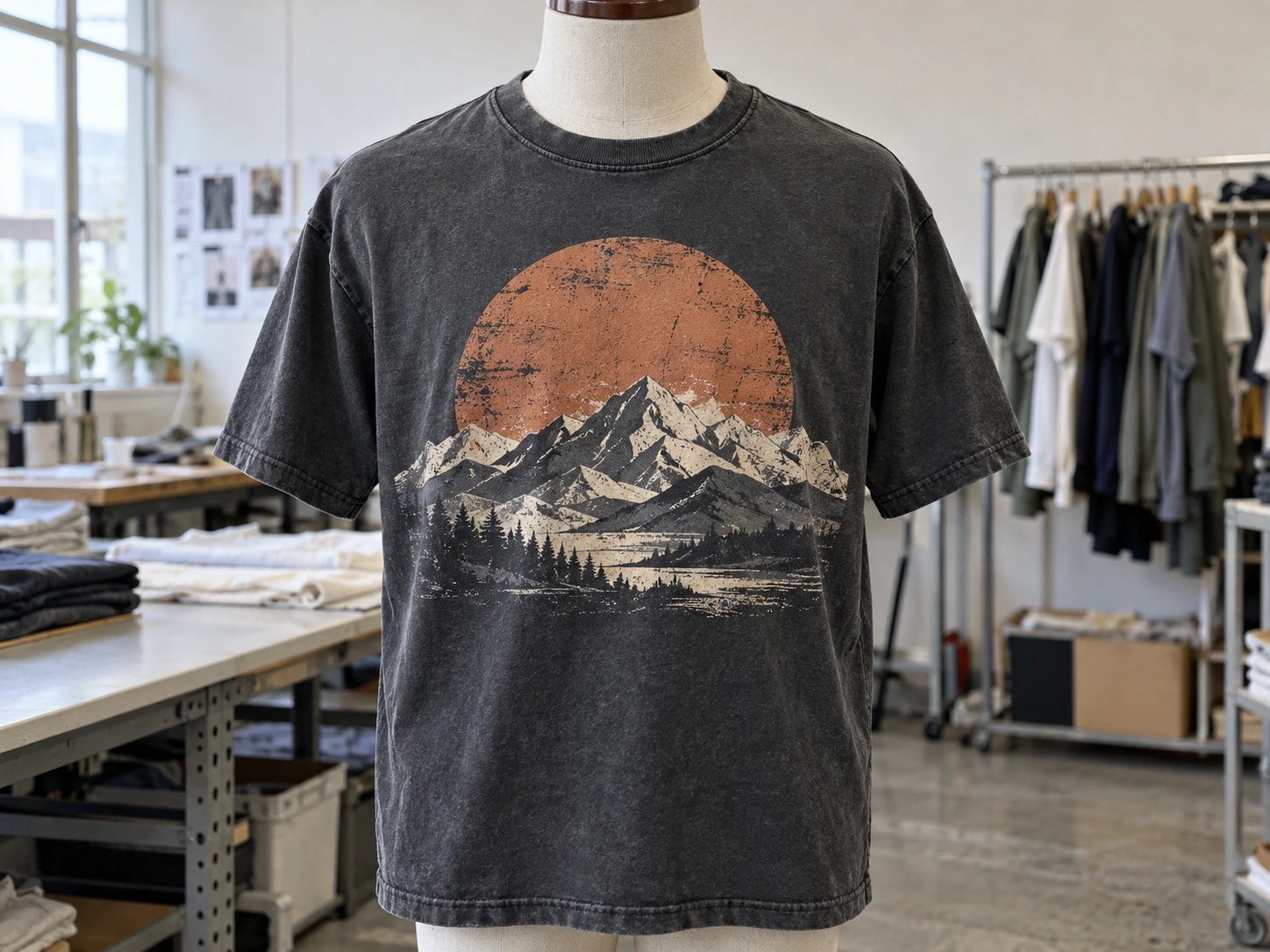
At KAOUYOU, customers commonly begin with reference images. The team asks which effect the customer wants to achieve before choosing a production route. A photo helps start that discussion, but it does not establish whether the buyer wants a soft, lightly faded tee or a strongly mottled body with a visibly broken graphic.
Separate the brief into three areas:
| Effect area | Decisions for the brand | Physical result to approve |
|---|---|---|
| Body color and hand | Base shade, even or mottled fading, seam highlights and softness | Washed fabric or garment shade and hand feel |
| Graphic aging | Muted colors, missing areas, crack size, coverage and ink feel | Print trial or complete decorated sample |
| Local distressing | Location, extent, edge character, holes and permitted variation | Placement reference and approved distressing sample |
State the leading visual feature and how strongly the other elements should appear. A restrained wash with an aged graphic can communicate the direction without adding holes. Strong body mottling and dense graphic distressing may compete for attention, so check that the main image remains readable.
The vintage cracked-print T-shirt is a reference for combining a faded body with front-and-back graphics. Use the visible result to discuss the new brief; the exact fabric, printing system and wash route still need project approval.
Which fabric and GSM support the intended vintage hand?
KAOUYOU commonly starts with 100% cotton single jersey for this direction. The team finds it a useful base for developing garment color, a softened hand and faded effects. Cotton-rich cotton/polyester blends can also be considered when the buyer prioritizes a different balance of hand and dimensional stability.
Higher polyester content can change how the fabric responds to a chosen dyeing or aging route. It should not be substituted on the assumption that the same appearance will follow. Review the actual fabric and process together.
Fabric weight is measured in grams per square meter (GSM). KAOUYOU uses the following weight directions during development:
| Reference weight | Possible design direction | Main development concern |
|---|---|---|
| About 160–200 GSM | Lighter, softer summer vintage tee | Thin material needs particular care with strong washing or local distressing |
| About 200–260 GSM | Balance of shape and everyday comfort | Match density, graphic coverage and finishing to the desired fall |
| About 260–320 GSM or higher when required | Substantial streetwear silhouette | Review garment weight, stiffness and additional processing or handling work |
These are reference ranges, not a universal vintage T-shirt specification. Surface texture, density and finishing also affect the impression. A rougher cotton surface and a cleaner, smoother one can give the same artwork a different character.
For a soft but supported body, KAOUYOU may combine a sufficiently dense fabric with moderate enzyme washing or softening. Excessive softening can make the shoulder and body collapse; some finishes can also interfere with print adhesion. Check the hand and decoration on production-intent material. The fabric swatch evaluation guide covers the earlier material review.
How should washed color and the wash direction be approved?
Washed black and charcoal are common KAOUYOU starting shades, alongside vintage brown, olive, gray-blue and off-white. Washed black usually has a grayer appearance and more visible seam fading than a clean, solid black. Lighter shades may show a subtler aging effect.
Ask whether the customer wants gentle overall fading or stronger clouding and contrast. That distinction is more useful than assuming a wash name identifies a fixed result.
In KAOUYOU's development discussions, enzyme washing is commonly considered for surface cleaning and a softer hand. Garment-color development may involve pigment coloration or another garment-dyeing route selected for the material. Mineral-wash requests often seek more irregular fading. Customers may use “acid wash” broadly for a high-contrast or snow-like appearance, so the intended look must be clarified through references and trials.
The fabric, starting color, processing conditions and mechanical action can change the result. A brown or olive direction may need different development from charcoal, while dark material can stain light trims or labels. Approve a washed physical shade and complete sample rather than relying only on a color name or screen image.
How can a faded or cracked graphic remain soft and readable?
First establish whether the aged appearance is built into the artwork or develops in the print surface. Missing dots, worn patches and cracks can be drawn into the file. Special print materials, post-treatment and garment washing can create other surface effects. KAOUYOU also combines approaches when the design requires it.
Artwork-defined distressing offers more repeatable placement of the missing areas. A physically developing crackle effect can vary between garments. Ask the customer to approve crack scale and density, how much body color shows through, and whether the print should feel soft or have a noticeable raised ink surface.
For a large faded graphic with a softer hand, KAOUYOU may compare thin-deposit screen printing, water-based printing, a suitable discharge direction, or halftones and reduced coverage. Each option needs a compatible fabric, color and process trial. “Water-based” or “discharge” alone is not an approval standard.
There are trade-offs. A large solid image with strong opacity can require more material than a broken, lower-coverage graphic. Bright pale colors on a dark body may need an underbase. Review color coverage and hand together, particularly if the customer requests both a strong graphic and a very fluid garment.
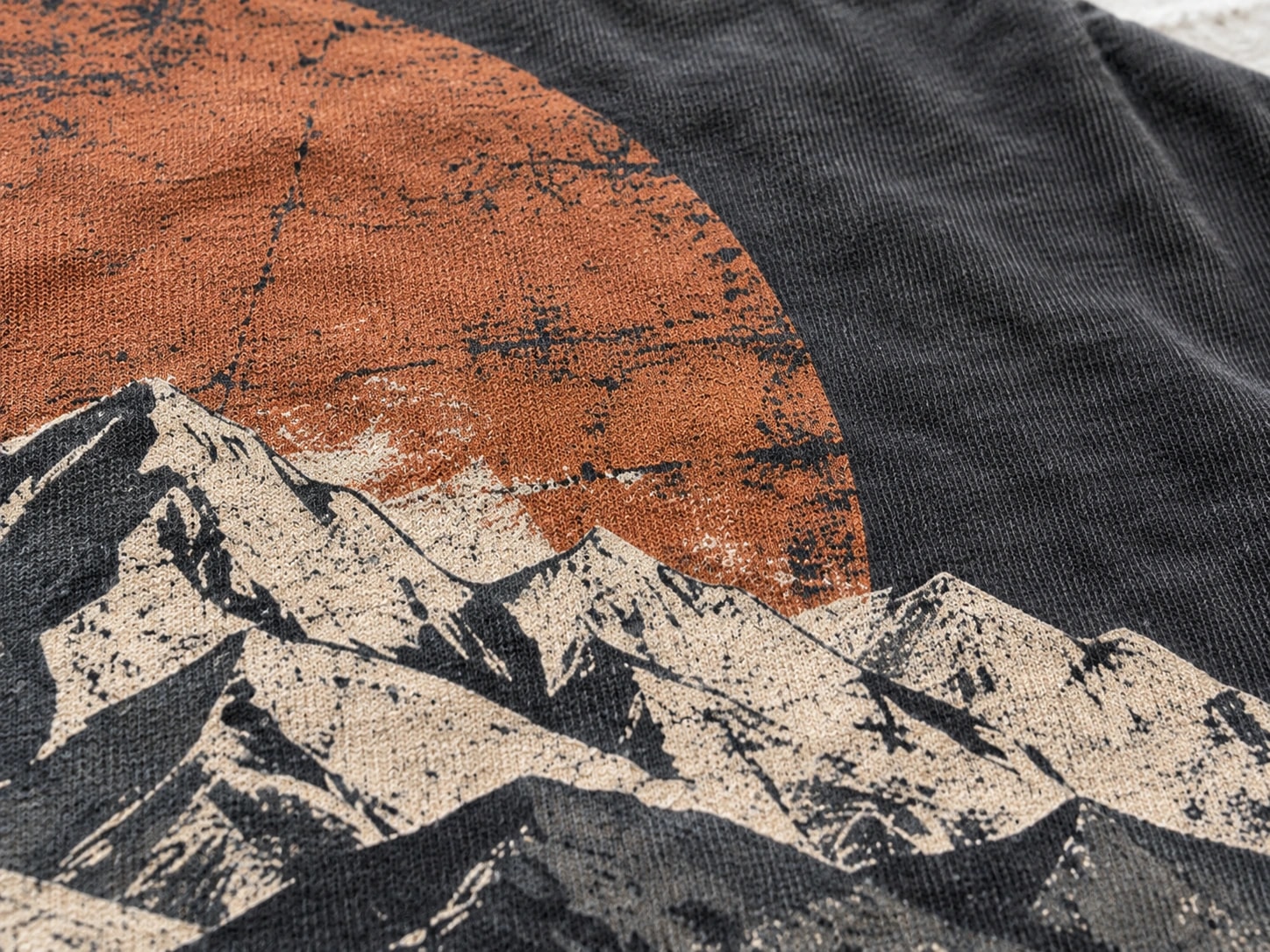
Distressing can remove small letters, fine lines, facial detail, low-contrast shadows and narrow spaces between colors. KAOUYOU may enlarge lettering, strengthen important outlines, simplify backgrounds or reduce the distressing around recognizable features. Approve a print trial at its actual intended size.
The oversized cracked graphic T-shirt offers a large-coverage visual reference. The washed placement graphic T-shirt shows another layout direction. Specify artwork scale and position for the chosen garment rather than assuming either reference transfers unchanged. Use the artwork preparation guide for file requirements and the screen printing vs DTF guide when comparing methods.
Should printing happen before or after garment washing?
KAOUYOU's common route for vintage tees is to complete garment dyeing or washing, then print. This helps control graphic color, placement and attachment to the finished body. The artwork can already contain worn areas, so a vintage appearance does not automatically require washing the print afterward.
Printing before washing may be considered when the buyer wants the graphic to fade with the body, soften into the base color, acquire worn edges or develop a controlled cracked appearance. The wash then becomes part of the graphic result as well as the garment finish.
For that route, KAOUYOU makes a complete sample and processes it under the intended bulk conditions. The buyer reviews the washed color, print loss, cracking, hand and placement. Approval of a clean print before washing does not establish acceptance of its final aged state.
Changing the sequence, print system or finishing conditions can change the result. Confirm the complete revised sample before treating it as the production reference.
How should distressed edges, rib and labels be coordinated?
Local wear needs a placement brief. Mark front and back views with the intended areas, approximate dimensions, number of holes where applicable, exposed layers, symmetry and acceptable natural variation. Distinguish a slightly worn edge from an obvious opening.
KAOUYOU records reference images, position ranges and degree of distressing in the production instructions, then retains the approved sample. Avoid excessive abrasion at structural seams, armholes, underarms, neck joins, label attachments and other vulnerable areas. Thin fabric also needs particular care. Where appropriate, concealed stitching, reinforcement or backing can help control an opening; these choices depend on the style.
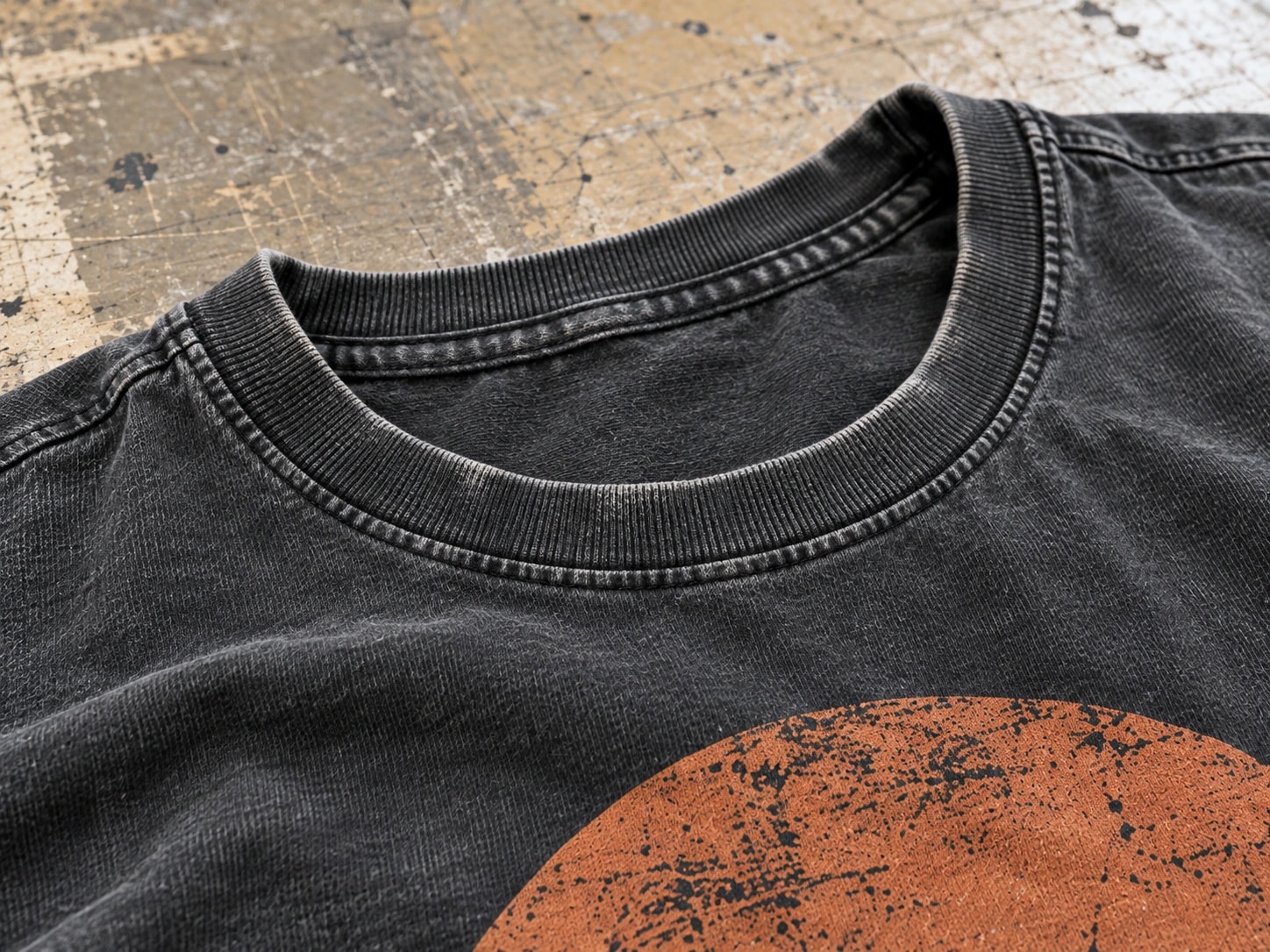
Rib, sewing thread and labels need to be included in the wash review. Different materials can absorb color differently or shrink by different amounts. A thread that remains pale after dyeing may become an intentional contrast or an unwanted detail. Labels can stain, distort or lose clarity, and rib shrinkage can pucker the neckline.
KAOUYOU checks the selected materials and then the complete washed garment. A brand label that must remain clean may be installed after washing when the construction allows it.
What variation and quality checks should the finished sample establish?
Natural variation needs an agreed range. KAOUYOU recommends physical references for the body shade, graphic effect and local distressing. Where useful, lighter, medium and stronger examples can help the customer define the target and acceptable limits. Those standards must be developed and approved for the project.
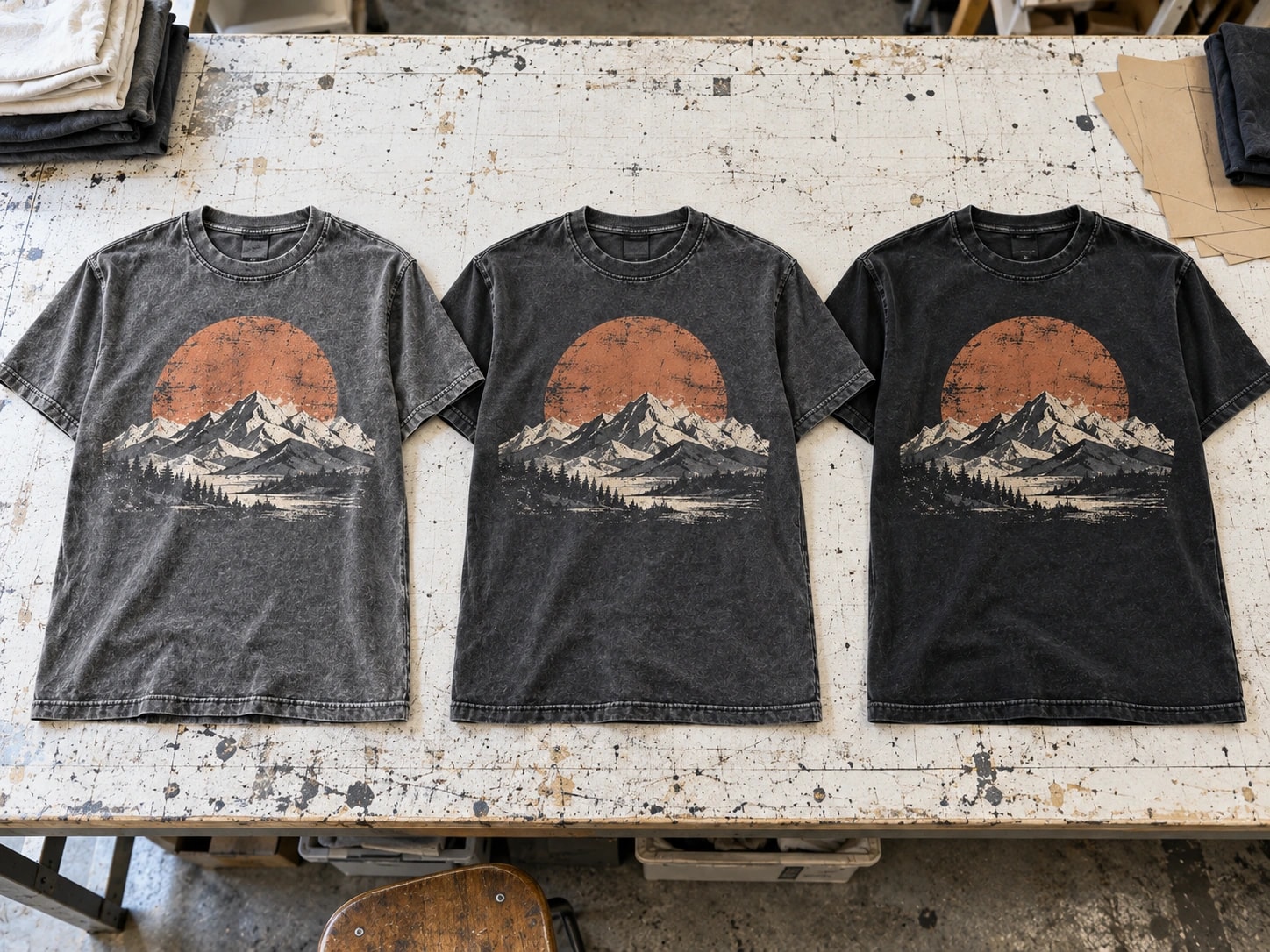
Keep the approved garment, shade and technique samples, measurement chart, process instructions, wash recipe reference and written customer confirmation together. “More vintage” becomes actionable when the comment identifies the part to change and its intended degree.
| Review area | What may be acceptable when approved | What needs rejection or further review |
|---|---|---|
| Body shade | Agreed fading and seam contrast within the approved range | Unapproved mottling, staining or excessive shade difference |
| Graphic | Approved missing areas, crack character and faded colors | Large-scale detachment, sticking, misregistration or loss of essential detail |
| Edges and holes | Wear within the specified positions and extent | Enlarged openings, broken structural seams or uncontrolled asymmetry |
| Shape and dimensions | Finished dimensions and appearance within the agreed specification | Neck distortion, unacceptable twisting, uneven hem or excessive shrinkage |
KAOUYOU checks body length, chest width, shoulder width, sleeves, front-to-back balance, neckline, side-seam twist and hem shape after washing. Graphic placement can also change with shrinkage. The customer's size chart normally refers to the washed, dried and rested garment; the pattern includes allowances based on lengthwise and widthwise trials. See the T-shirt shrinkage guide for the measurement process.
Routine checks include washing and drying, before-and-after measurements, shade and appearance review, manual rubbing and stretching of prints, and inspection of distressed areas. These practical checks do not constitute a formal laboratory report. When customers require formal data, KAOUYOU can arrange relevant third-party testing, with methods and acceptance criteria agreed for the project. The quality control service explains the wider inspection process.
What affects cost, MOQ and sample revisions?
Custom coloration, special washes, large multicolor graphics, detailed separations, special inks, manual distressing, multiple treatment locations and tighter variation limits can all add development or production work. Printing before washing adds another dependency because the graphic must survive and change in the intended way. Different artwork sizes across the size range and formal external tests also affect the quotation.
KAOUYOU's usual garment minimum order quantity (MOQ) is 100 pieces per style, per color. Custom fabric coloration, particular processes or subcontractor requirements may impose higher minimums, which need review against the actual order.
Sample comments should identify the cause of the mismatch. KAOUYOU commonly considers these adjustments:
- Excessive body mottling: reduce processing intensity or duration, revise the base color, or test a more even finish.
- A graphic that looks too clean: add controlled missing areas or halftones, or test appropriate post-treatment.
- A stiff print: review deposit thickness, underbase and a softer compatible print route.
- Poor graphic readability: reduce aging around key details and strengthen the important lines.
- Excessive edge wear: revise the placement or extent and review reinforcement where needed.
- A collapsed body or loose neck: reassess softening, fabric density, rib quality and its joining relationship.
These are recurring development directions, not guaranteed repairs. Severe print detachment, unacceptable wash mottling or structural damage can require remaking. A sample that combines the actual materials and intended sequence is the basis for deciding whether the revised result is ready for production. The product development service connects those decisions into the sampling brief.
Frequently Asked Questions
Does a vintage graphic T-shirt need holes or frayed edges?
No. A washed body and aged graphic can establish the direction on their own. Add local distressing only where it supports the approved design, and specify its position and extent separately.
Can a cracked graphic look identical on every T-shirt?
Cracks designed into the artwork give more repeatable placement of the missing areas. A crackle effect that develops through processing can vary. The body shade may vary too, so approve the complete result and permitted range.
Is a Pantone reference enough to approve washed black?
It helps communicate a color direction, but it does not show seam fading, mottling, hand or the interaction with the graphic. Approve a washed physical shade and finished sample as the production references.
Can several colors share KAOUYOU's 100-piece MOQ?
The usual garment MOQ is 100 pieces per style, per color. Special fabric or process requirements may set a higher minimum. Send the planned colors, quantities and finish requirements for project-specific confirmation.
Send a vintage T-shirt reference with the effects you want to keep
Provide front and back references, the original artwork when available, finished graphic dimensions, target body shade, preferred hand and any marked distressing areas. Include the size range, quantities by color and the degree of natural variation the brand can accept.
Explore the T-shirt collection, then send your vintage graphic T-shirt brief. KAOUYOU can use those inputs to clarify the intended effects and develop the physical sample for approval.