Answer in 30 Seconds
To develop a retro sports T-shirt for a streetwear brand, start with a clear silhouette and one leading design direction: contrast neck and sleeve bands, a color-block raglan sleeve, or a jersey-inspired graphic layout. Then select the body fabric, rib, stripe construction and artwork as a complete garment. Confirm the finished proportions and any washing on a sample before bulk production.
The sports reference does not require a performance fabric. A cotton jersey T-shirt can communicate the direction through its shape, color blocking and number graphics while retaining an everyday cotton hand. A mesh or polyester direction creates a different product and should be selected because it matches the brief.
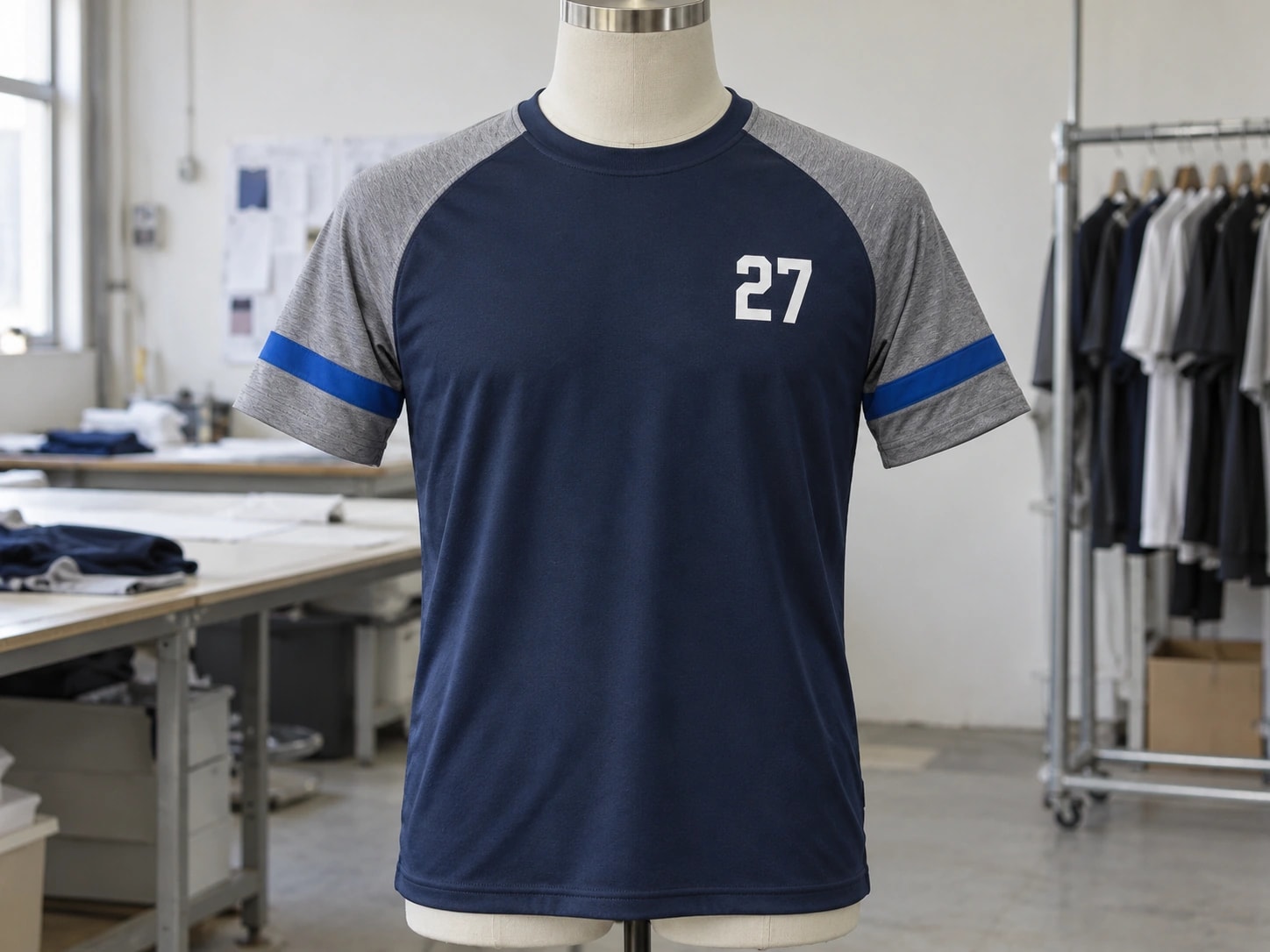
Which retro sports design direction should a brand start with?
Sports references have a wider fashion context: Depop's 2026 fashion report discusses reworked sports staples and nostalgia.
At KAOUYOU, customers usually arrive with a style drawing or reference that already identifies the garment direction. The development discussion turns those visual decisions into materials, construction and sample requirements.
| Direction | Elements to develop | Main sample decision |
|---|---|---|
| Contrast-trim or ringer direction | Contrast neck band, sleeve bands and a restrained graphic | Band width, neckline, sleeve opening and body-to-trim balance |
| Color-block raglan direction | Sleeve color division, raglan seam and optional sleeve stripe | Seam shape, sleeve volume, movement and color placement |
| Jersey-inspired direction | Numbers, lettering, piping, stripes, badges or mesh | Graphic hierarchy, material choice and accumulated construction detail |
These directions can overlap. A raglan T-shirt can also have a number graphic and contrast neck rib. KAOUYOU often recommends contrast trims or simple raglan blocking when the customer is developing a first style or working within a limited budget. More elements create more sourcing and approval decisions; they do not automatically create a stronger design.
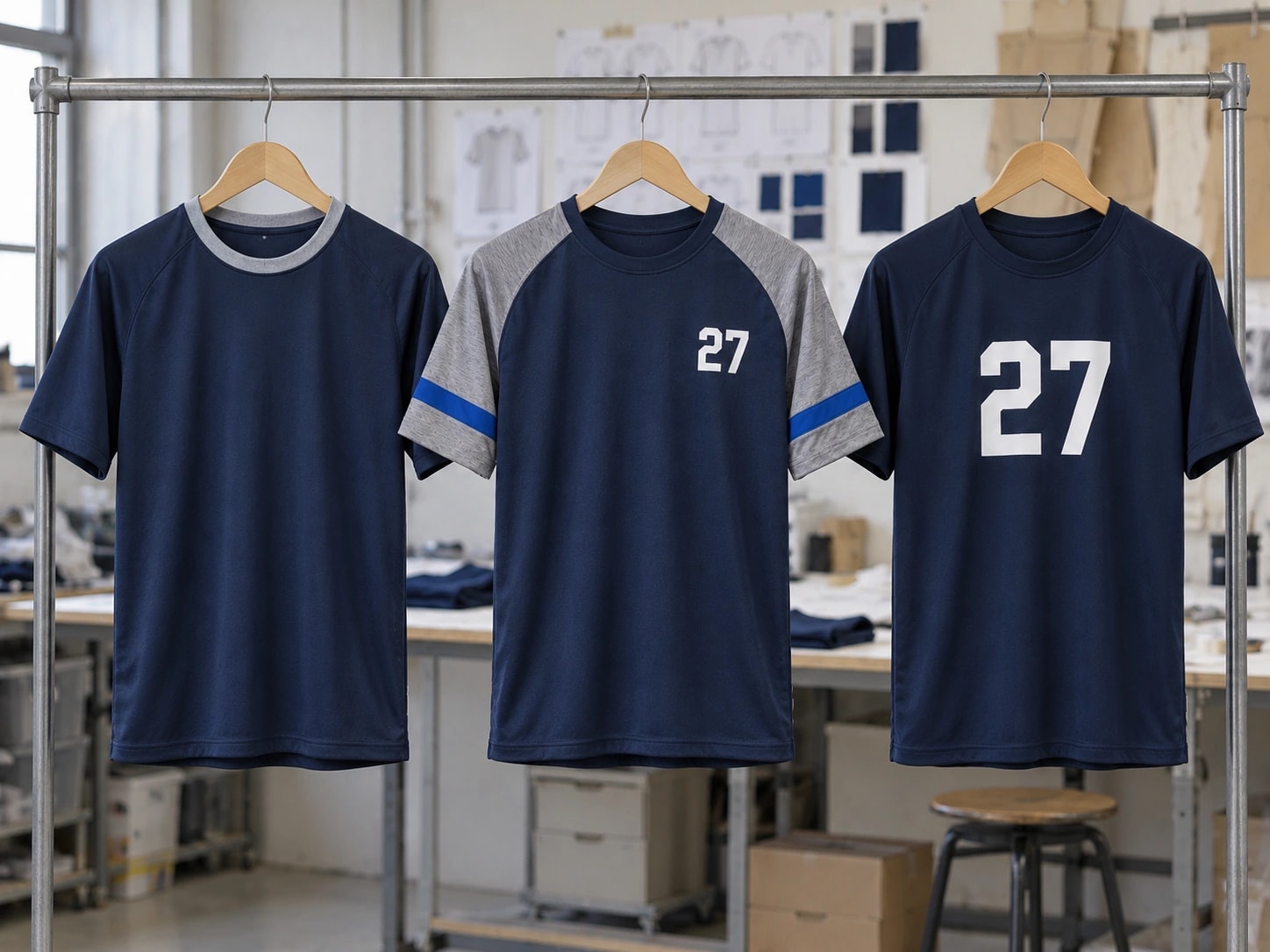
The chenille embroidery ringer T-shirt is an existing reference combining contrast neck and sleeve bands with a raised number motif. Use it to discuss proportion and construction; approve the actual fabric, trim and decoration for the new project. The T-shirt collection provides other starting points.
Which fabric and GSM suit an everyday retro sports T-shirt?
For a cotton T-shirt hand, KAOUYOU generally starts with cotton single jersey, including pure cotton or a cotton-rich blend. The sporting character can then come from the cut, color blocking, rib and graphics. Cotton/polyester blends, including chief value cotton (CVC), may be considered when the brief calls for a different balance of cotton hand and stability. Confirm the actual blend rather than using CVC as a complete specification.
Mesh can create a stronger jersey appearance. Polyester may be considered for a sublimation or performance-oriented brief, while cotton with elastane may suit a closer-fitting stretch direction. Fiber content alone does not prove quick-drying or other quantified performance.
KAOUYOU uses the following weight directions as development references:
| Intended direction | Reference weight | What still needs approval |
|---|---|---|
| Lighter sports-inspired hand | About 160–200 GSM | Coverage, movement, drape and support for trims or graphics |
| Everyday retro cotton T-shirt | About 200–260 GSM | Surface, softness, silhouette and finished wash result |
| Substantial streetwear direction | About 260–320 GSM or higher when the brief calls for it | Garment weight, stiffness, sleeve volume and suitability for the intended climate |
GSM means grams per square metre. These ranges are not category standards: density, yarn, construction and finishing can change the result at the same stated weight. An overly light fabric may not support the intended volume; an unnecessarily heavy jersey-inspired garment may feel cumbersome. The T-shirt GSM guide covers the weight decision in more detail.
How should fit and raglan sleeve proportions be specified?
A boxy or relaxed body can suit a streetwear direction, while a regular fit can support a more conventional sports reference. Define the relationship between body length, chest width, sleeve volume, neck opening and hem width. Enlarging the chest alone does not create a balanced oversized T-shirt.
The black boxy graphic T-shirt is a proportion reference rather than a ready-made raglan pattern. The oversized T-shirt measurement guide explains which dimensions need to work together.
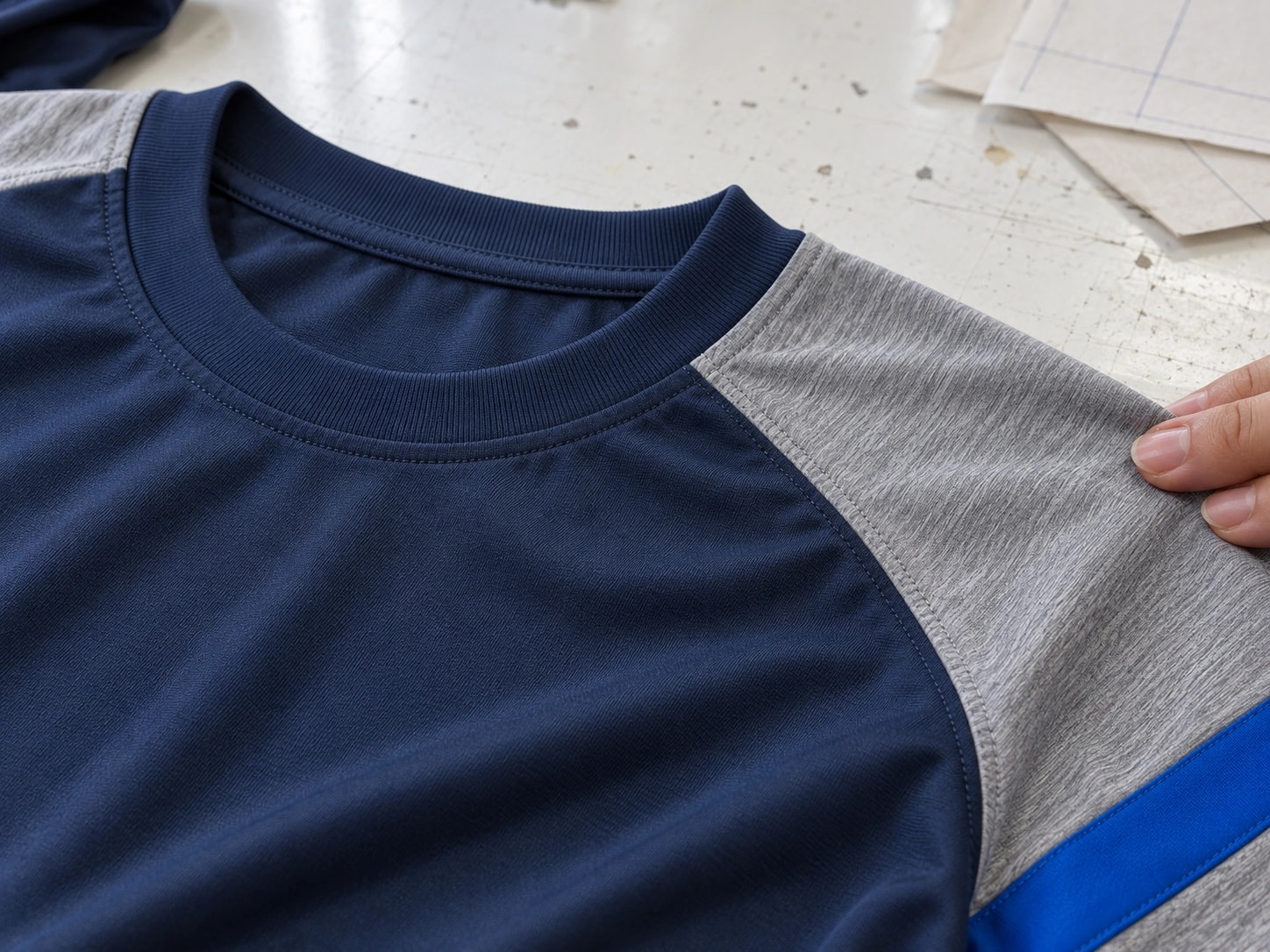
With a raglan sleeve, the seam runs from the neckline toward the underarm. Its shape affects the apparent shoulder, color division and sleeve volume. Confirm the specified front and back seam shapes, underarm ease, sleeve width and opening. Define the sleeve measurement method, including whether it starts at the neckline or center back, instead of applying an ordinary set-in sleeve chart without revision.
What should the contrast neck and sleeve trims match?
Set band width according to the neck opening, fabric thickness and design. A wider rib can strengthen the retro reference, but excessive width can make the neckline heavy or encourage an unwanted turned edge.
KAOUYOU determines the neck-rib length and stretch relationship from the selected rib's recovery rather than applying one fixed ratio. The team tests the main fabric and rib for shrinkage and recovery, then adjusts the pattern and trim length. Where washing is specified, the wash sample checks for puckering, looseness, contraction and color changes.
If the materials shrink too differently, a matching color is not enough to make the combination suitable. The rib quality or process may need to change. Approve physical colors and the finished main-fabric/rib combination together.
Should stripes and patchwork be sewn or printed?
Choose the construction according to the intended surface and color layout. A printed stripe, attached tape and pieced sleeve can look related in a drawing while producing different thickness, seams and hand.
| Method | Useful design direction | Development checks |
|---|---|---|
| Cut-and-sewn panels | Broad stripes, substantial blocking and fabric-pieced motifs | Panel map, seam allowance, thickness, placement and material compatibility |
| Tape or piping | Narrow lines and outlined seams | Finished width, placement, shrinkage and colorfastness |
| Printing | Complex colors, gradients or a flat visual treatment | Artwork scale, coverage, hand and the selected process |
| Embroidery | Small logos or local accents | Density, backing, weight and skin-side feel |
KAOUYOU has recently received enquiries about different fabrics assembled into a graphic or motif. This is a specific customer enquiry direction, not a claim that all retro sports T-shirts are becoming patchwork products.
For that type of brief, identify which areas are actual separate fabrics and which are surface decoration. A flat effect drawing does not explain every panel edge or seam. The sample must establish the proposed material arrangement and how it behaves as a garment.
The washed panel-seam T-shirt illustrates a design where visible construction contributes to the product identity. It is not evidence that every patchwork motif can be produced with the same pattern or sewing route.
How should numbers, lettering and badges be developed?
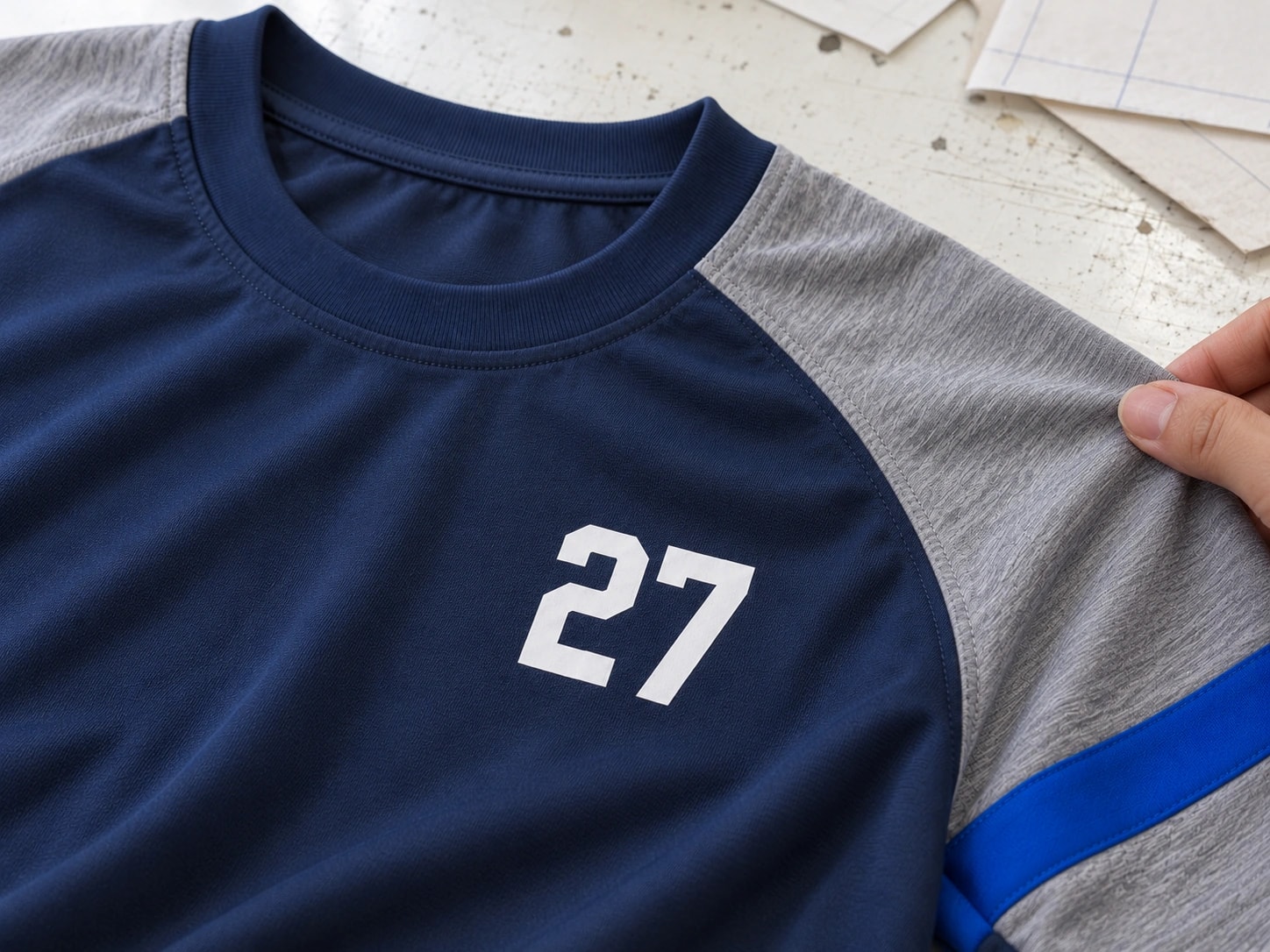
KAOUYOU considers screen printing for many large-number and limited-color lettering briefs; puff printing when a raised effect is wanted; appliqué or chenille for a more dimensional collegiate direction; and embroidery for smaller badges and logos. Multicolor, gradient or detailed graphics may lead to a transfer or direct-to-film (DTF) discussion. The choice depends on the actual artwork, base material, hand and approval requirements.
Large numbers made entirely from dense embroidery can add substantial weight and stiffness. Compare the intended effect with alternatives before approving the method. The screen printing and embroidery comparison covers the broader decoration decision.
For the artwork brief, provide vector files where appropriate, outlined lettering or the required font information, the exact number content, finished width and height, colors and separate front, back and sleeve placements. Record position from a defined neckline, seam or hem reference. Also decide whether all garment sizes share the same motif size or use approved groups. See the garment artwork preparation guide for file requirements.
If artwork crosses a raglan seam or panel join, include the crossing in the sample plan. Thick seams can interrupt application, while separately processed panels need accurate matching. KAOUYOU may consider panel-stage decoration or use the seam deliberately within the composition. Faces, text and regular geometry make misalignment particularly noticeable.
How should color blocking, vintage washing and decoration be sequenced?
A vintage direction can combine garment dyeing, pigment effects, enzyme or other specified washing and an aged graphic. These are possible routes, not treatments that every retro sports style needs.
KAOUYOU makes wash trials or complete samples to check shade, surface changes, shrinkage and the effect on decoration. Dark fabric bleeding onto a pale panel, different material shrinkage and seam puckering are key concerns in a color-block style. The actual fabric and trim combination needs to be checked after the intended processing.
A common KAOUYOU route is to assemble the garment, carry out the wash, then apply the print to control its color and position. If the customer wants the graphic to age with the garment, printing before washing may be considered after testing.
Across-seam artwork can require a different panel-stage route. Resolve that requirement together with the wash and assembly sequence during development; do not assume that the usual post-wash print method can reproduce every cross-panel design. Agree the acceptable variation of the vintage effect against the approved sample.
Which details affect cost, and what must the complete sample approve?
More color blocks add cutting and sewing work. Custom rib, tape or piping can introduce supplier minimums. Additional screen-print colors need additional screens; different individual numbers may require separate processing. Large appliqué and chenille areas, multiple fabric qualities, wash trials and different artwork sizes can all change the quote and preparation time.
Start with the detail that defines the style, then evaluate additions against budget and sample results. A single sleeve stripe can involve sourcing, testing, cutting and sewing rather than only a small visible addition.
Before approving bulk production, review:
- Body length, width, silhouette, sleeve volume and movement.
- Raglan or panel-line placement, specified color divisions and left-right balance.
- Neck opening, band width, recovery and sleeve-opening comfort.
- Actual main fabric, contrast material, rib, finished hand, weight and colors.
- Motif dimensions, position, color, hand, method and any seam crossings.
- Finished dimensions, color transfer, shrinkage differences and vintage variation after washing.
- Internal sewing, labels and the agreed packing requirements.
KAOUYOU uses the approved garment, measurement chart, construction/specification records, color references and written revision notes together as the production standard. A front-view photograph alone does not communicate the complete product. The product development service and quality-control service explain the related workflow.
Frequently Asked Questions
Can printed patchwork replace actual fabric panels?
A print can reproduce a color layout or visual motif, but it will not reproduce the seams, texture and layered hand of separate fabric pieces. Decide which parts of the effect matter before asking the factory to substitute the method.
Can I keep an existing T-shirt pattern and simply add raglan sleeves?
Changing to raglan construction affects the neckline, shoulder area, sleeve and underarm. Treat it as a pattern revision and approve the resulting fit, rather than assuming the existing set-in-sleeve measurements remain suitable.
Does approval of one colorway cover every contrast combination?
Do not assume that it does. A different dark/light combination or material pairing can change color-transfer and shrinkage concerns. Identify what changes between colorways and confirm the required swatch or garment checks before bulk.
Are different numbers the same production order as one repeated graphic?
Not necessarily. Different number content can require separate artwork preparation, processing and sorting. Include the number allocation and quantities in the quotation brief rather than adding them after one repeated motif has been approved.
Prepare your retro sports T-shirt brief
Send the style drawing, intended everyday or performance use, target fit, body and sleeve color layout, fabric direction, trim references, artwork dimensions, wash direction, size range and quantities. Identify any separate fabric pieces within a graphic, any seam-crossing artwork and any individual number variations.
Browse the T-shirt collection, or send your design for a development review.