Screen printing is often the more practical choice for large graphics and a flat ink effect on heavyweight T-shirts. Embroidery suits smaller logos and visible thread texture. The decision changes with artwork area, ink or stitch density, fabric stability, washing, order quantity and the wearer’s comfort.
For a clothing brand, choosing the technique also means approving how the finished garment feels and what it costs to reproduce. A heavyweight fabric can support decoration, but its grams per square meter (GSM) alone cannot tell you whether a large print will feel soft or a dense embroidery will lie flat.
Answer in 30 seconds
- Use the intended artwork size and actual fabric to compare methods; a digital mockup cannot show stiffness or backing.
- Thin screen-print ink usually adds less weight than dense embroidery. Thick ink, silicone and multiple underbase layers can still restrict drape.
- Heavy, dense fabric generally supports decoration better, but loose knitting, stretch and surface fibers can still cause problems.
- There is no fixed order quantity at which one method becomes cheaper. Request quotes for the actual artwork and production route.
- At KAOUYOU, the client normally approves the complete sample before its decoration is carried into bulk production.
Which Method Fits Your Heavyweight T-Shirt?
Start with the product’s intended appearance and use. A broad back graphic and a small embroidered chest logo solve different design needs, so comparing them only by price per piece gives an incomplete answer. For a first collection, review the decoration together with the custom T-shirt fabric, fit and construction.
| Buyer requirement | Screen printing | Embroidery |
|---|---|---|
| Large front or back graphic | Often practical for broad coverage, text and clear color blocks | Review weight, stitch count, stiffness and backing before committing |
| Small chest logo | Suitable when a flat ink appearance is intended | Often suitable for visible thread texture and dimensional branding |
| Surface effect | Can include water-based, puff, silicone, high-density, crackle or discharge effects | Can include flat embroidery, raised embroidery, chenille or appliqué |
| Soft drape | Thin ink layers usually add less weight; thick or heavily layered ink can still feel stiff | Dense filled areas add weight and can pull or stiffen the fabric |
| Complexity and cost | Artwork size, screens, colors, underbase, passes, effects and quantity | Artwork size, stitch count, density, digitizing, thread, backing and quantity |
| Washed or garment-dyed product | Choose print-before-wash or wash-before-print to suit the approved effect | Choose embroidery-before-wash or wash-before-embroidery to suit color and texture |
At KAOUYOU, both processes are handled by longstanding specialist partners. KAOUYOU communicates the production files, coordinates sample approval, checks the processed pieces and takes responsibility for the decoration quality delivered to the client. Both are normally completed on cut panels, where flat placement and machine access are easier to control. Garment washing or a design-specific location can require a different sequence.
Which Artwork Works Better for Screen Printing or Embroidery?
Screen printing: broad graphics and controlled ink effects
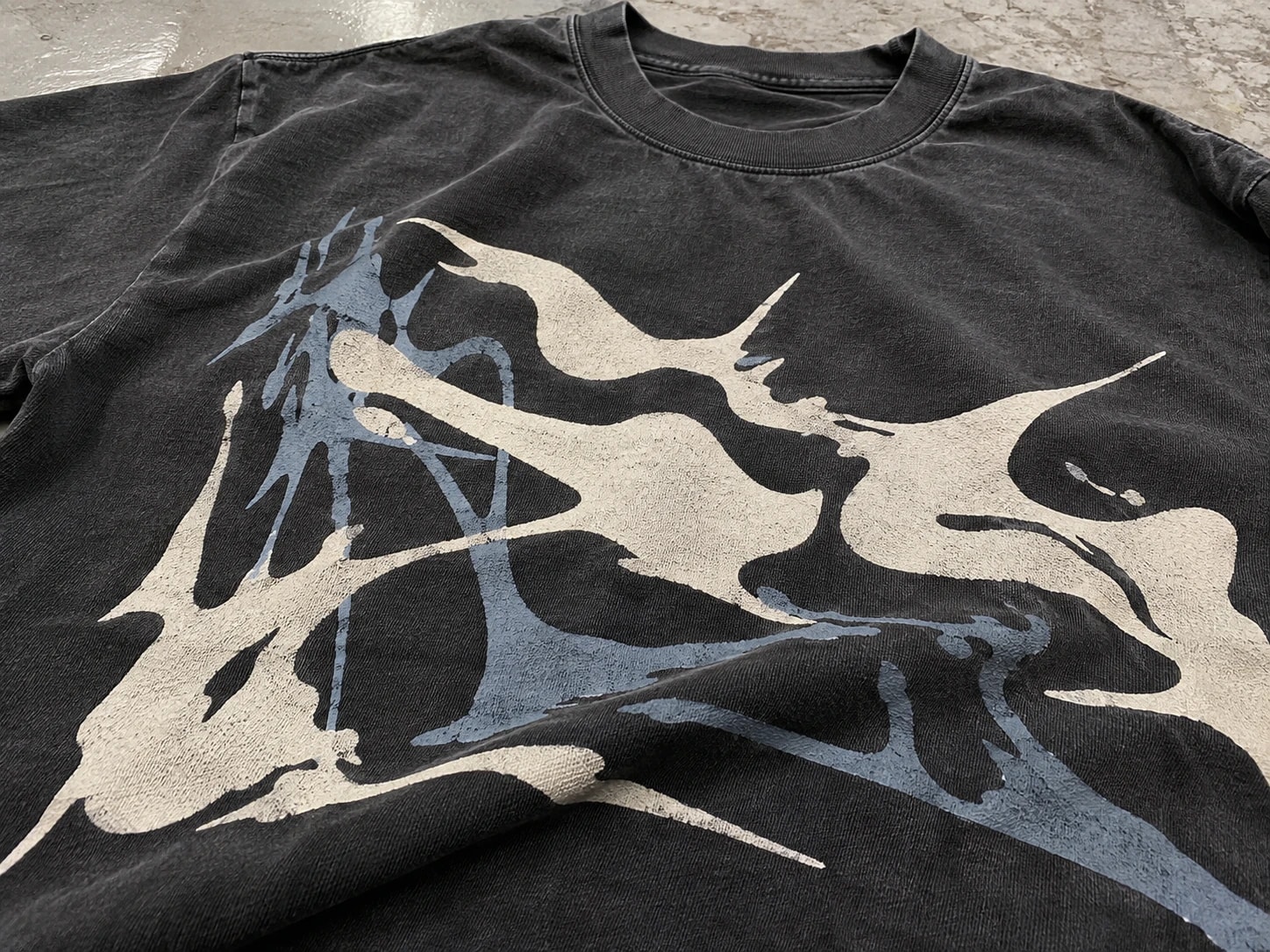
Screen printing is a useful starting point for large text, brand logos and graphics with clear color boundaries. It can provide strong coverage on dark fabric through a suitable ink system and underbase. Water-based ink, puff, silicone, high-density, crackle and discharge effects create different surfaces, so “screen printed” is not one fixed look or hand feel.
Each additional spot color usually needs its own screen, setup and registration. A white underbase or special-effect layer can add work beyond the visible artwork colors. Photographs, dense detail and complex gradients require a separate separation assessment; they are not automatically economical as a many-color screen print. The screen printing vs DTF guide covers that alternative.
A cracked-print oversized T-shirt illustrates a graphic-led product direction. Specify whether the broken appearance is designed into the artwork, created through an ink effect, developed by washing, or a combination. The description “vintage print” is not sufficient production instruction.
Embroidery: thread texture and concentrated branding
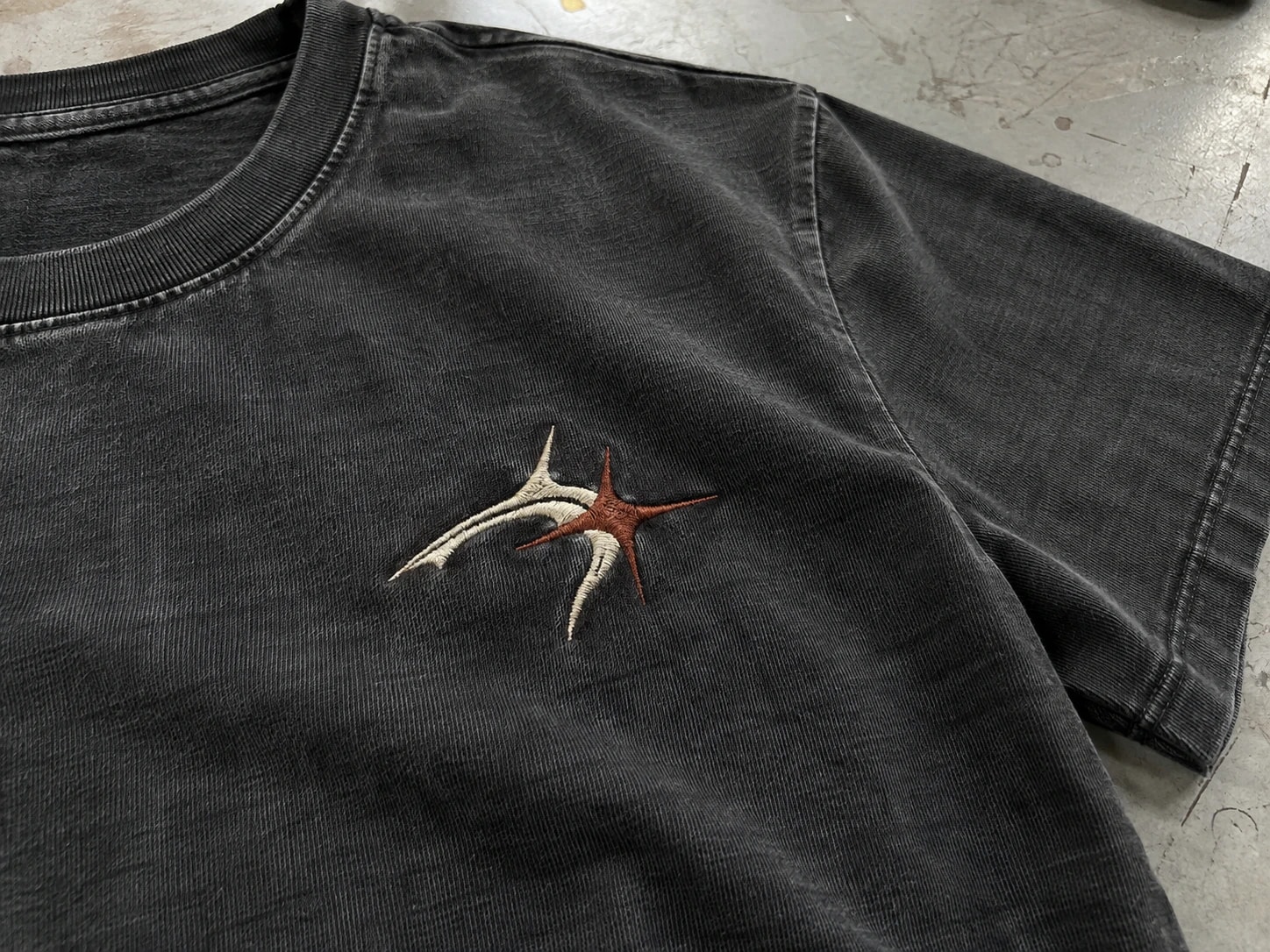
Embroidery works well for small chest logos, clear lettering, emblem-like designs and local details. Flat embroidery, raised embroidery, chenille and appliqué offer different dimensions and textures. They require their own artwork and material decisions rather than one interchangeable embroidery setting.
A small embroidered oversized T-shirt can retain a largely undecorated body while adding a defined logo. A chenille embroidery T-shirt represents a different texture direction. Review the intended thread effect on a sample rather than assuming that every embroidery will feel equally soft or appear equally raised.
Large embroidery needs more care. Dense filled areas can become heavy, stiff and uncomfortable against skin. Simplifying the fill, leaving open areas, dividing the design, using appliqué or combining print and embroidery may retain the design direction with less full-coverage stitching.
Does Higher GSM Make a T-Shirt Suitable for Either Method?
No fixed GSM number guarantees decoration stability. KAOUYOU considers weight and thickness alongside knitting density, surface smoothness, stretch, recovery, artwork area and the requested garment silhouette. A heavy but loosely knitted fabric can still pucker under embroidery or give uneven print coverage.
For screen printing, a smooth, dense surface usually supports clearer edges and more even coverage. Pronounced texture can interrupt fine lines; surface fibers can reduce definition. Stretch requires a compatible ink system, while dark fabric may need a white underbase. Floating color or dye migration risks depend on fiber, dye and processing conditions and should be investigated on the actual material.
For embroidery, dense heavyweight fabric can support stitching better than a light unstable fabric, but excessive stitch density can still pull the surface tight, show needle holes or damage yarns. Fabric and thread may also shrink differently during washing. Backing, hoop tension and stitch construction remain relevant even when the T-shirt feels substantial.
The heavyweight T-shirt GSM guide explains weight selection. For decoration approval, use that fabric specification together with a physical sample made in the intended production condition.
How Do Hand Feel, Drape and Comfort Compare?
For a large graphic, a relatively thin screen print generally adds less weight than dense embroidery and allows a more natural drape. That comparison changes with the ink system: thick high-density ink, silicone or repeated white-underbase layers can make the decorated area stiff and reduce local breathability.
Embroidery adds thread plus backing, which can change how a broad area hangs. A heavy back design may pull differently from the surrounding fabric, and a dense interior surface can rub against skin. A suitable soft backing or cover, reduced fill density and a smaller decoration area can improve comfort, subject to the approved effect.
Evaluate the complete garment on the body as well as flat on a table. Check whether the decoration holds the chest or back unnaturally, whether it interferes with the intended oversized drape and how its inner surface feels. Neither a close-up photograph nor the artwork file can establish those points.
Is Screen Printing Cheaper Than Embroidery?
There is no universal cost crossover. A large, simple screen print can be more economical than dense embroidery, while a small embroidered logo may be a practical choice compared with a complicated multicolor print. Compare the same finished artwork area, garment specification, quantity and wash requirements.
Higher quantity usually allows preparation costs to be spread over more garments, but it does not remove the processing cost of each piece. A highly detailed graphic may remain expensive even in bulk. Reducing its area or simplifying its fill can affect price more than changing order quantity alone.
Ask the supplier to separate development or setup charges from repeat production where relevant, and confirm which files or screens can be reused. The custom T-shirt cost breakdown places decoration inside the full garment price, including fabric, sewing, wash, labels and packaging.
How Does Embroidery Backing Prevent Puckering?
Backing stabilizes the fabric while the machine forms the stitches. A suitable combination of backing, stitch density, digitizing, thread tension and hoop tension helps limit distortion. At KAOUYOU, the specialist factory usually selects the technical setup, unless the client specifies a requirement. The result must still match the client’s approved effect.
Tear-away, cut-away and water-soluble materials have different uses; selection depends on the fabric and design. A water-soluble surface film can help control stitching over texture, while the embroidery may still need support underneath. The name of a stabilizer does not prove that it is suitable for every heavyweight T-shirt.
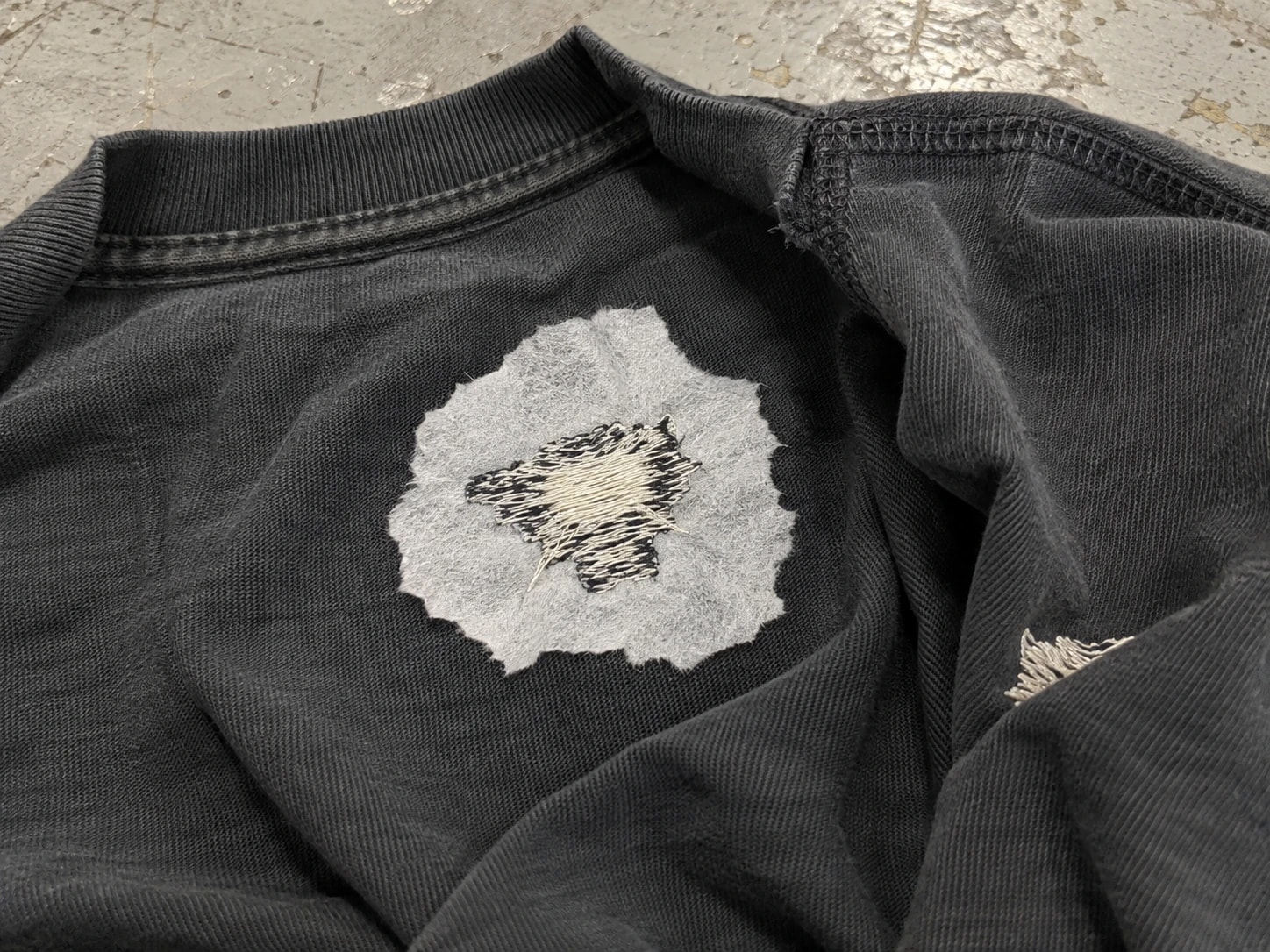
When puckering appears, review the entire setup: unnecessary filled areas, stitch direction and density, backing support, hoop tension and thread tension. Increasing the fabric weight alone may not solve it. Review the washed sample as well, because the fabric, thread and stabilizer can react differently to processing.
Should Decoration Come Before or After Garment Washing?
Choose the order according to the finished effect. KAOUYOU commonly completes garment dyeing or washing before screen printing when the objective is to keep the graphic clean and control its final color. When the print itself must fade, crack or blend into a vintage finish, printing before washing is another route, provided the actual ink and wash process have been tested.
Embroidery can also come before or after washing. Embroidery before washing may develop a more integrated aged appearance, but thread shade, abrasion and puckering need review. Embroidery after washing preserves a clearer, cleaner contrast against the aged body. That can be desirable, but the client should approve it deliberately.
Garment dyeing, heavy enzyme washing, acid washing, mineral washing and combinations require a complete process sample. Separate approved print and embroidery swatches do not show how the final garment will react. Check color, dye migration where relevant, shrinkage, print adhesion, embroidery distortion and hand after the full intended treatment.
Can screen printing and embroidery be combined?
Yes. A printed base graphic can carry embroidered lettering or selected details for a layered effect. If embroidery sits over the print, the usual route is to print and fully cure the ink before stitching. Printing across a raised embroidered surface is generally difficult because the surface is uneven. Separate areas allow more flexibility.
Confirm the relationship between both decorations before sewing the panels. Combination work adds positioning, processing, handling and loss risks, so KAOUYOU uses a process sample to check alignment, color, stitch effect, adhesion and puckering before confirming the bulk method.
A Real Case: Why a Large Embroidery Became a Print
A KAOUYOU client initially requested a very large embroidered design on a T-shirt. The team explained that the area would increase cost and could feel stiff during wear. The client still wanted to assess it as an embroidered sample.
Once the sample was made, the quote was higher than the client could accept, and the large embroidered area and its reverse felt too hard for the intended garment. The client then changed the design to printing.
The sample made the cost and comfort trade-off tangible. A large design can look attractive in artwork while behaving differently as a dense stitched surface. Approve the physical garment before treating the original decoration choice as the bulk standard.
This case does not establish a fixed price difference or a maximum embroidery size. It shows why artwork area, stitch construction and the intended wearer experience should be evaluated together. The article photographs illustrate decoration details and are not identified as photographs of this client project.
What Should Brands Send for Artwork Review and a Quote?
Send the garment specification and decoration brief together. If a field is undecided, identify it so the team can assess options before sampling. “Make it look like the mockup” leaves important choices about ink, thread, coverage, density and positioning unresolved.
- Fabric composition, target GSM, surface and stretch, plus a sample reference where available.
- Editable AI, PDF or another suitable original artwork file; retain a clear reference image of the intended appearance.
- Finished graphic width and height, placement measurements and whether size groups need different artwork dimensions.
- Print Pantone colors or an approved physical reference, separations where available, and the requested ink or effect.
- Embroidery thread colors, flat/raised/chenille/appliqué direction and permission to simplify fine text, gradients or thin lines.
- Garment dye or wash requirements, intended decoration sequence where specified, and final care or testing requirements.
- Order quantity by garment style and color, size allocation, labels, packaging and the intended budget direction.
Clients usually do not need to supply the embroidery machine file. KAOUYOU coordinates digitizing from the original artwork; the client approves the physical stitch result because line thickness, fill and stitch count can change the design and quote. For print file details, see the garment printing artwork guide.
What Must Be Approved Before Bulk Production?
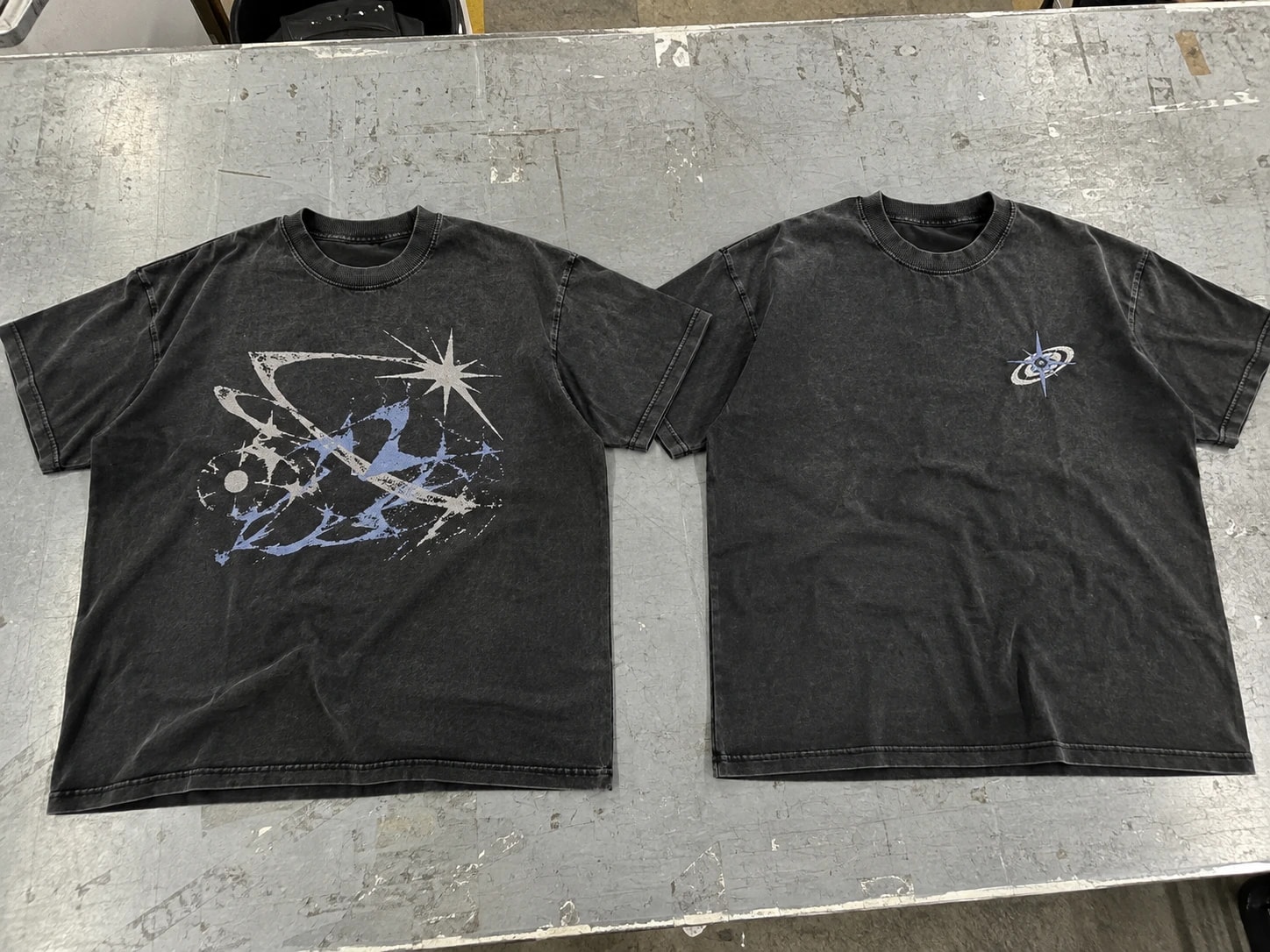
At KAOUYOU, the complete sample normally provides the final decoration reference for bulk. Confirm artwork, finished size, placement, color, surface effect, hand, reverse finish and the result after any intended dyeing or washing. Record changes clearly so the files and the approved sample agree.
If the client changes from embroidery to screen printing, or changes the ink, stitch construction or wash process, the old sample is no longer sufficient for that changed detail. Confirm the new physical result before carrying it into production.
Screen-print quality checks
KAOUYOU checks color, dimensions, position, registration, coverage, missing areas, unwanted cracking, stains and adhesion or wash performance as required. A designed crackle effect must be distinguished from unapproved cracking. The specialist partner reviews ink, underbase, curing and fabric compatibility to achieve the approved result.
Embroidery quality checks
Checks cover artwork completeness, thread colors, apparent density, position, skipped or broken stitches, puckering, fabric damage, backing finish and distortion after washing. A heavier-looking stitch result is not automatically better: the approved density must support the design without unacceptable stiffness or damage.
Where the same defect repeats, its cause needs correction at the relevant process rather than simply being left for final sorting. The clothing quality-control checklist explains the broader checkpoints around these decoration checks.
Frequently Asked Questions
Is embroidery always more durable than screen printing?
No universal ranking applies. Embroidery can suffer thread damage, puckering or wash distortion; screen printing can suffer cracking, poor adhesion or color change. Compare approved samples made on the intended fabric and processed under the intended wash and care conditions.
Does every print color need another screen?
A conventional spot-color screen print usually uses a separate screen for each color. A white underbase or special effect can add another screen or pass. The production quote should reflect the actual separation and process rather than only the colors visible in a mockup.
Can a photograph be embroidered without changing the artwork?
Not necessarily. Fine detail, gradients and tiny lettering may need simplification for thread. Screen printing also requires suitable separations for complex artwork. If the main goal is photographic detail, compare the design with DTF as another option rather than forcing it into either method.
Do clothing brands need to supply a machine embroidery file?
Usually not at KAOUYOU. A clear original artwork file, finished dimensions, colors, placement and effect direction are the starting inputs. KAOUYOU coordinates digitizing with the embroidery partner, and the client approves the physical result because stitch choices affect both appearance and price.
Can the same decoration size be used across all T-shirt sizes?
It can, if the brand approves the resulting proportions. Confirm whether the artwork remains fixed or uses size groups. A large graphic that fits the base size may need review on the smallest size, especially near armholes or seams.
What is KAOUYOU’s MOQ for a custom decorated T-shirt?
The usual garment MOQ is 100 pieces per style, per color, with mixed sizes within that color. This is the garment order requirement, not a universal minimum for every ink, thread, material or special effect. Specific decoration and material requirements are reviewed separately.